
Navigating the regulatory landscape of California, especially when it comes to your vehicle, can sometimes feel like deciphering an ancient map. One of the most frequent questions that arises for new car owners in the Golden State is whether their shiny, recently purchased automobile is exempt from the dreaded smog test. The answer, as with many things in California, is nuanced and depends on a few key factors, primarily the vehicle’s model year. Understanding these rules is crucial for any Californian driver to avoid unexpected fines and ensure their vehicle is legally registered and environmentally compliant. This guide will delve into the specifics of California’s smog check requirements for new cars, helping you understand what you need to know to stay on the right side of the law and contribute to the state’s air quality goals.
California’s Smog Check Program: A Brief Overview
California has long been at the forefront of environmental regulations, and its Smog Check program is a cornerstone of its efforts to combat air pollution. The program aims to identify and repair vehicles that emit excessive pollutants, thereby improving the air we breathe in communities across the state. These emissions contribute to smog, a hazy air pollution that can exacerbate respiratory problems and damage ecosystems. By requiring regular inspections, California ensures that vehicles on its roads are operating as cleanly as possible. The program is administered by the California Bureau of Automotive Repair (BAR), which sets the standards and guidelines for testing and repairs.
The Role of Model Year in Smog Test Exemptions
The most significant factor determining whether a new car needs a smog test in California is its model year. The state’s regulations are designed to acknowledge that newer vehicles generally have more advanced emissions control technology and are therefore less likely to be polluters. This leads to a tiered system of exemptions based on how recently the vehicle was manufactured.
Gasoline-Powered Passenger Vehicles: The General Rule
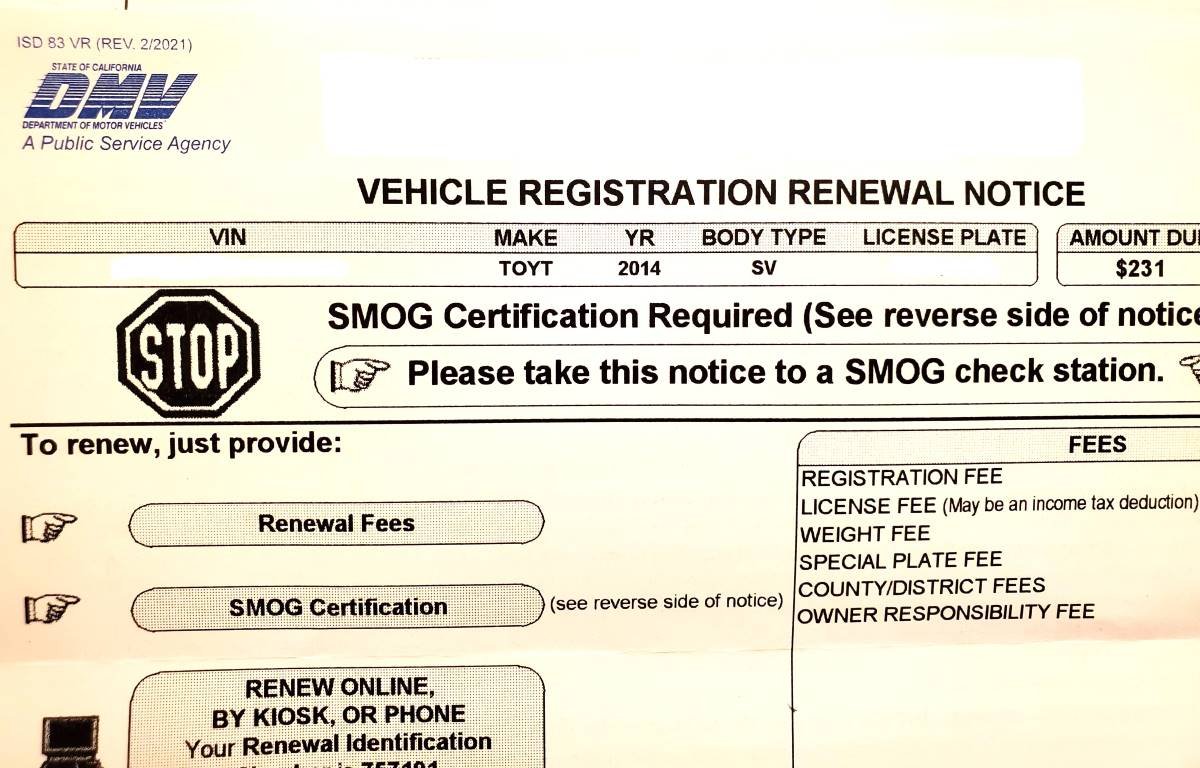
For gasoline-powered passenger vehicles and trucks, the general rule in California is that vehicles less than eight model years old are exempt from the biennial smog inspection. Instead of undergoing a traditional smog check, owners of these newer vehicles are required to pay an annual “Uninsured Vehicle Fee” (UVF) or “Vehicle License Fee” (VLF) that effectively replaces the smog check fee. This fee is collected by the California Department of Motor Vehicles (DMV) during the vehicle’s registration renewal process. The rationale behind this exemption is that these newer vehicles are presumed to be in good working order and compliant with emissions standards due to their modern onboard diagnostic systems and cleaner engine technology. The state relies on the manufacturer’s certification of compliance with federal and state emissions standards for these vehicles.
However, this exemption is not perpetual. Once a gasoline-powered vehicle reaches its eighth model year, it becomes subject to the biennial smog check requirement. This means that for the first seven years of its life (starting from the first model year), it is exempt from the physical smog inspection. The eighth model year marks the transition, and from that year forward, it must pass a smog inspection every two years. For example, if you purchase a brand-new car in 2024, its model year is 2024. It will be exempt from the smog check until the 2032 model year. In the registration renewal process for the 2032 registration year, it will then be required to undergo a smog inspection.
It’s important to note that this exemption applies to gasoline-powered vehicles. Other types of vehicles, such as diesel-powered vehicles and motorcycles, have different rules, which we will discuss later. Furthermore, this exemption is specifically for the biennial smog check. If the vehicle changes ownership within the first eight model years, a smog certification may still be required, depending on the specific circumstances and the state’s transfer of ownership regulations.
Diesel-Powered Vehicles: A Stricter Approach
California’s approach to diesel-powered vehicles is significantly different and generally more stringent than for gasoline vehicles, particularly for those used for commercial purposes. The goal is to address the higher particulate matter and nitrogen oxide emissions often associated with diesel engines.
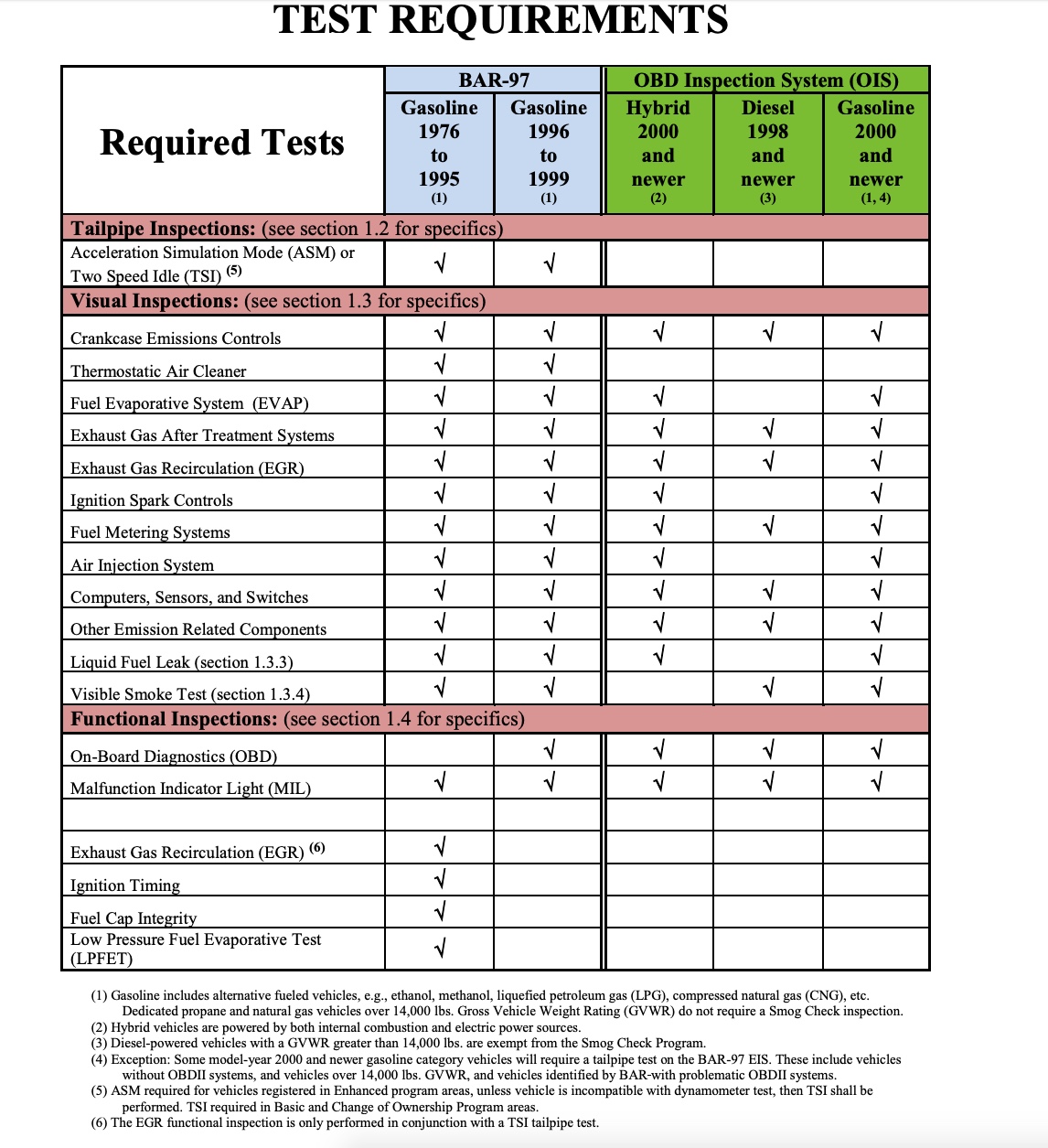
For passenger vehicles and light-duty trucks with a diesel engine, the rules have evolved. Previously, many diesel vehicles were exempt from smog checks. However, due to concerns about diesel emissions, the state has been progressively implementing stricter requirements. Currently, all diesel-powered passenger vehicles and light-duty trucks that are model year 2007 and newer are subject to the smog check requirements. This means that even newer diesel vehicles are required to undergo the biennial smog inspection. The exemption for diesel vehicles under eight model years old does not apply in the same way as it does for gasoline vehicles. Instead, the exemption is based on the model year, with older diesel vehicles (prior to 2007) facing different, often more burdensome, requirements or being phased out of the inspection program altogether.
For heavier diesel vehicles, such as trucks and buses used for commercial purposes, the regulations are even more rigorous. The Smog Check program, in conjunction with other initiatives like the California Air Resources Board (CARB) regulations, focuses heavily on ensuring these larger diesel engines are meeting stringent emissions standards. Many of these vehicles are subject to stricter testing protocols and compliance requirements than passenger vehicles. This reflects the significant impact that heavy-duty diesel emissions can have on air quality, especially in urban areas and along major transportation corridors like those found when traveling between cities like Los Angeles and San Francisco.
Alternative Fuel Vehicles and Motorcycles
The smog check requirements in California also vary for vehicles powered by alternative fuels and for motorcycles.
Alternative Fuel Vehicles (AFVs), such as those powered by compressed natural gas (CNG), liquefied petroleum gas (LPG), or hydrogen, often have different smog check requirements. Generally, AFVs that are less than four model years old are exempt from the biennial smog check. Similar to gasoline vehicles, they may be subject to a fee in lieu of the inspection. However, once these vehicles reach their fourth model year, they become subject to the biennial smog check. It’s crucial for owners of AFVs to confirm the specific requirements with the BAR, as regulations can be complex and may vary depending on the type of alternative fuel used and the vehicle’s classification.
Motorcycles in California have had a different path regarding smog checks. For a period, motorcycles were exempt from the smog check program entirely. However, this changed with the implementation of Assembly Bill 127 in 2018. Starting with the 2019 model year, all gasoline-powered motorcycles are now subject to the biennial smog check requirement. This means that even brand-new motorcycles will need to undergo a smog inspection when they are due for renewal of their registration, typically every two years. This change was implemented to address the contribution of motorcycle emissions to overall air pollution in the state.

When a New Car Might Still Need a Smog Test
While the model year exemptions are the primary factor, there are a few specific scenarios where a brand-new vehicle, even if it falls within the generally exempt age range, might still require a smog test. These situations often arise during specific transactions or when the vehicle is not being registered for the first time in California.
Change of Ownership
One of the most common exceptions to the new car smog test exemption is related to a change of ownership. Even if a vehicle is less than eight model years old and would typically be exempt from the biennial smog check, the seller is generally required to provide the buyer with a valid smog inspection certification at the time of sale or transfer. This applies to most gasoline-powered vehicles that are more than four model years old. For vehicles that are four model years old or newer, the buyer is typically responsible for paying the annual smog abatement fee in lieu of the smog check. However, if the seller wishes to provide a smog certificate as part of the sale, it is permissible. The key here is understanding who is responsible for what. For a truly new car purchased directly from a dealership for initial registration in California, the dealer usually handles the initial registration paperwork, and the buyer might pay the smog abatement fee. But if you buy a “new” used car, or a car that has been previously registered elsewhere and is now being registered in California, these rules can shift.
Out-of-State Vehicles Being Registered in California
If you are bringing a vehicle into California from another state, it will likely need to undergo a smog inspection to be registered in the state, regardless of its model year or how “new” it is. California has its own specific emissions standards, and vehicles must be certified to meet these standards. A vehicle that is compliant in another state may not be compliant with California’s stricter requirements. Therefore, when registering an out-of-state vehicle, you will typically need to obtain a smog certification from a California-licensed Smog Check station. This is a crucial step to ensure that the vehicle meets the state’s environmental regulations before it can be legally driven on California roads. This process ensures that all vehicles operating within the state contribute to meeting the ambitious air quality goals set by the state.
Specific Vehicle Types and Federal Certifications
While the general rules cover most passenger vehicles, there can be nuances for certain specialized vehicles or those with non-standard federal certifications. If a vehicle was manufactured to meet federal emissions standards but not specifically California standards, it might require a special inspection or certification to be registered in California. This is less common for standard new cars purchased from dealerships within California but can apply to imported vehicles or those with unique configurations. It is always advisable to consult with the California DMV or the Bureau of Automotive Repair if you have a vehicle with non-standard emissions compliance or if you are unsure about its specific smog check status.
Making Sense of the Fees and the Process
Understanding the financial implications and the practical steps involved in smog checks and their alternatives is essential for any new car owner in California. The state has implemented a system designed to balance emissions control with the realities of vehicle ownership.
The Smog Abatement Fee vs. The Smog Check
As mentioned, for vehicles that are exempt from the physical smog inspection, there is often a fee involved. For gasoline-powered vehicles less than eight model years old, owners pay an annual “Smog Abatement Fee” as part of their vehicle registration renewal with the DMV. This fee is designed to contribute to the state’s air quality improvement programs. It’s important to understand that this fee is not a payment for an inspection but rather a contribution in lieu of one. The amount of this fee can vary and is adjusted periodically. It’s a way for the state to collect revenue that supports environmental initiatives, even from vehicles presumed to be low-emission.
When a vehicle becomes subject to the biennial smog check (i.e., it reaches its eighth model year), the owner will no longer pay the smog abatement fee. Instead, they will be required to take the vehicle to a licensed Smog Check station for a physical inspection every two years. The cost of this inspection varies by station and can range from approximately $29.95 to $59.95 or more, plus any potential repair costs if the vehicle fails the test. The state sets a maximum price for the basic smog check.
Where to Get a Smog Check
If your new car does eventually require a smog check, or if you’re registering an out-of-state vehicle, you’ll need to find a licensed Smog Check station. These stations are licensed and regulated by the California Bureau of Automotive Repair. You can find certified stations through the BAR’s website or by looking for the official “Licensed Smog Check Station” sign at service centers. It’s advisable to choose a reputable station to ensure a fair and accurate inspection. Some stations offer coupons or discounts, so it’s worth doing a quick search before you go.
What Happens If You Don’t Comply?
Failing to comply with California’s smog check requirements can lead to significant consequences. If your vehicle is due for a smog check and you do not get it inspected, or if it fails the inspection and you do not make the necessary repairs, your vehicle registration renewal will be denied. This means you will not receive your updated registration tags, and it will be illegal to drive the vehicle on public roads. Law enforcement officers can issue tickets for expired registration and for operating a vehicle that has not undergone the required smog inspection. These tickets can include fines, and repeated offenses can lead to more serious penalties, including vehicle impoundment. Therefore, staying on top of your vehicle’s smog check requirements is not just about environmental responsibility but also about avoiding legal trouble and ensuring your vehicle remains legally registered.
In conclusion, for most brand-new gasoline-powered passenger vehicles purchased and registered in California, an initial smog test is not required for the first seven model years. Instead, owners will pay an annual smog abatement fee. However, it’s vital to be aware of the specific rules for diesel vehicles, motorcycles, alternative fuel vehicles, and situations involving out-of-state registrations or changes of ownership, as these can alter the requirements. Always refer to the official California DMV and Bureau of Automotive Repair websites for the most up-to-date and precise information regarding your specific vehicle.
LifeOutOfTheBox is a participant in the Amazon Services LLC Associates Program, an affiliate advertising program designed to provide a means for sites to earn advertising fees by advertising and linking to Amazon.com. Amazon, the Amazon logo, AmazonSupply, and the AmazonSupply logo are trademarks of Amazon.com, Inc. or its affiliates. As an Amazon Associate we earn affiliate commissions from qualifying purchases.