
For the adventurous traveler, understanding the sheer scale of a destination is paramount. When contemplating a journey to the remote and magnificent state of Alaska, one of the most surprising revelations for many is its extraordinary size. Often dwarfing the combined landmass of numerous nations, Alaska’s vastness becomes truly apparent when held up against an entire continent like Europe. This comparison isn’t merely an exercise in geography; it’s a fundamental insight for planning an Alaskan adventure, shaping expectations, and appreciating the incredible diversity and remoteness that define the 49th state. From challenging logistics to unparalleled wilderness experiences, Alaska’s dimensions dictate much of what makes it such a unique and formidable travel destination.
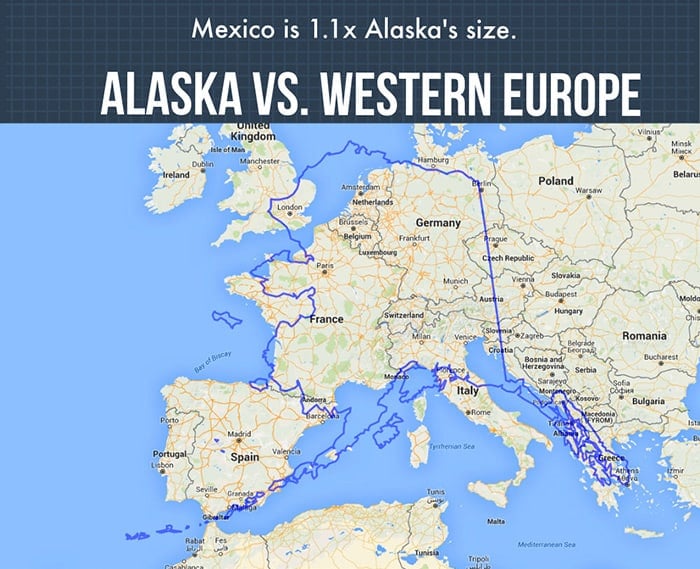
The Astonishing Scale: Alaska vs. Europe
To truly grasp the magnitude of Alaska, one must move beyond simple square mileage and visualize what that landmass truly represents on a global scale. The state is an outlier, even among the largest countries and continents, presenting a geographical footprint that constantly defies expectations.
Raw Numbers and Geographical Footprint
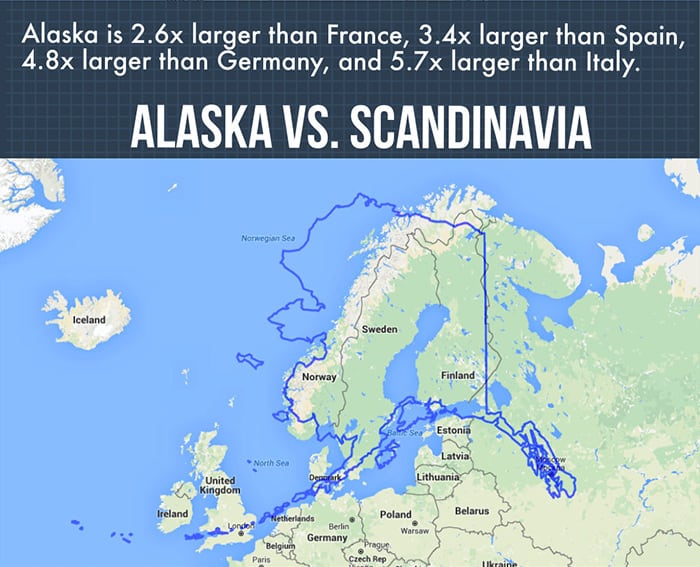
Let’s begin with the hard facts. Alaska covers an immense area of approximately 665,384 square miles (1,723,337 square kilometers). To put this into context, the continent of Europe (excluding Russia’s vast European territories for a more direct comparison of the generally understood “Western” and “Central” Europe) measures roughly 3.93 million square miles (10.18 million square kilometers). While Europe is still considerably larger, the scale of Alaska is startling. It is, by itself, larger than the combined area of France, Germany, Spain, Italy, and the United Kingdom. Imagine fitting all these diverse and sizable European nations into one American state – that is the sheer geographical footprint we are discussing. The distance from its easternmost point to its westernmost point (which technically stretches into the Eastern Hemisphere) is roughly 2,400 miles, and from north to south, it spans approximately 1,420 miles. This incredible expanse means that Alaska encompasses a remarkable array of climates, ecosystems, and geographical features, each demanding its own exploration.
Visualizing the Vastness
For travelers accustomed to the relatively compact nature of many European countries, where borders can be crossed in a matter of hours, Alaska’s scale can be mind-boggling. If you were to superimpose a map of Alaska over a map of the contiguous United States, you would find that it stretches from the Atlantic coast of Georgia all the way to the Pacific coast of California. Its coastline alone, including islands, measures over 33,900 miles – more than the entire coastline of the continental United States combined. This enormous coastal length, featuring countless fjords, islands, and inlets, is a testament to its oceanic influence and diverse marine life. The state also encompasses multiple time zones, a common feature of large countries but unusual for a single state. Understanding this immense geographical reality is the first step in planning any meaningful trip, as it dictates travel times, the scope of what can be seen, and the very nature of an Alaskan travel experience.
Implications for the Traveler: Navigating Alaska’s Grandeur
The colossal size of Alaska isn’t just an interesting factoid; it profoundly shapes the practicalities and possibilities for any traveler. Unlike a trip through Europe where one might visit several countries in a week, Alaska demands a different mindset and approach to travel.
Planning Your Alaskan Adventure
When planning an Alaskan adventure, the first realization is that “seeing Alaska” in one trip is a near impossibility for most. Its vastness necessitates a focus on specific regions. Travelers must make strategic choices: will it be the rugged beauty of Southeast Alaska with its intricate waterways and glaciers, explored via cruise ship or ferry through the Inside Passage? Or the wild interior, home to Denali National Park and its towering peak, often accessed by road or train from Anchorage or Fairbanks? Perhaps the remote Arctic tundra, requiring flights to indigenous communities and specialized tours across the Arctic Circle? Unlike a relatively compact European itinerary that might string together Paris, Rome, and Berlin by high-speed rail, an Alaskan journey often involves significant internal flights, lengthy drives, or multi-day cruises. Travelers might spend days traversing just one section, highlighting the importance of focused itineraries and realistic time allocations.
Diverse Landscapes and Ecosystems

Alaska’s immense size is the primary reason for its staggering ecological diversity. This single state contains more designated wilderness area than any other in the United States, protecting a spectrum of landscapes from temperate rainforests along the coast to frozen tundras in the far north. You can find active volcanoes on the Aleutian Islands, vast glacier fields in Prince William Sound, towering mountain ranges like the Alaska Range, and immense boreal forests covering much of the interior. Each region offers distinct ecosystems and wildlife viewing opportunities. The coastal areas teem with marine mammals like whales and sea lions, while the interior is home to grizzly bears, moose, and caribou. This incredible variety means that a trip to Alaska can feel like visiting several different countries, each with its own unique character, all within the borders of one state. Travelers seeking specific experiences – be it glacier trekking, bear viewing, fishing, or experiencing the Northern Lights – must understand that these are often localized to particular regions, further emphasizing the need for meticulous planning due to the vast distances involved.
What Alaska’s Size Means for Travel Experiences
Beyond the logistical challenges, the sheer scale of Alaska fundamentally alters the nature of the travel experience, fostering a sense of wildness and solitude almost unmatched elsewhere. It is a destination where nature truly reigns supreme, and human impact often feels wonderfully insignificant.
Unrivaled Wilderness and Solitude
One of the most profound effects of Alaska’s size is the unparalleled sense of wilderness and solitude it offers. With a population density that is among the lowest in the world, vast stretches of the state remain untouched by human development. This means travelers can immerse themselves in truly pristine environments, where the sounds of civilization are replaced by the calls of eagles, the rushing of rivers, and the quiet grandeur of the landscape. Opportunities for genuine disconnection and introspection are abundant, whether you’re kayaking through a remote fjord, hiking an unblemished trail in Gates of the Arctic National Park, or simply gazing at the endless expanse of the tundra. This vastness also supports robust wildlife populations, offering some of the best chances on Earth to see animals in their natural habitats, far from the crowds. For those seeking an escape from urban bustle and a profound connection with nature, Alaska’s immensity is its greatest asset.
Logistical Considerations and Costs
The expansive geography of Alaska also comes with distinct logistical considerations and often higher costs. Given the limited road network, particularly outside the main population centers, air travel becomes an essential mode of transport. Bush planes and small regional carriers are critical for reaching remote lodges, fishing camps, and national parks, adding significantly to travel expenses. Similarly, multi-day cruises or ferry journeys are often the most practical ways to explore the extensive coastline. Vehicle rentals, if opting for a road trip, might incur substantial mileage fees due to the vast distances. Moreover, the remoteness means that goods and services can be more expensive than in the lower 48 states or more densely populated European destinations. Travelers need to factor in these realities when budgeting for an Alaskan trip, understanding that the investment unlocks experiences that are truly unique and unforgettable. Detailed planning, booking well in advance, and potentially seeking specialized tour operators are key to navigating these challenges effectively.
Contrasting Travel Styles: Alaska vs. Europe
The size disparity between Alaska and Europe naturally leads to vastly different travel experiences and preferred styles, catering to distinct preferences and priorities.
Immersive Exploration vs. Cultural Hopping
Traveling in Alaska typically leans towards immersive exploration, focusing deeply on one or two regions and their natural wonders. Due to the travel times and the sheer scale, a trip might involve spending several days exploring Denali National Park or a week navigating the fjords of the Inside Passage. The goal is often to delve into the wilderness, witness specific wildlife, or undertake challenging outdoor activities. In contrast, a European itinerary frequently involves “cultural hopping,” where travelers might visit multiple cities and countries in a single trip. One can easily take a train from Amsterdam to Brussels or fly between London and Paris, experiencing a rapid succession of different cultures, histories, and urban landscapes. The focus is often on historical sites, art, cuisine, and diverse urban experiences, rather than boundless wilderness.
Modes of Transport and Accessibility
The primary modes of transportation also highlight the contrasting travel styles. In Europe, an extensive and efficient network of trains, buses, and well-maintained roads makes multi-country travel seamless. Intra-European flights are also plentiful and often affordable, enabling quick transitions between disparate regions and cultural hubs. Accessibility to most attractions is generally high, even in rural areas. In Alaska, while there are major highways connecting Anchorage, Fairbanks, and Seward, vast swaths of the state are only reachable by air or sea. Small aircraft, often called “bush planes,” are the lifeblood of remote communities and wilderness lodges, providing access to areas that remain virtually untouched. Cruise ships and the Alaska Marine Highway system offer unparalleled access to the coastal wilderness. This reliance on specialized transport modes emphasizes the wild, untamed nature of Alaska, where the journey itself is often a significant part of the adventure.
In conclusion, comparing the size of Alaska to Europe isn’t just an abstract geographical fact; it’s a foundational truth that dictates the very essence of travel in this remarkable state. Alaska’s staggering dimensions transform it into a destination that demands respect for its scale, careful planning, and a willingness to embrace its wild, untamed nature. For the traveler, this means prioritizing immersive experiences over superficial sightseeing, understanding the logistics of vast distances, and preparing for an encounter with a wilderness that is truly unrivaled in its grandeur and scope. It offers a profound counterpoint to the cultural richness of Europe, providing instead a deep dive into the raw power and beauty of the natural world.
LifeOutOfTheBox is a participant in the Amazon Services LLC Associates Program, an affiliate advertising program designed to provide a means for sites to earn advertising fees by advertising and linking to Amazon.com. Amazon, the Amazon logo, AmazonSupply, and the AmazonSupply logo are trademarks of Amazon.com, Inc. or its affiliates. As an Amazon Associate we earn affiliate commissions from qualifying purchases.