
The name California conjures images of sun-drenched beaches, towering redwood forests, vibrant cities, and a land of endless opportunity. It’s a place synonymous with innovation, glamour, and natural beauty, drawing millions of travelers each year seeking everything from luxurious Beverly Hills getaways to rugged adventures in Yosemite National Park. But beneath the layers of modern allure lies a fascinating history, one rooted not in geographical discovery, but in the pages of a fantastical novel. The origin of California’s name is a captivating tale that intertwines fiction, exploration, and the enduring human quest for a promised land, creating a narrative as rich and diverse as the state itself.
For those planning to explore this iconic destination, understanding its namesake provides a unique perspective on its enduring charm. From the opulent Four Seasons Beverly Hills offering a glimpse into the lavish lifestyle of its denizens, to the charming boutique hotels nestled along the coast, California offers an accommodation experience as varied as its landscapes. Its cities, landmarks, and natural wonders, such as the majestic Golden Gate Bridge or the dramatic cliffs of Big Sur, are not just travel destinations; they are chapters in a story that began centuries ago with a queen, a mythical island, and the dream of gold.

The Mythological Roots of a Golden Land
Long before any European explorer set foot on its shores, the name California existed in the imagination of a Spanish writer, a testament to the power of storytelling to shape real-world perceptions and discoveries. This literary origin story imbues the state with an almost fabled quality, a sense of destiny that seems to have unfolded with remarkable precision.
A Fictional Island and Its Queen
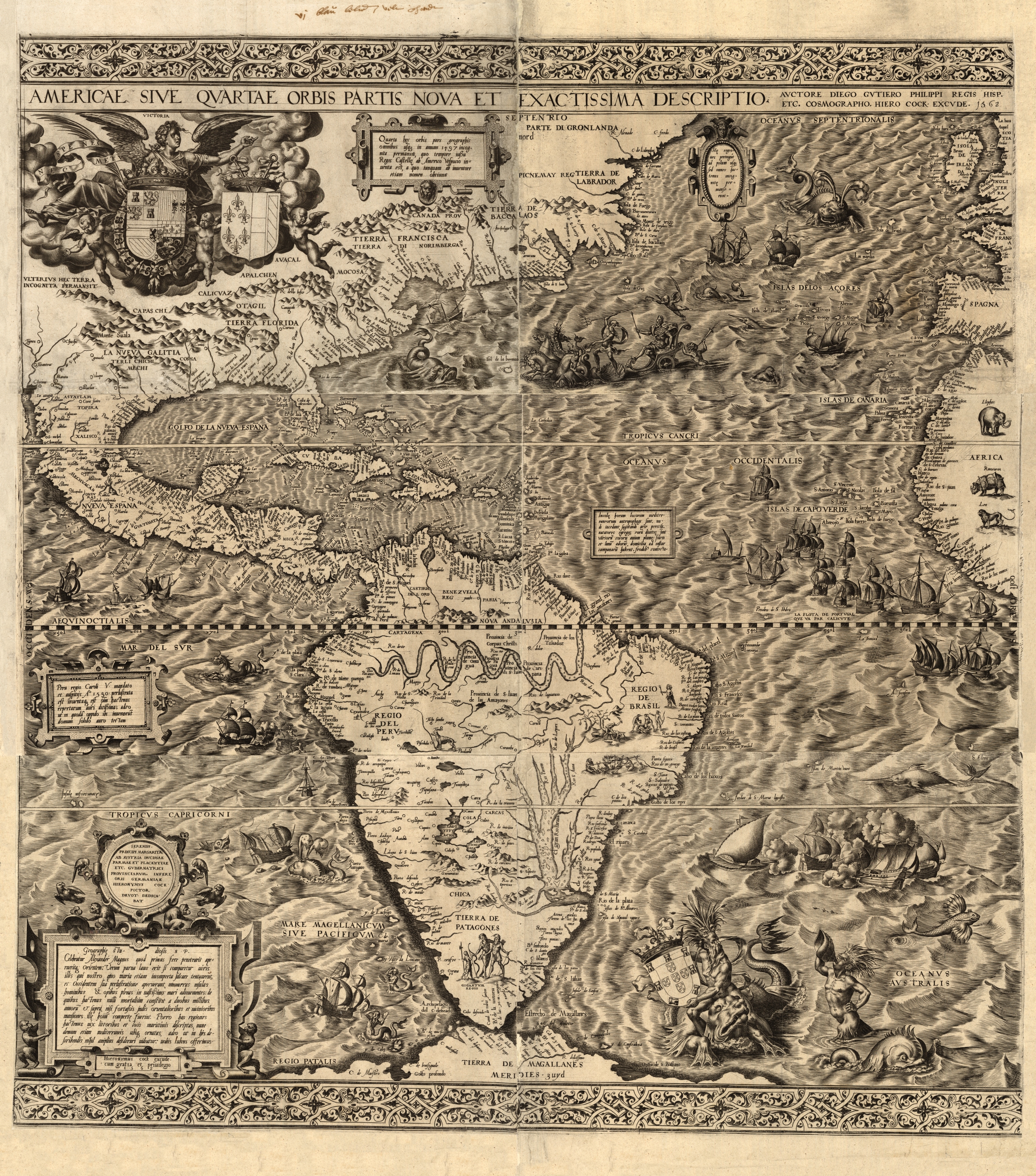
The journey into the past begins with a chivalric romance novel, wildly popular in 16th-century Spain. “Las sergas de Esplandián” (The Adventures of Esplandián), a sequel to the even more famous “Amadís de Gaula,” was written by Garci Rodríguez de Montalvo and published around 1510. In this epic tale, Montalvo describes a mythical island located “on the right hand of the Indies, very near to the terrestrial paradise.” This island, named California, was said to be inhabited by fierce Black Amazon women, ruled by a powerful and beautiful queen named Calafia.
The novel paints a vivid picture of this legendary place: “an island of the Amazons, called California. These were very black women, without a single man among them, and they lived in the manner of Amazons. They were robust of body, with strong and ardent hearts, and great courage. The island itself was one of the wildest in the world due to the bold and craggy rocks. Their arms were all made of gold, for in all the island there was no other metal.” The allure of an island abundant with gold, ruled by a formidable queen, captured the imagination of readers across Spain and beyond. It was a fantastical vision that perfectly aligned with the era’s spirit of exploration and the search for riches and exotic lands. The legend of Calafia and her golden kingdom became a powerful cultural touchstone, influencing the way people envisioned uncharted territories and fueling their desires for discovery.
For modern travelers, this mythological beginning adds a layer of enchantment to any trip to California. It’s a reminder that the pursuit of a “golden land”—whether it’s the literal gold of the Gold Rush, the metaphorical gold of opportunity in Silicon Valley, or the golden sunsets over the Pacific Ocean—has always been central to the California dream. Many of California’s most luxurious resorts and hotels, from the coastal elegance of the Ritz-Carlton Laguna Niguel to the desert oases of Palm Springs, continue to offer experiences that evoke a sense of finding one’s own paradise, albeit one filled with modern amenities rather than Amazonian warriors.
Explorers and the Search for Paradise
Just a few years after Montalvo’s novel gained popularity, Spanish conquistadors embarked on ambitious expeditions into the New World, driven by a thirst for wealth, glory, and the discovery of new lands. Among them was the formidable Hernán Cortés, who, after conquering the Aztec Empire in Mexico, turned his attention westward. He was undoubtedly familiar with “Las sergas de Esplandián” and its description of the mythical island of gold.
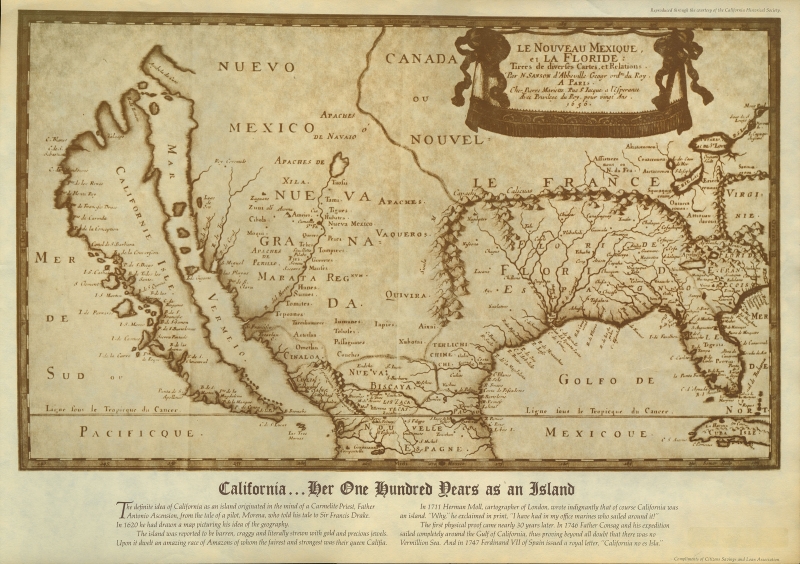
In 1533, one of Cortés’s lieutenants, Fortún Ximénez, landed on what he believed to be an island, a stark and arid land that was in fact the southern tip of the Baja California peninsula. This discovery fueled the belief that they had found Montalvo’s mythical island. While Ximénez met a violent end at the hands of the indigenous population, Cortés himself subsequently explored the region in 1535, landing in a bay he named Santa Cruz (modern-day La Paz, Mexico). It was around this time, as reports of a barren, pearl-rich “island” circulated back to Spain, that the name “California” began to be formally applied to the region.
The irony is striking: the land found was a far cry from the lush, golden paradise described by Montalvo. Yet, the name stuck, perhaps because it resonated with the romantic ideals of discovery and the enduring hope of finding immense wealth. The early explorers, driven by a mixture of ambition and the vivid imagery from popular literature, inadvertently bequeathed a fictional name to a very real and significant part of the world. This historical precedent established California as a destination where imagination often merges with reality, a concept that continues to define its tourism and lifestyle. Today, many travelers embark on their own quests, whether seeking adventure along the coastal highways, cultural immersion in San Francisco, or wellness retreats in the desert, often finding their own version of paradise.
From Fable to Fact: Mapping the Golden State
The initial application of the name California was to a place largely misunderstood—a peninsula believed to be an island, a barren land mistaken for a golden paradise. The evolution of this geographical understanding, and the expansion of the name, maps the very development of the region itself.
The Baja California Peninsula: The First ‘California’
For decades after Cortés’ expeditions, the southern portion of the land was known as California. Early maps depicted it as an island, separate from the North American mainland. This misconception persisted for nearly two centuries, fueled by limited exploration and the difficulty of navigating the treacherous Gulf of California. The name was firmly established for what is now the Baja California peninsula, a region known for its rugged beauty, dramatic deserts, and vibrant marine life.
Explorers like Francisco de Ulloa in 1539-1540 sailed much of the Gulf of California, definitively proving that Baja California was a peninsula, not an island. Despite this geographical correction, the name remained. The Baja California peninsula today, divided into the Mexican states of Baja California and Baja California Sur, remains a significant travel destination, offering distinct experiences from its northern counterpart. Tourists flock to places like Cabo San Lucas for luxury resorts and whale watching, or explore the more rugged eastern coast for adventurous eco-tourism. This original “California” provides a fascinating contrast to the bustling cities of the U.S. state of California, yet both share the same legendary name.
Alta California and the Expansion of a Name
The northward expansion of the name came with the subsequent Spanish colonization efforts. In the late 18th century, as concerns about Russian and British encroachment on their Pacific territories grew, Spain initiated the colonization of the lands north of the Baja California peninsula. This northern territory became known as Alta California (“Upper California”), distinguishing it from the older, more established “Baja California” (“Lower California”).
The Spanish mission system, spearheaded by figures like Father Junípero Serra, played a crucial role in establishing permanent settlements. From San Diego in the south to Sonoma in the north, missions and presidios dotted the landscape, laying the groundwork for many of California’s future cities. Places like Los Angeles, San Francisco, and San Diego trace their origins back to these early colonial efforts. The routes connecting these missions eventually became major arteries, evolving into today’s scenic drives that attract countless tourists.
The distinction between Baja California and Alta California became more pronounced after the Mexican-American War (1846-1848). The Treaty of Guadalupe Hidalgo in 1848 ceded Alta California to the United States, while Baja California remained part of Mexico. It was this newly acquired American territory that rapidly transformed into the modern U.S. state of California, inheriting a name with a rich, albeit fictional, past. Tourists today can visit many of these original missions, which serve as poignant historical landmarks offering a glimpse into the state’s foundational period. These sites, often beautifully preserved, provide a cultural experience that connects modern visitors to the earliest European settlers and their vision for this promising land.
California’s Enduring Allure: A Legacy of Gold and Dreams
The name California, born from fiction and applied by explorers, truly found its destiny with one of the most transformative events in American history: the California Gold Rush. This period not only cemented the “golden” association of the name but also irrevocably shaped the state’s identity, economy, and the very lifestyle that continues to attract millions.
The Gold Rush and Its Impact
In January 1848, just days before the Treaty of Guadalupe Hidalgo was signed, gold was discovered by James W. Marshall at Sutter’s Mill in Coloma. This discovery unleashed a torrent of migration, transforming California from a sparsely populated frontier into a bustling, diverse, and rapidly developing territory. The “forty-niners” who flocked to California in search of instant riches brought with them a spirit of adventure, entrepreneurship, and a willingness to take risks – traits that remain characteristic of the Californian ethos.
The Gold Rush cemented the name California’s association with gold, making the mythical golden island of Queen Calafia seem uncannily prophetic. This was real gold, not just the literary kind, and it fueled the dreams of countless individuals seeking a new life. The population boomed, diverse communities sprang up, and cities like San Francisco grew exponentially. The economic and social impact was profound, paving the way for California’s rapid admission into the Union as a state in 1850.
For tourists today, the legacy of the Gold Rush offers a fascinating journey into the past. Historical parks like Marshall Gold Discovery State Historic Park allow visitors to pan for gold, tour historic buildings, and relive the excitement of the era. Numerous ghost towns and mining museums scattered throughout the Sierra Nevada foothills offer unique educational and experiential opportunities, combining history with adventure travel. This period is not just a chapter in history; it’s an enduring narrative that speaks to the pioneering spirit and the pursuit of dreams that still define the Californian lifestyle.
A Modern Golden State: Tourism, Lifestyle, and Accommodation
Today, California continues to be a “golden land,” not just for its historical gold, but for the diverse experiences it offers travelers. It is a premier global destination, shaped by its rich history and continually reinvented by its vibrant culture and innovative spirit.
The state’s Travel appeal is virtually unrivaled, boasting an incredible variety of landscapes. From the pristine beaches of Malibu and La Jolla to the majestic peaks of the Sierra Nevada, the towering redwoods of Northern California, the dramatic coastal scenery of Big Sur, and the otherworldly deserts of Death Valley, there is an adventure for every type of explorer. Iconic national parks like Yosemite, Sequoia, and Joshua Tree attract nature lovers and outdoor enthusiasts from around the globe.
Tourism in California goes far beyond natural beauty. Its cities are cultural powerhouses, each with its own distinct flavor. Los Angeles is the global entertainment capital, home to Hollywood studios, the Hollywood Sign, and world-class museums. San Francisco charms with its Victorian architecture, cable cars, the famous Alcatraz Island, and a thriving food scene. San Diego offers a relaxed coastal vibe, vibrant nightlife, and family-friendly attractions like Balboa Park and the San Diego Zoo. Beyond the major metropolises, regions like Napa Valley and Sonoma Valley are world-renowned for their wine tourism, offering exquisite culinary experiences and picturesque vineyard stays.
The Lifestyle in California is as varied as its geography. It caters to luxury travelers seeking exclusive resorts and high-end shopping in Beverly Hills and Carmel-by-the-Sea, to budget travelers exploring national parks with camping or affordable hostels. Family trips find endless amusement at theme parks like Disneyland and Universal Studios Hollywood, while business travelers find state-of-the-art facilities and vibrant professional networks in tech hubs like Silicon Valley. The focus on health, wellness, outdoor activities, and innovation defines much of the Californian way of life, making it a dynamic place to visit and experience.
When it comes to Accommodation, California truly excels in its diversity. Visitors can choose from opulent five-star hotels like the Four Seasons Beverly Hills or the Ritz-Carlton Laguna Niguel offering unparalleled service and amenities. Boutique hotels in charming towns like Carmel-by-the-Sea provide unique, personalized stays. For those seeking a more independent or long-term experience, apartments and villas are readily available for booking. Resorts cater to every desire, from family-friendly complexes to adults-only retreats. Whether it’s a rustic cabin near Yosemite, a beachfront bungalow in Santa Monica, or a chic city loft, the state offers accommodation options to match every budget, preference, and lifestyle, ensuring that every visitor can find their perfect base for exploration.
In conclusion, the name California is a captivating thread woven through centuries of history, from the fictional pages of a Spanish novel to the bustling metropolises and breathtaking natural wonders of today. It represents an enduring human desire for discovery, opportunity, and a touch of the extraordinary. From its mythological queen Calafia to the real-life gold that transformed its destiny, California has always been, and continues to be, a land where dreams take flight, welcoming travelers from across the globe to discover their own golden experiences within its boundless embrace.
LifeOutOfTheBox is a participant in the Amazon Services LLC Associates Program, an affiliate advertising program designed to provide a means for sites to earn advertising fees by advertising and linking to Amazon.com. Amazon, the Amazon logo, AmazonSupply, and the AmazonSupply logo are trademarks of Amazon.com, Inc. or its affiliates. As an Amazon Associate we earn affiliate commissions from qualifying purchases.