
The name Hollywood resonates globally, instantly conjuring images of silver screens, dazzling stars, and the endless pursuit of dreams. Yet, long before it became the undisputed epicenter of the motion picture industry, this iconic California enclave was nothing more than a quiet agricultural community. The story of how this modest settlement acquired its now-legendary name is a fascinating blend of happenstance, vision, and a touch of domestic inspiration, firmly cementing its place as a significant historical landmark.
The Genesis of a Golden Dream
Before the glitz and glamour, the land that would become Hollywood was part of a larger agricultural expanse, ripe for development and expansion. Its fertile soils and agreeable climate made it an attractive prospect for those looking to cultivate the land in the burgeoning state of California.

Early Settlements and Agricultural Roots
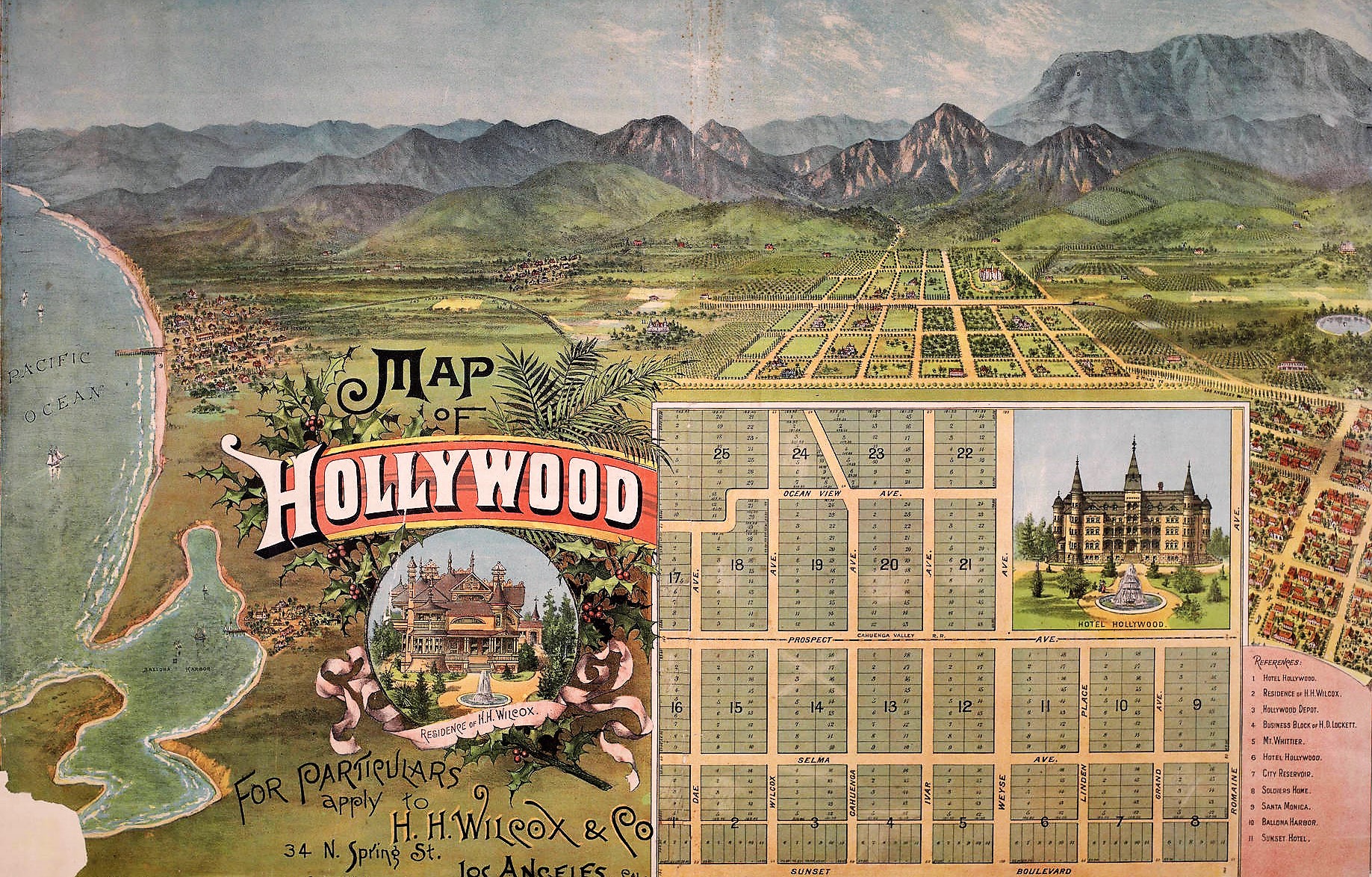
In the late 19th century, the region now known as Hollywood was largely an undeveloped, sun-drenched landscape nestled within the Cahuenga Valley. It was characterized by open fields, citrus groves, and thriving fruit orchards. Early settlers were drawn by the promise of fertile land and the mild Mediterranean climate, ideal for farming. The area was sparsely populated, a stark contrast to the bustling metropolis it would eventually become. The future site of cinematic marvels was then simply a canvas of rural tranquility, providing sustenance rather than spectacle.
It was into this pastoral setting that a pivotal figure, Harvey Henderson Wilcox, and his wife, Daeida Wilcox Beveridge, arrived. Wilcox, a wealthy prohibitionist from Kansas who had made his fortune in real estate and publishing, purchased a 160-acre ranch in 1886. This substantial plot of land, stretching from what is now Vine Street to La Brea Avenue, and from Sunset Boulevard to Franklin Avenue, formed the nucleus of the future Hollywood. While Harvey had the vision and capital, it was Daeida who would ultimately bestow upon their new endeavor the name that would echo through history.
The Fateful Naming: A Wife’s Vision
The true origin of the name “Hollywood” is often attributed to a moment of serendipity and the imaginative spirit of Daeida Wilcox Beveridge. Her contribution to the landmark’s identity is a testament to how personal experiences can shape the collective destiny of a place.
A Chance Encounter and an Inspiring Name
According to widely accepted accounts, Daeida Wilcox Beveridge undertook a train journey to the East Coast in 1886, possibly to visit relatives or to participate in a church conference. During this trip, she met a woman who spoke enthusiastically about her country home in Florida, which she referred to as “Hollywood.” The name captivated Daeida. It evoked images of English country estates adorned with holly trees, a symbol of charm, prestige, and idyllic beauty. Despite the fact that holly trees were not native to Southern California, the phonetic appeal and the picturesque imagery the name conjured resonated deeply with her.
Upon her return to California, Daeida shared her inspiration with her husband, Harvey Henderson Wilcox. She was convinced that “Hollywood” was the perfect name for their developing ranch and future community. The name carried an elegant, aspirational quality that she felt suited their vision for a refined residential area.
Wilcox’s Vision and Early Development
Embracing his wife’s suggestion, Harvey Henderson Wilcox proceeded to survey and subdivide his land. On February 1, 1887, he filed a plat map for his new community with the Los Angeles County recorder’s office. This map officially designated the area as “Hollywood.” The decision marked a formal birth for the community, laying the groundwork for its future development.
The original plans for Hollywood envisioned a quiet, temperance-minded community, a stark contrast to the boisterous Los Angeles of the time. Wilcox had strict covenants in place, prohibiting the sale of alcohol and establishing a community designed for genteel living. He sold the first lots for residential development, initiating the growth of what would become one of the most famous places on Earth, all under a name inspired by a chance encounter and a spouse’s intuition.

From Modest Beginnings to a Magnet for Movies
The naming of Hollywood was merely the prologue to its extraordinary transformation. From a temperance community, it would swiftly evolve into a global cultural powerhouse, drawing talent and visionaries from around the world.
Early Growth and Infrastructure
Following its formal naming, Hollywood began to grow steadily, albeit modestly. The community established its first post office in 1887, and the elegant Hollywood Hotel opened its doors in 1902, serving as a social hub for residents and visitors alike. Schools, churches, and shops soon followed, creating the infrastructure of a burgeoning town.
A significant turning point came with the expansion of the Pacific Electric Railway (the “Red Car” system) into Hollywood in 1904. This railway provided a crucial link to downtown Los Angeles, making Hollywood more accessible and attractive for both residents and businesses. In 1903, Hollywood was incorporated as an independent municipality, further establishing its identity. However, in 1910, facing water shortages and seeking improved municipal services, Hollywood voted to consolidate with the city of Los Angeles, a decision that would prove instrumental in its future.
The Dawn of Cinema
The early 20th century witnessed the nascent film industry grappling with legal challenges and unpredictable weather conditions on the East Coast. Filmmakers sought clearer skies, diverse landscapes, and perhaps most importantly, distance from the monopolistic practices of Thomas Edison’s Motion Picture Patents Company. Southern California, with its year-round sunshine, varied topography (from mountains to deserts to beaches), and proximity to the Mexican border (a quick escape route from patent enforcers), proved to be the ideal haven.
The first film crew to shoot entirely in Hollywood was the Biograph Company under the direction of D.W. Griffith, which produced the short drama In Old California in 1910. This moment marked a pivotal shift. Soon, numerous film companies followed suit, establishing studios and production facilities in the quiet, once-agricultural community. The name “Hollywood” quickly became synonymous with the burgeoning film industry, transforming from a simple town name into a global metonym for cinema itself.
The Enduring Legacy of a Name
The name “Hollywood” has transcended its humble origins to become one of the most recognizable and powerful brand names in the world. It is a testament to how a seemingly arbitrary choice can, through a confluence of historical events, become an indelible part of global culture.
A Symbol of Stardom and Storytelling
Today, Hollywood is more than just a district of Los Angeles; it is an idea, a dream factory, and a symbol of aspiration. The name is intrinsically linked to stardom, storytelling, and the magic of movies. It represents the pinnacle of cinematic achievement and the relentless pursuit of artistic expression. The very mention of “Hollywood” evokes a distinct imagery: the iconic Hollywood Sign perched in the Hollywood Hills, the glittering stars of the Walk of Fame lining its sidewalks, and the historic facades of venues like the TCL Chinese Theatre. These landmarks, all bearing or residing within the famed name, stand as physical manifestations of the legend.
The initial vision of Daeida Wilcox Beveridge for an elegant community, while perhaps not foreseeing the specific industry it would attract, imbued the place with a certain gravitas and charm that made it fertile ground for the theatrical and grand. The name itself, with its hint of classic English beauty, seemed perfectly suited to house the dreams and dramas that would unfold within its boundaries.
The Continued Allure
Even in an era of distributed digital production and globalized entertainment, the allure of “Hollywood” remains potent. Tourists flock to its streets, hoping to catch a glimpse of celebrity or simply to immerse themselves in the aura of cinematic history. Aspiring actors, writers, and directors continue to journey to Hollywood, drawn by the magnetic pull of its name and the promise of its legacy.
The story of how Hollywood, California, got its name is a charming footnote in the broader narrative of human ambition and cultural evolution. It began with a simple suggestion born from a train journey, evolved through the vision of pioneering landowners, and was ultimately etched into the global consciousness by the transformative power of film. The name itself, once merely a label for a piece of land, has become an enduring landmark, synonymous with an entire industry and a boundless realm of imagination.
LifeOutOfTheBox is a participant in the Amazon Services LLC Associates Program, an affiliate advertising program designed to provide a means for sites to earn advertising fees by advertising and linking to Amazon.com. Amazon, the Amazon logo, AmazonSupply, and the AmazonSupply logo are trademarks of Amazon.com, Inc. or its affiliates. As an Amazon Associate we earn affiliate commissions from qualifying purchases.