
Obtaining a birth certificate from California is a crucial administrative task that underpins countless aspects of modern life, from travel and education to employment and securing vital benefits. It’s a foundational document that verifies your identity and citizenship, making its accurate and timely acquisition a key component of personal lifestyle management. Whether you’re applying for a passport, enrolling in school, claiming social security benefits, or simply need an updated copy for your records, understanding the process in California is essential. This guide provides a comprehensive overview, demystifying the steps involved to ensure a smooth and successful experience.

Understanding the Importance of Your California Birth Certificate
Your birth certificate is more than just a piece of paper; it’s the primary legal document establishing your birth, parentage, and citizenship. For residents of California, this document is issued by the California Department of Public Health – Vital Records (CDPH-VR) or by the county recorder’s office in the county where the birth occurred. Its importance cannot be overstated, influencing everything from international travel to local administrative processes.
Authorized vs. Informational Copies
One of the most critical distinctions to understand when ordering a birth certificate in California is the difference between an “Authorized Certified Copy” and an “Informational Certified Copy.” This distinction dictates who can request the document and for what purposes it can be used.
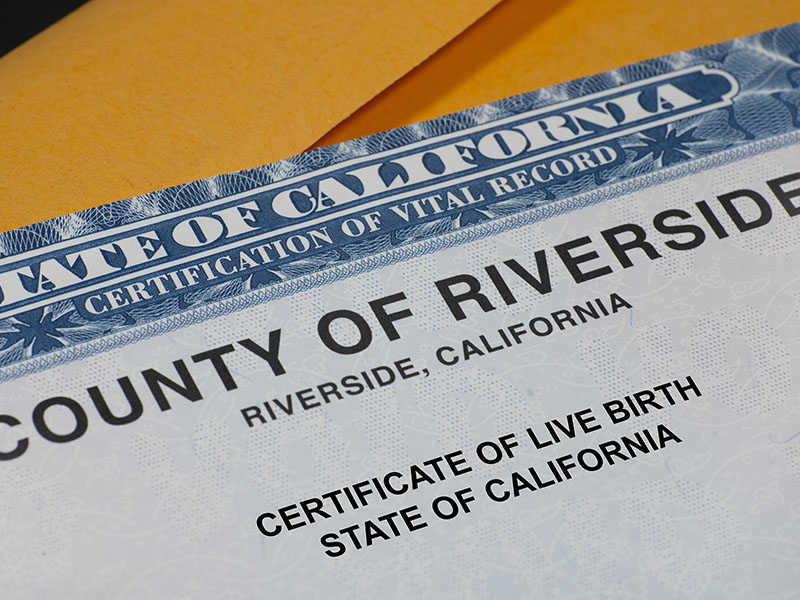
An Authorized Certified Copy is typically required for official purposes, such as obtaining a driver’s license, passport, school enrollment, social security benefits, or other legal and administrative processes where proof of identity and legal authorization is mandatory. These copies bear the signature of the State Registrar or county recorder and are printed on special security paper. By law, only specific individuals are authorized to receive an authorized copy:
- The registrant (the person named on the certificate).
- A parent or legal guardian of the registrant.
- A child, grandchild, sibling, spouse, or domestic partner of the registrant.
- An attorney representing the registrant or the registrant’s estate.
- A law enforcement agency or a representative of a governmental agency, as provided by law, who is conducting official business.
- A party entitled to receive the record as a result of a court order.
An Informational Certified Copy, conversely, contains the same information as an authorized copy but is marked with the inscription “INFORMATIONAL, NOT A VALID DOCUMENT TO ESTABLISH IDENTITY.” These copies are generally requested for personal use, genealogical research, or situations where official proof of identity is not required. Anyone can request an informational copy, provided they can provide sufficient identifying information about the record.
Understanding which type of copy you need before initiating your request will save you time and potential frustration.
Common Reasons for Needing Your Birth Certificate
The reasons for needing a birth certificate are numerous and span various life stages and administrative requirements. For a burgeoning traveler, it’s a non-negotiable document for passport applications. For new parents, it’s vital for enrolling children in school or securing their social security number. Other common scenarios include:
- Passport Applications: Essential for proving U.S. citizenship.
- Driver’s License/State ID: Often required as a primary form of identification.
- Social Security Benefits: Necessary for establishing eligibility.
- School Enrollment: Required for minor children to register for educational institutions.
- Marriage Licenses: May be needed to verify identity and age.
- Inheritance Claims: Used to establish lineage and legal standing.
- Genealogical Research: Informational copies are invaluable for tracing family history.
- Proof of Identity: A fundamental document for various legal and personal transactions.
Given its broad utility, maintaining an accessible and current copy of your birth certificate is a cornerstone of prudent personal administration.
Who Can Request a Birth Certificate in California?
The State of California maintains strict regulations regarding who can obtain copies of vital records, especially authorized certified copies, to protect individual privacy and prevent fraud. This framework is designed to ensure that sensitive personal information is only released to those with a legitimate right to it.
Authorized Requesters
As detailed earlier, authorized requesters are individuals directly related to the registrant or with legal standing. This includes the registrant themselves, immediate family members (parents, children, siblings, spouses, domestic partners), legal guardians, attorneys representing the registrant, and specific governmental or law enforcement agencies. If you fall into one of these categories, you will need to provide specific documentation to prove your relationship and identity.
For example, if you are requesting your own birth certificate, you will need to provide valid photo identification. If you are a parent requesting your child’s birth certificate, you will need to provide your identification and demonstrate your parental relationship (which is often evident on the birth certificate itself, but further documentation may be requested if names differ or other complexities arise).
Applying on Behalf of Another
It is possible to apply for a birth certificate on behalf of another individual, but this typically requires a power of attorney or a court order specifically authorizing you to do so. Without such legal documentation, you would generally only be able to obtain an informational copy, unless you fall into one of the previously mentioned authorized relationship categories. This safeguard prevents unauthorized access to personal vital records, reinforcing the privacy protections embedded in California law.
Step-by-Step Guide to Ordering Your Birth Certificate
Ordering your birth certificate from California can be done through several channels: online, by mail, or in person. Each method has its own requirements, processing times, and convenience factors.
Option 1: Online Application
Many individuals find the online application process to be the most convenient. The California Department of Public Health – Vital Records partners with third-party vendors for online requests. While convenient, it’s important to note that these services often charge an additional processing fee beyond the standard certificate fee.
When applying online, you will typically need to:
- Select a Service Provider: The CDPH-VR website directs users to authorized online vendors.
- Complete the Application Form: Provide all requested information, including the registrant’s full name, date and place of birth, parents’ names, and your relationship to the registrant.
- Submit Required Documentation: Upload scanned copies of your valid photo identification and a sworn statement. The sworn statement (usually available as a downloadable form) must be signed under penalty of perjury and often requires notarization, especially for authorized copies.
- Pay Fees: Use a credit or debit card to cover the certificate fee and any applicable online processing or shipping fees.
- Review and Submit: Carefully review all information before final submission.
Online applications are processed by the CDPH-VR, and copies are typically mailed to the requester.
Option 2: Mail-In Request
For those who prefer a traditional approach or require specific forms not easily managed online, requesting a birth certificate by mail is a reliable option.
To order by mail:
- Download the Application Form: Visit the CDPH-VR website or your specific county recorder’s office website to download the “Application for Certified Copy of Birth Record.”
- Complete the Form: Fill out all sections accurately and legibly. Indicate whether you are requesting an authorized or informational copy.
- Prepare a Sworn Statement (for authorized copies): If requesting an authorized copy, you must complete and sign the “Certificate of Acknowledgment of Sworn Statement” section on the application form. This typically requires notarization, meaning you’ll need to sign it in front of a notary public.
- Gather Required Documentation: Include a clear photocopy of your valid government-issued photo identification.
- Include Payment: Enclose a check or money order payable to “CDPH Vital Records” (or the specific county recorder) for the correct fee. Do not send cash through the mail.
- Mail Your Application: Send the completed form, sworn statement (if applicable), ID copy, and payment to the appropriate address provided on the application form (either the CDPH-VR or the relevant county recorder’s office, e.g., Los Angeles County Registrar-Recorder/County Clerk).
Mail-in requests generally have longer processing times than in-person applications, but they avoid the extra fees associated with online vendors.
Option 3: In-Person Application
For immediate needs or individuals who prefer direct interaction, applying in person at the CDPH-VR office in Sacramento or at the county recorder’s office where the birth occurred is the fastest method.
Steps for in-person application:
- Locate the Office: Determine whether to visit the CDPH-VR office in Sacramento or the county recorder’s office (e.g., San Francisco County Clerk).
- Complete the Application Form: Forms are usually available at the office, or you can download and fill one out beforehand.
- Bring Required Identification: You must present a valid government-issued photo ID.
- Pay Fees: Payment can typically be made by cash, check, money order, or credit/debit card (availability varies by location).
- Submit and Wait: Your request will often be processed on the spot, allowing you to leave with your birth certificate.
In-person applications are ideal for urgent requests, but they require travel to the designated office.
Required Documentation and Fees
Regardless of the method you choose, certain documentation and fees are consistently required to process your birth certificate request. Being prepared with these items beforehand will significantly expedite your application.
Proof of Identity
For all requests, especially for authorized certified copies, valid identification is paramount. Acceptable forms of ID typically include:
- Driver’s license or state-issued identification card.
- U.S. Passport or Passport Card.
- Foreign Passport (with U.S. Visa if applicable).
- Consular ID card.
- Military ID card.
- Permanent Resident Card (Green Card).
Ensure your ID is current and matches the name you are using on the application. For mail-in and online requests, clear photocopies or scanned images are required.
Application Forms and Sworn Statements
The official application form for a certified copy of a birth record is mandatory. For authorized copies, a sworn statement is integrated into the application (or provided as a separate form) where you attest to your eligibility under penalty of perjury. This sworn statement often requires notarization, a legal step where a notary public verifies your identity and watches you sign the document. Notarization adds a layer of legal authenticity to your request and is a critical step for many authorized copy applications.
Current Fees and Payment Methods
The fee for a California birth certificate is set by law and is subject to change. As of the current guidelines, the fee is typically around $29 per authorized or informational copy. It is crucial to verify the most current fee directly from the CDPH-VR website or the specific county recorder’s office website before submitting your application, as fees can be updated periodically.
Payment methods vary by application channel:
- Online: Credit/debit card only, often with additional processing fees.
- Mail: Check or money order payable to “CDPH Vital Records” or the specific county. Do not send cash.
- In-Person: Cash, check, money order, or credit/debit card (check specific office for accepted card types).
Double-check the exact payee name and amount to avoid delays caused by incorrect payments.
Navigating Processing Times and Special Circumstances
Understanding the typical processing times and knowing how to handle special situations can help you plan effectively and avoid last-minute stress.
Typical Processing Durations
Processing times for birth certificate requests in California can vary significantly based on the method of application and the current workload of the CDPH-VR or county offices.
- In-Person: Often immediate, or within a few hours, assuming all documentation is correct.
- Online: Typically processed within 1-2 weeks, plus mailing time. Some services offer expedited shipping for an additional fee.
- Mail-In: Can take 2-4 weeks or longer, especially during peak periods, plus postal transit time. It’s advisable to allow ample time for mail-in requests.
It’s always recommended to check the current processing times published on the official CDPH-VR website or the relevant county recorder’s website for the most up-to-date information.
Expedited Services and Apostille Requests
For urgent needs, some online services offer expedited processing and shipping for an additional cost. While the CDPH-VR itself does not typically offer “expedited” processing for mail-in requests in the same way, applying in person is inherently the fastest option.
An Apostille is an additional certification often required for a California birth certificate when it is to be used in a foreign country that is a member of the Hague Apostille Convention. This certifies the authenticity of the birth certificate itself and the signature of the issuing authority. To obtain an apostille, you must first secure an Authorized Certified Copy of your birth certificate. Then, you submit this certified copy to the California Secretary of State’s office for the apostille. This is a separate process and involves additional fees and processing times. If you need an apostille, plan accordingly, as it adds another layer to the overall timeline.

What If My Birth Record Has Errors?
Discovering an error on your birth certificate can be a significant hurdle. Correcting a birth certificate in California involves a separate process through the CDPH-VR. This usually requires submitting specific forms, supporting documentation (e.g., court orders, affidavits), and applicable fees to amend the record. The process can be complex and time-consuming, so it’s best to address any discrepancies as soon as they are identified.
Ordering your birth certificate from California is a straightforward process once you understand the requirements and options available. By carefully following the guidelines, preparing the necessary documentation, and choosing the method that best suits your needs, you can efficiently obtain this vital document and seamlessly manage your personal lifestyle responsibilities.
LifeOutOfTheBox is a participant in the Amazon Services LLC Associates Program, an affiliate advertising program designed to provide a means for sites to earn advertising fees by advertising and linking to Amazon.com. Amazon, the Amazon logo, AmazonSupply, and the AmazonSupply logo are trademarks of Amazon.com, Inc. or its affiliates. As an Amazon Associate we earn affiliate commissions from qualifying purchases.