
Navigating the legal landscape of obtaining a restraining order in Florida can seem daunting, especially when personal safety is at stake. This guide aims to demystify the process, providing clear, actionable steps for individuals seeking protection. While our primary focus is on enriching your travel experiences, from exploring captivating destinations and uncovering hidden attractions to indulging in unique experiences and understanding local tourism, we recognize that personal well-being is paramount. Therefore, we are providing this essential information on how to secure a restraining order in Florida, ensuring you can travel with peace of mind and a sense of security.
Understanding Restraining Orders in Florida
A restraining order, more formally known as an injunction for protection in Florida, is a court order designed to prevent an individual from engaging in specific behaviors that are causing harm or posing a threat. These orders are crucial for individuals experiencing domestic violence, repeat violence, dating violence, sexual violence, or stalking. The primary goal is to provide immediate and sustained protection for the petitioner (the person seeking the order) from the respondent (the person against whom the order is sought).
In Florida, there are several types of injunctions for protection, each tailored to specific circumstances:
- Injunction for Protection Against Domestic Violence: This is sought when the violence or threat of violence occurs between family or household members. This can include spouses, former spouses, blood relatives, people related by marriage, and people who are presently living together or have lived together in the past.
- Injunction for Protection Against Repeat Violence: This applies when there have been at least two incidents of violence or stalking, at least one of which has occurred within the last six months, committed by the respondent against the petitioner or a member of the petitioner’s immediate family.
- Injunction for Protection Against Dating Violence: This is for individuals who are or have been in a dating relationship. A dating relationship is defined as a romantic involvement, characterized by the expectation of affection or sexual intimacy, between two people.
- Injunction for Protection Against Sexual Violence: This is filed when the respondent has committed or attempted to commit sexual battery, lewd or lascivious battery, or any other offense involving sexual penetration or union without consent.
- Injunction for Protection Against Stalking: This is sought when the respondent is engaged in a pattern of conduct directed at the petitioner that causes a substantial and unwarranted fear of imminent serious injury or death to the petitioner or a member of their immediate family.
It’s important to understand that a restraining order is a serious legal document. Violating its terms can lead to criminal charges and penalties.
The Importance of Immediate Action
If you find yourself in a situation where you need a restraining order, acting swiftly is crucial. The longer you wait, the more opportunities there may be for further harm. The process, while requiring careful attention to detail, is designed to be accessible to those in need of protection. This guide will break down the steps involved, making it more manageable. Remember, seeking legal advice from a qualified attorney is always recommended, but this information provides a solid foundation for understanding the procedure.
Filing a Restraining Order in Florida: The Step-by-Step Process
The process of filing a restraining order in Florida involves several key stages. Each step is designed to ensure that the court has all the necessary information to make an informed decision about granting protection.
Step 1: Obtaining the Necessary Forms
The first practical step is to acquire the correct legal forms. These forms are typically available from the Clerk of Court’s office in the county where you reside or where the respondent resides, or where the alleged incident occurred. Many counties also provide these forms on their court websites, making them accessible for download.
You will generally need to fill out a Petition for Injunction for Protection. The specific form will depend on the type of injunction you are seeking (e.g., domestic violence, repeat violence). The petition will ask for detailed information, including:
- Your name and address.
- The respondent’s name and address.
- A clear and detailed description of the incidents that have led you to seek protection. This should include dates, times, locations, and specific actions taken by the respondent. Be as factual and precise as possible.
- The type of relationship you have with the respondent.
- The specific relief you are seeking from the court (e.g., no contact, stay away from your home, workplace, or children’s school).
Step 2: Completing the Petition Accurately
Accuracy and completeness are vital when filling out the petition. Any missing information or errors could lead to delays or the dismissal of your case. It’s recommended to write or type clearly, ensuring all sections are filled out.
Consider including:
- Specific Dates and Times: Vague descriptions are less persuasive than precise accounts.
- Witness Information: If there were any witnesses to the incidents, their names and contact information can be valuable.
- Evidence: While you don’t typically submit evidence with the initial petition, it’s good to have it organized, such as police reports, photos of injuries, or threatening messages. You will have an opportunity to present this evidence at a hearing.
Many Florida counties offer assistance through domestic violence shelters or legal aid organizations. These resources can provide invaluable support in completing the forms and understanding the legal jargon. For instance, if you are seeking protection due to domestic violence, contacting a local Florida domestic violence advocacy group can offer guidance through the initial paperwork.
Step 3: Filing the Petition with the Clerk of Court
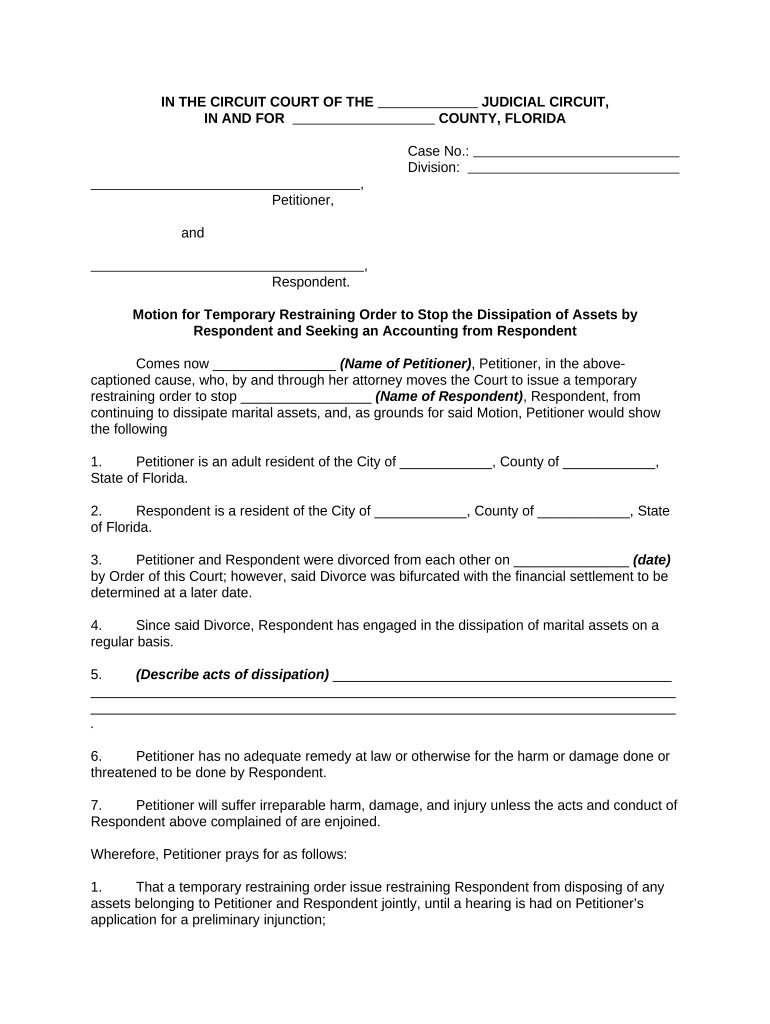
Once the petition is completed, you must file it with the Clerk of Court in the appropriate county. There is usually no filing fee associated with petitions for injunctions for protection. You will need to file multiple copies, as one will be kept by the court, one will be served on the respondent, and you will keep one for your records.
The Clerk of Court will review the petition for completeness and then forward it to a judge. In cases of immediate danger, a judge may review the petition the same day it is filed.
Step 4: The Ex Parte Hearing (If Applicable)
In many situations, especially those involving imminent danger, a judge will hold an “ex parte” hearing. This means the hearing takes place without the respondent present. During this brief hearing, the judge will review your petition and may ask you questions to clarify the details of your situation.
If the judge finds sufficient grounds to believe that you are in immediate danger, they may issue a Temporary Final Judgment for Protection (or a Temporary Injunction). This temporary order provides immediate protection until a full evidentiary hearing can be held. This temporary order is crucial as it offers immediate relief while the legal process unfolds.
Step 5: Service of Process on the Respondent
After a temporary injunction is issued or once the petition is filed and scheduled for a hearing, the respondent must be formally notified of the proceedings. This is known as “service of process.” The court will arrange for a sheriff’s deputy or a certified process server to personally deliver a copy of the petition and any temporary injunction to the respondent.
It is critical that service is properly completed. The respondent has a legal right to be notified and to have an opportunity to respond to the allegations. You should not attempt to serve the papers yourself, as this can invalidate the service.
Step 6: The Final Hearing
Following the service of process, a final hearing will be scheduled. This hearing is where both you and the respondent will have the opportunity to present your cases before the judge. You will be able to present evidence, testify, and call witnesses. The respondent will also have the chance to present their side of the story.
The judge will then decide whether to issue a Final Judgment for Protection, which is a more permanent injunction, or to deny the petition. A Final Judgment for Protection can last for a specified period, typically up to three years, and can be renewed.
Seeking Legal Assistance and Support
While this guide outlines the general process, legal matters can be complex. Seeking assistance from legal professionals and support organizations can significantly improve your chances of a successful outcome and provide you with the emotional support you may need.
Legal Representation
Hiring an attorney who specializes in domestic violence or injunctions for protection can be extremely beneficial. An attorney can:
- Ensure all legal procedures are followed correctly.
- Help you gather and present evidence effectively.
- Represent you in court, advocating for your safety.
- Explain your legal rights and options.
If you cannot afford an attorney, many Florida counties have legal aid societies or pro bono programs that offer free or low-cost legal services to individuals who qualify. Contacting your local bar association can provide referrals to these services.
Support Organizations
Beyond legal assistance, numerous organizations in Florida are dedicated to helping victims of domestic violence, stalking, and other forms of abuse. These organizations offer a range of services, including:
- Shelter and Housing: Providing safe places to stay.
- Counseling and Support Groups: Offering emotional and psychological support.
- Advocacy: Assisting with navigating the legal system and accessing resources.
- Safety Planning: Helping you create strategies to stay safe.
Examples of such organizations can be found by searching for “domestic violence resources [county name] Florida.” These groups are invaluable sources of support and guidance throughout the entire process. Remember, you do not have to go through this alone. Reaching out to these resources can be a critical step towards reclaiming your safety and well-being, allowing you to eventually return to enjoying the beautiful destinations, vibrant local culture, and exciting activities that Florida has to offer.
LifeOutOfTheBox is a participant in the Amazon Services LLC Associates Program, an affiliate advertising program designed to provide a means for sites to earn advertising fees by advertising and linking to Amazon.com. Amazon, the Amazon logo, AmazonSupply, and the AmazonSupply logo are trademarks of Amazon.com, Inc. or its affiliates. As an Amazon Associate we earn affiliate commissions from qualifying purchases.