
Texas Hold ‘Em, often simply called Hold ‘Em, is the most popular poker variant played worldwide. Its blend of simple rules and strategic depth makes it a captivating game for both casual gatherings and high-stakes professional tournaments. Understanding how to play this game is an essential skill for any poker enthusiast, offering a gateway into the thrilling world of card games, from friendly competitions at home to the legendary tables of the World Series of Poker in Las Vegas. This guide will walk you through the fundamental rules, betting structures, and common hand rankings, providing a solid foundation for your journey into Texas Hold ‘Em.

The Basics of Texas Hold ‘Em
At its core, Texas Hold ‘Em is a game of skill, probability, and psychology played with a standard 52-card deck. The objective is to form the best possible five-card poker hand by combining your two private “hole cards” with the five community cards dealt face-up on the table.
The Deck and Players
A standard 52-card deck is used, with no jokers. The game can be played with anywhere from two to ten players. For optimal strategic interaction and smoother gameplay, games with six to eight players are often considered ideal.
Dealing the Cards
The game proceeds in a clockwise direction. Each player is dealt two cards face down, known as hole cards. These cards are private and only visible to the player holding them. Following the initial deal, a series of community cards are dealt face up in the center of the table. These community cards are shared by all players and can be used by each individual to form their best five-card hand.
The Flop, Turn, and River
The community cards are dealt in three distinct stages:
- The Flop: After the first round of betting, three community cards are dealt face up. These cards are called the flop. Players now have six cards to consider: their two hole cards and the three community cards.
- The Turn: After a second round of betting, a fourth community card is dealt face up. This is known as the turn. With four community cards and their two hole cards, players now have seven cards to work with.
- The River: Following a third round of betting, the fifth and final community card is dealt face up. This is the river. This marks the end of the community cards, and players now have a total of seven cards (two hole cards and five community cards) from which to construct their best five-card hand.
Betting Rounds and Actions
Betting is a crucial element of Texas Hold ‘Em, and it occurs in rounds between the dealing of community cards. Players have several actions they can take during a betting round.
Betting Positions
The betting order is determined by the position of the players relative to the dealer button. The dealer button rotates clockwise after each hand. The player immediately to the left of the dealer is the “Small Blind,” and the player to their left is the “Big Blind.” These are forced bets made before cards are dealt to ensure there is action in every pot.
Player Actions
In each betting round, players take turns performing one of the following actions:
- Check: If no player has made a bet before you in the current round, you can “check.” This means you pass the action to the next player without placing any bet. Your turn ends until the next round of betting begins.
- Bet: If no player has made a bet before you, you can initiate the betting by placing a “bet.” The amount of the bet depends on the game’s structure (e.g., fixed-limit, pot-limit, or no-limit).
- Call: If another player has already made a bet or raise, you can “call.” This involves matching the amount of the current bet.
- Raise: If another player has made a bet, you can “raise.” This means you increase the current bet by a predetermined amount, and subsequent players must call the new, higher bet to stay in the hand.
- Fold: If you believe your hand is not strong enough to compete or if the cost to call is too high, you can “fold.” This means you forfeit your hand and any chance of winning the current pot. You will not participate in further betting rounds for this hand.
Betting Structures
The way betting is structured can significantly influence the game’s dynamics. The most common structures are:
- No-Limit: This is the most popular variant, especially in professional tournaments like the PokerStars Caribbean Adventure. Players can bet any amount of their chips at any time, from a minimum bet to all of their chips (an “all-in”). This structure allows for aggressive play and large swings.
- Pot-Limit: In Pot-Limit Hold ‘Em, the maximum bet or raise a player can make is limited to the current size of the pot. This offers a middle ground between No-Limit and Fixed-Limit.
- Fixed-Limit: In Fixed-Limit Hold ‘Em, all bets and raises are of a predetermined, fixed amount. This structure tends to lead to smaller pots and more strategic, less aggressive play.
Hand Rankings in Texas Hold ‘Em
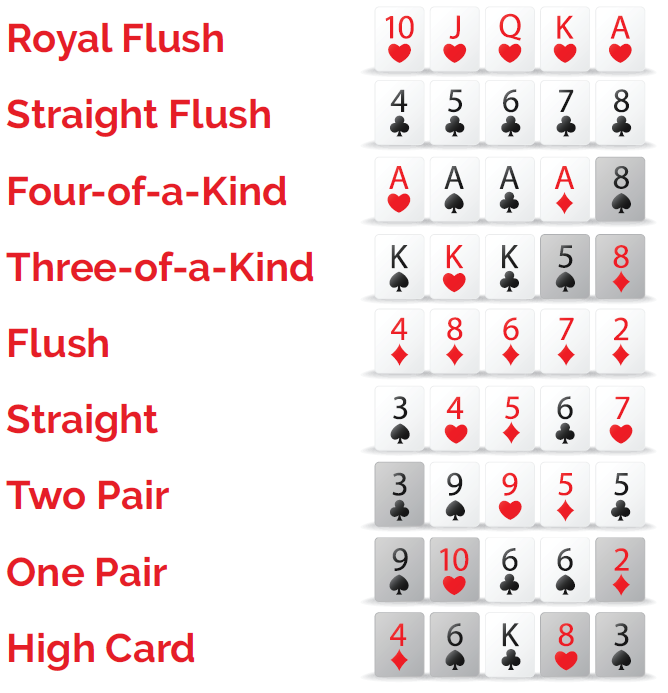
Understanding the hierarchy of poker hands is fundamental to playing Texas Hold ‘Em. The goal is to form the best possible five-card hand. Here are the hand rankings from highest to lowest:
- Royal Flush: A, K, Q, J, 10 of the same suit. This is the rarest and highest-ranking hand.
- Straight Flush: Five cards in sequence, all of the same suit (e.g., 9, 8, 7, 6, 5 of hearts).
- Four of a Kind: Four cards of the same rank (e.g., four Kings).
- Full House: Three cards of one rank and two cards of another rank (e.g., three Queens and two 7s).
- Flush: Five cards of the same suit, not in sequence (e.g., K, J, 8, 4, 2 of spades).
- Straight: Five cards in sequence, but not all of the same suit (e.g., 7, 6, 5, 4, 3 of mixed suits). Aces can be high (A-K-Q-J-10) or low (A-2-3-4-5).
- Three of a Kind: Three cards of the same rank and two unrelated cards (e.g., three 9s and two unrelated cards).
- Two Pair: Two cards of one rank and two cards of another rank, plus one unrelated card (e.g., two Aces, two 6s, and one unrelated card).
- One Pair: Two cards of the same rank, plus three unrelated cards (e.g., two Jacks and three unrelated cards).
- High Card: If no player has any of the above hands, the player with the highest-ranking card wins (Ace is the highest, followed by King, Queen, Jack, etc.).
Showdown
The showdown occurs after the final betting round on the river, if two or more players remain in the hand. Players reveal their hole cards, and the player with the best five-card hand, using any combination of their two hole cards and the five community cards, wins the pot. If two players have the same hand rank, the highest kicker (the next highest card) determines the winner. If kickers are also tied, the pot is split.
Strategy and Etiquette
Beyond the rules, mastering Texas Hold ‘Em involves strategic thinking and adhering to good etiquette.
Strategic Considerations
- Starting Hands: Not all starting hands are created equal. Some hands, like pocket Aces or pocket Kings, are strong from the outset and warrant more aggressive play. Others, like 7-2 offsuit, are generally weak and should be played cautiously or folded.
- Position: Your position at the table relative to the dealer button is critical. Players acting later in a betting round have more information about their opponents’ actions and can make more informed decisions.
- Reading Opponents: Observing your opponents’ betting patterns, physical tells (if playing live), and playing style can provide valuable insights into the strength of their hands.
- Pot Odds and Equity: Understanding pot odds (the ratio of the current pot size to the cost of a contemplated call) and your hand’s equity (your estimated probability of winning the pot) is essential for making profitable decisions.
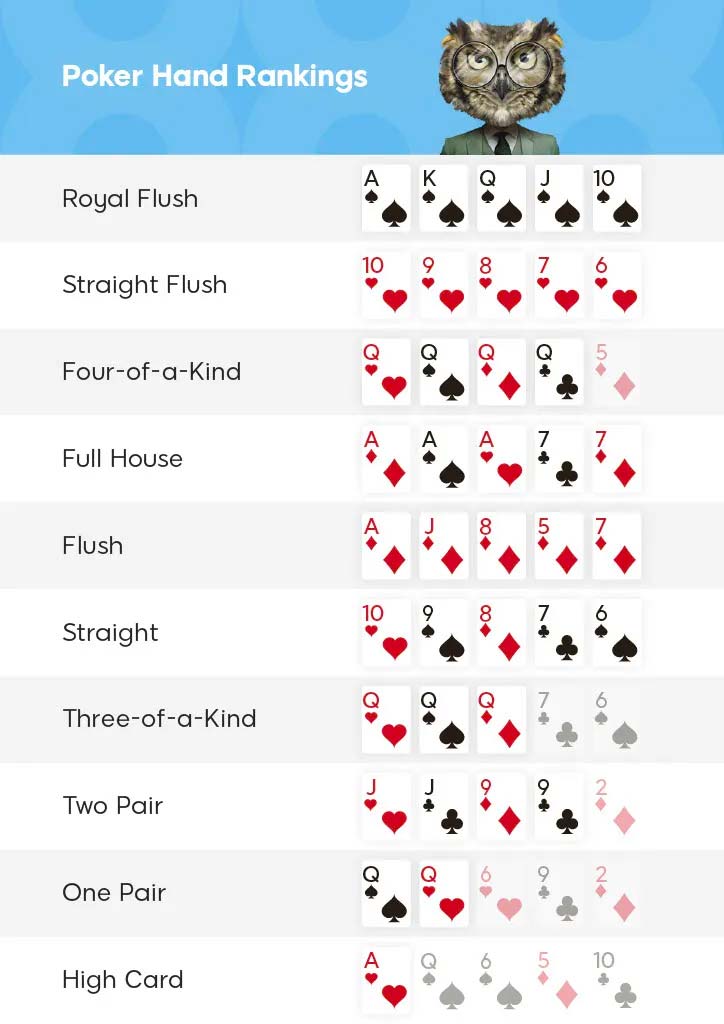
Table Etiquette
Good etiquette ensures a pleasant experience for all players, whether in a casual game at the Bellagio or a more formal setting.
- Act in Turn: Always wait for your turn to act. Acting out of turn can disrupt the game and may lead to penalties in serious games.
- Announce Your Actions Clearly: Whether you are checking, betting, raising, or folding, announce your intentions clearly.
- Keep Your Cards Visible (but Private): While your hole cards are private, they should remain on the table and clearly visible to you. Don’t hide them or cover them excessively.
- Be Respectful: Maintain a courteous attitude towards other players and the dealer. Avoid excessive complaining or disruptive behavior.
- Don’t Discuss Hands: During a hand, do not discuss your cards or strategy with other players, especially those still in the hand.
By understanding these rules, betting structures, hand rankings, and strategic considerations, you are well on your way to enjoying the dynamic and rewarding game of Texas Hold ‘Em. Whether you’re playing for fun with friends or aiming for the bright lights of a major tournament, the thrill of the game awaits.
LifeOutOfTheBox is a participant in the Amazon Services LLC Associates Program, an affiliate advertising program designed to provide a means for sites to earn advertising fees by advertising and linking to Amazon.com. Amazon, the Amazon logo, AmazonSupply, and the AmazonSupply logo are trademarks of Amazon.com, Inc. or its affiliates. As an Amazon Associate we earn affiliate commissions from qualifying purchases.