
The vast distances that separate the diverse landscapes of California and Colorado present an intriguing question for any traveler considering a cross-country adventure. These two iconic Western states, while sharing a geographical proximity within the United States, are separated by hundreds of miles of varied terrain, including plains, mountains, and deserts. Understanding this distance is crucial for planning any trip, whether by air, road, or even rail, as it directly impacts travel time, costs, and the overall experience.
Navigating the Miles: Driving Distances and Routes
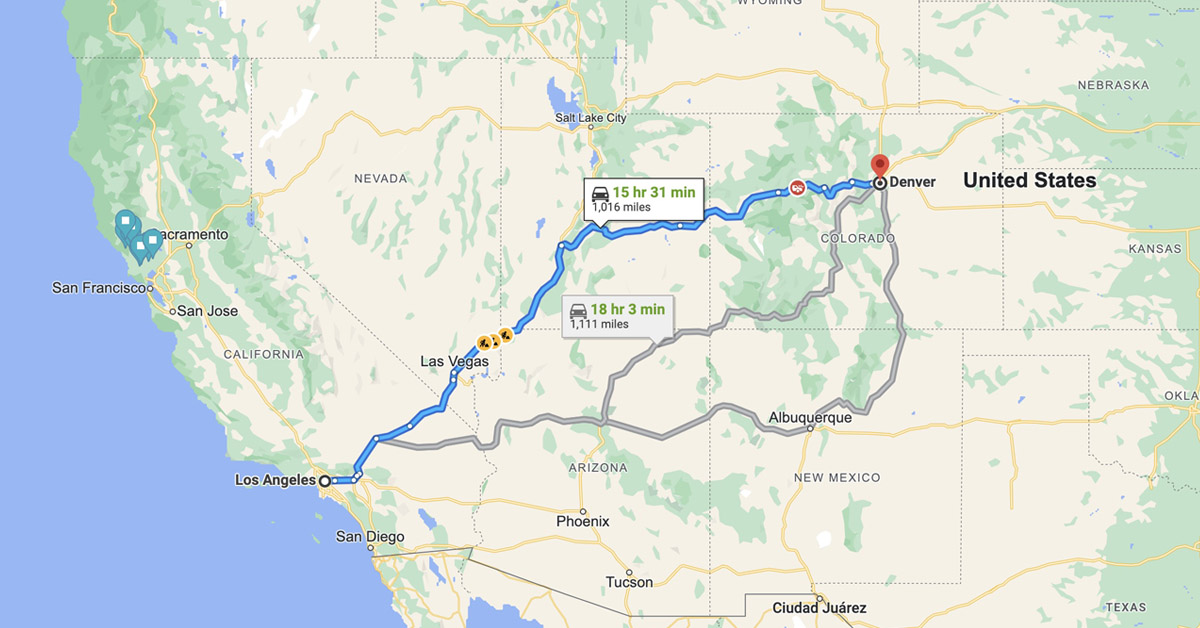
The most common way to traverse the expanse between California and Colorado is by car. The exact mileage and estimated driving time will vary significantly depending on your starting and ending points within each state. For instance, driving from Los Angeles, California to Denver, Colorado is a substantial undertaking.
Major Driving Routes and Considerations
The primary interstate highways that connect these two states offer the most direct and efficient routes for motorists.
-
Southern Route (via I-40 and I-70): This route typically involves heading east from Southern California on Interstate 40 (I-40), passing through states like Arizona and New Mexico. Once in New Mexico, drivers will connect with Interstate 70 (I-70) or other connecting highways to reach their destination in Colorado. This route offers a glimpse of the desert Southwest and the transition into the Rocky Mountains. The distance for this route is generally around 1,100 to 1,200 miles, with an estimated driving time of 18 to 20 hours without significant stops.
-
Central/Northern Route (via I-80 and I-76): For those starting in Northern California or preferring a more northerly path, a route utilizing Interstate 80 (I-80) eastward through states like Nevada and Wyoming is an option. From Wyoming, drivers would typically take Interstate 76 (I-76) south into Colorado. This route is often longer, potentially around 1,300 to 1,400 miles, and may take 22 to 24 hours of pure driving time. It traverses the Great Basin and the High Plains before reaching the Rockies.
Factors Influencing Driving Time:
- Starting and Ending Points: The exact cities within California and Colorado play a significant role. A drive from San Diego to Colorado Springs will differ from a drive from Sacramento to Fort Collins.
- Traffic Conditions: Major metropolitan areas like Los Angeles, Las Vegas, and Denver can experience significant traffic, especially during peak hours or holidays, adding to travel time.
- Road Construction and Detours: Seasonal road work, particularly in mountainous regions during warmer months, can cause delays.
- Weather: Winter conditions in Colorado, especially along I-70, can lead to temporary road closures or require the use of tire chains, substantially increasing travel time. Summer thunderstorms can also cause localized delays.
- Stops and Overnight Stays: A direct drive is rarely practical or enjoyable. Most travelers will break up the journey with overnight stays, adding a minimum of one or two days to the total travel time. Popular stopping points along the southern route include cities like Flagstaff, Albuquerque, and Santa Fe.
Air Travel: The Fastest Path Across the Divide
For those prioritizing speed and efficiency, air travel offers a dramatically shorter transit time between California and Colorado. Direct flights are readily available between major metropolitan airports in both states.
Major Airports and Flight Durations
-
From Southern California: Major airports like Los Angeles International Airport (LAX), San Diego International Airport (SAN), and John Wayne Airport (SNA) in Orange County offer frequent flights to Denver International Airport (DEN). The flight duration for these routes typically ranges from 2 hours to 2 hours and 30 minutes.
-
From Northern California: Airports such as San Francisco International Airport (SFO), Oakland International Airport (OAK), and Mineta San Jose International Airport (SJC) also provide direct service to Denver. Flight times from these locations are generally similar, around 2 hours and 30 minutes to 3 hours, due to the increased distance flown.
Beyond the Flight Time:
It’s important to remember that the total travel time for air journeys includes additional components:
- Travel to the Airport: Getting to your departure airport in California.
- Airport Procedures: Check-in, security screening, and boarding typically require arriving at the airport 2-3 hours before departure for domestic flights.
- Flight Time: The actual time spent in the air.
- Deplaning and Baggage Claim: Collecting luggage upon arrival at Denver International Airport.
- Travel from the Airport: Reaching your final destination in Colorado from DEN.
When factoring in these elements, a typical air travel day from California to Colorado can encompass 6 to 8 hours of a traveler’s day.
Scenic Rail Journeys: A Leisurely Approach
While less common for direct transit between California and Colorado due to the complexity and length of the journey, rail travel offers a unique and scenic perspective on the vast American West. Amtrak operates routes that can connect these two states, though it typically involves transfers and multiple days of travel.
Amtrak Routes and Experiential Travel
There isn’t a single, direct Amtrak train route that spans the entirety of California to Colorado. Travelers usually need to combine different services. A common approach might involve taking a train from a California city, such as Los Angeles, eastward towards Chicago, and then connecting to a train bound for Denver.
-
The California Zephyr: This iconic Amtrak route runs between Chicago and Emeryville (near San Francisco), passing through the heart of the Rocky Mountains in Colorado. While the Zephyr itself doesn’t originate in California and end in Colorado in one go, it is the primary Amtrak service that showcases the grandeur of the Rockies within Colorado.
-
Connecting Services: To reach the Zephyr from Southern California, one might take the Southwest Chief towards Chicago, a journey that itself takes approximately two days. Alternatively, a combination of trains could be used to reach a western hub like Denver from California with one or more transfers.
The Appeal of Rail:
Train travel is chosen for its relaxed pace, the opportunity to witness landscapes unfold without the stress of driving or airport security, and the comfort of spacious seating. Travelers can enjoy onboard amenities, dine in the dining car, and sleep in private accommodations. However, the travel time is considerable, often taking 2 to 3 days or more, making it a journey focused on the experience rather than simply reaching a destination quickly. The distance covered by train, with all its twists and turns and necessary connections, is significantly greater than the straight-line distance, easily exceeding 1,500 miles depending on the route.
Understanding the Geography: Distance and States in Between
The geographical distance between California and Colorado is not merely a number but a reflection of the diverse and expansive landscapes of the American West. The states that lie between them are integral to the journey, each contributing its unique character to the cross-country experience.

Intermediate States and Their Characteristics
-
Arizona: Often encountered on the southern driving routes, Arizona offers iconic desert scenery, including the majestic Grand Canyon National Park. Driving through Arizona means experiencing vast arid landscapes, towering saguaro cacti, and vibrant red rock formations.
-
New Mexico: Following Arizona on the southern path, New Mexico presents a rich tapestry of Native American and Hispanic cultures. Its landscapes range from high desert plateaus to picturesque mountain ranges. Cities like Albuquerque and Santa Fe offer significant cultural and historical attractions.
-
Nevada: If opting for a more northern route from California, Nevada is a prominent passage. Known for its expansive deserts and the dazzling lights of Las Vegas, Nevada represents a stark, beautiful, and sometimes otherworldly segment of the journey.
-
Utah: Depending on the specific route taken, Utah can be part of the journey, offering stunning red rock canyons and national parks like Zion National Park and Arches National Park. Its diverse geology makes it a visually rewarding state to traverse.
-
Wyoming: On a more northerly trajectory, Wyoming presents vast open plains, rugged mountain ranges, and iconic geological wonders like Yellowstone National Park and Grand Teton National Park.
The states between California and Colorado are not merely transit zones but destinations in themselves, offering a wealth of natural beauty, historical sites, and cultural experiences that can enrich any cross-country trip. The distance, therefore, is not just miles but a gateway to exploring the diverse tapestry of the American West.
LifeOutOfTheBox is a participant in the Amazon Services LLC Associates Program, an affiliate advertising program designed to provide a means for sites to earn advertising fees by advertising and linking to Amazon.com. Amazon, the Amazon logo, AmazonSupply, and the AmazonSupply logo are trademarks of Amazon.com, Inc. or its affiliates. As an Amazon Associate we earn affiliate commissions from qualifying purchases.