
Bridging the Distance: Understanding the Journey
Embarking on a journey across the United States often involves navigating significant distances, and the route between the vibrant metropolis of Chicago and the historic capital of Washington Dc is no exception. These two pivotal American cities, each a powerhouse of culture, history, and commerce, are separated by a considerable stretch of land, requiring travelers to consider various modes of transport to traverse the miles efficiently and comfortably. Understanding the precise distance and the implications of this geographical spread is the first step in planning an unforgettable trip.
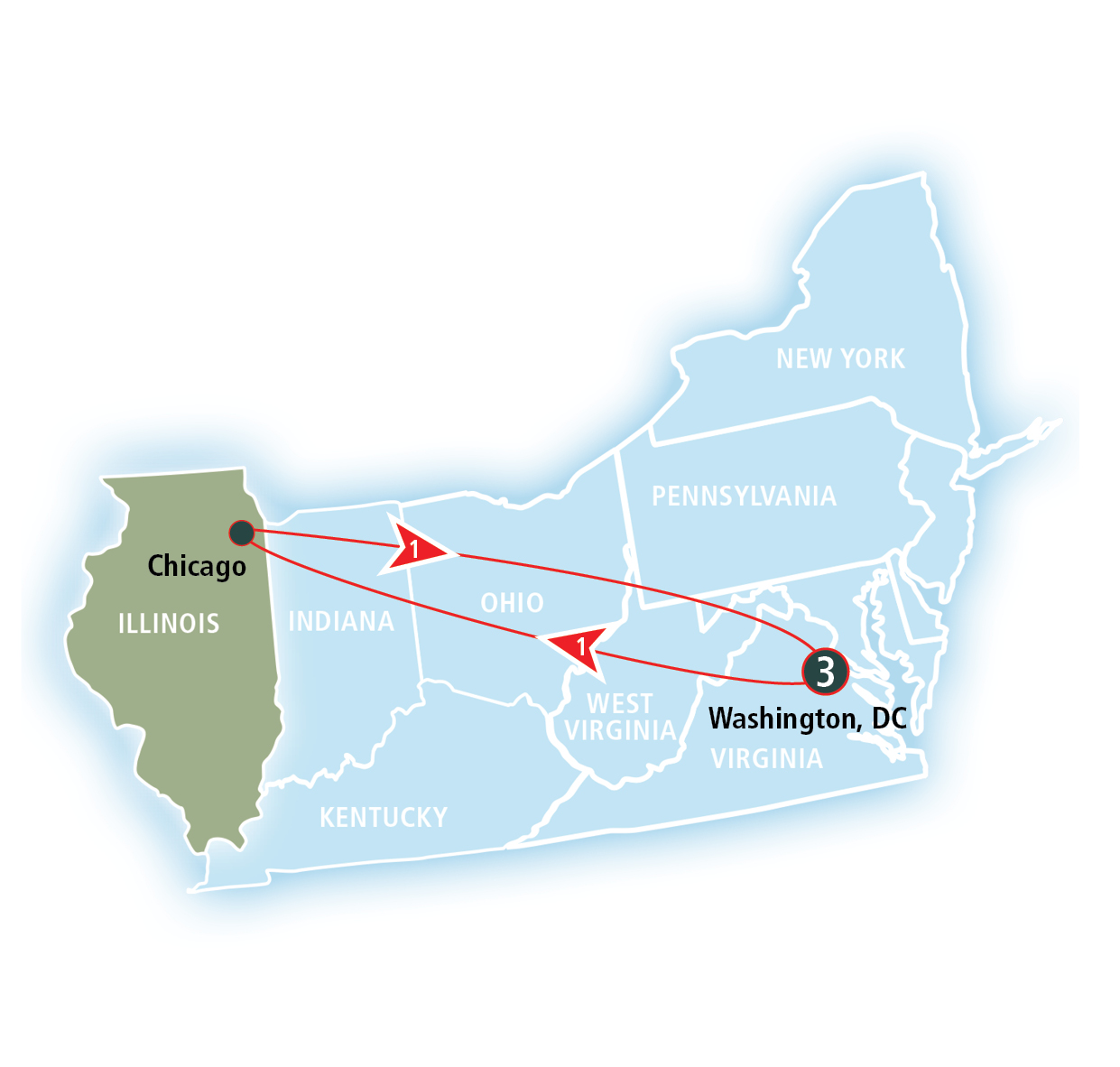
Geographically, the straight-line distance, often referred to as “as the crow flies,” between Chicago and Washington Dc is approximately 600 miles (about 965 kilometers). This direct measurement, while useful for pilots, doesn’t reflect the reality of ground travel. The actual road distance, which accounts for highways, terrain, and city layouts, typically ranges from 700 to 750 miles (1,126 to 1,207 kilometers), depending on the specific route taken. This substantial distance means that ground travel will entail a full day’s drive or a significant overnight journey by train or bus, while air travel compresses this expanse into just a few hours.
A Tale of Two Cities
Chicago, located in the heart of the Midwest on the shores of Lake Michigan, is renowned for its pioneering architecture, world-class museums, vibrant arts scene, and deep-dish pizza. It serves as a major hub for business, finance, and culture, attracting millions of visitors annually. Its distinct Midwestern charm is juxtaposed with its towering skyscrapers and bustling urban landscape.
Washington D.C., on the other hand, is the nation’s capital, nestled along the Potomac River on the East Coast. It is a city steeped in history, home to iconic monuments, world-renowned Smithsonian Museums, and the powerful institutions of the federal government. The city’s layout, envisioned by Pierre Charles L’Enfant, blends grand boulevards with intimate neighborhoods, all while serving as a global center for politics and diplomacy. Connecting these two significant urban centers offers travelers a unique opportunity to experience diverse facets of American life, from the industrial innovation of the Midwest to the historical gravitas of the capital.
Navigating the Miles: Travel Options and Considerations
The substantial distance between Chicago and Washington D.C. necessitates careful consideration of travel options, each offering distinct advantages and disadvantages in terms of time, cost, and experience.
Flying: The Swiftest Passage
For those prioritizing speed and efficiency, flying is undoubtedly the best option. Direct flights typically cover the aerial distance in approximately 1 hour and 30 minutes to 2 hours. However, the total travel time extends beyond mere flight duration. Travelers must factor in transit to and from airports, security checks, boarding processes, and potential delays.
Chicago is served by two major airports: O’Hare International Airport (ORD), one of the world’s busiest, and Midway International Airport (MDW), a more compact option popular with budget airlines. Washington D.C. is serviced by three primary airports: Ronald Reagan Washington National Airport (DCA), the closest to downtown D.C. with excellent public transport access; Dulles International Airport (IAD), a major international hub further out in Virginia; and Baltimore/Washington International Thurgood Marshall Airport (BWI), located in nearby Maryland, often offering competitive fares.
Pros of flying include significantly reduced travel time and convenience for business travelers or those with limited vacation days. Cons often involve the cumulative cost of airfare, baggage fees, and airport transfers, which can sometimes outweigh the initial time savings. To secure the best prices, it’s advisable to book flights well in advance, especially during peak travel seasons, and consider flying on weekdays or during shoulder seasons.
Driving: An American Road Trip
For travelers who prefer the open road and the flexibility of a personal vehicle, driving offers a different kind of adventure. The road trip from Chicago to Washington D.C. covers roughly 700 to 750 miles and typically takes between 10 to 12 hours of pure driving time, not accounting for stops for fuel, food, or rest. This makes it a journey best undertaken over one very long day or, more comfortably, with an overnight stop.
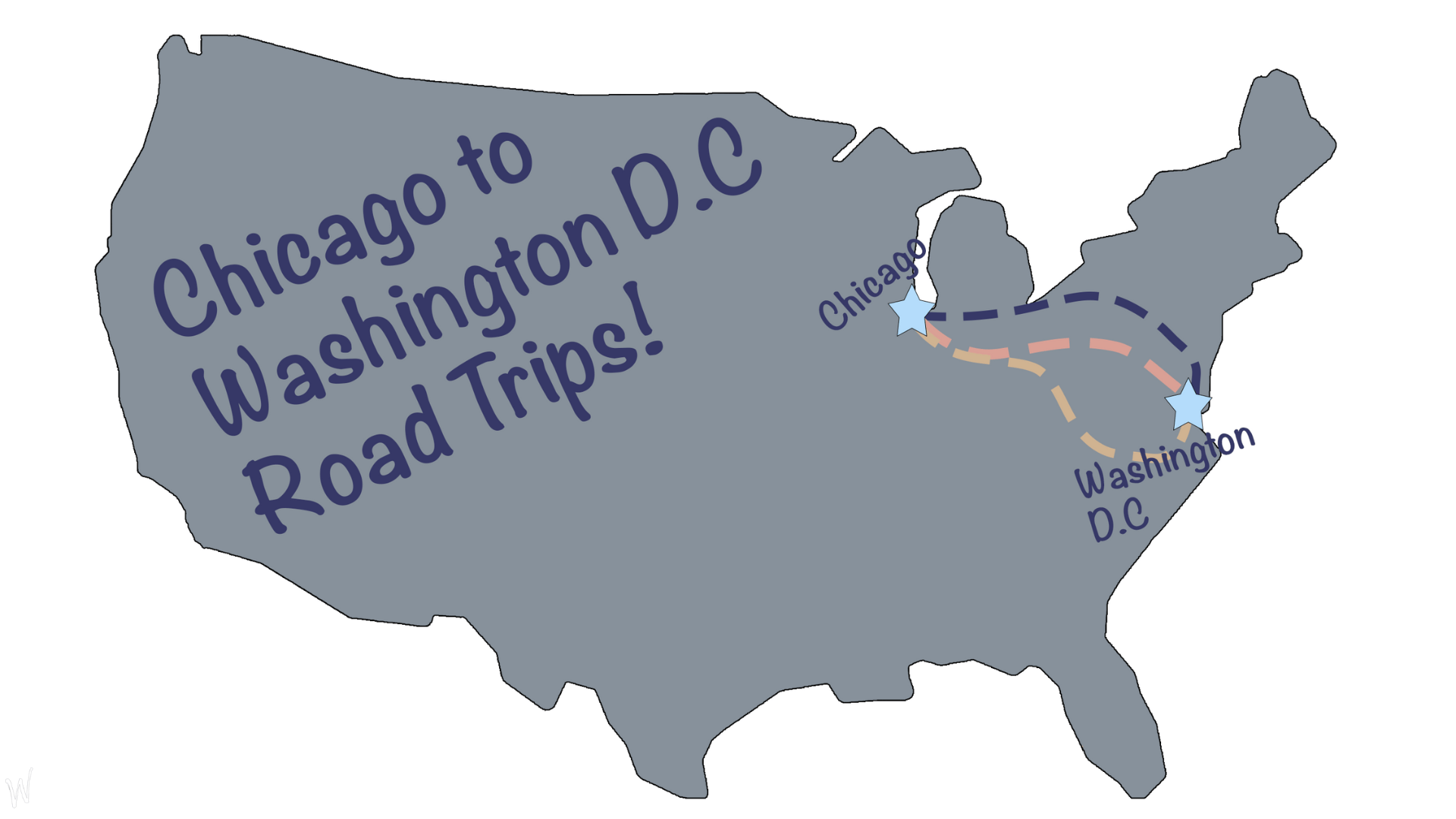
Popular routes generally involve heading southeast through Indiana and Ohio via Interstate 80 (I-80) or I-90, then connecting to Interstate 70 (I-70) through Pennsylvania and Maryland, eventually leading into Washington D.C. Alternative routes might utilize Interstate 76 (I-76), I-68, or I-270 to navigate closer to the capital.
The advantages of driving include unparalleled flexibility, the ability to carry more luggage, and the opportunity to make spontaneous detours. Travelers can explore charming towns like Columbus, Ohio, visit historical sites such as Gettysburg, Pennsylvania, or even enjoy the natural beauty of Cuyahoga Valley National Park. However, the downsides include fuel costs, potential tolls, wear and tear on a vehicle, and the inevitable fatigue associated with long hours behind the wheel. Traffic can also be a significant factor, especially when passing through major metropolitan areas like Pittsburgh or approaching D.C. itself.
Train Travel: A Scenic Alternative with Amtrak
Amtrak offers a relaxing and often scenic alternative for traversing the distance. The primary service connecting Chicago to Washington D.C. is the Capitol Limited line. This route provides an overnight journey, typically departing in the late afternoon or early evening and arriving the following morning. The total travel time by train is approximately 17 to 18 hours.
Train travel offers a unique set of benefits: passengers can relax in comfortable seats, walk around, enjoy dining car services, and take in the changing landscapes without the stress of driving or airport security. It’s an excellent option for those who enjoy a slower pace of travel and the romance of the rails. Amtrak offers various classes of service, from coach seating to private rooms (roomette or bedroom) which include meals and sleeping accommodations, though these come at a higher cost. The main disadvantage is the extended travel time compared to flying and potentially higher costs than budget flights or shared bus services.
Bus Services: Budget-Friendly Overland
For the most economical ground travel option, bus services like Greyhound and Megabus provide routes between Chicago and Washington D.C.. These journeys are often the longest, ranging from 14 to 18 hours, depending on the number of stops and transfers.
Bus travel is significantly more budget-friendly, making it an attractive option for students or travelers on a tight budget. Most modern buses offer amenities such as Wi-Fi and power outlets, enhancing comfort during the long ride. However, the extended travel duration, multiple stops, and less personal space compared to train or air travel are important considerations. It’s a pragmatic choice for those who value cost savings above all else.
Planning Your Journey: Beyond the Miles
The choice of how to travel from Chicago to Washington D.C. hinges on a balance of time, budget, and desired experience. Careful planning can significantly enhance the journey.
Optimal Timing and Seasonality
The time of year greatly influences travel. Summer months (June-August) are popular for tourism in both cities, leading to higher prices for flights and accommodations, and potentially more traffic for drivers. Spring (April-May) and Fall (September-October) offer pleasant weather, fewer crowds, and often better deals on travel. Winter travel (November-March) can be challenging, especially for drivers, due to the risk of snow and ice along the route, particularly in the northern states. Flights can also face weather-related delays during these months.
Cost Considerations
A comprehensive cost analysis should go beyond just the ticket price. For flights, consider baggage fees, airport parking, and ground transportation to your final destination. For driving, factor in fuel costs, potential tolls, and the cost of an overnight stay if you choose to break up the drive. Train and bus fares are generally all-inclusive for the journey itself, though food and drinks may be extra. Booking in advance almost always yields better prices across all modes of transport. Utilizing flexible travel dates can also lead to significant savings.
In-City Transit Upon Arrival
Upon arrival, seamless travel within your chosen city is crucial. In Chicago, the CTA (Chicago Transit Authority) operates an extensive network of ‘L’ trains and buses, connecting the airports to downtown and major attractions. In Washington D.C., the WMATA Metro system is highly efficient, linking DCA Airport and Union Station to all major points of interest. Understanding these local transit options can save time and money upon arrival, ensuring a smooth transition from long-distance travel to urban exploration.
Enhancing Your Experience: What Awaits You
Beyond the logistical considerations of distance and transport, the true allure of traveling between Chicago and Washington D.C. lies in the rich experiences each city offers.
Exploring Chicago
Upon reaching Chicago, travelers are greeted by an urban landscape teeming with architectural marvels. A boat tour along the Chicago River provides unparalleled views of skyscrapers designed by legendary architects. Millennium Park hosts iconic sculptures like “The Bean” (Cloud Gate), while the Art Institute of Chicago houses a world-class collection of art. For entertainment, Navy Pier offers attractions and dining, and no visit is complete without indulging in the city’s famous deep-dish pizza.
Discovering Washington D.C.
Arriving in Washington D.C. immerses visitors in the heart of American democracy and history. The vast National Mall stretches from the Lincoln Memorial to the Capitol Building, flanked by the Washington Monument and numerous free Smithsonian Museums, including the National Air and Space Museum and the National Museum of Natural History. A stroll past the White House and visits to the many poignant memorials offer profound insights into the nation’s past. Beyond the monuments, vibrant neighborhoods like Georgetown and Adams Morgan offer diverse dining, shopping, and nightlife.

The Journey as Part of the Destination
Ultimately, the distance between Chicago and Washington D.C. is more than just miles; it represents an opportunity for discovery. Whether soaring above the clouds, tracing the nation’s highways, or gliding across the rails, the chosen mode of travel shapes the narrative of the journey. By understanding the options and planning thoughtfully, travelers can transform what might seem like a mere transit into an integral and memorable part of their American adventure, seamlessly connecting two of the country’s most iconic destinations.
LifeOutOfTheBox is a participant in the Amazon Services LLC Associates Program, an affiliate advertising program designed to provide a means for sites to earn advertising fees by advertising and linking to Amazon.com. Amazon, the Amazon logo, AmazonSupply, and the AmazonSupply logo are trademarks of Amazon.com, Inc. or its affiliates. As an Amazon Associate we earn affiliate commissions from qualifying purchases.