
The journey between Oakland and Los Angeles is a quintessential California experience, connecting two of the state’s most vibrant and dynamic urban centers. Whether you’re planning a business trip, a leisurely vacation, or a family visit, understanding the distance and various travel options is crucial for a smooth and enjoyable journey. Oakland, nestled on the eastern shore of San Francisco Bay Area, serves as a major port city and a hub of culture and innovation, while Los Angeles, the sprawling metropolis to the south, is synonymous with entertainment, diverse communities, and iconic landmarks. The distance separating these two cities varies depending on the chosen route and mode of transportation, each offering distinct advantages and considerations. This comprehensive guide will explore the precise distances, estimated travel times, and practical advice for traversing the distance between Oakland and Los Angeles, ensuring you can make an informed decision for your next California adventure.

The Straightforward Distance: Understanding the Miles
Calculating the distance between Oakland and Los Angeles isn’t as simple as a single number, as it depends heavily on whether you’re measuring a straight line or actual navigable routes. However, for most travelers, the practical driving distance is the most relevant metric.
As the Crow Flies: Aerial Distance
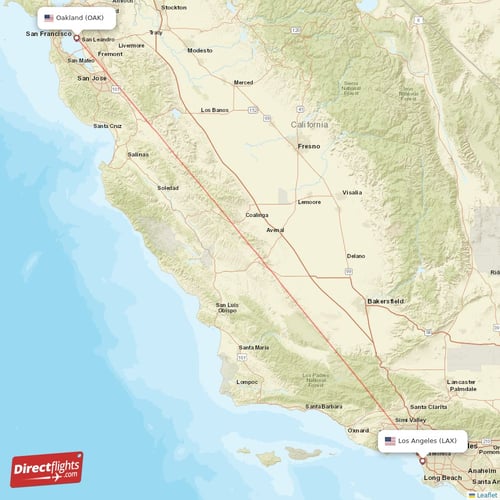
In a direct line, often referred to as “as the crow flies,” the aerial distance between Oakland and Los Angeles is approximately 340 to 350 miles (about 547 to 563 kilometers). This measurement is useful for understanding the most direct path an aircraft might take, but it doesn’t account for geographical barriers, roads, or flight paths, making it less practical for ground-based travel planning.
On the Road: Driving Distance and Key Routes
For those traveling by car, the driving distance is the most critical factor. There are two primary routes connecting Oakland and Los Angeles, each offering a different experience in terms of scenery and speed.
The most common and generally fastest route is via Interstate 5 (I-5). This route typically covers about 360 to 380 miles (approximately 579 to 612 kilometers), depending on the specific starting and ending points within each metropolitan area. The journey on I-5 is largely through the Central Valley, characterized by vast agricultural landscapes. While direct and efficient, it’s generally considered less scenic.
Alternatively, travelers can opt for U.S. Route 101 (US-101), which hugs the California coastline for significant portions. This route is longer, typically ranging from 400 to 420 miles (about 644 to 676 kilometers), but offers breathtaking views of the Pacific Ocean and charming coastal towns. The additional mileage and potential for slower speeds due to more turns and small-town traffic mean a longer travel time, but many find the scenic beauty worth the extra effort.
Regardless of the chosen route, the driving time without significant traffic usually ranges from 5.5 to 7 hours, a figure that can easily extend with congestion, rest stops, or detours.
Navigating the Journey: Modes of Transportation
Traveling between Oakland and Los Angeles offers a variety of transportation modes, each with its own set of advantages regarding speed, cost, and convenience.
Driving: The Most Flexible Option
Driving provides unparalleled flexibility, allowing travelers to depart and arrive on their own schedule, make stops at will, and transport luggage easily. The typical driving time, as mentioned, is 5.5 to 7 hours under ideal conditions.
- Pros: Flexibility, door-to-door convenience, ability to carry more luggage, option to explore scenic routes (US-101).
- Cons: Susceptible to traffic delays (especially in and around both cities), fuel costs, potential for driver fatigue, need for parking upon arrival.
- Routes: I-5 is the fastest, while US-101 is more scenic. Both routes are well-maintained, but I-5 has fewer services and towns along the way.
Flying: The Quickest Way
For those prioritizing speed, flying is undoubtedly the fastest option. Direct flights significantly cut down travel time compared to ground transportation.
- Airports: Travelers from Oakland would typically fly out of Oakland International Airport (OAK), landing at Los Angeles International Airport (LAX) or one of Los Angeles’s other regional airports like Hollywood Burbank Airport (BUR) or Long Beach Airport (LGB).
- Flight Duration: The actual flight time is typically around 1 hour and 15 minutes to 1 hour and 30 minutes.
- Total Travel Time: However, factoring in travel to and from airports, security checks, boarding, and baggage claim, the total door-to-door travel time often averages 4 to 6 hours, comparable to driving without heavy traffic.
- Pros: Fastest transit time, avoids traffic, comfortable for many.
- Cons: Can be expensive, requires airport transfers, strict baggage rules, environmental impact.
Rail Travel: A Scenic Alternative
Train travel offers a unique blend of comfort and scenic views, allowing passengers to relax and enjoy the journey without the stress of driving or airport procedures. Amtrak provides services between the two regions.
- Services: The primary Amtrak routes connecting Oakland (specifically from the Jack London Square station) to Los Angeles (Union Station) are the Coast Starlight and the San Joaquin (with a bus connection to Los Angeles).
- Journey Duration: Train journeys are considerably longer than driving or flying, typically taking 8 to 12 hours, depending on the service and connections. The Coast Starlight offers a scenic coastal route, while the San Joaquin goes through the Central Valley.
- Pros: Relaxing, spacious seating, no driving stress, scenic views (especially on the Coast Starlight), often city-center to city-center convenience.
- Cons: Longest travel time, less frequent departures compared to flights or driving.
Bus Services: Budget-Friendly Travel
Bus travel is often the most economical choice, suitable for budget-conscious travelers who don’t mind a longer journey.
- Providers: Companies like Greyhound and FlixBus offer regular services between Oakland and Los Angeles.
- Travel Time: Bus journeys typically range from 6 to 9 hours, influenced by traffic, number of stops, and specific routes.
- Pros: Most affordable, convenient for those without a car, often drops off at central locations.
- Cons: Longest travel time among motorized options, less personal space, potential for delays.
Factors Influencing Travel Time and Experience
While the raw distance provides a baseline, several real-world factors can significantly alter the actual time it takes to travel between Oakland and Los Angeles.
Traffic Congestion: California’s Reality
California is renowned for its traffic, particularly in its major metropolitan areas. Both the San Francisco Bay Area (where Oakland is located) and Los Angeles experience heavy congestion during peak hours.
- Impact on Driving: A 5.5-hour drive can easily become 8-9 hours if you hit rush hour traffic when entering or exiting either city. The I-5 corridor, while generally fast, can also see slowdowns around major junctions or population centers.
- Impact on Buses: Bus services are equally susceptible to traffic delays, as they use the same roadways.
- Impact on Flying: While flights are immune to ground traffic, congestion around airports can delay ground transportation to and from the terminal, adding to overall travel time.
Time of Day and Week
The specific time you choose to travel can dramatically impact your journey duration.
- Peak Hours: Weekday mornings (6 AM – 9 AM) and evenings (3 PM – 7 PM) are the busiest for road travel. Traveling during these times should be avoided if possible.
- Weekends: While weekend traffic can be unpredictable, it’s often lighter than weekday rush hour, especially on Saturday mornings or Sunday evenings when people are returning from weekend trips.
- Mid-day/Late Night: Traveling in the middle of the day or late at night typically offers the fastest ground travel times.
Weather Conditions
While California is famous for its sunny weather, certain conditions can impact travel.
- Fog: The Central Valley (along I-5) can experience dense fog, especially in winter, reducing visibility and slowing down traffic.
- Rain: Heavy rains, while infrequent, can make roads slick and contribute to accidents and delays.
- High Winds: Especially along coastal routes or through mountain passes, high winds can affect larger vehicles.
- Impact on Air Travel: Severe weather, though less common, can cause flight delays or cancellations, extending travel time significantly.
Unexpected Delays
Beyond predictable factors, unforeseen circumstances can always cause delays.
- Road Construction: Ongoing roadwork is common on major highways, potentially leading to lane closures and slower speeds.
- Accidents: Traffic accidents can cause significant backups, especially on routes like I-5 where alternate routes are limited.
- Mechanical Issues: While rare, mechanical problems with trains or buses can lead to unexpected stops.
Choosing Your Route: Practical Considerations
Selecting the best way to travel between Oakland and Los Angeles involves weighing personal preferences, budget, and the purpose of your trip.
Cost vs. Time
This is often the primary trade-off for travelers.
- Driving: While initially appearing cheaper, factor in fuel costs (significant for a 360-420 mile journey), potential tolls, and vehicle wear and tear. If multiple people are traveling, it can be very cost-effective per person.
- Flying: Generally the most expensive, especially for last-minute bookings. However, early booking and budget airlines can offer competitive fares. The value is in saving time.
- Train/Bus: These are typically the most budget-friendly individual options, often offering more comfort than a car for solo travelers without the high cost of flying. The trade-off is significantly longer travel times.
Comfort and Convenience
Your preference for comfort and convenience will also guide your choice.
- Driving: Offers personal space and control over stops, but can be tiring for the driver.
- Flying: Fast but can be stressful due to airport procedures, small seats, and potential for delays.
- Train: Offers ample space, ability to walk around, access to dining cars, and scenic views, making it a very comfortable option for long distances.
- Bus: Can be less comfortable than a train, with more limited space, but modern buses often include amenities like Wi-Fi and power outlets.
Travel Purpose
The reason for your trip might dictate the best mode of transport.
- Business Travel: Time is often of the essence, making flying the preferred choice for many professionals.
- Family Vacation: Driving allows for flexibility with kids, frequent stops, and hauling more luggage, although long drives can be challenging for children. Trains can also be a good option for families seeking a more relaxed journey.
- Solo Adventure: Budget travelers might opt for buses or trains, while those seeking speed and convenience might fly. Drivers can enjoy the freedom of the open road.
- Environmental Impact: For environmentally conscious travelers, trains and buses generally have a lower carbon footprint per passenger mile compared to flying or driving alone.
Environmental Impact
While perhaps not the primary decision factor for everyone, considering the environmental impact of your travel choice is increasingly relevant. Train travel and buses generally offer a lower carbon footprint per passenger than individual car travel or flying, contributing to more sustainable tourism practices.
In conclusion, the distance between Oakland and Los Angeles is a significant journey, whether measured at 350 miles by air or 360-420 miles by road. While a direct flight takes a mere hour and a half, the total travel time can range from 4-6 hours by air to 5.5-9 hours by car or bus, and up to 12 hours by train. Each mode of transport offers a distinct experience with its own set of costs, comforts, and time commitments. By carefully considering these factors and planning your journey thoughtfully, you can ensure a smooth, efficient, and enjoyable trip between these two iconic California cities.
LifeOutOfTheBox is a participant in the Amazon Services LLC Associates Program, an affiliate advertising program designed to provide a means for sites to earn advertising fees by advertising and linking to Amazon.com. Amazon, the Amazon logo, AmazonSupply, and the AmazonSupply logo are trademarks of Amazon.com, Inc. or its affiliates. As an Amazon Associate we earn affiliate commissions from qualifying purchases.