
The cityscape of Chicago, a titan of architectural innovation and urban vibrancy, is dotted with numerous iconic structures and public art installations that draw millions of visitors annually. Among these, perhaps none captures the imagination quite like the monumental, reflective sculpture affectionately known worldwide as “The Bean.” Officially titled Cloud Gate, this spectacular piece of public art sits proudly in Millennium Park, acting as a glittering, distorted mirror to the city’s impressive Chicago skyline and its countless admirers. Its smooth, seamless surface invites interaction, reflection, and wonder, making it an indispensable part of the modern Chicago experience. But beyond its undeniable charm and photogenic qualities, a fundamental question often arises for those encountering it for the first time: Who is the visionary mind behind this extraordinary landmark?
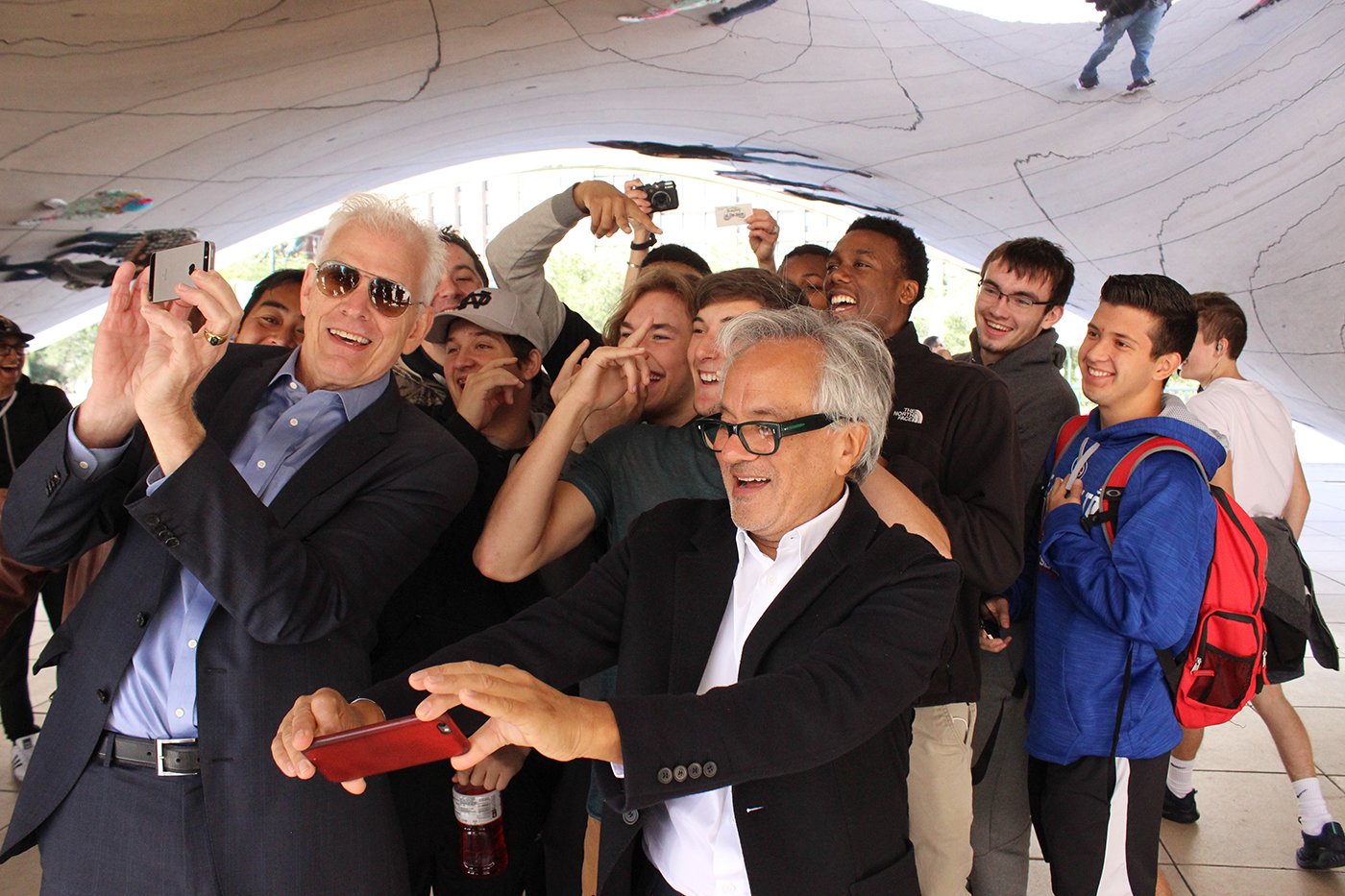
The creation of Cloud Gate is a tale of ambitious artistic vision meeting groundbreaking engineering, spearheaded by one of the world’s most distinguished contemporary artists. This article delves into the identity of its creator, exploring their artistic philosophy, the intricate journey from concept to colossal reality, and the enduring legacy of a sculpture that has firmly cemented its place as a global icon.
The Visionary Behind the Reflective Masterpiece
The mastermind behind Cloud Gate is the acclaimed British artist Anish Kapoor. Born in Mumbai, India in 1954, Kapoor moved to London in the early 1970s, where he studied art and eventually established himself as a leading figure in contemporary sculpture. His work is globally recognized for its exploration of perception, space, and the void, often utilizing monochromatic colors, monumental scale, and highly reflective surfaces to challenge viewers’ understanding of their surroundings.
Anish Kapoor’s Artistic Philosophy
Kapoor’s artistic journey has consistently pushed the boundaries of material and form, delving into themes that evoke wonder, introspection, and sometimes, disquiet. His work frequently features deep, immersive colors, often achieved with pigments, and highly polished surfaces that reflect and distort, blurring the lines between object and environment. This fascination with reflection and perception is a cornerstone of his practice, rooted in philosophical inquiries about illusion, reality, and the viewer’s active participation in experiencing art.
For Kapoor, the act of seeing is never passive. His sculptures are designed to be experienced from multiple angles, their forms shifting and changing as one moves around them. This engagement with the viewer is central to Cloud Gate. It’s not merely an object to be observed; it’s an environment to be entered, an experience to be absorbed. The mirror-like surface of Cloud Gate serves as a canvas for the surrounding city, the sky, and the spectators themselves, making them an integral part of the artwork. This interactive quality, combined with its monumental scale, allows Kapoor to transform a static object into a dynamic, ever-changing spectacle.
The Genesis of Cloud Gate
The journey of Cloud Gate began with a competition held by the Millennium Park Public Art Committee in 1999, seeking a signature sculpture that would define the park’s central plaza. Anish Kapoor’s proposal, inspired by the fluidity of liquid mercury, envisioned a massive, seamless, reflective object that would capture and distort the Chicago skyline and the surrounding landscape. The concept was audacious: a sculpture whose surface would invite touch, entry, and a playful engagement with one’s own reflection and the urban environment.
His design stood out for its innovative approach to public art, promising not just a static monument but an interactive experience. The committee was captivated by the idea of a sculpture that would be both imposing and approachable, a landmark that would reflect the vibrancy and dynamic spirit of Chicago itself. The initial sketches and models conveyed the profound impact such a piece could have, turning the passive act of viewing into an active exploration of perception and space.
Engineering an Icon: From Concept to Reality
Bringing Anish Kapoor’s ambitious vision to life was a colossal undertaking, demanding unprecedented levels of engineering ingenuity and meticulous craftsmanship. The sculpture, weighing 110 tons, required a fabrication process that pushed the boundaries of what was thought possible in monumental stainless steel construction.
Overcoming Technical Hurdles
The primary technical challenge lay in creating a truly seamless surface. Kapoor insisted that no seams or visible joins should disrupt the sculpture’s reflective quality, a demand that presented a significant hurdle for the fabricators. The chosen method involved constructing the sculpture from 168 individual stainless steel plates, each precisely cut and shaped using computer-controlled methods. These plates were then meticulously welded together. The sheer size and complex curvature of the sculpture meant that even slight imperfections in the welding process would be magnified on the highly polished surface.
The fabrication process took place over several years, initially by a company in Oakland, California, known as Performance Structures, Inc. When that company faced financial difficulties, the project was transferred to A. Zahner Company in Kansas City, Missouri, which completed the work. The logistical nightmare of transporting these massive components from California (and later, Missouri) to Chicago also added to the complexity. Each piece had to be precisely positioned and welded on-site within Millennium Park, a busy public space that would eventually host millions.
The Seamless Surface: A Feat of Polishing
Once the stainless steel plates were welded, the true artistry of the fabrication came into play: the polishing. This was the most critical and time-consuming phase, aimed at achieving Kapoor’s vision of a flawless, mercury-like surface. Teams of highly skilled polishers worked for months, grinding down the weld seams by hand, meticulously smoothing and buffing the entire exterior until every trace of a join vanished. This painstaking process transformed the segmented plates into a single, continuous, highly reflective form.
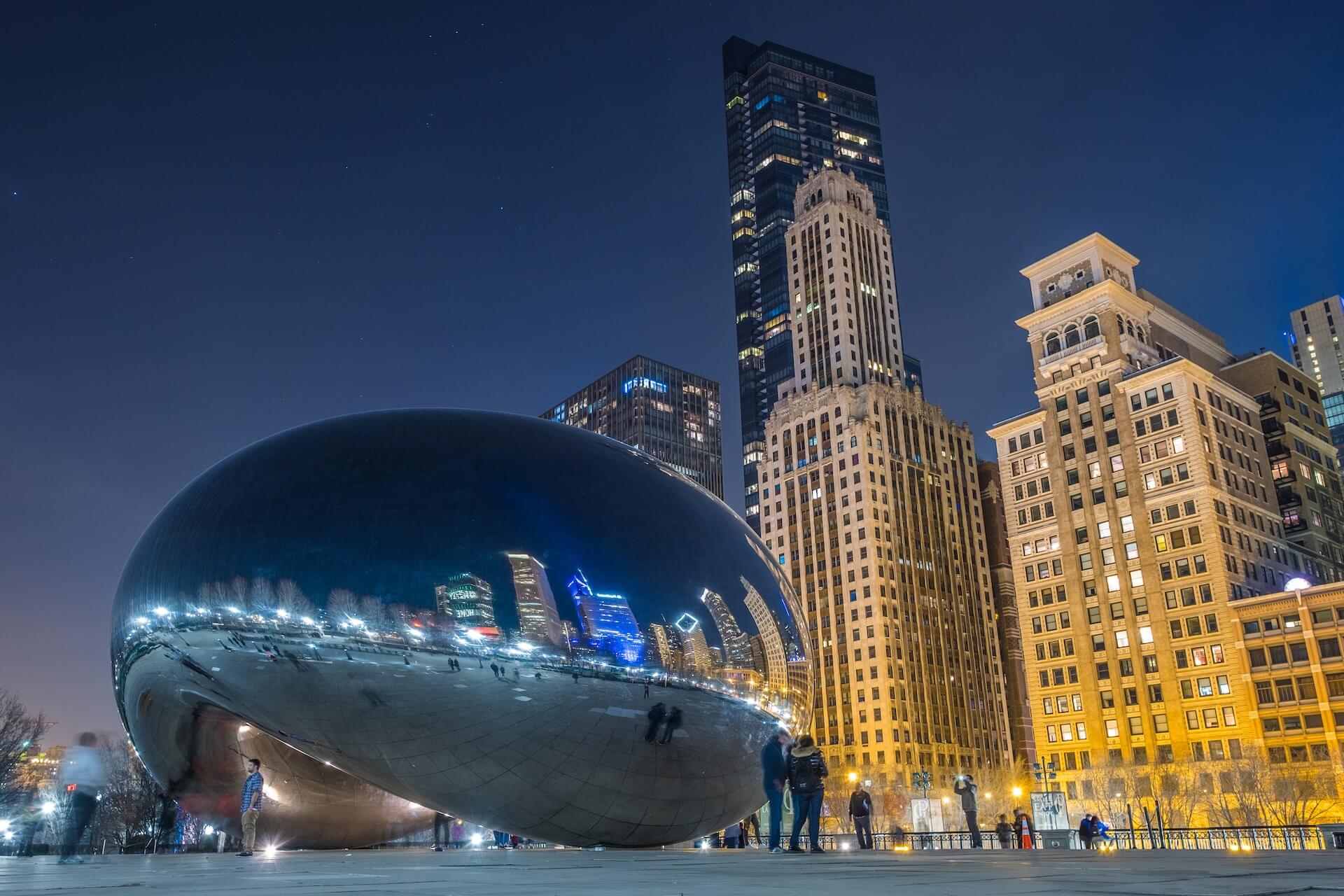
The result is a surface so perfectly polished that it appears as liquid metal, an impossible feat given its solid state. This seamless finish is what gives Cloud Gate its magical quality, allowing it to seamlessly mirror the ever-changing light, weather, and activity of its urban environment without any visual interruption from its construction. The underbelly, or “omphalos,” further amplifies this effect, drawing visitors into a dizzying vortex of reflections that distorts their images into slender, elongated forms.
Cloud Gate’s Place in Millennium Park
Cloud Gate is not just a standalone sculpture; it is an integral part of the dynamic landscape of Millennium Park, serving as a central focal point that harmonizes with its surroundings while simultaneously creating a distinct visual identity.
Integrating Art and Public Space
Millennium Park was conceived as a monumental public space, a celebration of art, architecture, and landscape design. Cloud Gate plays a crucial role in this ecosystem. Its placement in the AT&T Plaza allows it to reflect the grandeur of the surrounding skyscrapers, the greenery of the park, and the ever-present sky, effectively bringing the city into the artwork itself. Visitors are drawn from nearby attractions like the Jay Pritzker Pavilion and Crown Fountain, often converging at “The Bean” as a natural gathering point.
The sculpture’s organic, yet monumental form provides a striking contrast to the rectilinear geometry of the surrounding buildings, creating a visual dialogue between natural fluidity and man-made structure. Its reflective quality blurs the boundaries between the sculpture and its environment, making the park itself feel larger, more expansive, and infinitely more interactive. It transforms the urban landscape into an ever-changing art piece, where the environment is perpetually being reshaped and reinterpreted on its surface.
A Symbol of Chicago’s Artistic Legacy
Since its unveiling, Cloud Gate has transcended its origins as a mere artwork to become a powerful symbol of Chicago’s commitment to public art and its forward-thinking cultural identity. It has become arguably the most recognizable image associated with the city, rivaling even its iconic architecture. For tourists, it is a mandatory stop, offering unique photo opportunities that capture the essence of Chicago’s vibrant spirit. For residents, it’s a source of civic pride, a testament to their city’s embrace of bold, contemporary design.
The success of Cloud Gate highlights Chicago’s long tradition of integrating world-class art into its public spaces, from Picasso’s untitled sculpture in Daley Plaza to the numerous murals and sculptures across its neighborhoods. “The Bean” exemplifies this legacy, demonstrating how public art can not only beautify a city but also define its character, fostering a sense of community and inviting global recognition.
The Enduring Allure and Interpretations
The universal appeal of Cloud Gate lies in its unique ability to engage everyone, from art critics to casual tourists, offering layers of meaning and delight that continue to captivate.
Interactive Art and Public Engagement
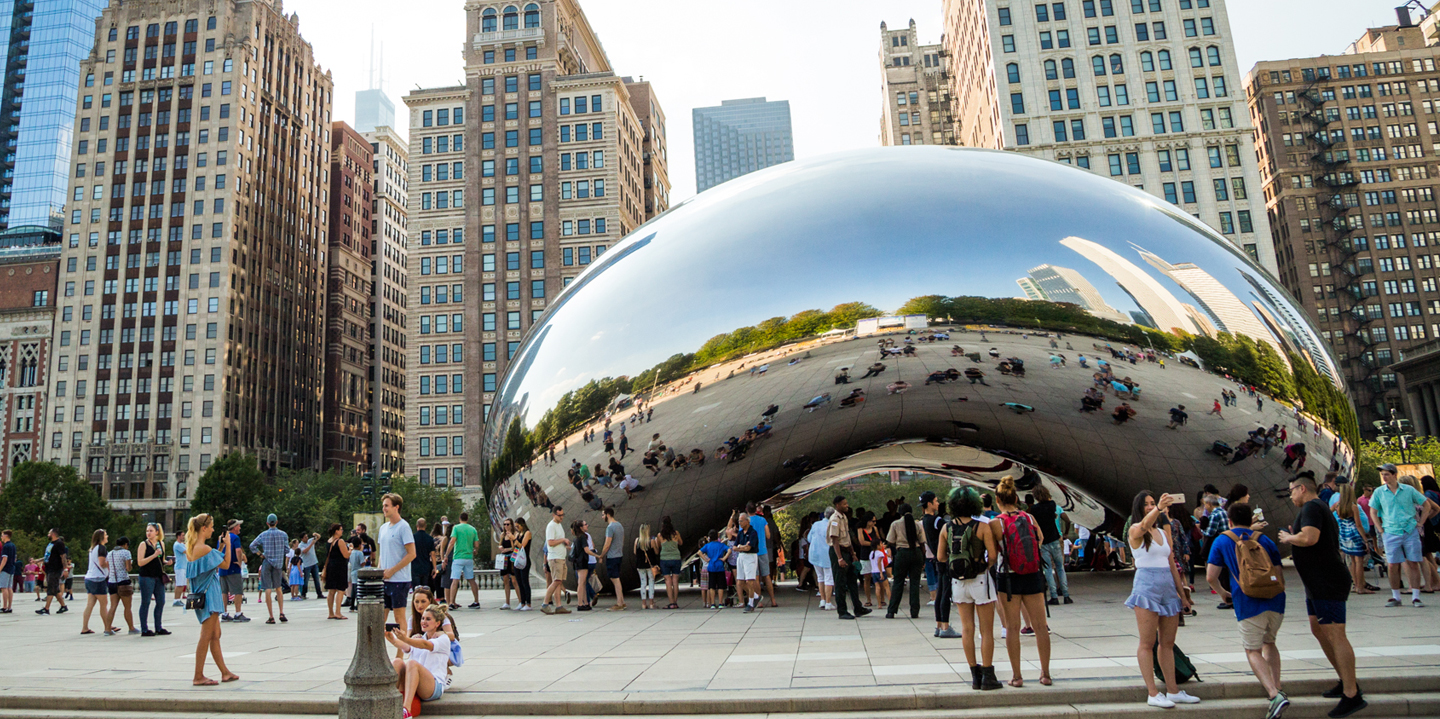
One of the most remarkable aspects of Cloud Gate is its inherent interactivity. Unlike traditional sculptures that often stand aloof, “The Bean” actively invites participation. People walk around it, touch its cool surface, and, most famously, walk underneath its arched belly, where the reflections become wonderfully distorted and multiply. This unique interaction transforms the passive act of viewing art into an immersive experience. Each photograph taken, each reflection captured, becomes a personal interaction with the artwork, making every visit a fresh encounter.
The distorted reflections of the city and its visitors create a playful, almost surreal environment. Children are fascinated by their elongated, whimsical images, while adults marvel at the way the urban landscape is inverted and reconfigured. This direct, unmediated engagement fosters a sense of ownership and connection, making Cloud Gate one of the most beloved and photographed landmarks in the world.
Cultural Impact and Artistic Significance
Cloud Gate’s impact extends beyond its immediate physical presence. It has become a significant piece within the broader discourse of contemporary art, celebrated for its innovative use of material, its conceptual depth, and its democratic accessibility. It challenges traditional notions of monumental sculpture, proving that public art can be both profound and profoundly popular.
Artistically, it stands as a testament to Anish Kapoor’s mastery of form, space, and material. It embodies his recurring themes of the void, reflection, and the illusory nature of perception, executed on an epic scale. Its global recognition has cemented its status as a contemporary masterpiece, influencing subsequent public art projects and demonstrating the power of art to transform urban environments and human experience. “The Bean” is more than just a large sculpture; it is a cultural phenomenon that continues to inspire, delight, and provoke thought.
In conclusion, the iconic “Bean” in Chicago, officially known as Cloud Gate, is the brilliant creation of the internationally renowned artist Anish Kapoor. His visionary concept, brought to life through extraordinary engineering and painstaking craftsmanship, has resulted in a landmark that transcends mere sculpture. It is an interactive experience, a reflective mirror of the city, and a powerful symbol of Chicago’s artistic ambition. Cloud Gate stands as a testament to the enduring power of art to shape our public spaces, engage our senses, and become an indelible part of a city’s identity.
LifeOutOfTheBox is a participant in the Amazon Services LLC Associates Program, an affiliate advertising program designed to provide a means for sites to earn advertising fees by advertising and linking to Amazon.com. Amazon, the Amazon logo, AmazonSupply, and the AmazonSupply logo are trademarks of Amazon.com, Inc. or its affiliates. As an Amazon Associate we earn affiliate commissions from qualifying purchases.