
Embarking on a journey from the windy metropolis of Chicago to the bustling concrete jungle of New York City is a common itinerary for business travelers, tourists, and those visiting family alike. While the geographical distance might seem substantial, modern aviation has transformed this trans-continental hop into a remarkably swift and efficient experience. Understanding the precise duration of such a flight, however, involves more than just looking at a timetable; it encompasses a range of variables, from the specific airports chosen to atmospheric conditions and operational efficiencies. This comprehensive guide will dissect the typical flight times, explain the factors that influence your total travel duration, and offer insights to help you plan your trip seamlessly. By delving into the nuances of this popular route, travelers can gain a clearer picture of what to expect, ensuring a smooth transition from the Midwest to the East Coast.
Understanding the Core Flight Duration
At its heart, the flight between Chicago and New York City is a relatively short domestic journey, often categorized as a short-to-medium haul flight. For many, this trip represents a convenient and rapid way to bridge the approximately 713-mile (1,147-kilometer) distance separating these two iconic American cities. However, the term “flight duration” itself can be interpreted in various ways, ranging from the time the aircraft is airborne to the full door-to-door travel experience.
The Direct Answer: Typical Flight Times
For a direct, non-stop flight from Chicago to New York City, the typical actual airtime generally falls within a narrow window. Most commercial passenger jets will complete the journey in approximately 1 hour and 55 minutes to 2 hours and 30 minutes. This duration accounts for the time from takeoff to landing, not including taxiing, gate delays, or other pre/post-flight procedures. It’s a brisk journey, often barely enough time to settle in, enjoy a beverage, and perhaps catch a short movie or get some work done before descent begins. This efficient transit time is a testament to the speed of modern aircraft and the well-established air corridors between these two major hubs.
Factors Influencing Actual Airtime
While the average provides a good baseline, several dynamic factors can influence the exact airtime for any given flight:
- Wind Conditions: One of the most significant variables is the prevailing winds. Flights traveling eastward often benefit from tailwinds, which can reduce flight duration, sometimes shaving off 10-20 minutes. Conversely, strong headwind conditions, particularly during certain seasons, can extend the flight time. Air traffic controllers and pilots constantly monitor these conditions to adjust flight paths and speeds.
- Air Traffic Control (ATC) Delays: Both Chicago and New York City are among the busiest airspaces in the world. High traffic volumes, especially during peak travel times or adverse weather at either end, can lead to airborne holding patterns or ground delays before takeoff. While pilots aim for efficient routing, ATC directives take precedence for safety and managing congested skies.
- Aircraft Type: The specific aircraft model used by the airline can also play a minor role. While most flights on this route use narrow-body jets like the Boeing 737 or Airbus A320 families, slight differences in cruising speed and operational efficiency between models can lead to minor variations in flight time.
- Route Optimisation: Airlines and ATC continuously optimize flight paths to balance efficiency with safety. Direct routing is generally preferred, but diversions due to weather, military operations, or other air traffic can slightly extend the journey.
Visualizing the Route: Chicago to New York City
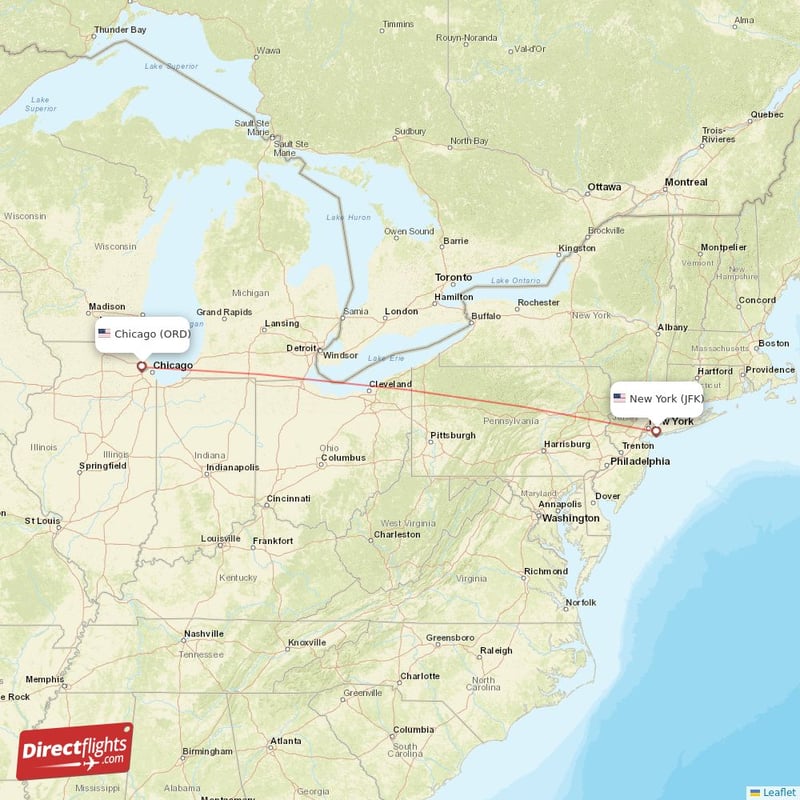
The flight path typically traverses a large portion of the American Midwest and Northeast. Departing from Chicago, planes generally head southeast, flying over states like Indiana, Ohio, and Pennsylvania, before descending into the New York metropolitan area. This relatively straightforward trajectory minimizes deviations, contributing to the consistent flight times observed on this route. While passengers won’t see specific landmarks from cruising altitude, the journey offers a distinct sense of crossing a significant geographical span in a remarkably short period.
Beyond Airtime: The Total Travel Experience
While the actual time spent airborne is a crucial piece of the puzzle, a traveler’s perception of “how long” the journey takes extends far beyond wheels up to wheels down. The total travel experience encompasses the entire process from leaving your origin point to arriving at your final destination, often referred to as “door-to-door” travel. Understanding these additional components is vital for realistic trip planning.
Pre-Flight Essentials: Check-in, Security, Boarding
The journey begins long before boarding. Factors at the departure airport significantly contribute to the overall travel duration:
- Airport Arrival Time: Airlines typically recommend arriving 1.5 to 2 hours before a domestic flight’s scheduled departure. This buffer allows ample time for check-in, especially if you have checked luggage, and navigating security.
- Check-in Procedures: Whether you check-in online, at a self-service kiosk, or with an agent, this process takes time. Waiting in line for baggage drop-off can add to the duration.
- Security Screening: The Transportation Security Administration (TSA) checkpoints can be unpredictable. Wait times vary drastically based on the airport, time of day, day of the week, and whether you possess expedited screening programs like TSA PreCheck or Clear. At major hubs like O’Hare International Airport or Midway International Airport in Chicago, security lines can sometimes take 30-60 minutes or more during peak periods.
- Boarding: Boarding typically begins 30-45 minutes before the scheduled departure time. Passengers are usually required to be at the gate and ready to board well before this cut-off.
Cumulatively, these pre-flight essentials can easily add 1.5 to 2.5 hours to your travel time, even before the plane pushes back from the gate.
Post-Flight Considerations: Deplaning, Baggage Claim, Ground Transportation
Once the plane touches down in New York City, the journey isn’t over. Several post-flight steps add to the total duration:
- Deplaning and Taxiing: After landing, the aircraft needs to taxi to its gate, which can take 5-15 minutes, especially at busy airports like John F. Kennedy International Airport (JFK) or Newark Liberty International Airport. Deplaning can take another 10-20 minutes, depending on your seat location.
- Baggage Claim: If you checked luggage, retrieving it can add anywhere from 15 to 45 minutes, depending on the airport and how quickly bags are unloaded.
- Ground Transportation: This is often the most variable part of post-flight travel, especially in the NYC metropolitan area. Depending on your arrival airport (JFK, LaGuardia Airport, or Newark Liberty International Airport) and your final destination within New York City or the surrounding areas, getting from the airport to your hotel or meeting can take anywhere from 30 minutes to over 2 hours, particularly during rush hour. Factors include traffic, public transport connections, and taxi/rideshare availability.
Calculating Door-to-Door Travel Time
Considering all these elements, a realistic estimate for door-to-door travel from downtown Chicago to downtown New York City typically ranges from 5 to 7 hours. This includes:
- Travel to the departure airport (e.g., from Chicago Loop to O’Hare): 45-90 minutes
- Pre-flight airport procedures (check-in, security, boarding): 1.5 – 2.5 hours
- Actual flight time: 2 hours – 2.5 hours
- Post-flight airport procedures (deplaning, baggage claim): 30 minutes – 1 hour
- Travel from arrival airport (e.g., from JFK to Manhattan): 45 minutes – 1.5 hours
Adding these segments provides a more accurate picture of the total time commitment for this journey, highlighting that the actual flight is only one component of the overall travel experience.
Choosing Your Airport: Options for Chicago and NYC
The choice of departure and arrival airports significantly impacts not only the overall convenience but also the total travel time from an urban center to the runway and vice versa. Both Chicago and the New York City metropolitan area are served by multiple major airports, each with its own characteristics and implications for your journey.
Chicago Departures: O’Hare International Airport vs. Midway International Airport
Travelers departing from Chicago typically have two primary options:
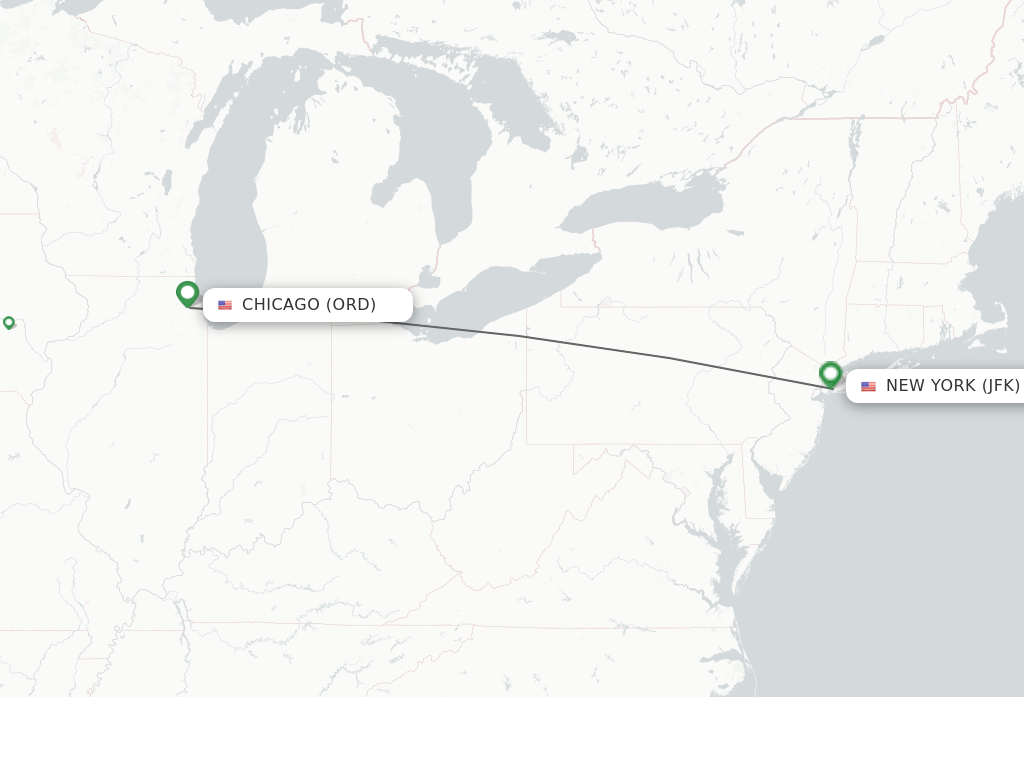
- O’Hare International Airport (ORD): As one of the world’s busiest airports, ORD offers the most frequent flights to New York City. It’s located approximately 17 miles northwest of downtown Chicago. Travel to O’Hare from downtown can take 45-90 minutes by car or taxi (depending on traffic) or about 45 minutes on the CTA Blue Line train. Its size means potentially longer taxi times for aircraft and longer walks within terminals.
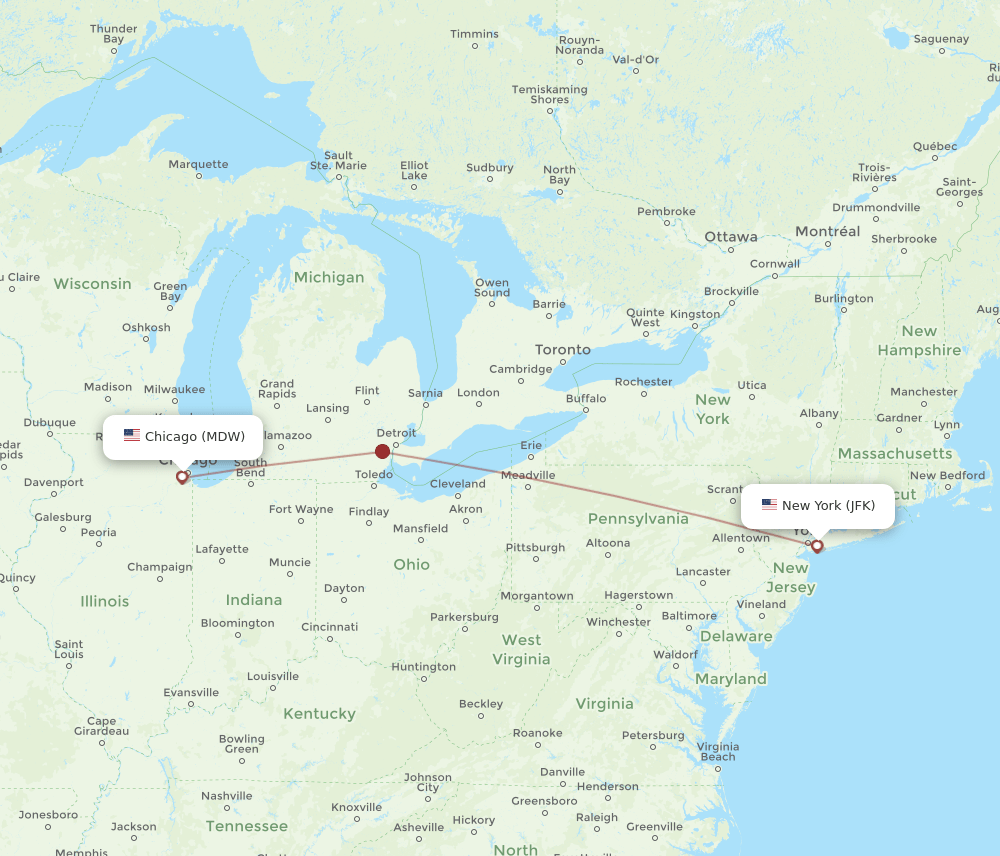
- Midway International Airport (MDW): Located closer to downtown, about 10 miles southwest, MDW is generally considered more convenient for those originating from the city center. Travel to Midway by car or taxi usually takes 30-60 minutes, and the CTA Orange Line offers a direct 25-minute ride. While smaller, it can still experience delays, but often has shorter security lines and taxi times compared to O’Hare.
The choice between ORD and MDW often comes down to your starting point in Chicago, airline preference, and flight availability. For maximum efficiency, assess the ground transport time to each airport from your specific location.
New York City Arrivals: JFK, LaGuardia, and Newark Liberty
The New York City area is unique in having three major airports, each serving different geographical areas and offering varying transit options into Manhattan and beyond:
- John F. Kennedy International Airport (JFK): Located in Queens, approximately 15 miles southeast of Midtown Manhattan. JFK is an international hub, often meaning longer taxi times, and its distance can result in extended ground travel to Manhattan (45-90 minutes via taxi/rideshare, 60-75 minutes via AirTrain/subway).
- LaGuardia Airport (LGA): Also in Queens, LGA is the closest airport to Midtown Manhattan, about 8 miles away. Despite its proximity, historically challenging road access and ongoing construction can still lead to 30-60 minute ground travel times to Manhattan by car/taxi/rideshare, or slightly longer using public buses to connect to the subway. LGA primarily handles domestic flights, including most Chicago arrivals.
- Newark Liberty International Airport (EWR): Located in New Jersey, approximately 16 miles southwest of Midtown Manhattan. While technically in another state, EWR offers excellent rail connections to Manhattan via the AirTrain and NJ Transit commuter trains, often reaching Penn Station in 30-45 minutes after exiting the plane. Road travel, however, can be subject to significant traffic.
Impact of Airport Choice on Overall Journey Time
The decision of which airport to fly into can significantly alter your door-to-door travel time, particularly at the New York City end. For example, if your final destination is in Downtown Manhattan, arriving at EWR and taking the train might be faster than landing at JFK and navigating road traffic. If your destination is in Midtown East, LGA might be the quickest, despite its own traffic woes. Always factor in the specific airport’s location relative to your final destination, as well as the available ground transportation options and their typical travel times during your expected arrival window.
Maximizing Comfort and Efficiency on Your Short-Haul Flight
Even though a flight from Chicago to New York City is relatively brief, strategic planning can significantly enhance both comfort and efficiency, making the most of your journey. Maximizing these aspects ensures you arrive refreshed and ready for your activities in the Big Apple.
Best Times to Fly: Avoiding Peak Travel
Timing your flight strategically can save you both time and stress.
- Early Mornings: Flights departing very early in the morning (e.g., before 7:00 AM) often experience fewer delays, less air traffic congestion, and generally smoother operations. Security lines are also typically shorter.
- Mid-Day Lulls: Flights between 10:00 AM and 2:00 PM can sometimes hit a sweet spot, avoiding the initial morning rush and the afternoon business travel peaks.
- Late Evenings: While potentially tiring, late-evening flights can also see reduced traffic and fewer ground delays. However, be mindful of public transportation options once you arrive in New York City, as they may be less frequent after certain hours.
- Mid-Week Travel: Flying on Tuesdays, Wednesdays, and sometimes Saturdays often yields lower fares and lighter airport crowds compared to Mondays, Thursdays, Fridays, and Sundays, which are typically peak travel days.
By choosing non-peak travel times, you reduce the likelihood of encountering the congestion that can extend both pre-flight and in-flight durations.
In-Flight Comfort Tips for a Brief Journey
Despite the short duration, a few tips can make your time in the air more enjoyable:
- Stay Hydrated: Cabin air is dry. Bring a reusable water bottle to fill after security to stay hydrated.
- Snacks: While some airlines offer light snacks, having your own ensures you have something you enjoy, especially if you’re on a tight schedule and miss a meal.
- Entertainment: Even for two hours, a good book, downloaded podcast, or a few episodes of a show can pass the time pleasantly. Many aircraft on this route offer Wi-Fi or seatback entertainment, but it’s wise to have offline options.
- Dress Comfortably: Wear loose, layered clothing to adjust to cabin temperatures.
- Earbuds/Headphones: Essential for blocking out noise and enjoying your entertainment.
Optimizing Your Booking: Non-Stop vs. Connecting Flights
For the Chicago to New York City route, always prioritize non-stop flights. Connecting flights, while sometimes cheaper, will drastically increase your total travel time, adding several hours for layovers, additional takeoffs and landings, and the risk of missed connections. Given the frequency of direct flights between these two major cities, there’s usually no practical reason to opt for a connecting journey unless facing extreme budget constraints or specific schedule needs. A non-stop flight ensures the most direct and efficient use of your time, aligning perfectly with the goal of understanding and minimizing your flight duration.
Preparing for Your Arrival in the Big Apple
Arriving in New York City is an exciting prospect, but the transition from airport to city can be a significant part of your overall travel time. A little preparation can make this final leg of your journey efficient and stress-free, ensuring you quickly dive into the vibrant experiences awaiting you.
Navigating New York City Ground Transport Options
Once you’ve landed at JFK, LGA, or EWR, understanding your ground transportation options is key to minimizing post-flight travel time:
- Public Transportation: This is often the most cost-effective and can be surprisingly efficient, especially during rush hour when roads are gridlocked.
- JFK: Connect via the AirTrain to the A, E, or J subway lines, or the Long Island Rail Road (LIRR) for direct service to Penn Station or Grand Central Terminal in Manhattan.
- LGA: A network of M60-SBS and Q70-SBS buses connect to various subway lines and the LIRR. The recently opened AirTrain connection is also improving directness.
- EWR: The AirTrain connects to NJ Transit and Amtrak trains, offering direct service to Penn Station in Manhattan.
- Taxis and Rideshares: Readily available at all airports, these offer door-to-door convenience but are subject to NYC’s notorious traffic and can be significantly more expensive, especially from JFK and EWR due to tolls and surcharges.
- Airport Shuttles: Shared-ride vans or private car services can be pre-booked, offering a balance between cost and convenience, though shared rides might make multiple stops.
Always check real-time traffic conditions and public transit schedules upon arrival to choose the quickest option for your specific destination within New York City. Having your MTA or NJ Transit app ready, or a pre-booked car service confirmation, can save valuable minutes.
In conclusion, while the flight itself from Chicago to New York City is a swift journey of approximately 2 to 2.5 hours, a truly comprehensive understanding of travel duration must encompass the entire door-to-door experience. From navigating busy airports like O’Hare or Midway to the complexities of reaching your final destination from JFK, LGA, or EWR, the total time commitment can realistically stretch to 5-7 hours. By factoring in pre-flight and post-flight logistics, choosing optimal travel times, and making informed airport selections, travelers can significantly streamline their journey, ensuring a more efficient and enjoyable trip to the vibrant heart of the East Coast.
LifeOutOfTheBox is a participant in the Amazon Services LLC Associates Program, an affiliate advertising program designed to provide a means for sites to earn advertising fees by advertising and linking to Amazon.com. Amazon, the Amazon logo, AmazonSupply, and the AmazonSupply logo are trademarks of Amazon.com, Inc. or its affiliates. As an Amazon Associate we earn affiliate commissions from qualifying purchases.