
Embarking on a journey from the mist-covered hills of San Francisco to the sun-drenched shores of Hawaii is a quintessential American West Coast experience. As travelers depart from San Francisco International Airport, they exchange the urban sophistication of California for the rhythmic pulse of the Pacific Ocean. Understanding the logistics of this flight is essential for any traveler looking to maximize their time in paradise. While the distance between the mainland United States and the archipelago is significant, the route is one of the most well-traveled and efficiently managed in the world.
Average Flight Durations to the Hawaiian Islands
The duration of a flight from San Francisco to the islands depends primarily on which specific airport you are targeting. While the islands appear close together on a map, the distance between the northernmost and southernmost points of the chain can influence flight times by up to thirty minutes.
Flying to Oahu and Honolulu
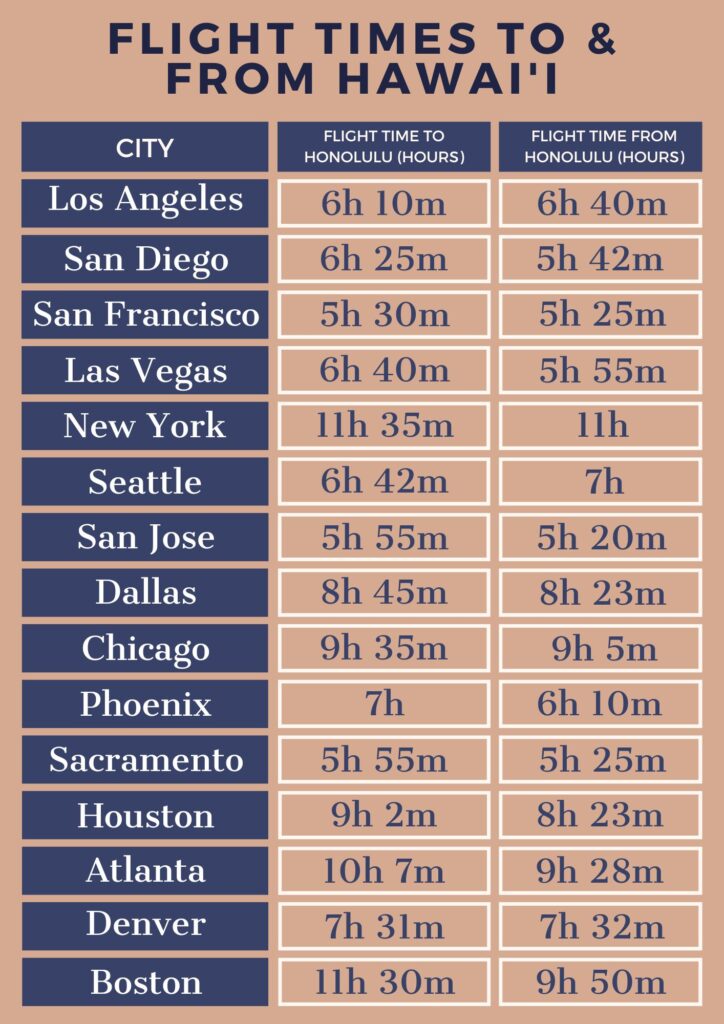
The most common route from the Bay Area is to Honolulu, the vibrant capital located on the island of Oahu. A direct flight typically takes between 5 hours and 15 minutes to 5 hours and 45 minutes. Upon arrival at Daniel K. Inouye International Airport, travelers are greeted by the iconic sight of Diamond Head and the nearby bustling skyline of Waikiki. This route is served by multiple daily frequencies, making it the most flexible option for those seeking a quick transition into the tropical lifestyle.
Reaching the Valley Isle: Maui
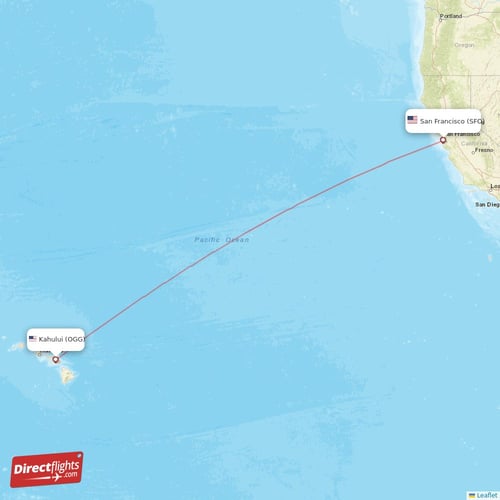
For those heading to the lush landscapes of Maui, the flight time is remarkably similar to that of Oahu. Direct flights to Kahului Airport usually clock in at approximately 5 hours and 20 minutes. This journey carries passengers over the vast expanse of the ocean before descending into Kahului, a central hub that provides easy access to the Road to Hana and the majestic heights of Haleakala National Park.
The Garden Isle and the Big Island
Traveling further north to Kauai or south to the Big Island requires slightly different considerations. A non-stop flight to Lihue Airport on Kauai often takes about 5 hours and 45 minutes, as it is the westernmost major island in the chain. Once there, travelers can explore the dramatic cliffs of the Napali Coast and the deep red hues of Waimea Canyon.
Conversely, a flight to Ellison Onizuka Kona International Airport in Kailua-Kona takes roughly 5 hours and 30 minutes. This route delivers visitors directly to the volcanic wonderland of the Big Island, where the towering peak of Mauna Kea dominates the horizon.
Factors Influencing Your Travel Time
While the scheduled flight times provide a reliable baseline, several variables can shorten or extend your time in the air. The physics of transpacific travel are governed by environmental and logistical factors that are often beyond the control of the airlines.
The Role of the Jet Stream
The most significant factor affecting flight duration is the wind. When flying west from San Francisco International Airport to Hawaii, aircraft are typically flying against the prevailing trade winds and the jet stream. This headwind can add thirty to forty-five minutes to the outbound journey compared to the return leg. Interestingly, the return flight from Honolulu back to the mainland is significantly faster, often taking only 4 hours and 45 minutes to 5 hours, as the tailwinds “push” the aircraft eastward toward the coast of California.
Weather Patterns and Seasonal Variations
Seasonal weather also plays a role. During the winter months, the jet stream tends to be stronger and more southerly, which can result in more turbulence and slightly longer flight times westward. Additionally, while Hawaii enjoys a relatively stable climate, heavy tropical rain or convective activity around the islands can occasionally lead to holding patterns or slightly adjusted approach paths, adding a few minutes to the total duration.
Airline Logistics and Flight Paths
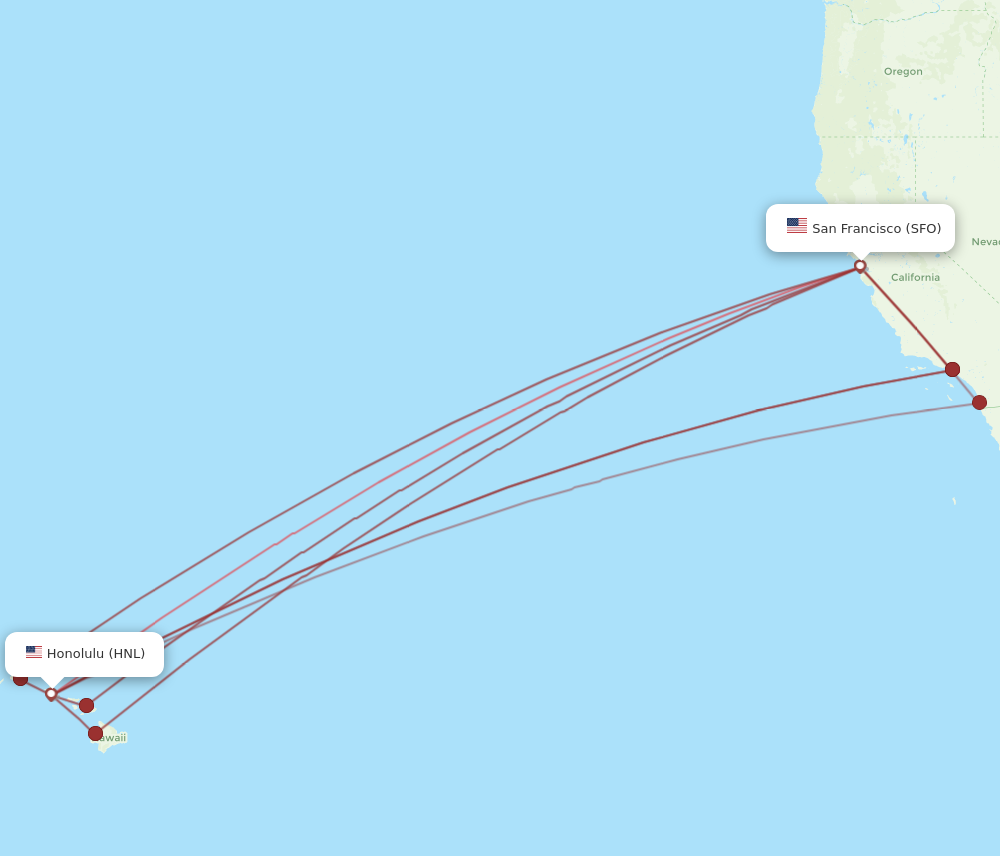
The specific flight path chosen by the pilot, often referred to as the “track,” is determined daily based on fuel efficiency and safety. Airlines like United Airlines and Hawaiian Airlines utilize sophisticated weather tracking to find the path of least resistance. Furthermore, the type of aircraft—whether a wide-body Boeing 787 or a narrow-body Airbus A321neo—can have minor impacts on cruising speed and overall flight efficiency.
Choosing the Right Airline and Terminal Experience
The experience of your 5-plus hour flight is heavily influenced by the airline you choose and the amenities they offer. Given that this is a long-haul domestic flight, comfort and service are paramount.
Major Carriers from SFO
San Francisco International Airport serves as a major hub for several airlines that offer frequent service to the islands. United Airlines maintains a dominant presence, offering numerous daily non-stops to Honolulu, Kahului, Kailua-Kona, and Lihue. For those looking for an immersive experience from the moment they board, Hawaiian Airlines provides a unique “island vibe” with local food and hospitality.
Alaska Airlines is another popular choice, often praised for its excellent customer service and consistent scheduling. In recent years, Southwest Airlines has also entered the market, offering competitive pricing and its signature “two bags fly free” policy, which is particularly beneficial for those planning long stays or bringing surfboards and hiking gear.
Navigating San Francisco International Airport
Starting your journey at San Francisco International Airport is generally a smooth process if you know where to go. Most Hawaii flights depart from Terminal 3 (primarily United Airlines) or the International Terminal, which handles several domestic departures as well. It is advisable to arrive at least two hours before your flight, especially during peak holiday seasons when many California families head to the islands.
Before boarding, travelers can enjoy the high-end dining and shopping that SFO is known for. From local artisanal coffee to museum-quality art exhibits, the airport provides a sophisticated prelude to the natural beauty of the Pacific.
Preparing for Your Arrival in Paradise
Once the flight concludes and you descend through the clouds to see the turquoise waters of the Pacific Ocean, the final logistics of your journey begin.
Agriculture Inspection and Arrival Protocols
It is important to remember that Hawaii has strict agricultural laws to protect its unique ecosystem. During your flight, you will be required to fill out a State of Hawaii Agricultural Declaration Form. This is a mandatory step for all passengers arriving from the mainland. Upon landing at Daniel K. Inouye International Airport or any of the other island hubs, you will pass through a quick screening area.
From the Airport to the Beach
Transportation from the airport varies by island. In Honolulu, travelers have access to a wide range of options, including rideshares, taxis, and the city’s public bus system, “TheBus.” For those staying in Waikiki, many hotels offer shuttle services. On the more rural islands like Kauai or the Big Island, renting a car is almost essential to explore landmarks such as Pearl Harbor, the North Shore, or the remote beaches of Hanapepe.
The transition from the cool, often foggy air of San Francisco to the humid, floral-scented breeze of the islands is a sensory experience that makes the 5-hour flight feel entirely worthwhile. Whether you are heading to the islands for a business retreat, a family vacation, or a solo adventure, the flight from SFO is the bridge between the fast-paced life of the United States mainland and the serene, timeless beauty of the Hawaiian archipelago.
As you plan your trip, remember that while the “how long” is a matter of hours, the “how well” depends on your preparation. Booking a morning flight often allows you to arrive in time for a sunset dinner on the beach, while a red-eye flight—though less common on the outbound leg—can maximize your first full day of exploration. No matter which island you choose, the journey from San Francisco remains one of the most iconic travel routes in the world, offering a seamless gateway to the wonders of Oahu, Maui, and beyond.
LifeOutOfTheBox is a participant in the Amazon Services LLC Associates Program, an affiliate advertising program designed to provide a means for sites to earn advertising fees by advertising and linking to Amazon.com. Amazon, the Amazon logo, AmazonSupply, and the AmazonSupply logo are trademarks of Amazon.com, Inc. or its affiliates. As an Amazon Associate we earn affiliate commissions from qualifying purchases.