
Traveling from the historic streets of Washington DC to the tropical paradise of Hawaii is one of the longest domestic journeys a traveler can undertake within the United States. Spanning nearly the entire width of North America and a significant portion of the Pacific Ocean, this trek covers approximately 4,800 miles. For those planning a getaway to the Aloha State, understanding the logistics of the flight duration is essential for a smooth transition from the mid-Atlantic to the central Pacific.
The Direct Flight Experience
For many travelers, the most efficient way to reach the islands is via a non-stop flight. However, due to the extreme distance, direct options are relatively limited and primarily depart from specific hubs in the Washington DC metropolitan area.

Non-Stop from Dulles International Airport
The primary gateway for direct travel to the islands is Dulles International Airport, located in Virginia. Currently, United Airlines is the leading carrier offering non-stop service from this hub to Honolulu on the island of Oahu.
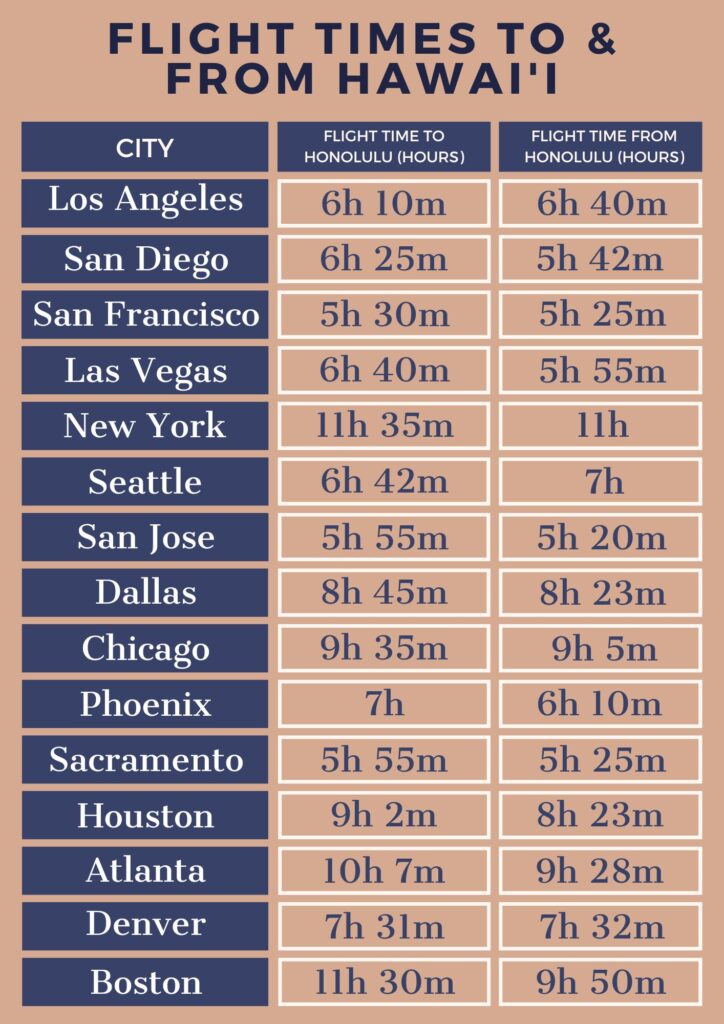
A direct flight from Dulles International Airport to Daniel K. Inouye International Airport typically lasts between 10 hours and 30 minutes to 11 hours. The duration can fluctuate based on seasonal wind patterns, specifically the strength of the jet stream. When flying westbound, planes are often fighting headwinds, which can add significant time to the journey. Conversely, the return flight from Honolulu back to the East Coast is generally shorter—often clocking in at around 9 hours to 9 hours and 45 minutes—thanks to the push from these same high-altitude winds.
The Logistics of a 10-Hour Domestic Flight
Flying for ten hours without a break requires a different level of preparation than a standard cross-country flight to California. Most aircraft utilized for this route are wide-body jets, such as the Boeing 767 or Boeing 777, which offer more space and amenities. Passengers can expect full meal services, extensive in-flight entertainment systems, and, in many cases, the option to upgrade to lie-flat seats in first or business class. Because you remain within the United States, you bypass the need for international customs, though Hawaii does require an agricultural declaration upon arrival to protect its unique ecosystem.
Connecting Flights and Popular Layovers
While direct flights are convenient, many travelers opt for connecting flights due to price sensitivity or the desire to visit other islands like Maui, Kauai, or the Big Island. When adding a layover, the total travel time from Washington DC can range anywhere from 13 to 18 hours.
West Coast Hubs: The Common Choice
Most connecting itineraries involve a stop at a major West Coast hub. Common connection points include San Francisco International Airport in California and Los Angeles International Airport. These airports serve as massive springboards for flights across the Pacific Ocean.
A typical journey might involve a 5-hour flight from Ronald Reagan Washington National Airport to Los Angeles, followed by a 2-hour layover, and then a final 5.5-hour leg to Honolulu. This breaks the trip into more manageable segments and allows travelers to stretch their legs in a different city. Other frequent connection cities include Seattle, Portland, and San Diego.
Mid-Continent and Southern Connections
Travelers departing from Baltimore/Washington International Thurgood Marshall Airport in Maryland often find themselves connecting in the middle of the country. Hubs such as Chicago O’Hare International Airport in Illinois, Dallas/Fort Worth International Airport in Texas, or Denver International Airport in Colorado are popular choices.
Airlines like American Airlines, Delta Air Lines, and Southwest Airlines offer various routes that pass through these cities. While a connection in Dallas might seem out of the way, the flight from Texas to Hawaii is roughly 8 hours, making it a significant portion of the journey.
Reaching the Neighbor Islands
While Honolulu is the primary entry point, many visitors have their sights set on the lush cliffs of Kauai or the volcanic landscapes of the Big Island.
Flying to Maui and Beyond

If your final destination is Kahului Airport on Maui, you will almost certainly require a connection. While there are occasionally seasonal direct flights from the East Coast to Maui, most passengers from Washington DC will fly into Honolulu first. From there, a quick 30-minute “puddle jumper” flight on Hawaiian Airlines or Southwest Airlines will take you to Kahului, Lihue Airport on Kauai, or Ellison Onizuka Kona International Airport in Kona.
When booking these multi-leg journeys, it is vital to account for the time spent in Honolulu for inter-island transfers. The total travel time from Washington DC to one of the neighbor islands can easily exceed 15 hours when including the transfer and the final short-haul flight.
The Impact of Time Zones
One of the most challenging aspects of the flight from Washington DC to Hawaii is the massive shift in time zones. Hawaii follows Hawaii-Aleutian Standard Time and does not observe Daylight Saving Time. This means that depending on the time of year, there is a 5- or 6-hour time difference between the capital and the islands.
For a traveler leaving Dulles International Airport at 9:00 AM, the 11-hour flight will land them in Honolulu at approximately 2:00 PM local time. While this seems like a productive afternoon for visiting Waikiki, the traveler’s body will feel as though it is 8:00 PM or 9:00 PM. Managing jet lag is a critical component of the travel experience, often requiring a strategy of staying awake until the local sunset to reset the internal clock.
Factors Influencing Flight Duration
Not every flight from Washington DC to Hawaii is identical in length. Several variables can alter the time you spend in the air.
The Role of the Jet Stream
The jet stream is a high-altitude ribbon of fast-moving air that generally moves from west to east. When flying from the East Coast to the Pacific Ocean, aircraft must fly against these winds. In the winter months, the jet stream is particularly strong, which can push flight times from Washington DC to Honolulu closer to the 11.5-hour mark. During the summer, the winds are calmer, often shaving 30 to 45 minutes off the trip.
Airport Choice in the DC Area
The choice between Ronald Reagan Washington National Airport, Dulles International Airport, and Baltimore/Washington International Thurgood Marshall Airport impacts the total travel time primarily through the availability of connections. Reagan National has a “perimeter rule” that limits the number of long-distance flights, meaning almost any trip to Hawaii from this airport will require a stop in a city like Dallas or Phoenix. BWI offers excellent value and often serves as a hub for Southwest Airlines, which provides numerous connecting routes to the islands via the West Coast.
Arrival and Ground Logistics
Once the wheels touch down at Daniel K. Inouye International Airport, the journey isn’t quite over. Navigating one of the nation’s busiest airports and securing transport to Waikiki or the North Shore of Oahu can take an additional hour. However, the first glimpse of Diamond Head or the historic Pearl Harbor from the airplane window usually makes the long hours of travel feel entirely worthwhile.
Preparing for the Long Haul
Given that the flight from Washington DC to Hawaii is nearly half a day long, preparation is key to ensuring comfort.
In-Flight Wellness
Staying hydrated is the most important factor in surviving a 10-plus hour flight. The cabin air in long-haul jets is notoriously dry, which can exacerbate the effects of jet lag. Travelers are encouraged to drink plenty of water and avoid excessive caffeine or alcohol. Additionally, because the flight crosses so many meridians, wearing compression socks and periodically walking the aisles can help prevent circulation issues.
Choosing the Right Carrier
The experience can vary significantly between airlines. Alaska Airlines and Hawaiian Airlines are known for their island-inspired hospitality, often serving local juices or snacks that begin the vacation experience before you even land. United Airlines, which dominates the direct route from Dulles International Airport, provides a consistent service with a variety of cabin classes to suit different budgets.
In summary, while the flight from Washington DC to Hawaii is a significant undertaking, modern aviation makes it more accessible than ever. Whether you choose the efficiency of a non-stop flight or the flexibility of a connecting route through California, the transition from the Potomac River to the Pacific Ocean is a journey of a lifetime. Expect to spend at least 10 to 11 hours in the air, but know that the destination—with its warm sands, lush mountains, and vibrant culture—is well worth every minute.
LifeOutOfTheBox is a participant in the Amazon Services LLC Associates Program, an affiliate advertising program designed to provide a means for sites to earn advertising fees by advertising and linking to Amazon.com. Amazon, the Amazon logo, AmazonSupply, and the AmazonSupply logo are trademarks of Amazon.com, Inc. or its affiliates. As an Amazon Associate we earn affiliate commissions from qualifying purchases.