
The state of Texas holds significant sway in the United States presidential elections, largely due to its substantial representation in the Electoral College. The number of electoral votes a state receives is not static; it is reapportioned every ten years following the Decennial Census. This process ensures that representation in the House of Representatives, and consequently the Electoral College, reflects the current population distribution across the nation. Understanding how Texas earns its electoral votes is crucial for comprehending its role in shaping the outcome of presidential contests.
The Basis of Electoral College Representation
The Electoral College is a unique feature of the American presidential election system. It is not a physical place but rather a process established by the U.S. Constitution. Each state is allocated a number of electors equal to the sum of its representation in the House of Representatives and its two senators. The total number of representatives in the House is fixed at 435, divided among the states based on their population as determined by the Census. Every state, regardless of its population size, is guaranteed two senators, hence the minimum of three electoral votes (one for each representative plus two senators).
The Role of the Decennial Census
The Decennial Census, conducted every ten years, is the foundation for reapportionment. The U.S. Census Bureau meticulously counts the population of every state. Following the census, Congress determines the number of seats in the House of Representatives each state will receive. This process, known as reapportionment, ensures that congressional districts reflect the most current population figures. States that have experienced significant population growth may gain seats, while those with declining populations may lose seats.
Calculating a State’s Electoral Votes
Once the reapportionment of the House seats is complete, calculating a state’s total electoral votes becomes straightforward. The formula is:
- Number of Electoral Votes = Number of Representatives in the House + Number of Senators (which is always 2)
For example, a state with 10 representatives in the House will have 10 + 2 = 12 electoral votes.
Texas’s Growing Electoral Power
Texas, the second-largest state by population, has consistently seen its population grow, leading to an increase in its number of electoral votes over the decades. This growth has cemented its position as a crucial battleground in presidential elections.
Post-2020 Census Reapportionment
The most recent reapportionment, following the 2020 Census, saw Texas gain two additional seats in the House of Representatives. This was a direct reflection of the state’s significant population increase between 2010 and 2020. Consequently, Texas now has 38 representatives in the House.
Therefore, the calculation for Texas’s electoral votes after the 2020 Census is:
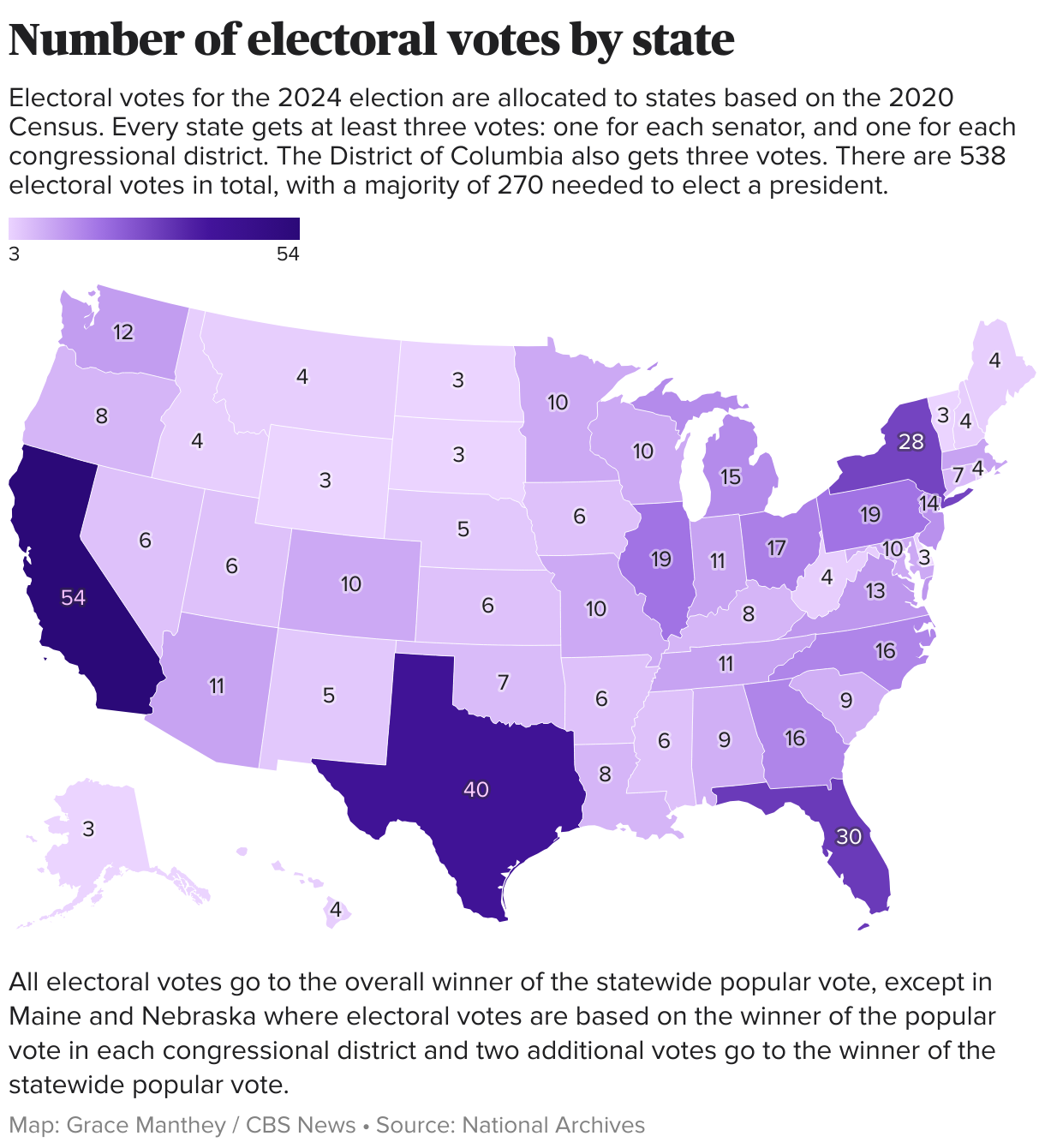
- 38 (Representatives) + 2 (Senators) = 40 Electoral Votes
This brings Texas’s total electoral vote count to 40, making it the second-largest bloc of electoral votes in the nation, trailing only California.
Historical Trends of Texas’s Electoral Votes

To fully appreciate Texas’s electoral significance, it is useful to examine its historical trajectory:
- After the 1970 Census: Texas had 24 electoral votes.
- After the 1980 Census: Texas had 29 electoral votes.
- After the 1990 Census: Texas had 32 electoral votes.
- After the 2000 Census: Texas had 34 electoral votes.
- After the 2010 Census: Texas had 38 electoral votes.
- After the 2020 Census: Texas has 40 electoral votes.
This consistent upward trend underscores Texas’s growing population and its increasing influence in presidential elections. The state’s electoral vote count is a direct indicator of its demographic dynamism.
How Electoral Votes Translate to Election Outcomes
The allocation of electoral votes is a critical component of how a presidential candidate wins the election. In almost all states, the candidate who wins the popular vote within that state receives all of its electoral votes. This is known as the “winner-take-all” system, which is employed by 48 states and the District of Columbia. The exceptions are Maine and Nebraska, which allocate their electoral votes proportionally.
The Significance of 270 Electoral Votes
To win the presidency, a candidate must secure a majority of the total electoral votes. There are currently 538 electoral votes in total (435 representatives + 100 senators + 3 for the District of Columbia). Therefore, a candidate needs at least 270 electoral votes to win the election.
A state like Texas, with its 40 electoral votes, represents a substantial portion of this target number. A candidate who can consistently win Texas gains a significant advantage in their pursuit of the 270-vote threshold. Conversely, losing Texas would require a candidate to find alternative paths to victory, often by winning a greater number of smaller states or performing exceptionally well in other large states.
Impact on Campaign Strategies
The distribution of electoral votes profoundly influences presidential campaign strategies. Candidates and their campaign teams focus their resources—time, money, and advertising—on states that are considered competitive or “swing states.” While Texas has historically been a Republican stronghold, its sheer size and growing diversity mean that it is increasingly scrutinized by both major parties. Campaigns will allocate resources to Texas to either solidify their base or attempt to flip the state, depending on their party’s traditional allegiance and the current political climate. The 40 electoral votes at stake make it a prime target for intense campaigning, especially in closely contested elections.
Factors Influencing Future Reapportionments
The number of electoral votes Texas receives in future elections will continue to be dictated by population trends. Several factors will influence Texas’s growth and, consequently, its representation:
Economic Opportunities and Immigration
Texas has historically benefited from a strong economy and a welcoming environment for both domestic and international migration. Job growth in sectors like technology, energy, and manufacturing has drawn populations from other states and countries. Continued economic prosperity and robust immigration policies, or the absence thereof, will play a significant role in Texas’s future population figures.
Birth Rates and Demographics
Demographic shifts, including birth rates and the age distribution of the population, also impact population growth. Texas has a relatively young population compared to some other states, which often correlates with higher birth rates and a growing workforce. Changes in these demographic indicators will affect Texas’s share of the national population.
The Next Census and Beyond
The next Decennial Census in 2030 will be critical in determining the electoral vote allocation for the elections of 2032, 2036, and beyond. If Texas continues to grow at its current pace, it is highly likely that it will gain even more representatives and, therefore, more electoral votes. This sustained growth would further solidify its position as a dominant force in the Electoral College and a pivotal state in the quest for the presidency. The dynamic nature of representation, driven by population shifts, ensures that the electoral landscape is ever-evolving.
LifeOutOfTheBox is a participant in the Amazon Services LLC Associates Program, an affiliate advertising program designed to provide a means for sites to earn advertising fees by advertising and linking to Amazon.com. Amazon, the Amazon logo, AmazonSupply, and the AmazonSupply logo are trademarks of Amazon.com, Inc. or its affiliates. As an Amazon Associate we earn affiliate commissions from qualifying purchases.