
Unpacking California’s Evolving Political Landscape: A Tourist’s Guide to Understanding Its Cultural Fabric
For travelers exploring the diverse tapestry of the Golden State, delving into its political history offers a uniquely insightful lens through which to understand its vibrant local culture and the character of its myriad regions. California‘s political evolution is not merely a series of electoral statistics; it’s a narrative woven into the very fabric of its communities, reflecting profound shifts in demographics, economic drivers, and prevailing social values. From the sun-drenched beaches of Southern California to the majestic redwoods of the north, and from the fertile expanse of the Central Valley to the bustling metropolises of Los Angeles and San Francisco, each vote cast over the centuries has shaped the legislative environment that impacts everything from environmental conservation to urban development, public education, and even the culinary trends that draw visitors from around the globe.

Understanding when and why California has leaned Republican, and its subsequent shift, provides a deeper appreciation for the complex interplay of forces that have forged this iconic state. This historical perspective allows tourists to connect with the authentic spirit of California, revealing the underlying currents that define its people, its aspirations, and its enduring appeal as a destination of innovation, beauty, and cultural dynamism. Far from being a dry historical account, this journey into California’s electoral past illuminates the very soul of the state, enriching any visitor’s experience by providing context to the diverse landscapes, vibrant cities, and distinct local cultures encountered at every turn.
The Golden State’s Republican Heyday: A Look Back at Early Electoral Dominance
California’s early political landscape was markedly different from its contemporary image. For much of its history following statehood in 1850, the state frequently, and often enthusiastically, cast its electoral votes for Republican presidential candidates. This era of Republican dominance was deeply intertwined with the state’s rapid growth, economic expansion, and the pioneering spirit that characterized its development. The influx of migrants during the Gold Rush, the establishment of vast agricultural enterprises, and the burgeoning industrial sector all contributed to a political environment that often aligned with the tenets of the Republican Party, particularly its emphasis on economic development and individual enterprise.
Travelers exploring historic districts in cities like Sacramento or delving into the heritage of agricultural regions can often sense the echoes of these early foundations. The architecture, the establishment of infrastructure, and even the names of historical parks and institutions can subtly tell tales of the state’s formative years, when a different political philosophy held sway and shaped its initial trajectory.
From Abraham Lincoln to Dwight D. Eisenhower: Presidents Who Carried California
California first voted Republican in 1860, supporting Abraham Lincoln. This early alignment with the nascent Republican Party was largely due to the Civil War and the state’s strong Unionist sentiment. Over the subsequent decades, California continued to be a Republican stronghold, particularly during periods of national prosperity and global engagement. Republican presidents like Benjamin Harrison (1888), William McKinley (1896, 1900), Theodore Roosevelt (1904), and Herbert Hoover (1928) all won California’s electoral votes. Each of these victories reflects a snapshot of California’s socio-economic priorities at the time, from westward expansion to industrialization and the establishment of a robust economy.
The mid-20th century saw a continuation of this trend, with war heroes and popular leaders maintaining California’s Republican leanings. Dwight D. Eisenhower, for instance, carried California in both 1952 and 1956, amidst an era of post-war optimism and burgeoning suburbanization. Exploring historic landmarks and mid-century modern architecture in cities like Palm Springs offers a tangible connection to this period, where a sense of prosperity and national unity often translated into Republican support.
The Rise of California as a Republican Powerhouse: A Mid-20th Century Phenomenon
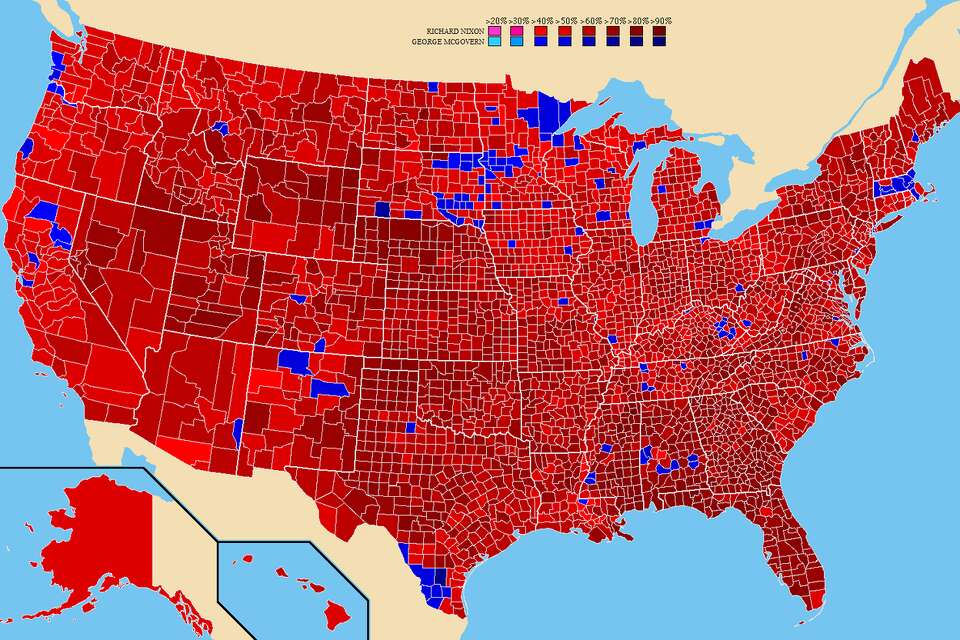
The period from the 1960s through the 1980s solidified California’s reputation as a key battleground and often a decisive win for Republican presidential candidates. This era was particularly defined by two native Californians who would go on to become Republican presidents: Richard Nixon and Ronald Reagan. Nixon, born in Yorba Linda, carried his home state in both his successful presidential bids in 1968 and 1972. His political career, deeply rooted in Orange County, reflects the conservative pulse that characterized significant portions of Southern California during that time. Visitors to the Nixon Presidential Library and Museum can gain a profound understanding of this influential period and its impact on the state’s political identity.
Following Nixon, Ronald Reagan, a former two-term governor of California, dramatically cemented the state’s Republican loyalty in the 1980s. He won California convincingly in both 1980 and 1984. Reagan’s appeal, charismatic persona, and conservative policies resonated deeply with many Californians, particularly those in suburban communities and the growing technology sectors. The Ronald Reagan Presidential Library and Museum in Simi Valley is a major tourist attraction, providing a window into the political and cultural zeitgeist of this influential period, showcasing how California played a pivotal role on the national stage.
In total, counting Lincoln in 1860 up to and including George H.W. Bush in 1988, California has voted Republican in 24 presidential elections.
The Shifting Tides: Demographic Changes and the Democratic Turn
The late 20th and early 21st centuries witnessed a significant political realignment in California, transforming the state from a Republican stronghold into a reliably Democratic bastion. This dramatic shift is not merely a political phenomenon; it’s a reflection of profound demographic, economic, and social changes that have fundamentally reshaped California’s cultural landscape. For the discerning traveler, understanding these shifts provides crucial context for the vibrant diversity, progressive ethos, and innovative spirit that characterize modern California and its many tourist attractions. The evolving political leanings are palpable in the state’s dynamic cities, its commitment to environmental protection, and its embrace of diverse communities and lifestyles—all elements that contribute to its global appeal.
This transformation has influenced everything from the types of festivals celebrated to the art installations found in public spaces, and from the diverse culinary scenes to the educational philosophies promoted across the state. Tourists venturing through California today are experiencing the direct results of these long-term demographic and political currents.
Diverse Populations and Progressive Policies: A Modern California Experience
One of the primary drivers of California’s shift has been its dramatic demographic evolution. The state has become a global melting pot, attracting immigrants from across Asia, Latin America, and beyond. This increasing diversity has significantly altered the electorate, bringing with it new perspectives and priorities that often align with the Democratic Party’s platform on social issues, immigration, and economic justice. Simultaneously, the rise of the tech industry in the Bay Area and elsewhere fostered a highly educated, often socially liberal population. Urbanization also played a key role, with a growing percentage of Californians residing in metropolitan areas that tend to vote Democratic.
These demographic and ideological shifts are profoundly evident in the cultural experiences available to tourists. Consider the vibrant ethnic neighborhoods in Los Angeles and San Francisco, offering authentic cuisines, unique shops, and cultural festivals that celebrate a myriad of traditions. These communities are not just tourist attractions; they are living testaments to California’s embrace of diversity and its progressive outlook, deeply tied to the state’s modern political identity. The state’s leading role in environmental protection, renewable energy, and social equity policies, often visible in its public spaces and attractions, is a direct outcome of this political shift.
The Last Republican Presidential Victory: A Landmark in Political Evolution
The last time a Republican presidential candidate carried California was in 1988, when George H.W. Bush won the state against Michael Dukakis. This election marked a critical turning point. Following 1988, California has consistently voted for the Democratic presidential candidate in every election. This sustained Democratic streak, now spanning over three decades, underscores the deep and lasting transformation of the state’s political landscape.
This shift isn’t just a political statistic; it’s a reflection of how California has positioned itself as a global leader in progressive thought, technological innovation, and cultural diversity. For visitors, this means encountering a state that actively grapples with and often champions solutions to complex social and environmental challenges. From the sustainability initiatives in its national parks to the inclusive policies celebrated in its major cities, the post-1988 California offers a travel experience steeped in forward-thinking ideals and a rich tapestry of human experiences.
Exploring California’s Political Tapestry: A Deeper Dive for the Curious Traveler
For the intellectually curious traveler, understanding California’s electoral history adds a profound layer of meaning to any visit. It transforms a scenic drive or a city tour into an exploration of the forces that shaped the environment, the communities, and the very spirit of the state. Knowing how many times California has voted Republican, and more importantly, why that trend reversed, helps explain the contrasts one encounters: from the liberal enclaves to the more conservative rural stretches, and from the cutting-edge innovation of Silicon Valley to the deeply rooted traditions of the agricultural heartland. This political context enriches the appreciation of California’s dynamic identity, making every landmark, every local interaction, and every cultural event a part of a larger, fascinating narrative.
Regional Variations: From Coastal Cities to the Central Valley
Even within the broadly Democratic-leaning California of today, significant regional variations in political sentiment persist, which directly inform the local culture and character. Tourists exploring different areas will quickly notice these distinctions. Coastal cities like San Francisco and Los Angeles, along with the tech hubs of the Bay Area, are overwhelmingly progressive, often reflected in their vibrant arts scenes, diverse culinary landscapes, and strong advocacy for social and environmental causes. These areas embody the modern Democratic California, offering cutting-edge cultural experiences and a palpable sense of innovation.
Conversely, significant portions of the vast Central Valley, as well as some parts of Southern California like Orange County and inland San Diego County, often retain more conservative leanings. Traveling through the Central Valley, visitors might encounter a different cultural flavor, one more connected to agricultural heritage, traditional values, and a strong sense of community rooted in generations of farming and ranching. These regions, though less frequently voting Republican in presidential elections today, still offer insights into the historical Republican California and present a fascinating contrast to the bustling liberal metropolises. Understanding these political nuances allows travelers to appreciate the multifaceted identity of the state, recognizing that “Californian” encompasses a wide spectrum of experiences and viewpoints.
Civic Engagement and Public Dialogue: Engaging with California’s Spirit
Beyond observing the cultural manifestations of political history, visitors can also engage with California’s active civic life. Many of the state’s museums, from presidential libraries to local historical societies, offer exhibits that delve into political movements, social reforms, and the figures who shaped California’s destiny. Public parks and plazas often serve as venues for public discourse and community gatherings, reflecting the state’s vibrant tradition of civic engagement. Even casual observation of public art, local news, or community events can offer glimpses into the ongoing dialogue that defines contemporary California.
This deeper engagement transforms a typical tourist visit into an immersive cultural journey, connecting historical voting patterns to the present-day reality of one of the world’s most dynamic and influential states. By understanding when and why California has voted Republican, and how this has shifted, travelers can truly grasp the complex identity of this ever-evolving destination, appreciating its layers of history, diversity, and an enduring spirit of progress and innovation.
LifeOutOfTheBox is a participant in the Amazon Services LLC Associates Program, an affiliate advertising program designed to provide a means for sites to earn advertising fees by advertising and linking to Amazon.com. Amazon, the Amazon logo, AmazonSupply, and the AmazonSupply logo are trademarks of Amazon.com, Inc. or its affiliates. As an Amazon Associate we earn affiliate commissions from qualifying purchases.