
Embracing California‘s Green Lifestyle: An Overview of Cultivation Rights
California, renowned for its progressive policies and diverse lifestyle offerings, has long been at the forefront of cannabis reform in the United States. For residents and those considering a longer stay, understanding the nuances of the state’s cannabis cultivation laws is an essential part of appreciating the unique freedoms and responsibilities that come with living in the Golden State. Beyond just consumption, the ability to cultivate cannabis for personal use reflects a broader philosophy of individual liberty and self-sufficiency that defines much of California’s ethos. This guide delves into the specifics of home cultivation, offering insights into the legal framework that shapes this particular aspect of the Californian lifestyle, from recreational allowances to medical provisions and the crucial considerations for responsible growing.

The journey of cannabis legalization in California began with medical use in 1996, eventually expanding to adult recreational use in 2016. These legislative milestones didn’t just open doors for dispensaries; they also empowered individuals to take a more direct role in their cannabis supply through home cultivation. This right to grow is not unlimited, however. It’s subject to specific state regulations and, significantly, local ordinances that can vary widely from one community to another. For those exploring California’s vibrant culture, understanding these laws is akin to understanding local customs – it ensures a respectful and lawful engagement with the state’s unique social landscape.
Personal Cultivation for Adults 21+: The Recreational Framework
For adults aged 21 and older, California law provides a clear pathway for personal cannabis cultivation, enshrined by Proposition 64, also known as the Adult Use of Marijuana Act. This landmark legislation, passed in November 2016, dramatically reshaped the cannabis landscape, legalizing recreational use and establishing a framework for its regulation, sale, and, crucially, home cultivation.
Understanding Proposition 64
Prior to Proposition 64, recreational cannabis cultivation was largely prohibited, except under specific medical circumstances. The passage of the Adult Use of Marijuana Act changed this, allowing adults to possess and cultivate small amounts of cannabis for personal use without a medical recommendation. This was a pivotal moment, shifting cannabis from a prohibited substance to a regulated commodity, much like alcohol or tobacco, within the state’s borders. The intent was to create a safe, legal market while also allowing individuals the freedom to grow their own plants, reflecting a more liberal approach to personal liberties.
The Legal Limit and Its Nuances
Under state law, adults 21 years of age or older are legally permitted to cultivate up to six living cannabis plants per residence. It’s important to emphasize “per residence,” not per person. This means that whether one adult or multiple adults reside in a single home, the total number of plants cultivated at that location cannot exceed six. This limit applies regardless of whether the plants are for recreational or medical use, unless a specific medical exception allows for more (which we’ll explore later).
Cultivation can occur either indoors or outdoors, but there are strict stipulations designed to ensure public safety and prevent diversion:
- Indoors: Plants cultivated indoors, such as in a spare room, garage, or dedicated grow tent, must be in a secure, locked space not visible from a public place. This ensures privacy and prevents unauthorized access, particularly by minors. Many cultivators opt for indoor setups due to better environmental control and discretion.
- Outdoors: Outdoor cultivation is allowed in some areas, but the plants must not be visible by normal unaided vision from a public place. This usually means they must be grown in a secure, fenced-off area or behind a solid barrier. This requirement is paramount for maintaining community standards and preventing public nuisance.
Furthermore, any cultivation, processing, or storage of cannabis must not be “openly to public view,” nor can it be done in a way that creates a public nuisance (e.g., strong odors bothering neighbors). These rules underscore California’s commitment to allowing personal freedom while balancing it with community well-being.
Local Ordinances and Their Impact
While California state law sets the baseline, local governments — cities and counties — have significant authority to further regulate or even prohibit outdoor cultivation. This is a critical point that often catches new residents or visitors off guard. Many municipalities have exercised this right, imposing stricter rules than the state. For instance, some cities may outright ban outdoor cultivation, while others might restrict it to specific zones or require permits.
In urban centers like Los Angeles or San Francisco, outdoor cultivation might be severely limited or impractical due to population density and specific city ordinances. Conversely, more rural counties might have less restrictive rules, but even there, residents must check local laws. It’s not uncommon for a city council to pass an ordinance requiring plants to be grown entirely indoors, or to mandate specific security measures that go beyond state law. Before planting any seeds, it is imperative for individuals to research their specific city and county regulations to avoid potential legal issues, ensuring their cultivation practices align with both state and local mandates.
Medical Cannabis: Supporting Wellness Through Cultivation
Long before recreational legalization, California was a pioneer in medical cannabis, providing patients with access to relief through the Compassionate Use Act of 1996, famously known as Proposition 215. This legislation recognized the therapeutic benefits of cannabis and allowed qualified patients and their primary caregivers to possess and cultivate cannabis for personal medical use.
The Compassionate Use Act (Prop 215)
The Compassionate Use Act marked a revolutionary step in patient care, granting individuals with specific medical conditions the right to use cannabis with a physician’s recommendation. This law laid the groundwork for a robust medical cannabis program and, importantly, the right to cultivate one’s own medicine. While Proposition 64 introduced recreational cultivation, it explicitly preserved the rights of qualified patients under Proposition 215 to cultivate larger quantities if medically necessary.
Physician Recommendation and Cultivation Allowances
For patients holding a valid physician’s recommendation for medical cannabis, the cultivation limits are more flexible than the standard six-plant recreational rule. A qualified patient, or their primary caregiver, may cultivate an amount of cannabis consistent with the patient’s current medical needs. While state guidelines often refer to a “reasonable amount,” which can be interpreted as 12 mature or 24 immature plants, the exact quantity is ultimately determined by the recommending physician and must be documented appropriately. This allows for personalized treatment, ensuring patients have sufficient access to their medicine.

It is crucial that this “reasonable amount” is directly linked to the patient’s medical condition and recommended usage. Patients should retain their physician’s recommendation and any associated documentation, as this serves as proof of their expanded cultivation rights. Just like recreational growers, medical cultivators must also adhere to all local ordinances regarding cultivation methods, security, and visibility.
Primary Caregiver Provisions
The Compassionate Use Act also allows for designated primary caregivers to cultivate cannabis on behalf of qualified patients. A primary caregiver is an individual who consistently provides for the housing, health, or safety of a patient. This provision ensures that patients who are unable to cultivate their own medicine due to illness or disability still have legal access. Caregivers, too, must comply with all state and local regulations concerning cultivation limits and practices. This compassionate approach underscores California’s commitment to ensuring patient access to a treatment option that many find invaluable for managing various health conditions, reflecting a holistic approach to lifestyle and wellness.
Cultivating Responsibly: Key Considerations for a Harmonious California Experience
Engaging in cannabis cultivation in California is a privilege that comes with significant responsibilities. Beyond simply adhering to plant counts, cultivators must consider various factors to ensure their activities are safe, secure, and respectful of their community and the environment. These considerations are vital for maintaining a harmonious lifestyle within the state’s progressive framework.
Public Visibility and Security
One of the most consistently enforced rules across both recreational and medical cultivation is the requirement that plants must not be visible from a public place. This means no cannabis plants should be openly visible from sidewalks, streets, or other public vantage points. For outdoor growers, this often necessitates secure fencing, privacy screens, or strategic planting locations. Indoor growers must ensure windows or other openings do not expose plants to public view.
Security is another paramount concern. Cultivation areas, especially outdoor ones, must be secured against unauthorized access, particularly by minors. This often means locked gates, secure entry points, and robust security measures to prevent theft or accidental exposure to children. Failing to secure a cultivation site can lead to serious legal repercussions, emphasizing the importance of responsible stewardship.
Property Ownership and Rental Agreements
For those who do not own their homes, the ability to cultivate cannabis is heavily dependent on their rental agreements. While state law allows for personal cultivation, landlords retain the right to prohibit cannabis cultivation on their private property. This is a common clause in many rental leases, as landlords may be concerned about potential damage, odor issues, or insurance liabilities.
Tenants interested in cultivating cannabis should always review their lease agreement carefully and, if necessary, discuss the matter with their landlord. Cultivating in violation of a rental agreement can lead to eviction, regardless of state law. This highlights the importance of respecting private property rights even within a liberal regulatory environment.
Environmental and Safety Guidelines
Responsible cultivation also extends to environmental and safety practices. Growing cannabis, especially indoors, requires specific conditions that can sometimes pose risks if not managed correctly. These include:
- Fire Hazards: Improper electrical wiring for grow lights, ventilation systems, or heating equipment can create fire risks. Cultivators should ensure all electrical installations are up to code and professionally installed if necessary.
- Mold and Mildew: High humidity, common in grow environments, can lead to mold and mildew, which are not only detrimental to the plants but can also pose health risks to residents. Proper ventilation and humidity control are essential.
- Pesticide Use: While commercial cannabis cultivation has strict pesticide regulations, home growers should also be mindful of what they use on their plants. Opting for organic and non-toxic pest control methods is crucial for personal health and environmental safety.
- Water Usage: California is prone to droughts, making water conservation a critical issue. Cultivators should employ efficient watering systems and practices to minimize water waste.
Adhering to these guidelines not only ensures personal safety but also contributes to a more sustainable and responsible approach to cannabis cultivation, aligning with California’s broader environmental values.
Consumption and Possession Limits
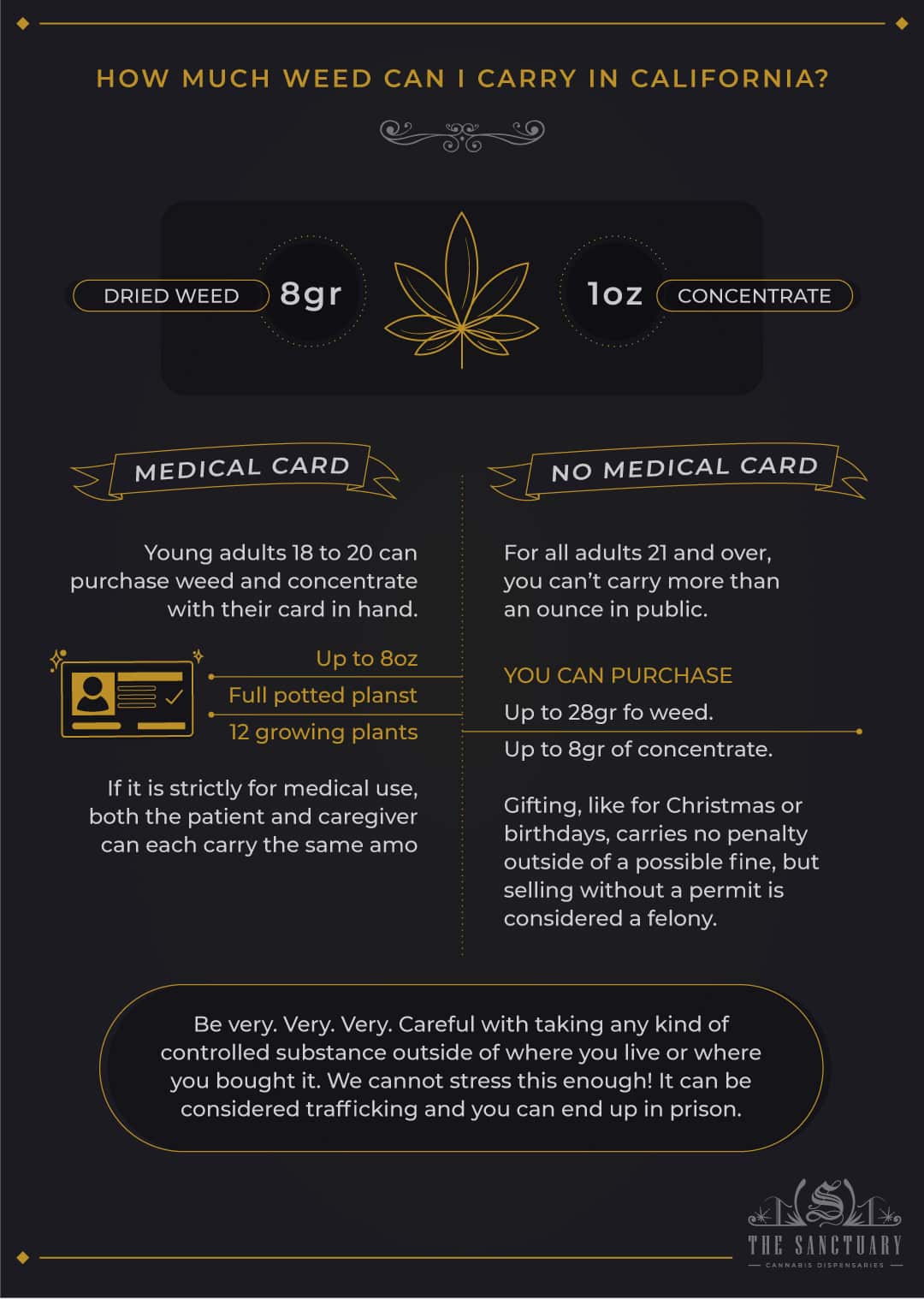
It’s important to differentiate between cultivation limits and possession limits. While you can grow up to six plants (or more for medical patients), the amount of dried cannabis flower you can legally possess for personal use is capped at 28.5 grams (approximately one ounce), and 8 grams of concentrated cannabis. This means that while you might harvest more from your plants, only a certain amount can be stored readily. Any excess beyond these limits, particularly if indicating intent to sell, could lead to legal issues if not properly handled within the legal retail framework. Public consumption of cannabis also remains largely prohibited, aligning with regulations for alcohol and tobacco. These distinctions are key to fully understanding the legal lifestyle of cannabis use in California.
The California Vibe: How Cannabis Cultivation Shapes the State’s Identity
The legal ability to cultivate cannabis plants for personal use is more than just a regulatory detail; it’s a significant component of California’s distinctive lifestyle and cultural identity. For many, it embodies the state’s pioneering spirit, its commitment to personal freedom, and a progressive approach to health and recreation.
For residents, home cultivation offers a unique form of self-sufficiency and a deeper connection to their personal wellness or recreational choices. It allows for control over the quality, strain, and cultivation methods of their cannabis, fostering a sense of bespoke production that aligns with California’s emphasis on artisanal goods and personalized experiences. This freedom contributes to a relaxed, liberal atmosphere that many seek when choosing to live in or visit the state. It’s an affirmation of individual autonomy, enabling people to engage with their hobbies and preferences within a supportive legal framework.
For visitors and those contemplating a move to California, understanding these cultivation laws provides insight into the broader “California vibe.” It signals a state that embraces progressive thinking and offers diverse recreational opportunities, some of which are not readily available elsewhere. While a tourist may not necessarily engage in cultivating plants during a short stay, the knowledge that such activities are legally permitted for residents speaks volumes about the state’s liberal stance and its unique blend of personal liberty and innovation. It can influence perceptions of California as a destination that respects individual choices and fosters a dynamic, evolving culture.
Furthermore, the legal cannabis market, supported by both cultivation and retail, has created a significant economic impact, fueling industries from agriculture to tourism. Cannabis tours, farm visits, and consumption lounges are emerging as part of the new tourism landscape, offering experiences that reflect this aspect of California’s modern identity. Whether through personal gardens or exploring the commercial cannabis scene, the right to grow and consume cannabis responsibly has cemented its place as a defining feature of the Californian lifestyle, attracting those who value freedom, wellness, and a forward-thinking approach to life.
LifeOutOfTheBox is a participant in the Amazon Services LLC Associates Program, an affiliate advertising program designed to provide a means for sites to earn advertising fees by advertising and linking to Amazon.com. Amazon, the Amazon logo, AmazonSupply, and the AmazonSupply logo are trademarks of Amazon.com, Inc. or its affiliates. As an Amazon Associate we earn affiliate commissions from qualifying purchases.