
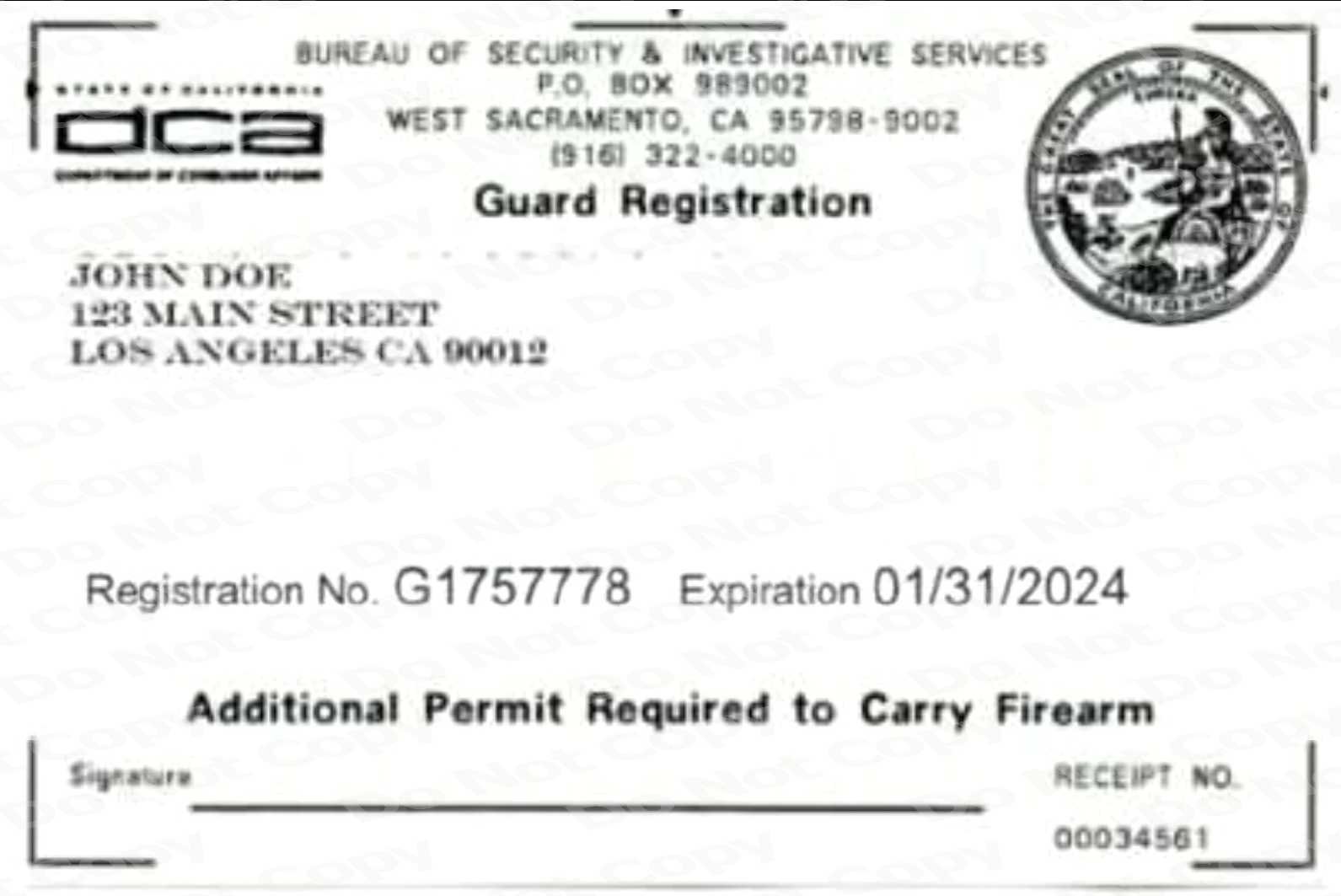
Embarking on a career in security in the Golden State requires understanding the foundational credential: the California Guard Card. For individuals eyeing opportunities within the dynamic private security sector, navigating the associated costs is a crucial first step in their professional lifestyle planning. Beyond a mere fee, the expense represents an investment in professional legitimacy, skill acquisition, and adherence to state regulations. This card, formally known as a Security Guard Registration, is mandated by the Bureau of Security and Investigative Services (BSIS), a division of the California Department of Consumer Affairs, ensuring that all security personnel meet specific training and background standards. The total cost isn’t a single flat rate but rather a sum of several distinct components, each playing a vital role in establishing a credible and compliant security professional. Understanding these elements is essential for anyone considering this career path, allowing for effective budgeting and a clear financial outlook on their professional journey.
Decoding the California Guard Card Landscape
The journey to obtaining a California Guard Card is multifaceted, involving specific training, a thorough background check, and a formal application process with the BSIS. This comprehensive approach ensures that only qualified and reputable individuals are entrusted with security responsibilities across the state. The primary purpose of the Guard Card is to regulate the private security industry, protecting both the public and the professionals working within it. Without this certification, individuals are legally prohibited from performing security guard duties in California.
Mandatory Training Requirements
The initial cornerstone of the Guard Card process is the required training. This isn’t just a formality but a critical educational component designed to equip future security guards with essential knowledge and skills. The BSIS mandates a minimum of 40 hours of training, divided into two key phases:
- Phase 1: The Power to Arrest Course (8 hours): This foundational course must be completed and passed before submitting the Guard Card application. It covers critical legal aspects, ethical considerations, and the proper procedures for making arrests, ensuring that guards understand their legal authority and limitations.
- Phase 2: Additional Training (32 hours): The remaining 32 hours of training must be completed within the first six months of being registered as a security guard. This phase delves into a broader range of topics, including public relations, observation and documentation, communication skills, liability, and emergency response.
The cost of this training varies significantly depending on the provider. Reputable training academies, often found in major cities like Los Angeles, San Francisco, or San Diego, typically charge anywhere from $80 to $200 for the initial 8-hour Power to Arrest course. Full 40-hour packages, which are often more economical when purchased upfront, can range from $150 to $400. Online courses may offer a more budget-friendly option, sometimes priced slightly lower, but it’s crucial to ensure they are BSIS-approved. The investment in quality training is not merely a compliance cost; it directly impacts a guard’s preparedness, professionalism, and ultimately, their career trajectory and effectiveness on the job.
The Live Scan Fingerprinting Requirement
A non-negotiable step in the application process is the Live Scan fingerprinting. This digital fingerprint submission is crucial for conducting a comprehensive background check through the California Department of Justice (DOJ) and the Federal Bureau of Investigation (FBI). This stringent requirement helps ensure that individuals with disqualifying criminal records are prevented from obtaining a Guard Card, thereby upholding public safety and the integrity of the security profession.
The cost of a Live Scan is typically composed of two parts:
- DOJ and FBI Processing Fees: These are state and federal charges for processing the background check. As of recent updates, these combined fees are approximately $49. These are non-negotiable and standard across all Live Scan providers.
- Rolling Fee: This is the service charge imposed by the Live Scan operator for taking and submitting your fingerprints. This fee varies by location and provider, ranging typically from $20 to $40.
Therefore, the total cost for Live Scan fingerprinting generally falls within the range of $69 to $89. It is vital for applicants to bring the correct Live Scan form, specifically the one for BSIS Security Guard Registration, to ensure their fingerprints are sent to the correct agencies for processing.
BSIS Application Fee
After completing the initial training and the Live Scan process, the final financial hurdle for the initial Guard Card is the application fee paid directly to the BSIS. This fee covers the administrative costs associated with reviewing the application, verifying training completion, and issuing the Guard Card itself. The initial application fee for a Security Guard Registration is $55. This fee is non-refundable, regardless of whether the application is approved or denied, underscoring the importance of ensuring all prerequisites are met accurately before submission.
Combining these elements, the estimated total initial cost for a California Guard Card typically ranges from $200 to $550, depending heavily on the chosen training provider and Live Scan rolling fees. This outlay is a foundational investment in a career that offers diverse opportunities across various sectors in California.
Sustaining Your Security Career: Ongoing Costs and Renewals
Obtaining the initial Guard Card is just the beginning of a professional lifestyle in security. To maintain a valid registration and continue working legally, security guards in California must be aware of and budget for ongoing costs, primarily associated with renewals and potential continuing education requirements. Proactive financial planning for these recurring expenses is key to an uninterrupted career.

Biennial Renewal Fees
A California Guard Card is valid for two years from the date of issuance. To prevent the registration from expiring, security guards must submit a renewal application and pay the associated fee to the BSIS. The current renewal fee for a Security Guard Registration is $55. It is critical to initiate the renewal process well in advance of the expiration date, as allowing the card to lapse can lead to penalties or even necessitate going through the entire initial application process again, incurring greater costs and potential employment disruption. A lapsed card means an individual cannot legally work as a security guard until it is reactivated.
Continuing Education and Endorsements
While there isn’t a mandatory continuing education requirement for the basic Guard Card itself beyond the initial 40 hours, security professionals often opt for additional training to enhance their skills, specialize, or obtain further endorsements. These can significantly impact earning potential and career mobility within the security lifestyle.
Common endorsements and their approximate costs include:
- Armed Guard Card (Firearms Permit): This is a substantial additional investment. It requires a separate application, a minimum of 14 hours of specific firearms training (8 hours classroom, 6 hours range qualification), and passing a shooting proficiency test. The training costs can range from $200 to $400, plus a BSIS application fee of $80 and an additional Live Scan fee (typically $38 for the DOJ and FBI firearms fees, plus the rolling fee). Renewal for the firearms permit is annual, costing $60 for the BSIS fee and requiring requalification training, which also incurs costs.
- Baton Permit: Training for a baton permit usually costs between $80 and $150 and requires specific instruction on the proper use of impact weapons. There is an additional BSIS application fee for this permit, often around $50.
- Pepper Spray Permit: While not always a separate permit, specific training on the use of Oleoresin Capsicum (OC) spray is highly recommended and often a prerequisite by employers. The training typically ranges from $40 to $80.
- Proprietary Security Officer (PSO) Registration: For those working directly for a company (not a contract security agency), a PSO registration is required. This has its own application and renewal fees, similar to the Guard Card, but with different training requirements.
These specialized endorsements significantly add to the initial and ongoing costs but open doors to higher-paying positions and more diverse security roles, making them a worthwhile investment for many. Professionals aiming for a long-term, specialized career in security will integrate these additional costs into their financial planning.
Factors Influencing the Total Cost and Maximizing Value
The overall cost of obtaining and maintaining a California Guard Card is not static. Several variables can influence the final expenditure, and understanding these can help individuals make more informed decisions, aligning with their personal financial and career lifestyle goals.
Variability in Training Costs
As mentioned, training fees are the most variable component. The price differences stem from several factors:
- Provider Reputation and Facilities: Well-established academies with state-of-the-art training facilities, experienced instructors, and strong industry connections might charge more. However, they often offer more comprehensive instruction and better preparation for the realities of the job.
- Location: Training costs can be higher in metropolitan areas like Los Angeles or San Francisco due to higher operating costs. Conversely, providers in smaller cities or online platforms might offer more competitive rates.
- Bundled Packages: Many training schools offer packages that combine the 8-hour Power to Arrest with the remaining 32 hours of training, and sometimes even include specialized courses like baton or pepper spray certification at a discounted rate. These bundles can be more cost-effective than purchasing each course individually.
When choosing a training provider, it’s crucial to prioritize BSIS-approved entities to ensure the training is legitimate and recognized. While cost is a factor, the quality of instruction directly impacts a guard’s preparedness and professional efficacy.
Avoiding Pitfalls and Unexpected Expenses
Careful attention to detail throughout the application process can save applicants from incurring unnecessary costs or delays. Common pitfalls include:
- Incorrect Live Scan Form: Using the wrong form can result in fingerprints being sent to the incorrect agency, requiring a re-scan and additional fees.
- Incomplete Applications: Missing information or errors on the BSIS application can lead to delays or rejection, potentially incurring repeat application fees if a completely new submission is required.
- Lapsed Registration: Failing to renew the Guard Card on time can result in having to restart the entire application process, including repeating the initial 40 hours of training and paying all initial fees again, which is a significant financial setback. The BSIS typically sends renewal notices, but ultimately, it is the responsibility of the individual to track their expiration date.

Strategic Investment for Career Advancement
Viewing the costs associated with the Guard Card not as expenses but as strategic investments is crucial for a successful security lifestyle. Quality training and additional endorsements not only ensure compliance but also enhance marketability, leading to better job opportunities and higher wages. For example, an armed guard with specialized training in executive protection or surveillance will command a significantly higher salary than a basic unarmed guard. Many employers also look favorably upon candidates who have proactively invested in their professional development, viewing it as a sign of dedication and ambition.
By carefully planning for the initial and ongoing costs, choosing reputable training, and avoiding common errors, aspiring and current security professionals in California can effectively manage their finances while building a robust and rewarding career in the security industry. The investment in a Guard Card is an investment in one’s professional future, opening doors to diverse career paths across the state’s sprawling economy.
LifeOutOfTheBox is a participant in the Amazon Services LLC Associates Program, an affiliate advertising program designed to provide a means for sites to earn advertising fees by advertising and linking to Amazon.com. Amazon, the Amazon logo, AmazonSupply, and the AmazonSupply logo are trademarks of Amazon.com, Inc. or its affiliates. As an Amazon Associate we earn affiliate commissions from qualifying purchases.