
California beckons travelers from across the globe with its iconic landscapes, vibrant cities, and endless adventure. From the sun-drenched beaches of Southern California to the majestic redwoods of the north, and from the bustling urban centers of Los Angeles and San Francisco to the serene beauty of national parks like Yosemite and Death Valley, the Golden State offers an unparalleled experience. Many visitors opt for a quintessential California road trip, eager to explore the diverse attractions at their own pace. However, the open road, especially on scenic routes like the Pacific Coast Highway, can sometimes tempt drivers to push the limits, often leading to an unwelcome souvenir: a speeding ticket.
Understanding the financial implications and legal consequences of a speeding ticket in California is crucial for any traveler. What might seem like a minor infraction can quickly escalate into a substantial drain on your travel budget, impacting your ability to enjoy that luxury resort stay, indulge in fine dining, or partake in exhilarating local activities. This comprehensive guide will break down the costs, consequences, and best practices for navigating California’s roadways responsibly, ensuring your travel memories are filled with joy, not legal woes.
Understanding the Financial Impact of Speeding in California
A speeding ticket in California is far more than just a minor inconvenience; it’s a significant financial hit that can disrupt even the most meticulously planned travel budget. The sticker shock often comes from the fact that the initial base fine is only a fraction of the total amount you’ll eventually pay. California employs a complex system of surcharges, assessments, and fees that dramatically inflate the final cost of a citation. For travelers, this unexpected expense can mean the difference between an indulgent experience at a boutique hotel and a more constrained budget, or even force the cancellation of planned excursions.
Base Fines and Additional Fees: A Costly Calculation
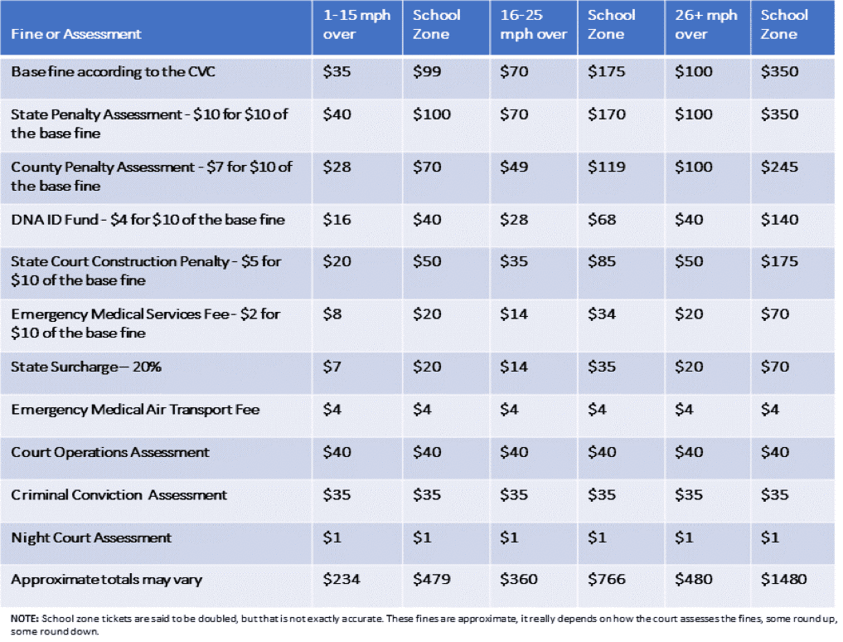
The base fine for speeding in California depends on how many miles per hour (mph) you were driving over the posted limit. Generally, these base fines are:
- 1-15 mph over the limit: Approximately $35
- 16-25 mph over the limit: Approximately $70
- 26 mph or more over the limit: Approximately $100
However, these figures are just the starting point. California adds a series of state and county fees, court costs, and surcharges that can multiply the base fine by five to ten times. These additional charges often include:
- State Surcharge: An additional 20% of the base fine.
- Court Construction Fee: To fund courthouse construction and renovation projects.
- Court Operations Assessment: To cover the operational costs of the courts.
- Criminal Justice Administration Fee: To support local law enforcement and justice programs.
- Emergency Medical Services Fund: To fund emergency services.
- Penalty Assessments: Several additional charges imposed by the state and county.
For instance, a base fine of $35 for going 1-15 mph over the limit can easily balloon to over $230 once all these assessments are factored in. If you were caught going 26 mph or more over the limit, a $100 base fine could quickly become upwards of $490 or more, not including potential jail time or license suspension for egregious offenses.
Consider the impact on your travel plans: that $230-$500 could have been spent on a memorable hot air balloon ride over Napa Valley, a gourmet meal in San Diego’s Gaslamp Quarter, or an extra night at a charming bed and breakfast in Big Sur. For international visitors or those on a strict budget, such an unexpected expense can significantly diminish the quality of their California experience, turning a dream vacation into a financial headache.
The Hidden Costs: Insurance Premiums and Driver’s License Points
Beyond the immediate monetary cost of the ticket, there are long-term financial consequences that can be even more substantial, particularly when it comes to insurance premiums and driver’s license points. These hidden costs can follow you long after your California vacation has ended, impacting your lifestyle and future travel plans.
In California, most speeding violations result in one point being added to your driving record. Accumulating too many points within a specific timeframe can lead to a “negligent operator” status, which may result in your driver’s license being suspended or revoked. While this is more of a concern for California residents, out-of-state and international drivers are not immune. Points from a California ticket can often transfer to your home state’s driving record due to interstate compacts, leading to similar consequences. For international visitors, while direct points on their home country’s license might be less common, the offense can still be noted and potentially impact future car rental agreements or even visa applications, depending on the severity.
The most universal and often most expensive hidden cost is the increase in auto insurance premiums. Insurance companies typically view speeding tickets as an indicator of higher risk. Even a single point on your record can cause your insurance rates to increase significantly – sometimes by hundreds of dollars annually – for three to five years. For travelers who rent cars, repeated infractions could even lead to rental car agencies refusing service in the future, severely limiting their travel flexibility.
To mitigate the impact of points, eligible drivers may be able to attend traffic school. While this avoids the point being added to your public driving record (though the conviction remains on your confidential record), traffic school itself incurs costs, typically ranging from $30-$60, in addition to an administrative fee paid to the court. This also demands several hours of your time, potentially eating into precious vacation days if you opt to complete it while still in California.

Navigating California’s Roadways: Prevention and Best Practices for Travelers
Exploring California’s vast and varied landscapes by car is an unforgettable experience. From cruising down the Pacific Coast Highway with breathtaking ocean views to winding through the majestic forests of Sequoia National Park or traversing the unique desert terrain of Joshua Tree, a road trip truly allows you to immerse yourself in the state’s beauty. To ensure these memories remain positive and free from the stress of a speeding ticket, adopting preventative measures and best driving practices is paramount. By being mindful of your surroundings and respecting traffic laws, you can preserve your travel budget for enriching experiences like a stay at a luxurious Santa Barbara resort or an adventure tour in Lake Tahoe.
Common Speeding Traps and Enforcement Zones
While law enforcement can be anywhere, certain areas in California are notorious for strict speed enforcement. Being aware of these common speeding traps can help you stay vigilant:
- Freeways (Interstate 5, US-101, I-15): On long stretches of highway, especially after a period of congestion, drivers often feel compelled to speed up. Patrols frequently monitor these arteries, particularly around city limits or areas where speed limits suddenly drop. The stretch of I-5 between Los Angeles and Sacramento, for example, is known for its enforcement.
- Transition Zones: Be extra cautious when transitioning from a high-speed freeway to a surface street or when entering or exiting small towns along rural routes. Speed limits often decrease rapidly, and officers frequently position themselves to catch drivers who fail to adjust quickly.
- Construction Zones: Speed limits are drastically reduced in construction zones, often as low as 25 mph, and fines are typically doubled in these areas. Pay close attention to signage, especially on major thoroughfares like the I-80 corridor near Oakland.
- School Zones: During school hours (typically 7 AM to 10 AM and 2 PM to 4 PM on weekdays), speed limits are strictly enforced at 25 mph near schools. These areas are usually well-marked, but travelers unfamiliar with the local schedules might overlook them.
- Scenic Routes and Coastal Roads: While alluring, routes like the Pacific Coast Highway often have variable speed limits, sharp turns, and breathtaking views that can distract drivers. Enforcement is common to ensure safety on these popular, sometimes challenging, roads, especially in tourist hot spots like Carmel-by-the-Sea or the stretch through Malibu.
- Small Towns with Revenue Generation Tendencies: Some smaller municipalities rely heavily on traffic citations for local revenue. While not officially “traps,” these towns are known for strict enforcement, even for minor infractions. Examples can be found along older highways or routes that parallel major interstates.
Utilize modern navigation apps like Waze or Google Maps, which often provide real-time alerts about police presence or speed traps. However, always remember that these are supplementary tools and should not replace your own diligent observation of posted speed limits and road conditions.
Defensive Driving and Respecting Posted Limits
The most effective way to avoid a speeding ticket and ensure a pleasant travel experience is to practice defensive driving and consistently adhere to posted speed limits. This is particularly important in a state as diverse as California, where driving conditions can change rapidly.
- Read All Signs Carefully: Speed limits can change frequently, especially when passing through different jurisdictions, entering residential areas, or encountering construction zones. Look for new speed limit signs and adjust your speed promptly. Don’t assume the speed limit will remain constant for miles.
- Understand Variable Limits: Some areas have different speed limits for day and night, or for specific vehicle types (like trucks with three or more axles). Pay attention to these nuances. Similarly, adverse weather conditions (rain, fog, high winds – common along the coast or in mountain passes) often necessitate a slower, safer speed, regardless of the posted limit.
- Maintain a Safe Following Distance: This isn’t just about safety; it also helps you react to sudden changes in traffic or road conditions without needing to accelerate erratically. When you’re relaxed and not tailgating, you’re less likely to speed.
- Avoid Distractions: In-car navigation systems, beautiful scenery, or even engaging conversations with travel companions can divert attention from your speedometer and traffic signs. Keep your focus on the road and your speed.
- Use Cruise Control Wisely: On long, open stretches of freeway, cruise control can be an excellent tool to maintain a consistent, legal speed. However, be cautious when using it in areas with variable speed limits, heavy traffic, or winding roads.
- Be Aware of the Flow of Traffic: While it might feel safer to go with the flow of traffic, even if it’s over the speed limit, this is not a defense against a speeding ticket. Law enforcement will often pull over the fastest cars or those making aggressive maneuvers, even if others are also speeding. Your priority should always be the posted limit.
By adopting these practices, travelers can enjoy the freedom and beauty of California’s roads without the financial burden or stress of a speeding ticket, ensuring their travel memories are nothing short of golden.
What to Do If You Get a Speeding Ticket in California
Despite your best efforts, sometimes a speeding ticket is unavoidable. Whether it’s a momentary lapse in judgment or an unfortunate misunderstanding, receiving a citation while traveling in California can be a frustrating and confusing experience, especially for those unfamiliar with the state’s legal system. The decisions you make immediately after receiving a ticket, and in the weeks that follow, can significantly impact the financial and legal consequences. For travelers, navigating this process requires careful consideration, as a court appearance or extended legal battle could severely disrupt carefully planned itineraries and accommodation bookings, potentially turning a relaxing vacation into a logistical nightmare.
Options for Addressing Your Citation
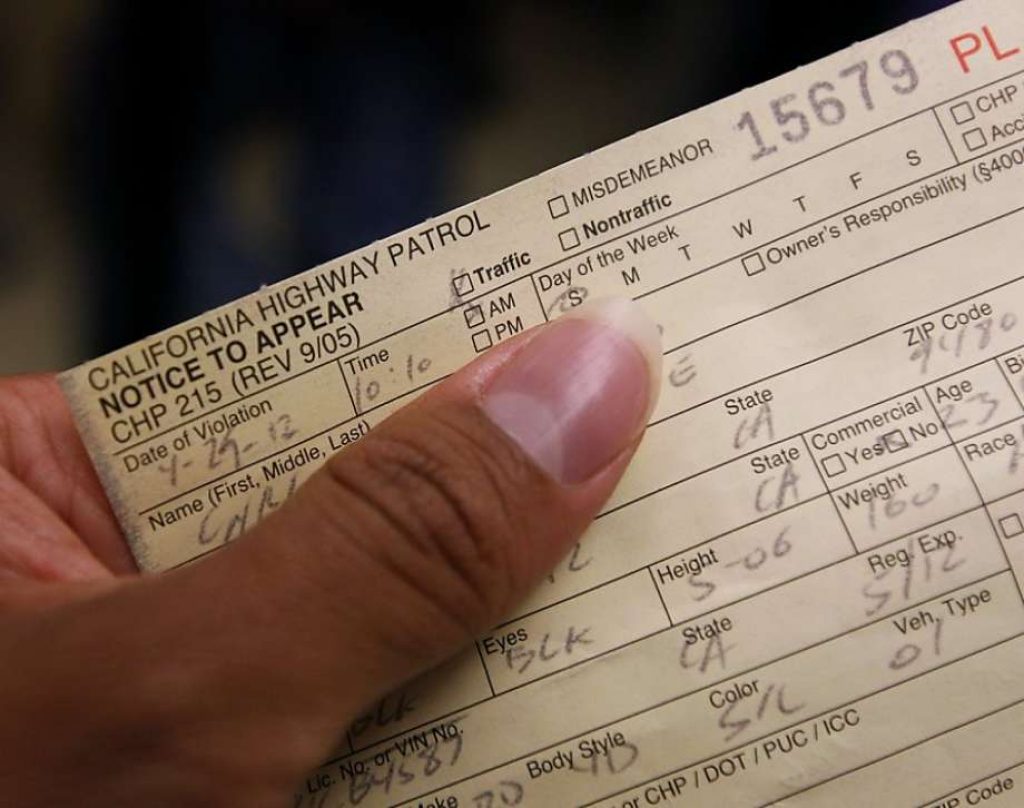
Once you receive a speeding ticket in California, you generally have three primary options:
- Pay the Fine and Plead Guilty (Traffic Bail): This is often the simplest and most straightforward option, especially for minor infractions and for travelers who do not want to extend their stay or return to California for a court appearance. By paying the “traffic bail” amount by the due date, you are essentially pleading guilty to the infraction. The downside is that the conviction will appear on your driving record, and one point will be added (for most speeding tickets), leading to potential increases in your auto insurance premiums. For out-of-state drivers, this point may transfer to your home state’s record. While convenient, this option directly incurs all the financial penalties discussed earlier.
-
Contest the Ticket (Plead Not Guilty): If you believe you were wrongly cited, or if there are mitigating circumstances, you have the right to plead not guilty and request a trial. This involves appearing in court, either in person or, in some cases, through a “trial by written declaration.”
- Trial by Written Declaration: This option allows you to submit a written statement explaining your case, along with any evidence (e.g., photos, dashcam footage). The officer also submits their statement, and a judge reviews both. This can be particularly appealing for out-of-state travelers as it avoids the need to return to [California](https://lifeoutofthebox.com/california] for a court date. If found not guilty, the ticket is dismissed. If found guilty, you will still owe the fine and typically lose the option to attend traffic school.
- In-Person Trial: This requires you to appear in court in the county where the ticket was issued. You will have the opportunity to present your case to a judge, cross-examine the officer, and call witnesses. While this offers the best chance of dismissal if you have a strong defense, it demands significant time, effort, and potentially travel expenses, which can be a major disruption to a planned vacation or a costly post-trip obligation.
-
Attend Traffic School: For many first-time offenders or those with minor speeding infractions, traffic school is an appealing option. If eligible and successfully completed, traffic school prevents the point from being added to your public driving record, thus helping to avoid increased insurance premiums.
- Eligibility: Generally, you must have a valid driver’s license, the violation must be for an infraction (not a misdemeanor), you cannot have attended traffic school for a prior violation within the last 18 months, and the ticket cannot involve alcohol or drugs.
- Process and Costs: You typically pay the full ticket amount plus an administrative fee to the court, and then pay a separate fee directly to a state-approved traffic school (online or in-person). Upon completion, the school notifies the court, and the point is masked from your public record. While beneficial for your insurance, it does add to the overall cost and requires several hours of coursework. For travelers, completing an online traffic school after returning home is usually the most practical approach.
Legal Assistance and Out-of-State Drivers
For travelers from other states or countries, a California speeding ticket can introduce unique complexities.
- Out-of-State Drivers: California is part of the “Driver License Compact” and the “Nonresident Violator Compact.” These agreements mean that traffic violations committed in California will generally be reported to your home state’s Department of Motor Vehicles (DMV), and the points or other consequences will apply to your license as if the offense occurred in your home state. This makes it crucial for out-of-state drivers to take California tickets seriously.
- International Drivers: For drivers from outside the United States, the immediate impact on their home country’s driving record might vary based on international agreements. However, failure to address a California ticket can lead to a warrant for arrest in California, which could complicate future entry into the U.S. or even lead to arrest if stopped again in California. It can also impact future car rental eligibility.
- When to Consider Legal Counsel: If you’re facing a serious speeding violation (e.g., extremely high speed, reckless driving), have multiple prior violations, or if contesting the ticket requires an in-person court appearance that significantly disrupts your travel, hiring a California traffic attorney might be a wise investment. An attorney can advise you on your best course of action, potentially negotiate with the court, or even appear on your behalf, saving you the time and expense of returning to the state. This could be particularly valuable for travelers who have limited time or who prioritize a smooth, uninterrupted vacation experience.
Beyond the Ticket: Enhancing Your California Travel Experience Responsibly
California’s allure lies in its ability to offer a diverse range of experiences, from the cultural richness of San Francisco with its iconic Golden Gate Bridge and Alcatraz Island, to the glamour of Hollywood in Los Angeles, and the natural wonders of Yosemite National Park or the majestic Redwood National Park. These destinations are meant to be savored and enjoyed without the shadow of legal troubles. Adopting a mindset of responsible and mindful travel, especially when driving, ensures that your focus remains on creating cherished memories, not on managing fines or court dates.
Exploring California Safely and Mindfully
The true essence of a California road trip isn’t about how fast you can get from point A to point B, but about the journey itself. The winding roads, the ever-changing scenery, and the hidden gems discovered along the way are what make California so special.
- Embrace the Journey: Plan your itinerary with ample time built in for unexpected stops, scenic overlooks, and spontaneous detours. Rushing not only increases your risk of speeding but also diminishes your ability to truly appreciate the landscape. Imagine driving too fast through Big Sur and missing the perfect photo opportunity or the chance to witness migrating whales from a roadside pull-off.
- Prioritize Safety Over Speed: Beyond avoiding tickets, safe driving protects you, your passengers, and others on the road. Many of California’s most beautiful routes, especially through mountains or along the coast, can be challenging with sharp curves and limited visibility. Respecting the speed limit in these areas is crucial for safety and for maintaining a relaxed, enjoyable pace.
- Sustainable and Responsible Travel: A speeding ticket is not only a personal setback but can also contribute to a less positive image of tourism. Driving responsibly aligns with broader principles of sustainable travel, respecting local communities, natural environments, and the laws designed to protect them. Your actions on the road reflect on the traveling community as a whole.
- Enjoy the Lifestyle: California’s lifestyle is often associated with freedom, relaxation, and a laid-back approach. Getting a ticket can instantly shatter this perception, replacing it with stress and financial strain. By driving within the limits, you maintain that sense of ease and allow yourself to fully immerse in the authentic California experience, whether it’s exploring the historic missions, enjoying the rides at Disneyland, or hiking in Anza-Borrego Desert State Park.
Resources for Travelers
Before and during your California adventure, leveraging available resources can further enhance your trip and help you stay out of trouble:
- California Department of Motor Vehicles (DMV): The official source for all traffic laws, driver handbooks, and information regarding citations and points. While not specific to travelers, understanding their regulations is key.
- California Highway Patrol (CHP): The primary enforcement agency on most California freeways and rural roads. Their website often provides traffic advisories and safety tips.
- Navigation Apps: As mentioned, Waze and Google Maps can offer real-time traffic, accident, and even police presence alerts. However, use them as guidance, not as an excuse to break laws.
- Weather and Road Condition Websites: Check the California Department of Transportation (Caltrans) website or app for current road closures, chain requirements in mountain passes, and adverse weather conditions, especially if you’re venturing to areas like Lake Tahoe or Yosemite during winter.
- Travel Insurance: While it won’t cover fines, comprehensive travel insurance can provide peace of mind for other travel disruptions, allowing you to focus on safe driving.
- Rental Car Company Policies: Familiarize yourself with your rental car agreement, especially regarding citations and accident reporting.
In conclusion, while the question “How much is a speeding ticket in California?” might seem straightforward, the answer is complex and carries far-reaching implications for travelers. From the significant financial drain to the potential disruption of travel plans and long-term impacts on driving records and insurance, a speeding ticket is a costly error. By understanding the rules, practicing defensive driving, and making informed decisions if you do receive a citation, you can ensure your California adventure remains an unblemished chapter in your travel story, allowing you to fully enjoy the Golden State’s unparalleled beauty and endless attractions. Drive safely, travel wisely, and make memories that last a lifetime, for all the right reasons.
LifeOutOfTheBox is a participant in the Amazon Services LLC Associates Program, an affiliate advertising program designed to provide a means for sites to earn advertising fees by advertising and linking to Amazon.com. Amazon, the Amazon logo, AmazonSupply, and the AmazonSupply logo are trademarks of Amazon.com, Inc. or its affiliates. As an Amazon Associate we earn affiliate commissions from qualifying purchases.