
For individuals and businesses in California looking to expand their horizons internationally, understanding the process of apostilling a document is not merely a bureaucratic formality – it’s a critical gateway. Whether you’re planning a relocation for a “Family Trip,” embarking on “Business Stays” abroad, pursuing international education, or engaging in foreign legal processes, an apostille ensures your California-issued documents are legally recognized in countries party to the Hague Apostille Convention. This comprehensive guide is designed to navigate you through the intricacies of obtaining an apostille in the Golden State, offering insights and practical steps to streamline your journey into global opportunities.

Understanding the Apostille and Its Importance for International Lifestyles
Embarking on an international adventure, whether for work, study, or personal reasons, often involves a significant amount of preparation. Among the most crucial administrative steps is the apostille process, a certification that lends international legal credence to your domestic documents.
What is an Apostille?
At its core, an apostille is a form of authentication issued to documents for use in countries that participate in the Hague Apostille Convention of 1961. This international treaty simplifies the legalization of documents for inter-country use, essentially eliminating the need for further authentication by the embassy or consulate of the foreign country where the document is to be used. Before the Hague Convention, documents typically required a more complex “legalization” process, involving multiple layers of certification, often including the foreign embassy. The apostille streamlines this by providing a single, internationally recognized certificate affixed directly to the document.
The apostille itself is a standardized stamp or form issued by a designated authority (in California, this is the California Secretary of State). It verifies the authenticity of the signature on the document, the capacity in which the person signing the document acted, and, where appropriate, the identity of the seal or stamp which the document bears. It does not authenticate the content of the document itself, only its origin.
Why You Might Need an Apostille in California
The need for an apostille arises in a multitude of scenarios, all of which underscore its relevance to international “Lifestyle” choices and “Business Stays.” Understanding these common use cases can help you anticipate your requirements:
- International Education: Students from California planning to study abroad will often need apostilled copies of their academic transcripts, diplomas, and degree certificates. This is to ensure that their educational qualifications are recognized by foreign universities and credential evaluation bodies.
- Working Abroad: Professionals seeking employment overseas frequently encounter requirements for apostilled employment contracts, background checks, professional licenses, and letters of recommendation. These documents assure foreign employers and immigration authorities of your qualifications and legal standing.
- Marriage and Family Reunification Abroad: For individuals planning to marry in a foreign country, apostilled birth certificates, marriage licenses (if previously married in California), and divorce decrees are often mandatory. Similarly, family members seeking to join relatives abroad may need apostilled birth certificates, adoption papers, or other vital records.
- International Business Transactions: California-based businesses engaging in international trade, opening foreign branches, or forming partnerships may require apostilled corporate documents, such as articles of incorporation, bylaws, powers of attorney, and certificates of good standing. This ensures legal compliance and recognition in foreign jurisdictions.
- Real Estate Overseas: Purchasing or selling property in another country can necessitate apostilled property deeds, powers of attorney, or other legal documents related to real estate transactions.
- Adoption: International adoption processes are heavily reliant on apostilled documents, including birth certificates of the adoptive parents, home study reports, and court orders.
- Citizenship Applications: Individuals applying for citizenship in a foreign country may need various personal documents, like birth certificates, marriage certificates, or police clearances, to be apostilled.
In essence, if you are a California resident or business looking to use a California-issued document in a foreign country that is part of the Hague Apostille Convention, an apostille is almost certainly a prerequisite.
Navigating the Apostille Process in California: Step-by-Step
Obtaining an apostille in California involves a clear, sequential process overseen by the California Secretary of State. Following these steps meticulously will help ensure a smooth and successful experience.
Step 1: Document Preparation and Notarization
The first and arguably most critical step is to ensure your document is correctly prepared for apostille. Not all documents are created equal, and their preparation depends on their nature.
-
Identify Eligible Documents: The California Secretary of State can only apostille documents that meet specific criteria:
- Public Documents: These are documents issued by a California public official or agency, bearing an original signature and/or official seal. Examples include:
- Birth, marriage, and death certificates (issued by the County Clerk or Department of Public Health).
- Court documents (divorce decrees, judgments).
- School transcripts and diplomas (issued by public universities, colleges, or K-12 schools, often requiring a school official’s signature to be notarized first).
- Documents issued by the California Secretary of State itself (e.g., Certificates of Status for corporations).
- Private Documents: These are documents signed by an individual in their private capacity. For these to be apostilled, they must be properly notarized by a California notary public. Examples include:
- Powers of attorney.
- Affidavits and declarations.
- Agreements and contracts.
- Copies of passports or driver’s licenses (if certified by a notary).
- Public Documents: These are documents issued by a California public official or agency, bearing an original signature and/or official seal. Examples include:
-
Notarization Requirement for Private Documents: If your document is a private one, finding a licensed California notary public is essential. The notary must:
- Verify the identity of the signer.
- Witness the signer’s signature (or receive acknowledgment of signature).
- Complete a proper notarial certificate (e.g., acknowledgment, jurat) that is attached to or included on the document.
- Affix their official seal and signature.
- Ensure their commission is current. An apostille cannot be issued for documents with incomplete or incorrect notarizations, or those notarized by an expired notary commission.
-
Important Note on Federal Documents: Documents issued by federal agencies (e.g., FBI background checks, FDA certificates, documents signed by a U.S. federal official or court) cannot be apostilled by the California Secretary of State. These documents must be apostilled by the U.S. Department of State in Washington D.C.
Step 2: Submitting Your Document to the California Secretary of State
Once your document is correctly prepared and, if necessary, notarized, it’s ready for submission to the California Secretary of State, the sole authority for issuing apostilles in California.
- Methods of Submission: You have two primary options:
- Mail-in Service: This is the most common method. You will need to prepare a package containing:
- The original document(s) requiring an apostille. Ensure they are the originals or certified copies (for vital records).
- A completed Apostille/Certification Request Form. This form is available on the California Secretary of State’s website and asks for your contact information, the country where the document will be used, and the type of document.
- Payment: A check or money order payable to the “Secretary of State” for the required fee per apostille. Check the current fee schedule on their website.
- A self-addressed, stamped envelope for the return of your apostilled document(s). For security and tracking, it is highly recommended to use priority mail, certified mail, or a courier service with a tracking number.
- Mail your package to the specific address provided by the California Secretary of State for apostille requests, usually in Sacramento.
- In-Person Submission: For urgent requests, you can submit documents in person at the California Secretary of State offices in Sacramento or Los Angeles.
- Sacramento Office: Offers walk-in service during business hours. Turnaround times can vary but are typically much faster than mail-in.
- Los Angeles Office: Often requires appointments, especially for same-day service, though policies can change. It’s crucial to check their website or call ahead for the most current information regarding hours, appointment requirements, and walk-in availability.
- You’ll need to bring the documents, the request form, and payment (cash, check, money order, or credit card – verify accepted payment types for in-person).
- Mail-in Service: This is the most common method. You will need to prepare a package containing:
Step 3: Receiving Your Apostilled Document
Once the California Secretary of State processes your request, they will affix the apostille certificate directly to your document.
- Processing Times: Mail-in requests typically take several weeks, varying based on current volume. In-person submissions, especially in Sacramento, can often be completed the same day or within a few business days. Always factor in these timelines when planning your international endeavors.
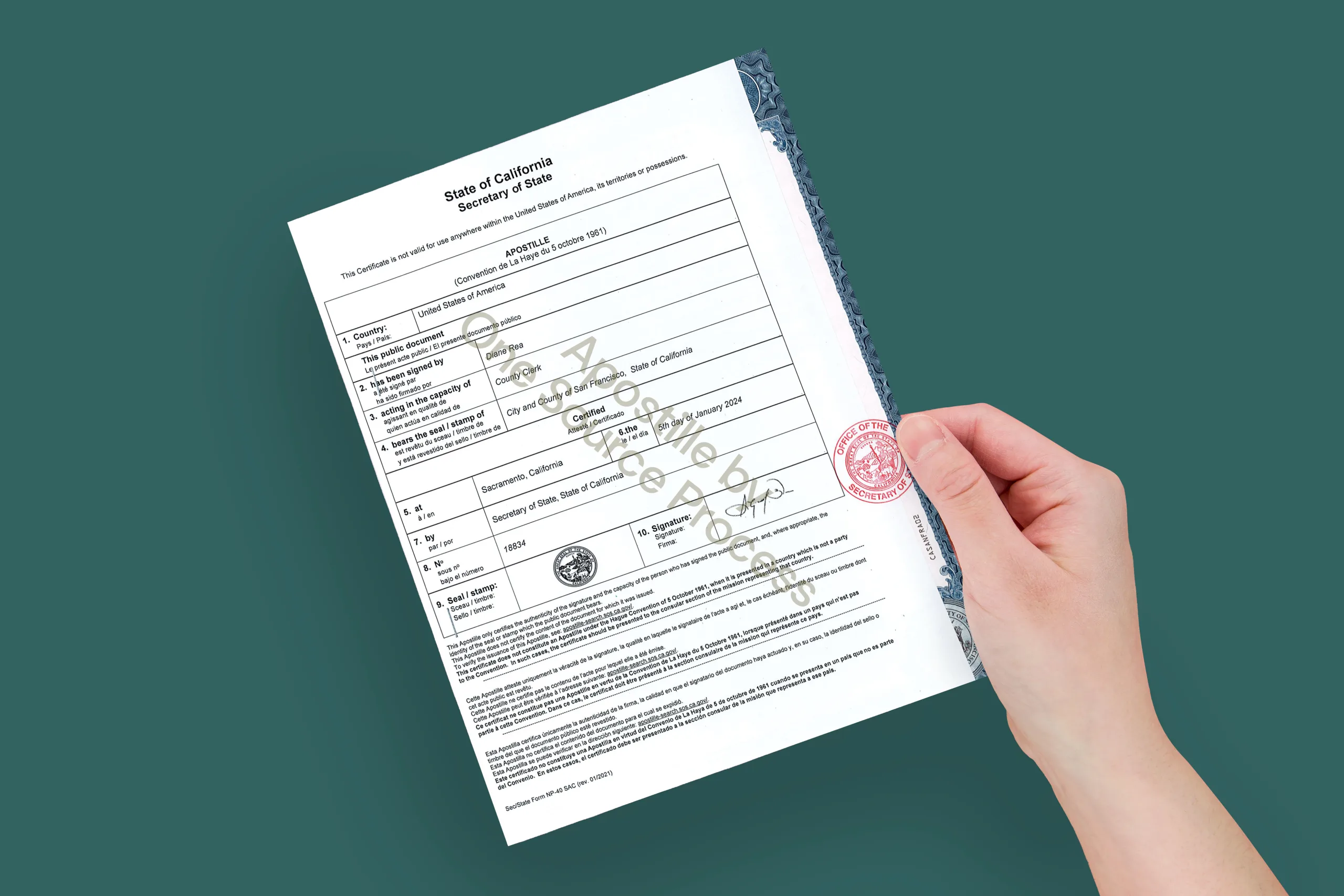
- What the Apostille Looks Like: The apostille is a distinct, multi-part form that includes details such as the country of issue, the name of the signatory, the capacity in which they acted, the seal of the authority that issued the document, the place and date of the apostille, and the signature and seal of the apostilling authority (California Secretary of State). It is usually attached to your original document with a staple, grommet, or ribbon, making it an integral part of the document.
- Verification: The receiving country can verify the authenticity of the apostille through the California Secretary of State’s online verification system, using the unique identifier on the apostille.
Common Challenges and Expert Tips for a Smooth Process
While the apostille process in California is straightforward, certain pitfalls can cause delays. Being aware of these and applying strategic tips can save you time and frustration.
Avoiding Common Pitfalls
- Incorrect Notarization: This is the most frequent reason for rejection. Ensure the notary’s commission is active, their seal is legible, and the notarial certificate is correctly filled out for the specific type of action (e.g., acknowledgment for signatures, jurat for sworn statements). Any missing information or errors will lead to rejection.
- Submitting Ineligible Documents: Do not send documents issued by federal agencies or other states to the California Secretary of State. They will be returned unprocessed. Federal documents go to the U.S. Department of State, and documents from other states must be apostilled by that state’s Secretary of State.
- Missing Information in the Request: Double-check that your Apostille/Certification Request Form is fully completed, including the destination country. Incomplete forms will delay processing.
- Expired Documents: While most vital records do not expire, some documents, like professional licenses or background checks, may have validity periods. Ensure your document is current if the receiving authority requires it.
- Originals vs. Copies: For public documents like birth certificates, you generally need to submit the original certified copy issued by the County Clerk or State Registrar. For private documents, the original document with the live notary signature is required. Simple photocopies generally cannot be apostilled unless they are certified by the document custodian (and that certification is then notarized).
Pro Tips for Efficiency
- Start Early: The apostille process, especially by mail, can take several weeks. Factor this into your overall timeline for international relocation, business ventures, or study plans. Don’t wait until the last minute.
- Double-Check All Requirements: Before sending your documents, visit the official California Secretary of State website. Requirements and fees can change, and their website is the most authoritative source. Confirm the specific needs of the destination country, as some may have additional requests beyond the apostille.
- Consider Using a Reputable Apostille Service: While this article focuses on the DIY approach, for complex cases, individuals with limited time, or those dealing with multiple document types, a specialized apostille service can be invaluable. These services are familiar with the nuances of various document types and can expedite the process, often handling notarization and submission on your behalf for a fee.
- Verify Recipient Country’s Requirements: Always confirm with the foreign embassy, consulate, or institution exactly what documents are needed and if they require an apostille or full legalization. This pre-verification can prevent unnecessary steps or rejections.
Beyond the Apostille: What Happens Next?
Receiving your apostilled document from California marks a significant milestone, but it’s often just one step in a broader journey. Understanding what comes next is crucial for your international “Lifestyle” endeavors.
For Non-Hague Convention Countries
If the country where you intend to use your document is not a party to the Hague Apostille Convention, an apostille will not suffice. Instead, your document will require a multi-step “legalization” process, typically involving:
- Certification by the California Secretary of State (this is similar to the first step of an apostille, confirming the validity of the California public official’s signature or notary’s commission).
- Authentication by the U.S. Department of State in Washington D.C.
- Legalization by the embassy or consulate of the destination country located in the U.S. This final step is where the foreign government confirms the document’s validity for use within its borders.
This process is more time-consuming and complex, so it’s vital to research the specific requirements for your destination country well in advance.

Final Steps for Your International Endeavor
The apostille is a powerful enabler, streamlining the acceptance of your California documents abroad. However, it’s rarely the final piece of the puzzle. Depending on your purpose, you may still need to:
- Apply for a Visa: For long-term stays, employment, or study, a visa will almost certainly be required. Your apostilled documents will be crucial supporting evidence for your visa application.
- Obtain Residency Permits: If you’re relocating, gaining a residency permit will be a subsequent step, often requiring an array of authenticated documents.
- Register with Local Authorities: Upon arrival in your destination country, you might need to register your presence or documents with local municipal or immigration authorities.
The apostille successfully bridges the legal gap between California and numerous foreign nations, empowering you to pursue education, career opportunities, family life, or business growth on a global scale.
In conclusion, navigating the apostille process in California is an essential administrative step for anyone venturing into international waters for “Lifestyle” or “Business Stays.” By understanding the requirements, preparing your documents meticulously, and following the outlined submission procedures, you can ensure your California-issued documents receive the international recognition they need, smoothly paving the way for your global aspirations. Approach this process systematically, and you’ll unlock a world of possibilities with confidence and legal certainty.
LifeOutOfTheBox is a participant in the Amazon Services LLC Associates Program, an affiliate advertising program designed to provide a means for sites to earn advertising fees by advertising and linking to Amazon.com. Amazon, the Amazon logo, AmazonSupply, and the AmazonSupply logo are trademarks of Amazon.com, Inc. or its affiliates. As an Amazon Associate we earn affiliate commissions from qualifying purchases.