
California, the Golden State, is a dream destination for countless couples seeking to tie the knot. From the sun-drenched beaches of Southern California to the majestic redwoods of the north, its diverse landscapes offer an unparalleled backdrop for a romantic union. Beyond the picturesque scenery, California also boasts a straightforward and accessible process for obtaining a marriage license, making it a popular choice for both residents and those planning a destination wedding. This guide will navigate you through the essential steps, requirements, and considerations for applying for your marriage license in the Golden State, ensuring your journey to wedded bliss is as smooth as possible.
Understanding the California Marriage License Process
A marriage license is a legal document that authorizes a couple to marry within the state of California. It’s a critical first step in the legal recognition of your marriage and must be obtained before your wedding ceremony. California offers two types of marriage licenses: a public license and a confidential license, each with its own set of rules and benefits.
Public Marriage License
The public marriage license is the most common type and is suitable for most couples. It requires the marriage to be solemnized by an authorized officiant in the presence of at least one witness. Once the license is issued, it is a public record.
Confidential Marriage License
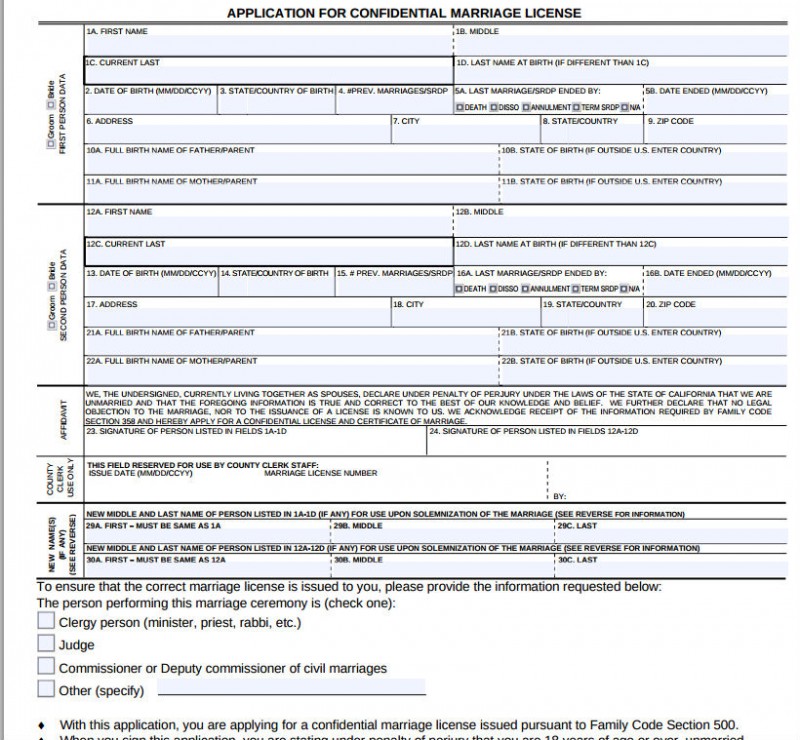
A confidential marriage license offers a more private alternative. It does not require witnesses, and the marriage record is not publicly accessible. To be eligible for a confidential license, couples must be living together at the time of application and must be 18 years of age or older. The ceremony can be performed by any officiant authorized by California.
Key Eligibility Requirements
Regardless of the license type, several core eligibility requirements must be met:
- Age: Both individuals must be at least 18 years of age. If either party is under 18, parental and court consent is required, a complex process that is generally not recommended for those seeking a straightforward wedding.
- Marital Status: Both individuals must be unmarried. If either party has been previously married, they will need to provide the date their last marriage ended. This can be through death, divorce, or annulment. Documentation, such as a divorce decree, may be required in some instances.
- Relationship: The individuals must not be related by blood in a way that would prohibit marriage under California law. This typically includes parents, children, siblings, aunts, uncles, nieces, and nephews.
Steps to Obtaining Your Marriage License
The application process for a marriage license in California is designed to be efficient and accessible. While specific procedures may vary slightly by county, the general steps remain consistent across the state.
Step 1: Determine Your County of Application
You can apply for a marriage license in any county in California, regardless of where you plan to get married within the state. Many couples opt to apply in the county where they reside or in the county where their wedding ceremony will take place for convenience.
Step 2: Schedule an Appointment (Recommended)
While some county clerks’ offices accept walk-ins, it is highly recommended to schedule an appointment in advance. This will save you time and ensure you are seen promptly. You can usually find appointment scheduling information on the website of the county clerk or recorder’s office.
Step 3: Gather Required Documentation
Both applicants will need to present valid, government-issued photo identification. Acceptable forms of identification typically include:
- Driver’s License: Issued by any U.S. state or territory.
- State Identification Card: Issued by any U.S. state or territory.
- Passport: From your country of origin.
- Military Identification Card.
In addition to photo ID, if either applicant has been previously married, they may need to provide the exact date their last marriage ended. While a copy of the divorce decree or death certificate is not always required at the time of application, it’s wise to have it readily available in case the clerk requests it.
Step 4: Complete the Marriage License Application Form
The marriage license application form can often be downloaded from the county clerk’s website and partially filled out prior to your appointment. This will further expedite the process. Both applicants will need to appear in person at the county clerk’s office to sign the application under oath.
Step 5: Appear Together at the County Clerk’s Office
Both individuals must appear together in person at the county clerk’s office to finalize the application and receive the marriage license. During this appointment, you will present your identification, sign the application, and pay the required fee.
Step 6: Pay the Marriage License Fee
The fee for a marriage license in California varies by county, but typically ranges from $70 to $110. Payment methods accepted also vary; most offices accept cash, checks, money orders, and credit cards. It’s best to check the specific county clerk’s website for their accepted payment methods and current fee schedule.
Step 7: Receive Your Marriage License
Once all requirements are met and the fee is paid, the county clerk will issue your marriage license. This document is valid for 90 days from the date of issuance. This means your wedding ceremony must take place within this 90-day period. If you do not marry within 90 days, the license will expire, and you will need to apply for a new one and pay the fee again.
The Wedding Ceremony and License Return

The marriage license is not the final step; it’s the authorization to marry. The actual ceremony is where you legally become married.
Solemnization of the Marriage
The marriage ceremony must be performed by an authorized officiant. This can include:
- Judges: Active and retired judges, commissioners, and assistant commissioners of any court of record in California.
- Ministers or Priests: Authorized to solemnize marriages by their religious denomination.
- Members of Parliament or Senators: From California.
- Certain Other Officials: As designated by law.
- Civil Celebrants: Individuals deputized by the county clerk to perform marriages.
If you are having a civil ceremony at the county courthouse, the clerk’s office can often provide information on available officiants. For destination weddings or ceremonies at venues like The Beverly Hills Hotel, you will need to arrange for your own officiant.
The Role of Witnesses
For a public marriage license, at least one witness must be present at the ceremony. This witness must be at least 18 years old and must sign the marriage license after the ceremony. For a confidential marriage license, no witnesses are required.
Returning the Signed License
After the ceremony, the officiant is responsible for returning the signed marriage license to the county clerk’s office where it was issued. This must be done within 10 days of the ceremony. It is crucial that this step is completed, as it officially registers your marriage with the state.
Obtaining Certified Copies of Your Marriage Certificate
Once your marriage is registered, you can obtain certified copies of your marriage certificate. This document serves as legal proof of your marriage and is required for various administrative purposes, such as changing your name on identification documents, updating insurance policies, and claiming spousal benefits.
How to Request Certified Copies
Certified copies can usually be requested in person at the county recorder’s office, by mail, or through an online portal if available. You will typically need to provide the names of the couple, the date of marriage, and potentially the license number. There is a fee for each certified copy.
Special Considerations for Destination Weddings and Non-Residents
California is a popular destination for weddings. For couples planning a wedding in California but residing elsewhere, the process is largely the same. You will still need to obtain a marriage license from a California county clerk.
Planning Ahead
It is advisable for non-residents to arrive in California a few days before their wedding to allow ample time to obtain the license. Visiting the county clerk’s website of your chosen wedding location well in advance will provide specific instructions and any unique requirements.
Officiant Requirements for Non-Residents
If you are having your wedding officiated by someone not ordained in California, ensure they understand the state’s requirements for solemnizing marriages. Many couples choose to use officiants who are already familiar with California law. Some counties offer a service where a deputy commissioner of civil marriages can perform your ceremony at the courthouse or even at a location of your choice.
Frequently Asked Questions
Can I apply for a marriage license online?
While you can often start the application process online by filling out forms, both individuals must appear in person at the county clerk’s office to sign the application under oath and receive the license.
How long is a California marriage license valid?
A California marriage license is valid for 90 days from the date of issuance.
What if my wedding ceremony is outside of California?
A marriage license issued in California is only valid for ceremonies performed within the state of California. If your wedding is planned for another state, you will need to obtain a license in that state.
Can I change my name after getting married in California?
Yes, changing your name is a common practice after marriage. You will need your certified marriage certificate to begin the name change process with agencies like the Social Security Administration and the Department of Motor Vehicles.

What is the difference between a marriage license and a marriage certificate?
A marriage license is the document that authorizes you to get married. A marriage certificate is the legal record that proves you are married, issued after the marriage license has been signed and returned.
Obtaining a marriage license in California is a manageable process when approached with proper preparation and understanding. By familiarizing yourself with the requirements and steps outlined above, you can ensure that this legal formality is a seamless part of your exciting journey towards marital commitment in this beautiful state.
LifeOutOfTheBox is a participant in the Amazon Services LLC Associates Program, an affiliate advertising program designed to provide a means for sites to earn advertising fees by advertising and linking to Amazon.com. Amazon, the Amazon logo, AmazonSupply, and the AmazonSupply logo are trademarks of Amazon.com, Inc. or its affiliates. As an Amazon Associate we earn affiliate commissions from qualifying purchases.