
California is a state renowned for its diverse landscapes, vibrant culture, iconic landmarks, and a lifestyle that draws millions to its shores, from the bustling streets of Los Angeles to the serene vineyards of Napa Valley and the tech hubs of Silicon Valley. Whether you’re considering a move, planning an extended stay, or simply fascinated by the intricacies of life and law in different destinations, understanding local regulations is paramount. While many articles focus on California’s culinary scene, luxury resorts, or hidden travel gems, delving into its unique legal framework offers another layer of insight into its distinct character. For those exploring the multifaceted aspects of California living, understanding the process of purchasing a handgun within the state’s strict legal environment is a topic that sometimes arises. This guide aims to demystify the detailed procedures and requirements, offering a clear roadmap for navigating what is widely considered one of the most complex firearm regulatory systems in the United States.
Engaging with the local legal landscape, particularly concerning firearms, is a significant aspect of understanding the lifestyle in California. It’s not merely a transaction but a journey through a highly regulated system designed with public safety in mind. For residents, or those planning to establish long-term accommodation, this knowledge is essential. For visitors, while not directly applicable, it provides a broader understanding of the local culture and the robust regulatory environment that shapes daily life. This comprehensive overview will detail the eligibility criteria, the required steps, and various considerations for anyone contemplating the purchase of a handgun in the Golden State.
The California Landscape of Firearm Ownership
California stands out in the national discussion surrounding firearm laws. The state has consistently implemented and upheld some of the strictest gun control measures in the United States. These regulations affect every aspect of firearm ownership, from what types of firearms can be sold, to how they are stored and transported. This stringent approach is a defining characteristic of the state’s public policy and, by extension, a part of its unique lifestyle.
For newcomers or those accustomed to more permissive laws elsewhere, the California system can seem daunting. It requires patience, meticulous attention to detail, and a commitment to complying with every step of the legal process. The underlying philosophy behind these laws is often cited as a commitment to reducing gun violence and enhancing public safety, a goal that profoundly impacts how firearms are regulated and obtained. Understanding this overarching context is the first step in navigating the specific requirements for purchasing a handgun. It sets the stage for appreciating why certain documents, waiting periods, and safety certifications are not just bureaucratic hurdles, but integral components of the California approach.
Eligibility and Initial Requirements
Before embarking on the actual purchase process, prospective handgun owners in California must first meet several fundamental eligibility criteria. These are designed to ensure that only qualified individuals, as defined by state and federal law, can acquire firearms.
California Residency and Age
One of the most critical requirements is establishing California residency. To legally purchase a handgun, you must be a resident of the state. This typically requires presenting valid documentation that proves your current residency, such as a California Driver’s License or ID card, along with other supporting documents like utility bills, vehicle registration, or a residential lease agreement. The specific requirements can vary slightly depending on the dealer, but the intent is always to verify that the purchaser genuinely resides in California. For those visiting or on short-term accommodation, this immediately clarifies that a handgun purchase is generally not feasible without establishing residency.
Additionally, you must be at least 21 years old to purchase a handgun from a Federally Licensed Firearm (FFL) dealer in California. This age requirement applies to both federal and state laws governing handgun sales. There are very limited exceptions, primarily for law enforcement or military personnel.
The Firearm Safety Certificate (FSC)
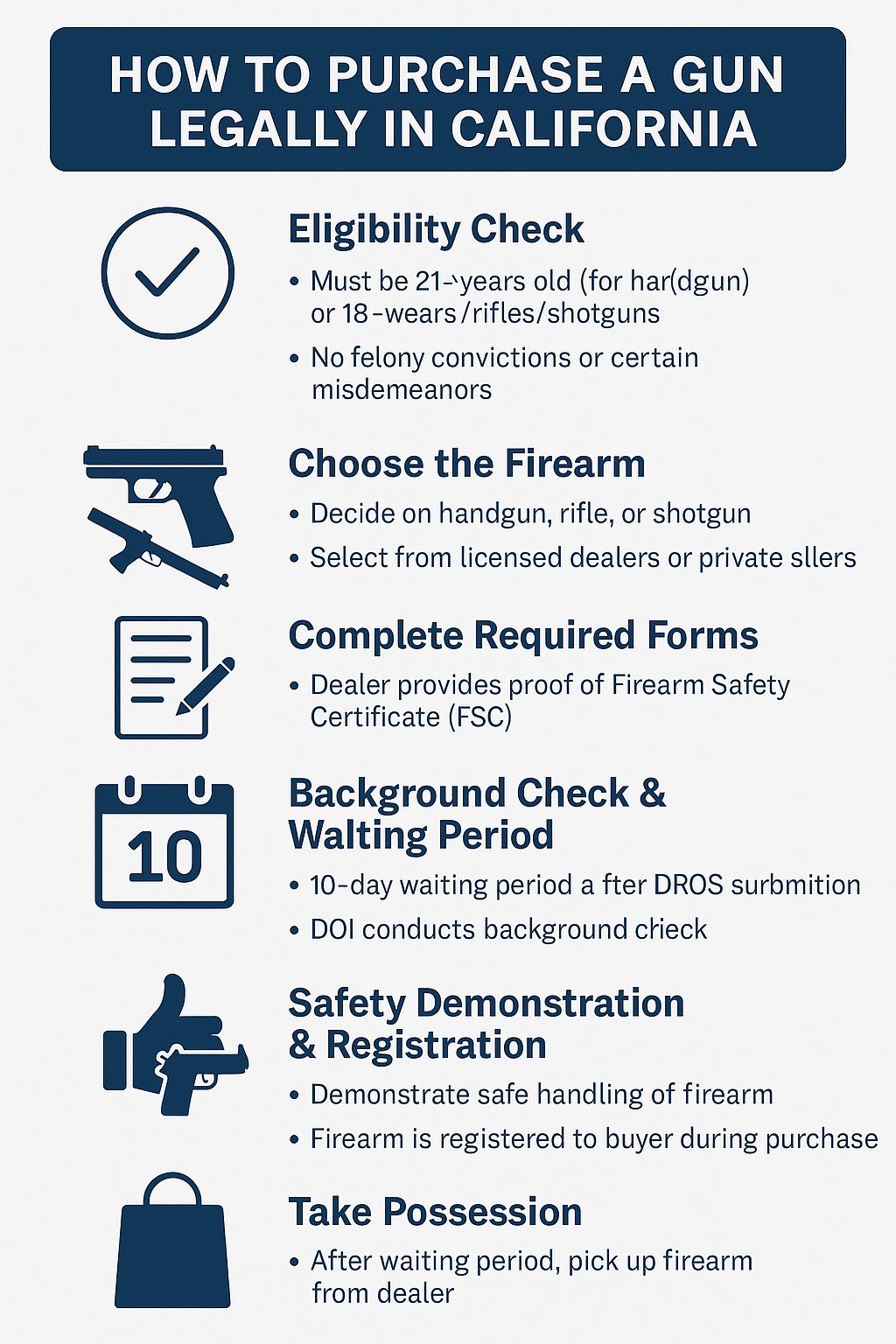
A cornerstone of California’s firearm regulations is the Firearm Safety Certificate (FSC). With very few exceptions (such as possessing a hunting license or being active duty military), every individual wishing to purchase a handgun must first obtain an FSC.
The process for obtaining an FSC is straightforward:
- Study: It is highly recommended to study the official FSC study guide, which covers basic firearm safety rules, safe handling procedures, storage requirements, and California specific laws. This guide is usually available online through the California Department of Justice (DOJ) website.
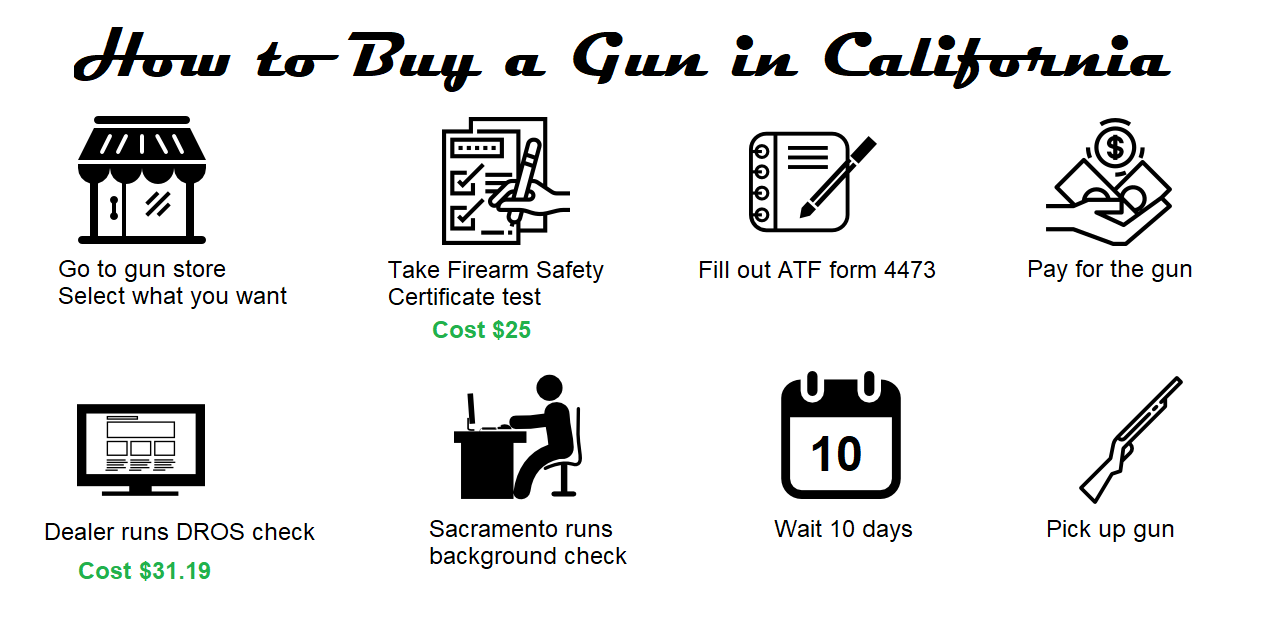
- Take the Test: The FSC test is administered by certified instructors, often available at local gun stores, shooting ranges, or sporting goods retailers that sell firearms. The test consists of 30 multiple-choice questions, and a passing score of 75% (23 correct answers) is required.
- Receive Your Certificate: Upon passing the test and paying a small fee (typically $25), you will be issued an FSC card, which is valid for five years.
The FSC is more than just a piece of paper; it represents a fundamental understanding of firearm safety and legal responsibilities, which is deeply embedded in the state’s approach to responsible firearm ownership as part of its unique lifestyle.
The Purchase Process at a Licensed Dealer
Once you’ve confirmed your eligibility and obtained your FSC, the actual process of purchasing a handgun from a Federally Licensed Firearm (FFL) dealer can begin. This involves several distinct stages, each with its own requirements and timelines.
Selecting a Handgun from the Approved Roster
California maintains a Roster of Handguns Certified for Sale (Roster). This is a list of specific handgun models that have been tested and certified by the state’s Department of Justice (DOJ) as meeting certain safety standards. If a handgun model is not on this Roster, it generally cannot be sold by an FFL dealer to a civilian in California. This is a critical point that often surprises individuals from other states, as it significantly limits the variety of handguns available for purchase. The Roster is regularly updated and can be accessed on the California DOJ website. Careful selection from this approved list is paramount to a successful purchase.
Background Check and Waiting Period
After selecting an approved handgun, the dealer will initiate the background check process. This involves filling out a federal form (ATF Form 4473) and the California Dealer Record of Sale (DROS) form. The DROS system is the state’s mechanism for conducting background checks and tracking firearm sales.
The dealer will collect your personal information, FSC number, and residency documents, then submit the DROS to the California DOJ. The DOJ then conducts a comprehensive background check, which includes looking for any disqualifying factors such as felony convictions, certain misdemeanor convictions, domestic violence restraining orders, or mental health adjudications.
Crucially, California imposes a mandatory 10-day waiting period, sometimes referred to as a “cooling-off period,” from the date and time the DROS is submitted. This means that even if your background check clears immediately, you cannot pick up your handgun until at least 10 full 24-hour periods have elapsed. This waiting period is strictly enforced and is a key feature of the state’s gun control laws.
Handgun Safety Demonstration and DROS
Upon completion of the 10-day waiting period and a “proceed” status from the DOJ, you can return to the dealer to pick up your handgun. Before taking possession, you will be required to perform a safe handling demonstration. This typically involves demonstrating that you can safely load, unload, and operate the handgun in the presence of the dealer. This practical demonstration reinforces the principles learned during the FSC process and ensures proficiency in safe firearm handling.
Additionally, the handgun must be sold with a California-approved locking device, such as a cable lock or safe. This is another safety measure designed to prevent unauthorized access and reinforce responsible storage, which is a significant part of the lifestyle expectations for firearm owners in California.
Special Considerations and Common Pitfalls
Beyond the standard purchase process, there are several special situations and common pitfalls that prospective handgun owners in California should be aware of. Navigating these intricacies is vital to remaining compliant with state law.
Private Party Transfers
While the vast majority of handgun purchases go through an FFL dealer, private party transfers (sales or gifts between two individuals) are also legal in California, but they must also be facilitated through an FFL dealer. This means that both the seller and the buyer must appear at an FFL dealer, where the same background check, 10-day waiting period, FSC requirement, and DROS process will apply. This “universal background check” system ensures that all firearm transfers, regardless of whether they involve a commercial dealer, are subject to the same scrutiny. Unlike many other states, there are no true “private sales” in California where individuals can exchange firearms without FFL involvement.
Importing Firearms to California
If you are moving to California from another state and bringing a handgun with you, there are specific legal requirements you must meet. Within 60 days of establishing residency, you must report all firearms you bring into the state to the California Department of Justice (DOJ) via a “New Resident Firearm Ownership Report” (BOF 4542A). Crucially, any handgun you bring into California must also comply with California’s assault weapons laws and magazine capacity restrictions. Many handguns that are legal in other states may be considered “assault weapons” or have illegal magazine capacities under California law. It is highly advisable to research California firearm laws before moving to avoid inadvertently violating state statutes, a prime example of how understanding destination-specific regulations impacts lifestyle choices.
Storage and Transportation Laws
Beyond the purchase, California also has strict laws regarding firearm storage and transportation. When not in use, firearms must be stored in a locked container or disabled with a trigger lock or similar device. Loaded firearms are generally prohibited in public places, and specific rules apply to their transportation, requiring them to be unloaded and stored in a locked container, separate from ammunition, during transit. These ongoing responsibilities are an integral part of handgun ownership in California and reflect the state’s emphasis on safety beyond the point of sale.
Navigating the Regulations: A California Lifestyle Perspective
Understanding how to buy a handgun in California is more than just memorizing a list of rules; it’s about appreciating the state’s comprehensive approach to public safety and personal responsibility. For those who choose to live in California, or for anyone interested in the diverse facets of its unique lifestyle, these regulations are a significant part of the fabric of the state.
Whether you’re establishing a long-term home in a vibrant city like San Francisco or a quieter community in Orange County, or simply seeking to understand the local nuances during a prolonged visit, familiarizing yourself with these processes provides valuable insight. It highlights the layers of regulation that shape daily life and personal freedoms within this iconic destination. Just as one might research local dining customs or transportation options, understanding the legal framework surrounding firearms offers a deeper appreciation for the distinct character of California.
In conclusion, purchasing a handgun in California is a multi-step process that demands diligence, patience, and strict adherence to state and federal laws. From obtaining your Firearm Safety Certificate to navigating the Roster of Handguns Certified for Sale (Roster) and enduring the mandatory waiting period, each step is designed to ensure responsible ownership. For residents and those deeply invested in the California lifestyle, understanding these regulations is not just a legal necessity but an integral part of engaging with the state’s unique social and legal environment. This guide serves as a foundational resource for anyone embarking on this journey, underscoring the importance of informed and compliant action in the Golden State.
LifeOutOfTheBox is a participant in the Amazon Services LLC Associates Program, an affiliate advertising program designed to provide a means for sites to earn advertising fees by advertising and linking to Amazon.com. Amazon, the Amazon logo, AmazonSupply, and the AmazonSupply logo are trademarks of Amazon.com, Inc. or its affiliates. As an Amazon Associate we earn affiliate commissions from qualifying purchases.