
Owning property in California involves understanding a complex, yet predictable, system of real estate taxation. For anyone considering a long-term stay or investment in the Golden State, deciphering the annual property tax bill is crucial for accurate financial planning and assessing the true cost of accommodation. Unlike many other states, California’s property tax system is heavily influenced by Proposition 13, a landmark ballot initiative passed in 1978, which fundamentally altered how property is assessed and taxed. This guide delves into the nuances of calculating real estate taxes, providing a comprehensive overview for current and prospective property owners.

Understanding California Property Tax Fundamentals
At its core, California’s property tax system is designed to provide relative stability and predictability for homeowners. This stability largely stems from Proposition 13, which established strict limitations on both the property tax rate and annual increases in assessed value.
The 1% Base Rate and Proposition 13
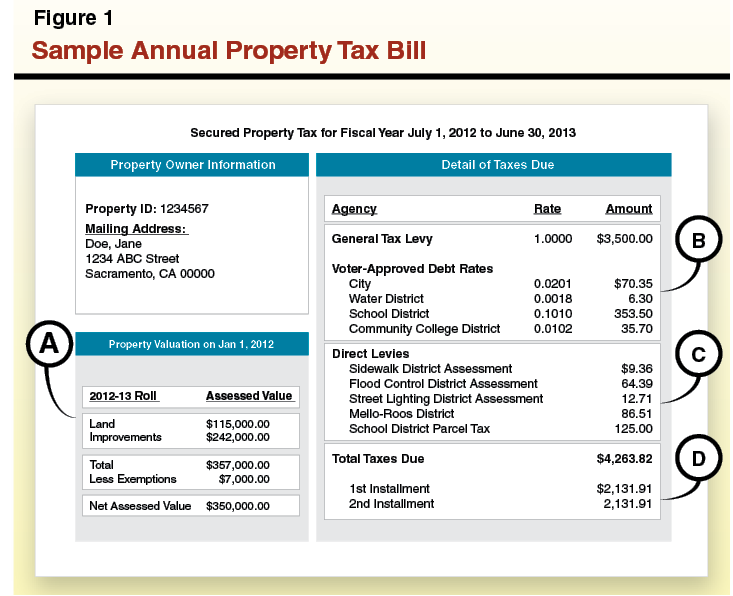
Proposition 13 sets the base property tax rate at 1% of a property’s assessed value. This 1% rate applies uniformly across all counties in California. However, this 1% is just the starting point. The assessed value itself is determined by the purchase price of the property, or its market value at the time of a change in ownership.
Crucially, Proposition 13 also limits how much a property’s assessed value can increase each year. As long as there is no change in ownership, the assessed value can only increase by a maximum of 2% annually, regardless of how much the market value might appreciate. This cap provides significant long-term protection against rapidly increasing property taxes for homeowners who remain in their homes for extended periods. The assessed value can only be reassessed to current market value when there is a change in ownership or new construction.
Supplemental Taxes and Reassessment Events
When a property changes ownership, it triggers a reassessment event. The county assessor will establish a new base year value for the property, typically reflecting the property’s sale price. This new value becomes the basis for future tax calculations.
However, the transition isn’t always immediate. Because the county’s annual tax roll is finalized months before new sales occur, a supplemental tax bill is often issued. This supplemental bill covers the difference between the old assessed value and the new, higher assessed value for the remainder of the current tax year. For example, if you purchase a home in Los Angeles County in March, and the previous owner’s assessed value was significantly lower, you will receive a supplemental bill covering the period from March to the end of the tax year (typically June 30th). This is an important consideration for new buyers, as these bills can sometimes arrive several months after closing and represent a substantial, unexpected cost if not budgeted for.
Unpacking Local Levies and Mello-Roos Districts
While Proposition 13 establishes the 1% base rate, your actual property tax bill will almost certainly exceed this amount due to additional local levies. These additional charges are voter-approved and fund specific public services and infrastructure projects within particular communities.
Direct Assessments and Special District Taxes
Beyond the 1% base rate, your property tax bill will include various “direct assessments” or “special district taxes.” These are local charges approved by voters to fund essential services such as schools, fire protection, police services, libraries, parks, and sanitation. Unlike the base tax, which is calculated as a percentage of your assessed value, many direct assessments are fixed fees or calculated based on factors like the size of your lot, the number of units, or frontage footage.
Each county and even specific cities within a county will have different combinations of these assessments. For instance, a homeowner in San Diego might see charges for the local school district bond, a community lighting assessment, and a park maintenance fee, all added to their base tax. These charges can add anywhere from 0.25% to over 0.5% (or more, in specific cases) to your effective property tax rate.
Mello-Roos Community Facilities Districts
One particularly impactful type of local levy in California is the Mello-Roos Community Facilities District (CFD). Mello-Roos taxes are a special form of assessment that finance major infrastructure projects in newly developed or redeveloped areas. These projects can include new roads, schools, parks, water and sewer systems, and other public facilities essential for growing communities.
Properties located within a Mello-Roos district will have an additional tax assessment that can significantly increase their annual property tax burden. Unlike traditional property taxes, Mello-Roos taxes are often based on the size of the home, the lot size, or other specific metrics, rather than the assessed value. These assessments are typically disclosed during the purchase process and can remain in effect for 20-30 years or more. It’s crucial for prospective buyers to understand if a property is in a Mello-Roos district, as these can add thousands of dollars to an annual tax bill. For example, a new home in Orange County might have a total effective tax rate closer to 1.5% or 1.7% due to significant Mello-Roos fees, compared to an older home nearby not subject to such assessments.
The Role of Assessed Value in Your Tax Bill
The assessed value of your property is the linchpin of your property tax calculation. It’s not necessarily the same as the market value, especially for properties that haven’t changed ownership recently.
Annual Inflationary Adjustment (Proposition 8)
As mentioned, under Proposition 13, your assessed value can increase by a maximum of 2% per year. This annual inflationary adjustment is applied to the base year value. However, there’s an important exception: if the market value of your property drops below its assessed value (a situation common during housing market downturns), the assessed value can be temporarily reduced to reflect the lower market value. This provision is often referred to as a “Proposition 8” reduction.
If your property’s assessed value is reduced under Proposition 8, it will be restored in subsequent years as the market value recovers, but never exceeding the adjusted base year value (the original base year value plus the cumulative 2% annual inflation adjustments). This mechanism provides a safety net for homeowners during market slumps, preventing them from paying taxes on a value higher than what their property is actually worth.
Appealing Your Property’s Assessed Value
Property owners have the right to appeal their property’s assessed value if they believe it is incorrect or exceeds the current market value. This is particularly relevant after a recent purchase where the sale price might not fully reflect the property’s true market value, or if you believe the assessor has made an error. The appeal process typically involves submitting an application to your county’s Assessment Appeals Board by a specific deadline (usually around September 15th). You will need to provide evidence to support your claim, such as comparable sales data, appraisal reports, or other relevant market information. Successfully appealing an assessment can lead to a reduction in your property tax bill for that year and potentially future years.
Exemptions and Relief Programs for Homeowners
California offers several exemptions and relief programs that can reduce a homeowner’s property tax liability. Understanding and applying for these can lead to significant savings.
Homeowners’ Exemption
The most common and widely utilized exemption is the Homeowners’ Exemption. If you own and occupy your home as your principal place of residence on January 1st of the assessment year, you are eligible for a $7,000 reduction in the assessed value of your property. While $7,000 may seem small compared to the value of a California home, it translates to a tax savings of approximately $70 to $80 per year (based on the 1% base rate plus average local levies). To claim this exemption, you must file an application with your county assessor’s office. Once granted, it typically remains in effect as long as you continue to meet the eligibility requirements.
Other Notable Exemptions
Beyond the Homeowners’ Exemption, other exemptions are available for specific circumstances:
- Veterans’ Exemption: Eligible veterans or their unmarried surviving spouses may qualify for an exemption that can significantly reduce their assessed value. There are both basic and disabled veterans’ exemptions with varying requirements and benefit levels.
- Disabled Persons’ Exemption: Certain permanently disabled individuals may be eligible for property tax relief.
- Religious, Educational, and Charitable Exemptions: Properties used exclusively for religious, educational, or charitable purposes may also qualify for exemptions, reducing or eliminating their property tax burden.
- Disaster Relief: In the event of a natural disaster, property owners whose homes are damaged or destroyed may be eligible for property tax relief for the affected period.
It’s important to research the specific requirements and application processes for each exemption through your local county assessor’s office, as eligibility criteria can be strict and documentation extensive.
Practical Steps to Estimate Your Property Tax
Estimating your property tax bill can seem daunting, but with the right resources, it’s a manageable task.
Utilizing County Assessor Websites
The most accurate resource for estimating property taxes is your local county assessor’s website. Every county in California maintains a comprehensive website where you can look up property information. Many sites offer property tax estimators or at least provide detailed breakdowns of current tax rates and assessments for specific parcels.
To get an estimate for a property you’re considering purchasing, you can often search by address or Assessor’s Parcel Number (APN). The site will typically display the current assessed value, the base tax amount, and a list of all special assessments and direct levies. By adding these components, you can arrive at a close estimate of the annual tax bill. Remember to factor in potential supplemental taxes if you’re a new buyer.
Consulting with Real Estate Professionals
When making a significant real estate transaction, consulting with local real estate agents, mortgage brokers, and escrow officers is invaluable. These professionals have intimate knowledge of the local tax landscape and can provide precise estimates based on recent sales and current assessment data. They can clarify which specific local assessments apply to a particular property and help you understand how changes in ownership will impact the tax calculations. A good real estate agent will typically include an estimated property tax figure in any financial projections or disclosure packages for a property.
Calculating real estate taxes in California is more than just applying a simple percentage. It involves understanding the foundational principles of Proposition 13, accounting for various local assessments, and being aware of available exemptions. By thoroughly researching these components, property owners can gain clarity on their long-term accommodation costs and make informed financial decisions in this dynamic housing market.
LifeOutOfTheBox is a participant in the Amazon Services LLC Associates Program, an affiliate advertising program designed to provide a means for sites to earn advertising fees by advertising and linking to Amazon.com. Amazon, the Amazon logo, AmazonSupply, and the AmazonSupply logo are trademarks of Amazon.com, Inc. or its affiliates. As an Amazon Associate we earn affiliate commissions from qualifying purchases.