
Navigating Unexpected Legalities During Your California Stay
Even the most meticulously planned California trip, whether for business, extended leisure, or a temporary relocation, can sometimes hit an unexpected snag. Disputes can arise – from issues with a short-term rental deposit to disagreements over services rendered during a long-term project. Understanding the small claims court system in California is a crucial aspect of responsible “lifestyle management” for visitors and temporary residents, ensuring you know your rights and how to seek recourse if needed. This guide focuses on the process from the perspective of someone who might not be a permanent California resident but finds themselves in a situation requiring legal action within the state.
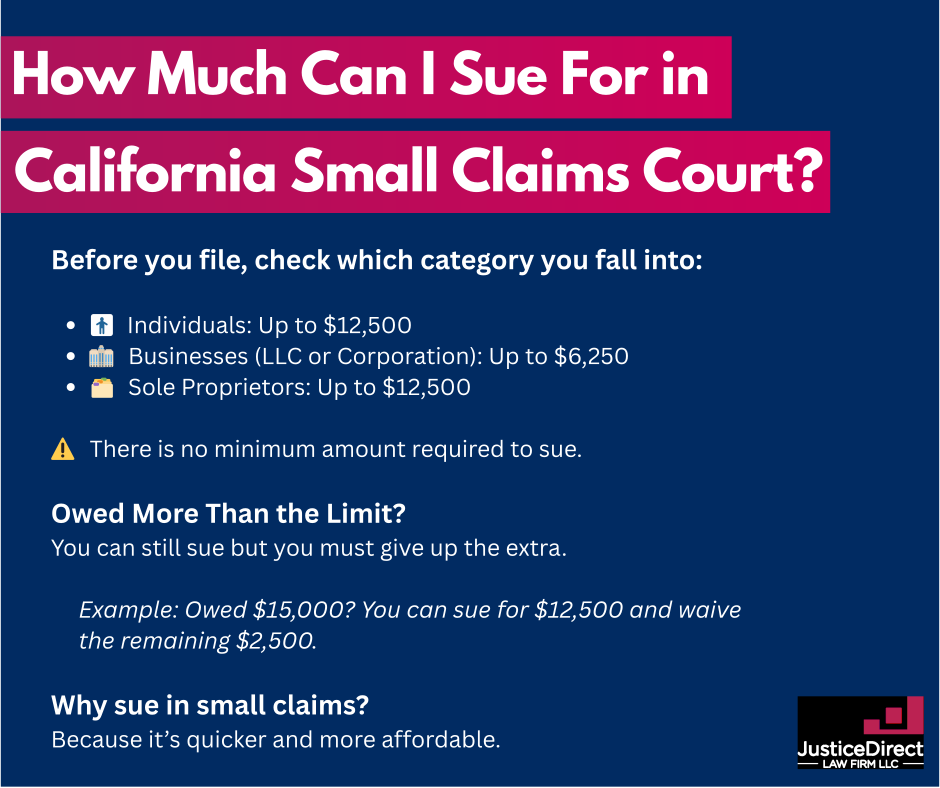
Small claims court is a special division of the Superior Court designed to resolve disputes quickly and affordably, without the need for an attorney. It handles cases involving claims for money or the return of personal property where the amount in dispute falls below certain limits. For individuals, the maximum amount you can sue for is currently $12,500. For businesses or governmental entities, this limit is $6,250. It’s a less formal environment than regular civil court, and rules of evidence and procedure are simplified, making it accessible to self-represented litigants. This informal setting is particularly beneficial for those who may be unfamiliar with the U.S. legal system or who are managing their affairs from out of state.
Common Scenarios for Travelers and Temporary Residents
While the picturesque landscapes and vibrant cities of California often provide idyllic experiences, sometimes disputes arise that necessitate legal action. For travelers, business visitors, or those on extended stays, these can range from issues with accommodation providers to disputes over services rendered.
Rental and Accommodation Disputes
One of the most frequent areas of contention for temporary residents involves housing. Whether you’re staying in a short-term rental, a hotel, or a longer-term lease, issues can quickly escalate.
- Short-term rentals (Airbnb, VRBO, etc.): Disputes commonly involve unreturned security deposits, claims of property damage made against you that you dispute, or situations where the rental property was significantly misrepresented from its listing. For instance, if a promised amenity like a hot tub or a specific number of bedrooms was unavailable or nonexistent, and efforts to resolve it with the host or platform failed, a small claims suit might be the next step.
- Extended stays/temporary leases: If you’ve entered into a lease agreement for an extended period, perhaps for a temporary work assignment or during a relocation phase, disputes with landlords can arise over issues like neglected repairs, unfair deductions from your security deposit, or penalties for early lease termination that you believe are unwarranted.
- Hotel issues: While less common for small claims given the typically lower stakes, significant service failures, unjust charges appearing on your bill, or damage claims made by the hotel against you could potentially lead to a small claims action if the amount exceeds their internal dispute resolution capacity and reaches the small claims limit.
Consumer Service Issues
Beyond accommodation, various services you engage with during your California visit or temporary residence can also lead to disputes suitable for small claims court.
- Tour operators/travel agencies: If you paid for a tour or a package through a local agency and the services were not delivered as promised, or you were unfairly denied a refund for a canceled service, small claims offers a path for resolution.
- Car rentals: Disputed damage claims after returning a vehicle, excessive or hidden fees that were not disclosed upfront, or breakdowns due to poor maintenance that incurred additional costs can all be grounds for a small claims action.
- Local services: During an extended stay, you might engage local service providers for anything from car repair to personal care services. Disputes with contractors over shoddy work, unfulfilled promises, or unfair billing practices can also be addressed in small claims court.
Personal Property Claims
Loss or damage to personal belongings while they are under the care of a service provider can also form the basis of a small claims suit. This could include items lost or damaged by a laundry service, a moving company during a temporary relocation, or even a storage facility if your belongings were impacted during a short-term storage agreement. In all these scenarios, the key is to have documented proof of the item’s value and the circumstances of its loss or damage.
The Step-by-Step Process for Out-of-State Claimants
Filing a small claims suit in California when you are not a permanent resident presents unique challenges, but it is entirely manageable with careful planning.
Pre-Filing Considerations
Before you even think about stepping into a courtroom, several critical steps ensure your claim is valid and has the best chance of success.
- Jurisdiction: The court must have the legal authority to hear your case. This typically means the dispute occurred in California, or the person or business you are suing (the defendant) resides or does business in California. You’ll need to determine the correct county to file in, usually where the defendant lives, where the business is located, or where the contract was entered into and performed.
- Demand Letter: Always start with a formal demand letter. This is a crucial first step that demonstrates your attempt to resolve the issue amicably before resorting to legal action. Clearly state the facts of your dispute, the amount you are seeking, and a reasonable deadline for response. For out-of-state claimants, sending this letter via certified mail with a return receipt requested is vital. This provides proof that the defendant received it, which can be important evidence later.
- Evidence Gathering: Collect all relevant documents and evidence meticulously. This includes contracts, agreements, emails, text messages, photographs, videos, receipts, invoices, bank statements, and any communication logs. For travelers, ensuring you have digital copies or physical copies that can be easily transported is essential, as you might not have easy access to records once you leave California. Organize your evidence chronologically and logically.
Filing Your Claim
Once you’ve exhausted pre-court resolution attempts and gathered your evidence, the next phase is filing the actual claim.
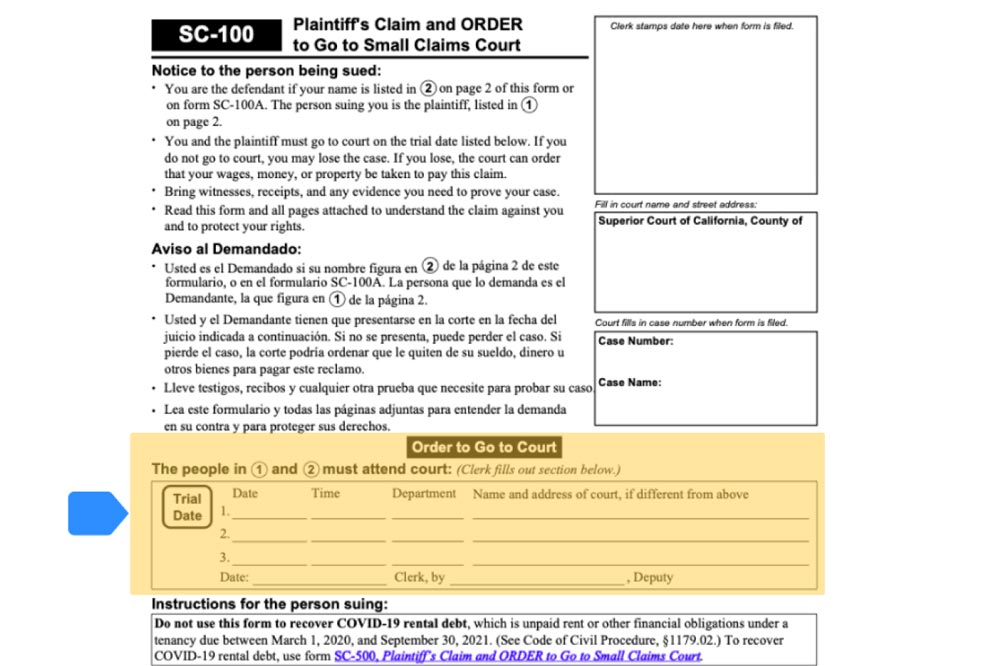
- Identifying the Right Court: Your claim must be filed in the correct California Superior Court. This is usually based on the defendant’s residence or business location, or where the incident occurred. For example, if the dispute is with a business in Los Angeles, you would typically file with the Los Angeles Superior Court. If it happened in San Francisco, the San Francisco Superior Court would be appropriate. You will need to fill out a Plaintiff’s Claim and Order to Go to Small Claims Court form (Form SC-100). This form requires you to state why the defendant owes you money or property.
- Fees and Fee Waivers: There is a filing fee associated with initiating a small claims suit, which varies depending on the amount you are suing for and how many claims you have filed in the past 12 months. If you have a low income or receive public benefits, you might be eligible for a fee waiver, allowing you to proceed without paying the court fees. You can apply for a fee waiver using Form FW-001.
Serving the Defendant
After filing your claim, the most critical step is “serving” the defendant – officially notifying them that they are being sued. Proper service is non-negotiable; if not done correctly, your case cannot proceed.
- Importance of Proper Service: The court needs proof that the defendant received the summons and complaint. Without it, the court cannot hear your case.
- Methods: Service cannot be performed by you. It must be done by someone who is at least 18 years old and not a party to the case. Options include a county sheriff or marshal, a registered process server, or a friend/family member (though a professional is often recommended for efficiency and proof). While certified mail might seem appealing for out-of-state claimants, it typically requires a signed return receipt to be considered valid personal service in California small claims, which can be unreliable. For an out-of-state claimant, hiring a registered process server physically located in California is often the most reliable way to ensure proper service.
Preparing for Your Court Date
Once the defendant has been served, a court date will be set. Proper preparation is key to presenting a clear and compelling case.
- Evidence Organization: Organize all your documents, photos, emails, and other evidence in a clear, easy-to-follow manner. Consider creating multiple copies – one for the judge, one for the defendant, and one for yourself.
- Witnesses: If you have witnesses whose testimony would strengthen your case, you must arrange for them to appear in court. This can be challenging if your witnesses are also out-of-state; consider if their testimony can be provided via a written declaration under penalty of perjury if allowed by the court, though in-person testimony is always preferred.
- Appearing in Court: Personal appearance is usually required for small claims cases. This means that as an out-of-state claimant, you will likely need to travel to California for your court date. While rare and typically requiring prior court approval under specific, compelling circumstances, some courts might allow remote appearances (by phone or video). However, you should assume you will need to be physically present and plan your travel logistics accordingly. Be punctual, dress professionally, and be respectful to everyone in the courtroom.
Post-Judgment and Enforcement for the Temporary Resident
Winning your small claims case is a significant step, but it’s not always the end of the journey, especially if the defendant doesn’t voluntarily pay.
- What if you win?: If the judge rules in your favor, the court will issue a “judgment” stating that the defendant owes you a specific amount of money.
- Collecting the judgment: This can often be the most challenging part, particularly if you are no longer in California. The court does not collect the money for you. You, as the judgment creditor, are responsible for collecting it. Methods include wage garnishment, bank levies, or placing a lien on the defendant’s property. These often require additional court filings and coordination with the sheriff’s department. For someone out of state, this might involve hiring a collection agency or an attorney (for collection efforts, even if not for the original small claims trial) to act on your behalf in California.
- Statute of Limitations for Enforcement: A California judgment is typically valid for 10 years and can be renewed before it expires. This gives you a substantial window to collect, but proactive steps are always best.

Important Considerations and Resources
While the small claims system is designed for self-representation, certain situations warrant additional advice.
- Legal Advice: Although lawyers are generally not permitted to represent parties in small claims court, consulting with an attorney before you file, or for advice on collection efforts, is highly advisable. This is especially true for complex cases or for out-of-state claimants who might need guidance on jurisdiction, service, or enforcement from afar.
- Court Resources: The California Courts Self-Help Center (courts.ca.gov/selfhelp-smallclaims.htm) is an invaluable online resource offering detailed guides, forms, and frequently asked questions for small claims litigants. Many county superior courts also have self-help centers or legal aid services that can provide free or low-cost assistance.
- Mediation: Many courts offer or require mediation before trial. This process involves a neutral third party helping both sides reach a mutually agreeable settlement. Mediation can be an excellent way to resolve disputes quickly and avoid the uncertainties of a court trial, especially if traveling for court is a significant burden.
Navigating a legal dispute from afar can be daunting, but the California small claims system is designed to be accessible. By understanding the process, meticulously preparing your case, and utilizing available resources, travelers and temporary residents can effectively seek justice and resolve financial disputes encountered during their time in the Golden State.
LifeOutOfTheBox is a participant in the Amazon Services LLC Associates Program, an affiliate advertising program designed to provide a means for sites to earn advertising fees by advertising and linking to Amazon.com. Amazon, the Amazon logo, AmazonSupply, and the AmazonSupply logo are trademarks of Amazon.com, Inc. or its affiliates. As an Amazon Associate we earn affiliate commissions from qualifying purchases.