
The world of academic and professional writing often necessitates adherence to specific citation styles, and for many, the Chicago Manual of Style presents a unique set of guidelines. Among these, the formatting of titles, particularly in bibliographies and reference lists, can be a point of confusion. This guide aims to demystify the process of citing titles in Chicago style, focusing on the nuances that ensure accuracy and professionalism in your written work, whether it be a research paper on Machu Picchu or a travelogue about Kyoto.
Understanding Chicago Style Title Formatting
The Chicago Manual of Style (CMOS) offers two primary citation systems: the Notes-Bibliography system and the Author-Date system. While both require title formatting, the context in which they appear can influence specific rules, especially concerning capitalization and italicization. Generally, titles of major works (books, journals, films, websites) are italicized, while titles of shorter works (articles, chapters, essays, poems) are enclosed in quotation marks.
Books and Major Works
When citing a book, journal, or any standalone major work in your bibliography or reference list, the title should always be italicized. This applies to the full title of the work as it appears on the title page. For instance, if you are referencing a seminal work on ancient Roman architecture, its title would be presented in italics.
Articles and Shorter Works
Conversely, articles, book chapters, essays, poems, and similar shorter pieces that appear within a larger work are typically enclosed in quotation marks. This distinction is crucial for readers to immediately differentiate between the primary source and its containing publication. For example, an article about wildlife in the Amazon rainforest published within a conservation journal would have its article title in quotation marks, while the journal title itself would be italicized.
Capitalization Rules
Chicago style has specific rules for capitalizing titles. This generally involves “headline-style” capitalization, where most words are capitalized, with the exception of articles (a, an, the), prepositions (of, in, on, at), and coordinating conjunctions (and, but, or, for, nor, so, yet) unless they are the first or last word of the title or subtitle.
Subtitles
If a work has a subtitle, the main title and subtitle are generally treated the same way regarding capitalization and punctuation. A colon typically separates the main title from the subtitle, and both are subject to the headline-style capitalization. For example, a travel guide might have a title like: Wanderlust: A Comprehensive Guide to Exploring the Scottish Highlands. Both “Wanderlust” and “A Comprehensive Guide to Exploring the Scottish Highlands” would follow the capitalization rules.
Punctuation within Titles
Punctuation within titles, such as hyphens or apostrophes, should be retained as they appear in the original work. Similarly, if a title contains a question mark or an exclamation point, these should also be included.
Citing Specific Types of Works in Chicago Style
Beyond general principles, specific types of works have particular considerations when it comes to citing titles in Chicago style. This section delves into common examples relevant to travel, tourism, and accommodation.
Journal Articles and Scholarly Papers
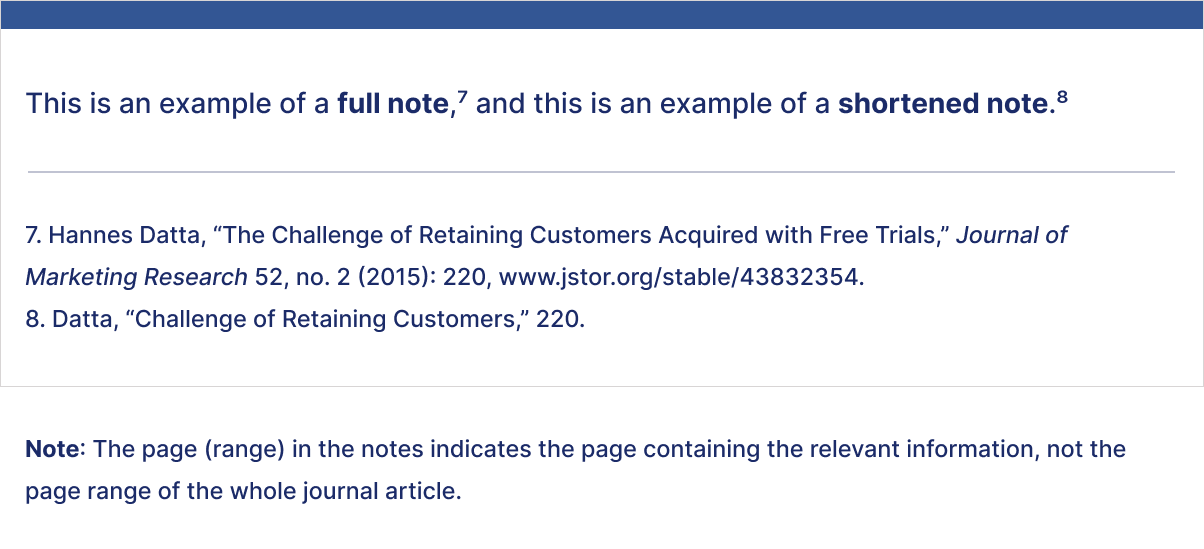
When citing a journal article, the title of the article is enclosed in quotation marks, and the title of the journal is italicized. The volume and issue numbers, along with publication dates and page numbers, follow a specific format.
- Example: Smith, John. “The Culinary Traditions of Tuscany.” Journal of Gastronomy 25, no. 3 (2023): 112-130.
Books
As mentioned, book titles are italicized. When citing a book in a bibliography, you typically include the author(s), title, publication city, publisher, and year of publication.
- Example: Davies, Eleanor. A History of Venice. New York: Oxford University Press, 2021.

Websites and Web Pages
Citing online content, such as a blog post or an article on a travel website, requires careful attention. The title of the specific page or article is typically placed in quotation marks, and the name of the website itself is italicized. Providing a URL and access date is also standard practice.
- Example: Peterson, Mark. “Ten Must-See Attractions in Paris.” Global Explorer Magazine, October 15, 2023. https://www.globalexplorermag.com/paris-attractions.
Films, Documentaries, and Multimedia
Titles of films, documentaries, and other multimedia productions are italicized. Information such as the director, studio, and release year are included in the citation.
- Example: The Grand Budapest Hotel. Directed by Wes Anderson. Searchlight Pictures, 2014.
Hotel and Resort Names
While not typically cited in the same academic sense as scholarly works, understanding how to reference hotel and resort names accurately can be important for reviews, travel guides, or promotional materials. In descriptive writing, hotel names are often capitalized normally, and if a specific aspect of the hotel is being discussed, such as a particular suite or amenity, that would be presented accordingly. For instance, a review of the Burj Al Arab Jumeirah might mention its “Royal Suite.”
Advanced Considerations in Chicago Style Title Formatting
Beyond the fundamental rules, several advanced considerations can refine your citations and ensure adherence to the most precise Chicago style requirements. These often involve dealing with specific circumstances or types of sources.
Titles Within Titles
When a title contains another title within it, the inner title follows its own Chicago style rules. For example, if a book chapter discusses a film, the film’s title within the chapter’s title would be handled according to its classification (italicized for a film).
Foreign Language Titles
When citing works in a language other than English, you typically provide the original title. If the work is not widely known by its original title, you may provide an English translation in brackets after the original title.
Titles with No Author
In instances where a work lacks a clear author, the citation begins with the title, following all standard formatting rules. This is less common for books but can occur with anonymous pamphlets or certain online content.
The Subtleties of Subtitles
The treatment of subtitles can sometimes be a point of contention. CMOS generally advises treating the subtitle as an integral part of the title. This means if the subtitle contains a preposition that would normally be lowercase, but it’s the first or last word of the subtitle, it should be capitalized.
Consistency is Key
The most crucial aspect of citing titles in Chicago style, or any style, is maintaining consistency throughout your document. Once you establish a rule for formatting a particular type of title, apply it uniformly. This ensures a professional and polished presentation of your research or travel writing. Whether you are documenting your explorations of Patagonia or reviewing the amenities at a luxury resort in the Maldives, accurate title citation contributes significantly to the credibility and readability of your work.

The Role of Style Guides and Software
For those frequently using Chicago style, it’s highly recommended to have a copy of The Chicago Manual of Style readily available. Online resources and citation management software can also be invaluable tools for ensuring accuracy. These resources can help you navigate complex rules and automate much of the formatting process, freeing you to focus on the content of your writing, whether it’s about the architecture of Barcelona or the serene beaches of Bali.
By diligently applying these principles, you can confidently cite titles in Chicago format, enhancing the clarity, accuracy, and professional appearance of your academic papers, travel articles, or any written work requiring precise bibliographic information. This attention to detail is not merely a formality; it is a fundamental aspect of academic integrity and effective scholarly communication.
LifeOutOfTheBox is a participant in the Amazon Services LLC Associates Program, an affiliate advertising program designed to provide a means for sites to earn advertising fees by advertising and linking to Amazon.com. Amazon, the Amazon logo, AmazonSupply, and the AmazonSupply logo are trademarks of Amazon.com, Inc. or its affiliates. As an Amazon Associate we earn affiliate commissions from qualifying purchases.