
Planning a wedding in the breathtaking landscapes of Colorado is an experience many couples dream of. From the majestic peaks of the Rocky Mountains to the charming historic towns, the Centennial State offers an unforgettable backdrop for your special day. A crucial step in bringing this dream to fruition is obtaining a marriage license. While the process is straightforward, understanding the requirements and procedures ensures a smooth and stress-free experience. This guide will walk you through everything you need to know to secure your Colorado marriage license, allowing you to focus on the joyous anticipation of your wedding.
Understanding Colorado Marriage License Essentials
The state of Colorado has a welcoming approach to marriage, with relatively simple requirements designed to make the process accessible. Unlike some other states, Colorado does not require a waiting period between when you obtain the license and when you can get married. This means you can apply for your license and have your wedding ceremony on the same day. Furthermore, Colorado does not require any blood tests or medical examinations. The primary focus is on ensuring both individuals are of legal age, not currently married to someone else, and entering into the union voluntarily.
Eligibility Requirements
To be eligible to apply for a marriage license in Colorado, both individuals must meet the following criteria:
- Age: Both applicants must be at least 18 years of age. If an applicant is 16 or 17 years old, they may marry with the written consent of both parents or their legal guardian. Minors under 16 are generally not permitted to marry in Colorado.
- Marital Status: Neither applicant can be currently married to someone else. If either party has been previously married, they must provide proof of how the marriage was terminated (e.g., a final divorce decree or death certificate) for any marriage that ended within the last 35 days of the application date. While older divorce decrees or death certificates may not need to be presented, it’s always advisable to have them on hand in case of any discrepancies or questions.
- Relationship: The applicants cannot be related by lineal consanguinity (e.g., parent and child, grandparent and grandchild) or be siblings, including half-siblings.
- Consent: Both parties must consent to the marriage.
Essential Documentation
When you visit the county clerk’s office to apply for your marriage license, you will need to present specific documentation. It is crucial to have these items ready to expedite the process and avoid any unnecessary delays.
- Proof of Identity and Age: Both applicants must present a valid, government-issued photo identification. Acceptable forms of identification typically include:
- Driver’s license
- State-issued identification card
- Passport
- Military identification card
- Birth certificate (though a photo ID is still preferred for verification of identity)
The identification must clearly show your name and date of birth.
- Proof of Dissolution of Previous Marriages (if applicable): As mentioned earlier, if you have been divorced or widowed, you may need to provide documentation. For divorces or annulments finalized within the last 35 days of your application, you must present a certified copy of the divorce decree or annulment. If your previous marriage ended more than 35 days ago, you generally do not need to present this documentation, but it’s a good idea to confirm with the specific county clerk’s office you plan to visit.
- Social Security Numbers: While not always required to be presented in physical form, you will likely need to provide your Social Security numbers.
The Application Process: Step-by-Step
Applying for a marriage license in Colorado is a straightforward process conducted at any county clerk’s office within the state. You do not need to be a resident of Colorado to obtain a license there. The license is valid for ceremonies performed anywhere within the state.
Where to Apply
You can apply for a marriage license at any county clerk and recorder’s office in Colorado. Some of the more popular counties for destination weddings include:
- Denver County Clerk and Recorder: For those marrying in or near Denver.
- Boulder County Clerk and Recorder: Ideal for couples seeking mountain views near Boulder.
- Eagle County Clerk and Recorder: Serves popular ski resort towns like Vail and Beaver Creek.
- Pitkin County Clerk and Recorder: For weddings in the exclusive area of Aspen.
- El Paso County Clerk and Recorder: Serving the Colorado Springs area.
It is highly recommended to check the specific county clerk’s website for their office hours, any appointment requirements, and any specific local procedures. Some offices may require appointments, especially during peak wedding seasons.
The Application Form and Interview
Once you arrive at the county clerk’s office, both applicants will need to complete a marriage license application form. This form will request personal information such as full names, addresses, dates of birth, places of birth, parents’ names, and Social Security numbers. Be prepared to answer questions truthfully and accurately.
After submitting the application, you will likely meet with a clerk who will review your documentation and verify the information provided. This is a formal process, and honesty is paramount. They will ensure you meet all eligibility requirements before proceeding.
Fees and Payment
There is a fee associated with obtaining a marriage license in Colorado. The exact cost can vary slightly from county to county, but it generally ranges from $30 to $50. It is advisable to check the specific county clerk’s website for the most up-to-date fee information. Most offices accept cash, credit cards, or money orders. It’s a good idea to confirm accepted payment methods in advance.
Issuance of the License
Upon successful completion of the application, verification of documents, and payment of the fee, the county clerk will issue your marriage license. This document is your legal authorization to get married.
After Obtaining Your License: The Wedding and Beyond

With your marriage license in hand, you are now legally permitted to have your wedding ceremony performed in Colorado. The license itself is typically valid for 35 days from the date of issuance. This means you have over a month to hold your ceremony.
The Officiant and Witness(es)
For your marriage to be legally recognized, it must be solemnized by an authorized officiant. In Colorado, this includes:
- Licensed judges (current or retired)
- Licensed clergy members
- Ministers of any religious society or denomination
- Other individuals authorized by law to solemnize marriages
The officiant must sign the marriage license after the ceremony. Additionally, Colorado law generally requires at least one witness to be present at the ceremony and to sign the marriage license. However, some counties may require two witnesses. It is best to confirm the witness requirement with your officiant or the county clerk’s office.
Returning the Signed License
After your wedding ceremony, the signed marriage license must be returned to the county clerk’s office where it was issued. The officiant is typically responsible for returning the license, but it’s wise for the couple to confirm this arrangement. The license must be returned within a specified timeframe, usually within 30 days of the ceremony. Once the license is received and recorded by the clerk’s office, your marriage is officially registered.
Obtaining Your Marriage Certificate
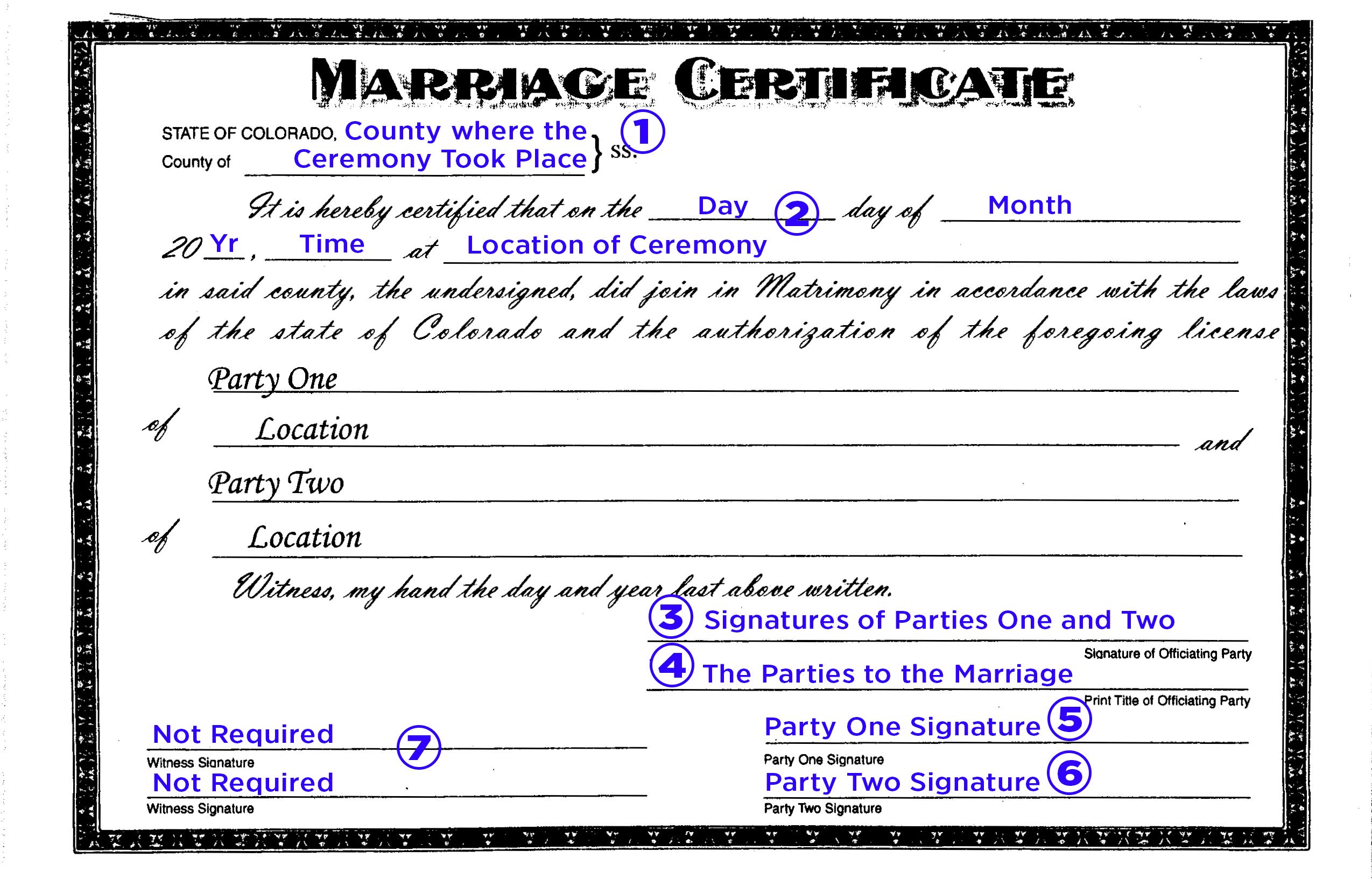
The marriage certificate is the official document that serves as proof of your marriage. After your signed license has been recorded, you can request certified copies of your marriage certificate from the county clerk’s office. These copies are often needed for various legal and administrative purposes, such as changing your name on official documents (like your driver’s license or Social Security card), updating insurance policies, or for immigration purposes. There is usually a small fee for each certified copy.
Frequently Asked Questions About Colorado Marriage Licenses
Navigating the legalities of marriage can sometimes bring up questions. Here are answers to some commonly asked questions regarding Colorado marriage licenses.
Can I get married in Colorado if I’m not a resident?
Yes, absolutely. Colorado does not have residency requirements for obtaining a marriage license. Couples from all over the world come to Colorado to get married.
How long is the marriage license valid?
A marriage license issued in Colorado is valid for 35 days from the date of issuance. Your ceremony must take place within this 35-day window.
What if I lose my marriage license before the ceremony?
If you lose your marriage license before your wedding, you will need to return to the county clerk’s office and apply for a new one. You will likely have to pay the fee again. It is important to keep the license in a safe place after you receive it.
Can we apply for a marriage license online?
While some counties may allow you to start the application process online, you will almost always need to appear in person at the county clerk’s office with your required documentation to complete the application and receive the license. Always check the specific county clerk’s website for their application procedures.
What if our names are misspelled on the license?
If you notice any errors on your marriage license, it’s crucial to address them immediately with the county clerk’s office before the ceremony. They can often make corrections before the license is finalized or recorded.

Do we need to be married in the same county where we got the license?
No, you can obtain your marriage license in any county in Colorado, and your ceremony can take place anywhere within the state.
By familiarizing yourself with these guidelines, you can ensure a smooth and successful process for obtaining your Colorado marriage license, paving the way for a beautiful and legally recognized wedding celebration in this stunning state.
LifeOutOfTheBox is a participant in the Amazon Services LLC Associates Program, an affiliate advertising program designed to provide a means for sites to earn advertising fees by advertising and linking to Amazon.com. Amazon, the Amazon logo, AmazonSupply, and the AmazonSupply logo are trademarks of Amazon.com, Inc. or its affiliates. As an Amazon Associate we earn affiliate commissions from qualifying purchases.