
Navigating the process of obtaining a disabled placard in California can seem daunting, but understanding the steps involved makes it a manageable endeavor. These placards, officially known as Disabled Person Parking Permits, are essential for individuals with mobility impairments to access designated accessible parking spaces. This guide will walk you through the entire process, from eligibility and application to renewal, ensuring you can confidently secure the necessary permit to enhance your travel experiences throughout the Golden State.
Understanding Eligibility and Types of Placards
The California Department of Motor Vehicles (DMV) governs the issuance of disabled person parking permits. Eligibility is primarily based on specific medical conditions that significantly limit an individual’s ability to walk or require the use of a mobility aid.

Qualifying Medical Conditions
To qualify for a disabled placard, you must have one or more of the following conditions, as certified by a licensed medical professional:
- Significant Mobility Impairment: This is the most common reason for eligibility. It includes conditions that prevent a person from walking 200 feet without assistance, the use of a wheelchair, a cane, crutches, a brace, or other assistive devices. Examples include severe arthritis, neurological disorders, respiratory or cardiac conditions that limit exertion, and conditions requiring significant rest stops.
- Blindness: Individuals who are legally blind, as defined by California law, are also eligible. This typically means having a corrected visual acuity of 20/200 or less in the better eye, or a visual field of 20 degrees or less.
- Medical Condition Requiring Use of Assistive Equipment: If your medical condition necessitates the use of specific equipment for ambulation, such as a walker or portable oxygen, you may also qualify.
Types of Disabled Placards
California offers two main types of disabled placards:
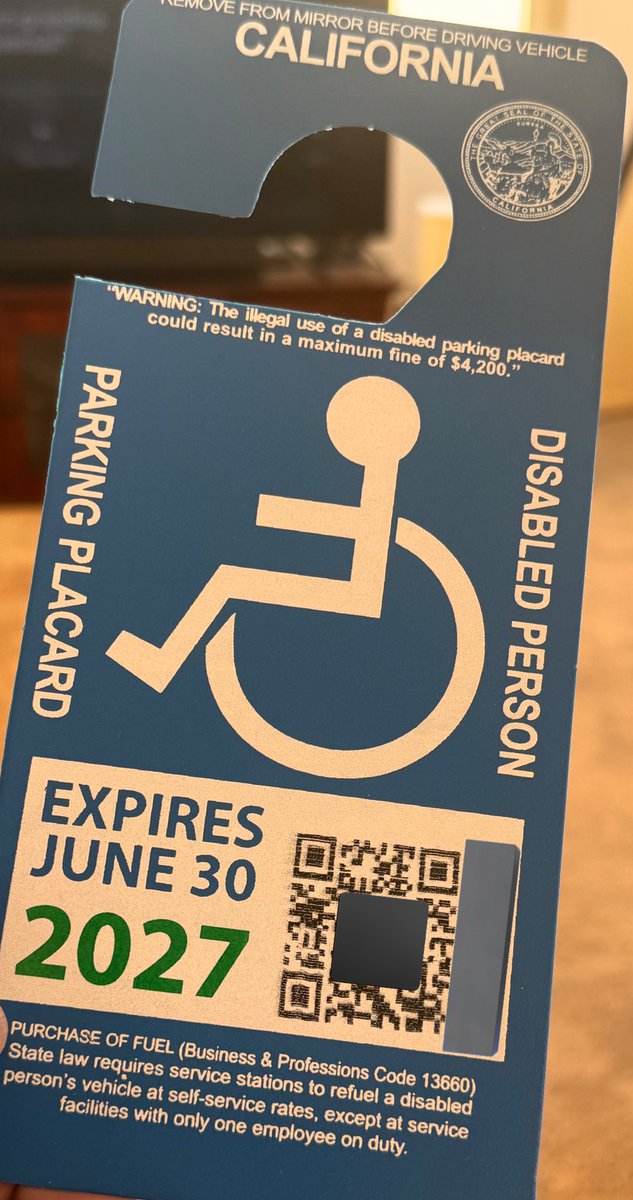
- Disabled Person Placard (Blue): This is the standard placard issued to individuals with permanent disabilities. It is typically valid for two years.
- Disabled Veteran Placard (Maroon): This placard is available to veterans who have a service-connected disability as certified by the U.S. Department of Veterans Affairs. These placards are also typically valid for two years.
There is also a temporary disabled placard, which is usually issued for a period of six months or less, for individuals with temporary mobility impairments.
The Application Process
Applying for a disabled placard involves completing specific forms and obtaining certification from a medical professional. The process is designed to be straightforward, ensuring that eligible individuals can obtain their permits without undue burden.
Step 1: Obtain the Application Form
The primary form required is the “Application for Disabled Person Parking Placard” (REG 195). This form can be obtained in several ways:
- Online: Download the form directly from the California DMV website.
- In Person: Visit your local California DMV office.
- By Mail: Request the form to be mailed to you by contacting the DMV.
Step 2: Medical Certification
This is a critical part of the application. The REG 195 form includes a section that must be completed and signed by a licensed medical professional. This can include:
- A physician (M.D.)
- A surgeon (D.O.)
- A licensed podiatrist
- A chiropractor (for certain conditions that affect the spine and lower extremities)
- An optometrist (for blindness)
- A registered nurse, nurse practitioner, or physician assistant authorized to practice in California and acting within the scope of their practice.
The medical professional will need to attest to the applicant’s specific medical condition and how it affects their mobility or vision. It is important to discuss your condition thoroughly with your doctor to ensure they can accurately complete this section.
Step 3: Completing Your Portion of the Form
While your medical professional completes the certification, you will need to fill out the applicant’s section of the REG 195 form. This includes providing:
- Your full legal name
- Your date of birth
- Your driver’s license or identification card number
- Your mailing address
- Your signature
Step 4: Submitting Your Application
Once the REG 195 form is fully completed and signed by both you and your medical professional, you can submit it to the DMV. You have a few submission options:
- In Person: Take the completed form to any California DMV field office. This is often the quickest way to have your application processed and receive your placard.
- By Mail: Mail the completed form to the address specified on the form. Processing by mail may take longer.
What to Bring to the DMV (If Applying In Person)
If you choose to apply in person, be sure to bring:
- The completed REG 195 form.
- A valid driver’s license or identification card.
- The application fee, if applicable (though there is generally no fee for disabled person parking placards themselves, a fee may apply for a replacement disabled person license plate).
Using Your Disabled Placard and License Plates
Once you have been approved and received your disabled placard, it’s important to understand how to use it correctly and what other options are available.
Displaying Your Placard
The placard should be displayed hanging from the rearview mirror of your vehicle when it is parked in a disabled parking space. It should not be displayed when the vehicle is in motion. Ensure the placard is clearly visible to parking enforcement officers.
Disabled Person License Plates
In addition to a placard, eligible individuals can also apply for disabled person license plates. These plates are designed to be permanently attached to your vehicle, eliminating the need to move a placard between vehicles. To be eligible for disabled person license plates, you must:
- Own the vehicle for which you are applying.
- Have a permanent disability as certified by a medical professional.
- Pay the applicable license plate fees, which are separate from placard fees.
The application process for disabled person license plates is similar, often requiring the same REG 195 form and medical certification.
Understanding the Benefits
The primary benefit of a disabled placard is access to designated accessible parking spaces. These spaces are typically located closer to building entrances, making it easier for individuals with mobility challenges to access businesses, attractions, and services. In some jurisdictions, disabled placards may also offer reduced parking fees or exemptions from parking meter limitations, though this varies widely by city and county. Always check local regulations regarding parking fees and time limits.
Renewal and Replacement
Disabled placards are not permanent and require periodic renewal. Understanding the renewal and replacement process ensures you maintain access to accessible parking.
Renewal Process
- Expiration: Disabled person placards are typically valid for two years. The expiration date is printed on the placard.
- Renewal Form: You will need to complete a new REG 195 form, with the medical certification section completed by a medical professional, to renew your placard.
- Submission: Submit the renewed application to the DMV either in person or by mail before your current placard expires.
- Fees: While there is no fee to renew a placard, there may be fees associated with renewing disabled person license plates.
It is crucial to renew your placard well in advance of its expiration date to avoid any lapse in your ability to use accessible parking spaces.
Replacement of Lost or Stolen Placards
If your disabled placard is lost, stolen, or damaged, you can apply for a replacement. You will need to complete a new REG 195 form and indicate that you are requesting a replacement. There may be a small fee for a replacement placard. Submit the completed form to the DMV as soon as possible.

Important Considerations
- One Placard Per Person: Each individual is allowed only one disabled person parking placard at a time.
- Use in Any Vehicle: Your disabled placard can be used in any vehicle you are traveling in, whether you are the driver or a passenger. However, it must be displayed in the vehicle that is parked.
- Fraud Prevention: Misuse of a disabled placard is a serious offense and can result in fines and penalties. Only use the placard when the eligible disabled person is present in the vehicle.
By familiarizing yourself with these guidelines and procedures, you can efficiently obtain and utilize a disabled placard in California, ensuring greater accessibility and convenience as you explore the diverse attractions and experiences the state has to offer. Whether you are planning a visit to the beaches of San Diego, the theme parks of Anaheim, or the cultural landmarks of Los Angeles, a disabled placard will be an invaluable asset to your journey.
LifeOutOfTheBox is a participant in the Amazon Services LLC Associates Program, an affiliate advertising program designed to provide a means for sites to earn advertising fees by advertising and linking to Amazon.com. Amazon, the Amazon logo, AmazonSupply, and the AmazonSupply logo are trademarks of Amazon.com, Inc. or its affiliates. As an Amazon Associate we earn affiliate commissions from qualifying purchases.