
Nevada, often celebrated for its vibrant entertainment and unique legal landscape, presents a distinct pathway for individuals seeking a dissolution of marriage. The state is renowned for its relatively swift divorce proceedings, attracting individuals from across the country and even internationally. Understanding the specific requirements and procedures is crucial for navigating this process efficiently and with minimal stress. This guide delves into the core elements of obtaining a divorce in Nevada, covering residency, grounds for divorce, necessary documentation, and the procedural steps involved.
Residency Requirements and Grounds for Divorce
Establishing Residency
To initiate a divorce in Nevada, one of the spouses must meet a minimum residency requirement. This means that either the petitioner (the spouse filing for divorce) or the respondent (the other spouse) must have physically resided in Nevada for at least six weeks immediately preceding the filing of the divorce complaint. Proof of residency can include utility bills, rental agreements, or affidavits from individuals who can attest to the residency period. This requirement ensures that Nevada courts have jurisdiction over the marriage. For those considering a move to Nevada solely for the purpose of a quick divorce, it is imperative to establish genuine residency and not just a temporary stay.

Grounds for Divorce
Nevada is a no-fault divorce state, meaning that a spouse does not need to prove that the other spouse did something wrong to be granted a divorce. The most common ground for divorce in Nevada is “irreconcilable differences.” This essentially means that the marriage has broken down to the point where there is no reasonable prospect of reconciliation. The court does not require extensive evidence to support this claim; a simple statement that the couple can no longer get along is generally sufficient.
While no-fault is the predominant ground, Nevada law also recognizes other grounds, though they are rarely used in practice due to the ease of the no-fault option. These include:
- Adultery: While legally recognized, proving adultery can be complex and is often unnecessary when irreconcilable differences can be asserted.
- Conviction of a felony: If one spouse has been convicted of a felony and imprisoned for at least one year.
- Wilful desertion: If one spouse has abandoned the other for a period of at least one year.
- Cruelty: This refers to physical or mental cruelty that makes the continuation of the marriage unbearable.
- Incurable insanity: If one spouse has been legally declared incurably insane.
For most individuals seeking a divorce in Nevada, filing under the ground of irreconcilable differences is the most straightforward and efficient approach.
The Divorce Process: From Filing to Decree
Filing the Complaint for Divorce
The divorce process officially begins when the petitioner files a “Complaint for Divorce” with the appropriate county court. This document formally states the intention to divorce and outlines the basic information about the marriage, including the names of the spouses, the date and place of marriage, and the grounds for divorce. If minor children are involved, the complaint will also address matters related to child custody, visitation, and support.
At the time of filing, a filing fee must be paid to the court. The exact amount can vary by county, so it is advisable to check with the specific court clerk’s office. The petitioner is then responsible for formally notifying the respondent of the lawsuit.
Service of Process
Once the Complaint for Divorce is filed, the respondent must be officially served with a copy of the Summons and Complaint. This is known as “service of process” and ensures that the respondent is aware of the legal action and has an opportunity to respond. Service can be accomplished in several ways:
- Personal Service: A sheriff, deputy sheriff, or a private process server personally delivers the documents to the respondent.
- Substituted Service: If personal service is not possible, a process server may leave the documents with a competent person at the respondent’s residence or place of business, and then mail a copy to the respondent’s last known address.
- Service by Publication: If the respondent cannot be located after diligent efforts, the court may allow service by publishing a notice of the divorce action in a newspaper of general circulation in the county where the action is filed.
The method of service will depend on the circumstances and the availability of the respondent. Proper service is a critical legal step, and failure to comply can delay or even invalidate the divorce proceedings.
The Respondent’s Answer and Counterclaim
After being served, the respondent has a specific period (typically 20 days in Nevada) to file an “Answer” with the court. The Answer is the respondent’s formal response to the allegations in the Complaint. In the Answer, the respondent can agree with or dispute the claims made by the petitioner.
The respondent may also choose to file a “Counterclaim,” which is essentially their own complaint for divorce, outlining their own requests and grounds for divorce. If a Counterclaim is filed, the original petitioner will then have an opportunity to respond to it.
Discovery and Negotiation
In more complex cases, particularly those involving significant assets, debts, or contentious child custody disputes, a “discovery” phase may occur. Discovery is a legal process where each party can obtain information and evidence from the other party. This can involve:
- Interrogatories: Written questions that must be answered under oath.
- Requests for Production of Documents: Demands for relevant documents, such as financial records, property deeds, or tax returns.
- Depositions: Out-of-court testimony taken under oath, usually with attorneys present.

The information gathered during discovery often forms the basis for negotiations between the parties. Ideally, spouses can reach an agreement on all aspects of their divorce, including property division, spousal support (alimony), child custody, and child support.
Reaching a Settlement Agreement
If the parties can agree on the terms of their divorce, they will draft a “Settlement Agreement” (also known as a Marital Settlement Agreement or Stipulated Judgment). This comprehensive document details how all marital issues will be resolved. It is crucial that this agreement is fair, equitable, and in compliance with Nevada law. Attorneys often play a significant role in drafting and reviewing these agreements to ensure that both parties’ rights are protected.
The Final Decree of Divorce
Once a Settlement Agreement is reached and signed by both parties, or if a judge makes decisions after a trial, the court will review the proposed resolution. If everything is in order and all legal requirements are met, the judge will sign a “Decree of Divorce.” This is the official court order that legally terminates the marriage.
A Nevada divorce can be finalized as early as 40 days after the initial filing, provided all paperwork is in order and there are no significant disputes. This expedited timeline is one of the primary reasons Nevada is a popular destination for divorces.
Key Considerations for a Nevada Divorce
Hiring an Attorney
While it is possible to navigate a Nevada divorce without legal representation (often referred to as “pro se” or “self-representation”), it is highly recommended to retain an experienced family law attorney. Divorce laws and court procedures can be complex, and an attorney can:
- Advise on legal rights and obligations.
- Ensure all necessary paperwork is filed correctly and on time.
- Negotiate favorable settlement terms.
- Represent your interests in court if necessary.
- Help you understand and comply with Nevada’s specific legal requirements.
For those who do not have the financial means to hire an attorney, legal aid societies and pro bono services may be available.
Uncontested vs. Contested Divorce
The speed and cost of a divorce are heavily influenced by whether it is contested or uncontested.
- Uncontested Divorce: This occurs when both spouses agree on all aspects of the divorce, including property division, spousal support, and child-related matters. In an uncontested divorce, the parties can draft a settlement agreement and submit it to the court for approval, leading to a much quicker and less expensive process.
- Contested Divorce: This happens when spouses cannot agree on one or more issues. Contested divorces often involve extensive negotiations, mediation, and potentially a trial, making them more time-consuming and costly.
Child Custody and Support
If minor children are involved, Nevada courts will prioritize the best interests of the child when making decisions regarding custody and visitation. This can include:
- Legal Custody: The right to make decisions about a child’s upbringing, education, and healthcare.
- Physical Custody: Where the child primarily resides.
- Joint Custody: Where both parents share legal and/or physical custody.
- Sole Custody: Where one parent has primary legal and/or physical custody.
Child support is calculated based on state guidelines, taking into account the income of both parents and the number of children. Nevada has specific formulas for calculating these amounts.
Property Division
Nevada is a community property state. This means that any assets and debts acquired by either spouse during the marriage are considered jointly owned, regardless of who earned the income or whose name is on the title. These community assets and debts are subject to equitable division between the spouses. Separate property, such as assets owned before the marriage or received as gifts or inheritance during the marriage, is generally not subject to division.
Spousal Support (Alimony)
Spousal support, also known as alimony, may be awarded by the court to help a spouse maintain their standard of living after the divorce. Factors considered by the court when determining alimony include the length of the marriage, the financial needs of each spouse, the earning capacity of each spouse, and the contributions each spouse made to the marriage.
Relocating to Nevada for Divorce
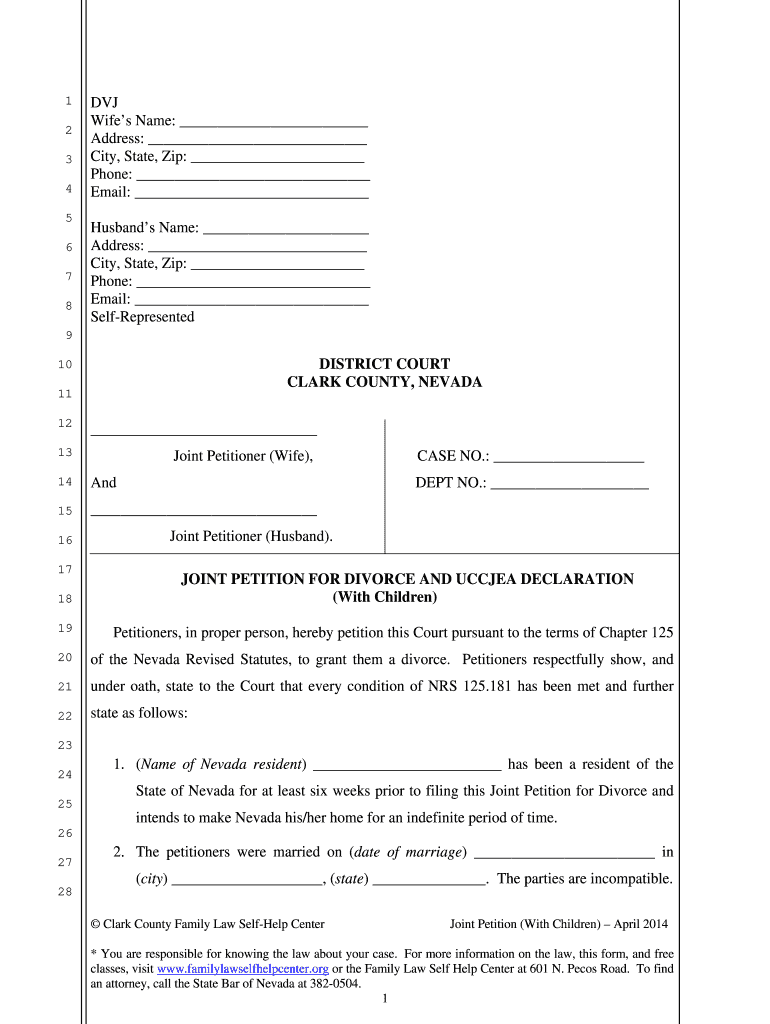
While Nevada’s laws may seem attractive for a quick divorce, it’s important to understand the nuances. Simply intending to get a divorce in Nevada without establishing genuine residency can lead to issues, particularly if the other spouse resides in another state and challenges the jurisdiction of the Nevada court. The six-week residency requirement is a strict guideline that must be met.
Navigating a divorce in Nevada involves understanding these legal intricacies. Consulting with a qualified Nevada attorney is the most effective way to ensure a smooth and legally sound dissolution of marriage, allowing individuals to move forward with their lives.
LifeOutOfTheBox is a participant in the Amazon Services LLC Associates Program, an affiliate advertising program designed to provide a means for sites to earn advertising fees by advertising and linking to Amazon.com. Amazon, the Amazon logo, AmazonSupply, and the AmazonSupply logo are trademarks of Amazon.com, Inc. or its affiliates. As an Amazon Associate we earn affiliate commissions from qualifying purchases.