
Navigating the complex regulatory landscape of the hospitality industry in California is a critical step for any business looking to serve alcoholic beverages. From bustling restaurants in San Francisco to vibrant bars in Los Angeles and picturesque wineries in Napa Valley, a liquor license is not merely a formality but a foundational element of operation. For tourism-driven economies, the availability of diverse culinary and beverage experiences is paramount, making the process of obtaining this license a vital topic for prospective business owners and investors alike. Understanding the requirements and procedures set forth by the California Department of Alcoholic Beverage Control (ABC) is the first step toward enriching California’s vibrant local culture and enhancing its global appeal as a premier tourist destination.
Understanding California’s Alcoholic Beverage Control (ABC)
The California Department of Alcoholic Beverage Control (ABC) is the state agency responsible for regulating the manufacture, distribution, and sale of alcoholic beverages. Established to ensure public safety and welfare, the ABC issues various types of licenses, each with specific privileges and restrictions. Operating without the correct license can lead to severe penalties, including fines and business closure, underscoring the importance of thorough compliance.
The Role of the ABC
The primary mission of the ABC is to administer the provisions of the Alcoholic Beverage Control Act in a manner that protects the public health, safety, and welfare. This involves:
- Issuing Licenses: Granting licenses to qualified applicants.
- Regulating Sales: Ensuring licensees operate within the scope of their permits.
- Preventing Underage Drinking: Enforcing laws against selling to minors.
- Promoting Responsible Service: Encouraging safe practices through education and enforcement.
- Investigating Violations: Addressing complaints and infractions related to alcohol sales and service.
For a state like California, where tourism is a cornerstone of the economy, the ABC’s role extends to safeguarding the quality and integrity of the hospitality sector. Ensuring that establishments serving alcohol operate responsibly contributes directly to a positive experience for both residents and visitors, upholding California’s reputation as a world-class destination.
Types of Liquor Licenses
California offers a wide array of liquor licenses tailored to different business models. The most common types for tourism-related businesses include:
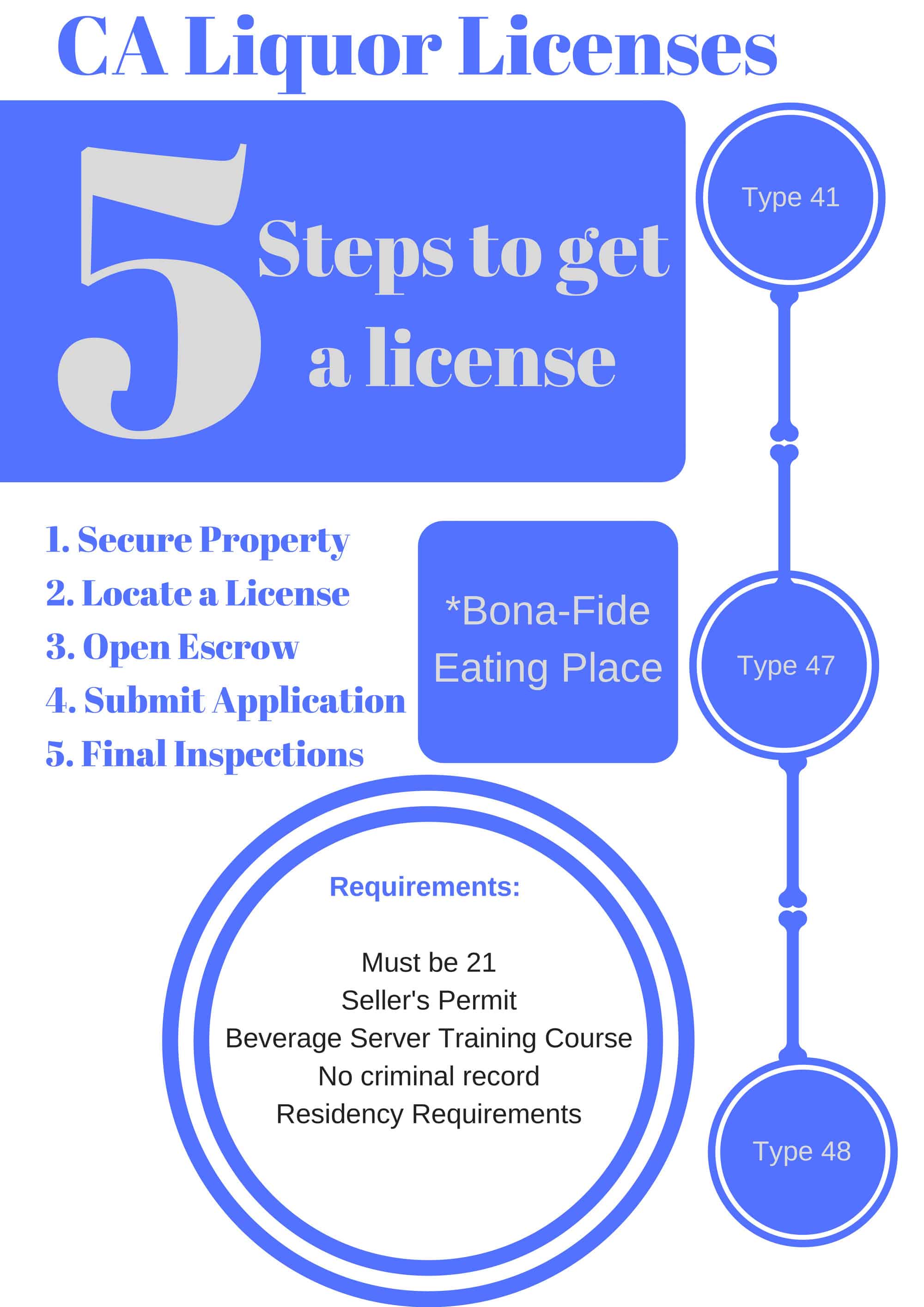
- Type 47 (On-Sale General Public Eating Place License): This license permits the sale of beer, wine, and distilled spirits for consumption on the premises of a bona fide public eating place (restaurant). It is one of the most sought-after licenses for restaurants aiming to offer a full bar service, crucial for attracting discerning diners in locales like Beverly Hills or San Diego.
- Type 48 (On-Sale General Public Bar License): Intended for stand-alone bars or nightclubs, this license allows for the sale of beer, wine, and distilled spirits for on-premise consumption. Unlike Type 47, a Type 48 establishment is not required to operate as a bona fide eating place, though many offer food. These establishments are central to the nightlife and entertainment aspects of tourism.
- Type 41 (On-Sale Beer & Wine Public Eating Place License): This license allows restaurants to sell beer and wine only for on-premise consumption. It’s a popular choice for eateries that don’t wish to offer spirits but still want to enhance the dining experience with alcoholic beverages.
- Type 20 (Off-Sale Beer & Wine License): Primarily for convenience stores, supermarkets, and specialty food shops, this license permits the sale of packaged beer and wine for consumption off the premises. While not directly tied to on-premise dining, these outlets cater to tourists seeking to purchase local wines or craft beers to enjoy elsewhere.
- Type 21 (Off-Sale General License): Similar to Type 20 but includes distilled spirits, allowing for the sale of packaged beer, wine, and spirits for off-premise consumption. This is common for liquor stores and larger grocery chains.
Choosing the correct license type is paramount and depends entirely on the business’s operational model and the type of alcoholic beverages it intends to sell.
The Application Process: A Step-by-Step Guide
Securing a liquor license in California is a meticulous process that demands patience and attention to detail. The steps outlined below provide a general framework, but applicants should always consult the ABC’s official website and local district office for the most current and specific requirements.
Initial Considerations and Research
Before even filling out an application, several preliminary steps are essential:
- Business Plan & Location: Clearly define your business type (restaurant, bar, hotel, retail) and secure a physical location. The location’s zoning, proximity to schools or churches, and existing liquor license density will significantly impact your application.
- Local Ordinances: Contact your city or county planning department. Many municipalities have specific zoning regulations, conditional use permit (CUP) requirements, and other local laws that must be satisfied before the ABC will grant a license. For example, some cities might have strict noise ordinances affecting late-night operations, a key factor for tourist nightlife venues.
- License Availability (Quota vs. Non-Quota): Some licenses, particularly Type 47 and Type 48, are subject to county-specific quotas based on population. If a quota is filled, you might need to purchase an existing license through a transfer, which can be a costly and competitive process. Non-quota licenses, like Type 41 and 20, are generally more readily available.
- Financial Readiness: The application fees alone can range from hundreds to thousands of dollars, depending on the license type. If acquiring a quota license through transfer, expect substantial additional costs for the license itself.
Submitting Your Application
Once the groundwork is complete, the formal application process begins:
- Preliminary Application: Start by submitting a preliminary application to your local ABC district office. This involves providing basic business information, legal entity details, and the proposed location.
- Full Application Submission: Upon ABC approval of the preliminary application, you will receive a full application package. This comprehensive document requires detailed personal and business financial information, criminal background checks for all principals, and often, copies of leases or property deeds. Accuracy and completeness are critical to avoid delays.
- Fingerprinting: All individuals listed on the application (owners, partners, corporate officers) must undergo fingerprinting for a thorough background check by the California Department of Justice and the FBI.
Public Notification Requirements
Transparency is a key component of the ABC process, ensuring community awareness and input:
- Posting Notice: Applicants are required to conspicuously post a public notice of the application at the proposed premises for a specified period (typically 30 days). This notice informs the public about the pending application and provides details for filing protests.
- Newspaper Publication: In some cases, applicants must also publish notice of the application in a newspaper of general circulation in the area.
- Community Input: Local residents, businesses, or public agencies can file a protest against an application if they believe granting the license would adversely affect public peace, safety, or welfare. Common reasons for protest include concerns about noise, loitering, crime, or over-concentration of licenses in an area. Addressing these concerns proactively or through negotiation can be crucial for success, especially in dense urban tourist areas like Santa Monica or Laguna Beach.
Investigations and Approval
After the public notification period, the ABC conducts a thorough investigation:
- ABC Investigator: An ABC investigator will be assigned to your case. They will review all submitted documents, conduct interviews, inspect the premises, and verify compliance with all state and local regulations. This often includes verifying the “bona fide public eating place” status for Type 47 licenses, ensuring a legitimate restaurant operation rather than just a bar with minimal food service.
- Local Agency Checks: The investigator will also consult with local law enforcement (e.g., Los Angeles Police Department, San Francisco Police Department) and planning departments to ascertain any objections or compliance issues.
- Resolution of Protests: If protests are filed, the ABC will facilitate a meeting between the applicant and the protestants to seek a resolution. If no agreement is reached, a formal hearing may be held, potentially delaying or even denying the license.
- Final Approval: If all requirements are met, no valid protests remain unresolved, and the investigation yields a positive recommendation, the ABC will issue the liquor license.
Navigating Common Challenges and Considerations
The path to obtaining a California liquor license can present several hurdles. Being aware of these common challenges can help applicants prepare and mitigate potential delays.
Zoning and Local Ordinances
Beyond state ABC regulations, local jurisdictions impose their own rules. Many cities require a Conditional Use Permit (CUP) for establishments serving alcohol. Obtaining a CUP involves a separate application process with the city or county planning department, often requiring public hearings and community review. Failure to secure a CUP will prevent the ABC from issuing a license, regardless of state compliance. This interplay between state and local regulations is a critical aspect, especially in areas with sensitive community dynamics.
Quota Restrictions and Transfers
For certain types of licenses, particularly on-sale general licenses (Type 47 and 48), California counties have a limited number available based on population quotas. When the quota is full, a new license cannot be issued, meaning applicants must purchase an existing license from a current licensee. This “transfer” market operates like real estate, with prices fluctuating based on demand and location. In high-demand areas like Orange County or prime San Francisco neighborhoods, the cost of acquiring a transferred license can be exceptionally high, often dwarfing the state application fees. Engaging an experienced broker or legal counsel specializing in ABC transfers is often advisable.
Temporary Permits
While waiting for the full license to be processed, the ABC offers certain temporary permits that allow businesses to operate for a limited period. A Temporary Permit (TP) can be issued to a transferee of an existing license, allowing them to sell alcoholic beverages while the transfer application is pending. This is invaluable for maintaining business continuity and generating revenue during the often lengthy approval process, particularly vital for tourist-heavy seasons.
Maintaining Compliance and Avoiding Pitfalls
Obtaining the license is just the beginning. Ongoing compliance with ABC regulations is crucial for the long-term viability of any business serving alcohol.
Ongoing Regulatory Requirements
Licensees must adhere to a myriad of rules, including:
- Hours of Operation: Strict enforcement of sale hours (generally 6 AM to 2 AM).
- Serving Minors: Zero tolerance for selling or serving alcohol to underage individuals.
- Intoxicated Patrons: Preventing service to visibly intoxicated persons.
- Record Keeping: Maintaining accurate records of alcohol purchases and sales.
- Premise Maintenance: Ensuring the licensed premises remain safe and clean.
- Employee Conduct: Training staff on responsible beverage service (RBS).
Violations can lead to citations, fines, license suspension, or even permanent revocation. For businesses reliant on tourism, a tarnished reputation due to ABC violations can have devastating consequences.
Training and Responsible Service
California mandates Responsible Beverage Service (RBS) training for all alcohol servers and their managers. This training equips staff with the knowledge and skills to serve alcohol responsibly, identify intoxicated patrons, and prevent underage drinking. The RBS certification program is administered by the ABC and is a critical component of responsible operation, directly contributing to public safety and enhancing the overall visitor experience in California’s hospitality venues.
License Renewals and Transfers
Liquor licenses must be renewed annually. Additionally, any changes to the ownership structure, legal entity, or premises layout may require notification to and approval from the ABC. Failure to properly renew or report changes can lead to license lapse or suspension.
The Economic Impact on California Tourism
The efficient and transparent process of obtaining and managing liquor licenses in California is not merely administrative; it underpins a significant portion of the state’s tourism economy.
Enhancing Hospitality Experiences
A robust and regulated system for alcoholic beverage service allows California’s diverse hospitality sector to flourish. Restaurants can offer sophisticated wine pairings, bars can craft innovative cocktails, and hotels can provide comprehensive amenity packages. These offerings are fundamental to the guest experience, driving tourist spending in vibrant areas like Hollywood, Santa Barbara, and Palm Springs. The ability to serve alcohol responsibly elevates the state’s culinary and entertainment scenes, making them key attractions for domestic and international visitors.
Supporting Local Businesses
By facilitating the licensing process, the ABC directly supports countless small to large businesses, from family-owned restaurants to large resort complexes. These businesses, in turn, create jobs, contribute to local tax revenues, and purchase goods and services from other local suppliers, creating a powerful economic multiplier effect. A streamlined licensing process encourages entrepreneurial investment, particularly in sectors vital to tourism.
Contributing to Local Culture
California’s local culture is intimately tied to its food and beverage scene. From the craft beer explosion in San Diego to the world-renowned wineries of Sonoma and Napa, these establishments are more than just places to drink; they are cultural hubs that define community character and attract tourists seeking authentic local experiences. The ability to legally and responsibly offer these products ensures that California continues to foster a rich and diverse cultural landscape that appeals to a wide array of visitors.
In conclusion, while obtaining a liquor license in California is a challenging journey, it is an indispensable one for businesses aspiring to thrive in the state’s dynamic hospitality and tourism industries. A meticulous approach to the application, combined with a commitment to ongoing compliance, will pave the way for successful operation and a valuable contribution to California’s reputation as a world-class destination.
LifeOutOfTheBox is a participant in the Amazon Services LLC Associates Program, an affiliate advertising program designed to provide a means for sites to earn advertising fees by advertising and linking to Amazon.com. Amazon, the Amazon logo, AmazonSupply, and the AmazonSupply logo are trademarks of Amazon.com, Inc. or its affiliates. As an Amazon Associate we earn affiliate commissions from qualifying purchases.