
Navigating the path to becoming a licensed real estate agent in the vibrant state of Louisiana involves a structured process designed to ensure that professionals possess the necessary knowledge and ethical standards. Whether your dream is to help clients find their perfect home in New Orleans, facilitate commercial deals in Baton Rouge, or explore opportunities in other picturesque towns across the state, obtaining your real estate license is the crucial first step. This guide will walk you through the essential requirements, educational components, examination process, and post-licensing steps necessary to launch your real estate career in the Pelican State.
Understanding the Eligibility Requirements
Before embarking on your journey, it’s vital to ensure you meet the fundamental criteria set forth by the Louisiana Real Estate Commission (LREC). These requirements are in place to maintain the integrity and professionalism of the real estate industry within the state.
Age and Residency
To be eligible for a real estate license in Louisiana, applicants must be at least 18 years of age. Furthermore, you must be a bona fide resident of Louisiana or maintain a place of business in the state. This residency requirement ensures that licensees are subject to state regulations and can be readily contacted by the commission and the public.
Education and Background Checks
A clean background is essential for anyone seeking to enter a profession that involves significant financial transactions and public trust. Applicants are required to be of good moral character. This is typically assessed through a criminal background check, which includes fingerprinting. Any felony conviction or conviction of a crime involving moral turpitude may disqualify an applicant. The LREC will review each case individually, but transparency and honesty during the application process are paramount.
Completing the Required Pre-Licensing Education
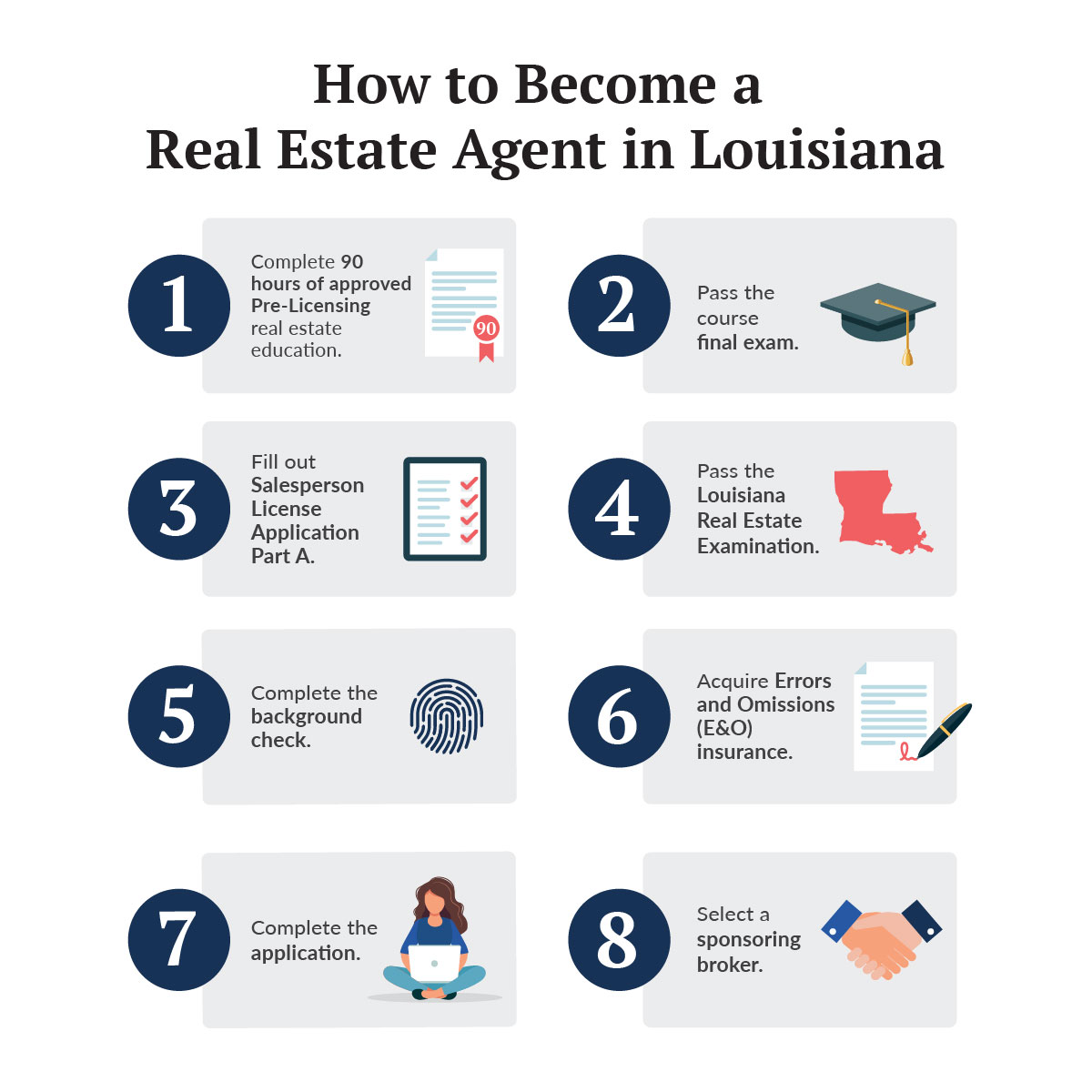
A cornerstone of the licensing process in Louisiana is the completion of a state-approved pre-licensing education course. This coursework is designed to equip aspiring agents with the fundamental knowledge required to practice real estate ethically and competently.
The 90-Hour Salesperson Pre-Licensing Course
The Louisiana Real Estate Commission mandates a minimum of 90 hours of approved instruction for all prospective real estate salespersons. This comprehensive curriculum covers a broad range of topics crucial for understanding the real estate profession, including:
- Real Estate Principles and Practices: This foundational module delves into the core concepts of real estate, such as property rights, ownership, types of real property, and legal descriptions.
- Real Estate Law: Understanding Louisiana-specific real estate laws, including agency relationships, contracts, deeds, mortgages, and closing procedures, is critical. This section ensures licensees are aware of their legal obligations and the rights of their clients.
- Financing: A significant portion of real estate transactions involves financing. This module covers various mortgage types, loan processes, and the role of financial institutions.
- Ethics and Fair Housing: Ethical conduct and adherence to fair housing laws are non-negotiable in the real estate industry. This part of the course emphasizes professional integrity and the prohibition of discrimination.
- Property Management: While primarily focused on sales, understanding basic property management principles can be beneficial for agents dealing with rental properties or assisting investors.
- Appraisal and Market Analysis: Learning how to determine property value through appraisal methods and comparative market analysis (CMA) is a key skill for agents.
- Mathematics: Practical application of real estate mathematics, including calculating commissions, prorations, and loan payments, is also covered.
These courses are offered by various accredited real estate schools throughout Louisiana. Prospective licensees have the flexibility to choose between in-person classes, online courses, or a hybrid format, depending on their learning preferences and schedules. It is imperative to select a course provider that is officially approved by the LREC to ensure the credit hours are recognized.
Choosing a Reputable Education Provider
The quality of your pre-licensing education directly impacts your readiness for the licensing exam and your future success in the field. When selecting a school, consider:
- Accreditation: Verify that the school and its courses are approved by the Louisiana Real Estate Commission.
- Instructor Experience: Look for schools with experienced instructors who have practical knowledge of the Louisiana real estate market.
- Pass Rates: Some schools may provide statistics on their students’ pass rates for the licensing exam.
- Learning Materials: Review the course materials and delivery methods to ensure they align with your learning style.
- Student Reviews: Seek out reviews from previous students to gauge the school’s reputation and effectiveness.
Passing the Louisiana Real Estate Salesperson Exam
Once you have successfully completed your pre-licensing education, the next significant hurdle is passing the state licensing examination. This exam is administered by a third-party testing service, typically Pearson VUE, on behalf of the LREC.
Understanding the Exam Format
The Louisiana Real Estate Salesperson Examination is divided into two sections:
- National Portion: This section covers general real estate principles and practices that are applicable nationwide. Topics include property ownership, types of ownership, deeds, lease agreements, contracts, financing, and agency.
- State Portion: This section is specific to Louisiana real estate laws, rules, and regulations. It covers topics such as license law, agency disclosure, property disclosures, Louisiana Civil Code provisions related to real estate, and local zoning ordinances.

The exam is administered via computer and consists of multiple-choice questions. The number of questions and passing score are determined by the LREC and may be subject to change. It is essential to prepare thoroughly for both sections.
Strategies for Exam Preparation
Effective preparation is key to successfully passing the exam. Consider the following strategies:
- Review Course Materials Thoroughly: Revisit your pre-licensing course notes, textbooks, and any practice materials provided by your school.
- Utilize Practice Exams: Many real estate schools and independent providers offer comprehensive practice exams. These simulations are invaluable for familiarizing yourself with the exam format, identifying areas of weakness, and building confidence.
- Focus on Louisiana-Specific Content: Pay particular attention to the state portion of the exam. Understanding Louisiana’s unique legal framework and regulations is crucial for success.
- Study Key Terms and Definitions: Real estate is a field with its own specialized vocabulary. Create flashcards or study guides for important terms and their definitions.
- Understand the “Why”: Don’t just memorize facts; strive to understand the underlying principles and rationale behind real estate concepts and laws. This will help you answer questions that require critical thinking.
- Time Management: Practice answering questions within a timed environment to develop efficient test-taking strategies.
Scheduling and Taking the Exam
After completing your pre-licensing education, you will receive instructions on how to register for the exam. This typically involves creating an account with the designated testing service, selecting a testing center, and paying the examination fee. It is advisable to schedule your exam shortly after completing your course while the information is still fresh in your mind. On exam day, arrive at the testing center early and bring the required identification.
Applying for Your Real Estate License
Passing the exam is a significant accomplishment, but it is not the final step. You must then formally apply for your real estate salesperson license with the Louisiana Real Estate Commission.
The Application Process
The application for a real estate license typically includes:
- Completed Application Form: This form will require personal information, educational details, and a declaration of any criminal history.
- Proof of Education: You will need to submit evidence that you have completed the required 90-hour pre-licensing course from an approved provider.
- Exam Score Report: Your official score report from the licensing exam must be submitted.
- Background Check Information: Details of your completed criminal background check and fingerprint submission will be required.
- Application Fee: A non-refundable fee is associated with the license application.
It is crucial to fill out the application accurately and completely to avoid delays. Any discrepancies or omissions can lead to your application being returned or rejected.
Sponsorship by a Licensed Broker
In Louisiana, a newly licensed salesperson cannot operate independently. You must be sponsored by a licensed Louisiana real estate broker. Your sponsoring broker will be responsible for supervising your activities and ensuring you adhere to all real estate laws and ethical standards.
- Finding a Brokerage: Research different real estate brokerages in your desired market. Consider factors such as their reputation, commission splits, training programs, and company culture. Many new agents opt for larger, established firms that offer robust training and mentorship, while others may prefer smaller, boutique agencies.
- The Sponsorship Process: Once you have identified a broker who is willing to sponsor you, they will typically need to sign off on your license application, confirming their agreement to supervise you. The LREC will then process this information as part of your license issuance.
Post-Licensing Requirements and Continuing Education
Obtaining your license is the beginning of your real estate career, and ongoing professional development is essential.
Completing Post-Licensing Education
While Louisiana does not mandate a specific post-licensing education requirement for salespersons upon initial licensure, it is highly recommended for new agents to continue their learning. Many brokerages offer in-house training programs for their new agents, focusing on practical skills, market knowledge, and transaction management. Participating in these programs can significantly accelerate your growth and success.
Continuing Education
To maintain an active real estate license in Louisiana, licensees are required to complete a specific number of hours of continuing education (CE) every two years. These CE courses are designed to keep licensees updated on changes in real estate law, market trends, and best practices. The Louisiana Real Estate Commission outlines the specific CE requirements, including any mandatory topics. Failure to complete the required CE within the designated timeframe can result in the suspension or revocation of your license.
By diligently following these steps, aspiring real estate professionals can successfully obtain their license in Louisiana and embark on a rewarding career helping individuals and families achieve their property goals in this unique and beautiful state. Remember that continuous learning, ethical practice, and dedication are the cornerstones of a successful real estate profession.
LifeOutOfTheBox is a participant in the Amazon Services LLC Associates Program, an affiliate advertising program designed to provide a means for sites to earn advertising fees by advertising and linking to Amazon.com. Amazon, the Amazon logo, AmazonSupply, and the AmazonSupply logo are trademarks of Amazon.com, Inc. or its affiliates. As an Amazon Associate we earn affiliate commissions from qualifying purchases.