
The dream of educating the next generation is a noble pursuit, and for many, it begins in the vibrant state of Texas. Navigating the process of obtaining teacher certification in the Lone Star State can seem complex, but with a clear understanding of the requirements and pathways, aspiring educators can confidently embark on their journey. This guide aims to demystify the Texas teacher certification process, offering a comprehensive overview for individuals seeking to enter the profession.
Understanding the Foundation: Requirements for Texas Teacher Certification
Before diving into the specifics of different certification routes, it’s crucial to grasp the fundamental prerequisites that form the bedrock of the Texas educator licensing system. These requirements ensure that all candidates possess the necessary academic background, foundational knowledge, and commitment to ethical practice.
Educational Attainment
At its core, obtaining a teaching certificate in Texas necessitates a bachelor’s degree from an accredited institution. This degree serves as the initial academic validation, demonstrating a candidate’s ability to engage with higher-level learning and research. While the specific major may vary depending on the subject area one wishes to teach, the bachelor’s degree is a non-negotiable starting point for most certification pathways.
Core Subjects and General Knowledge
Beyond a bachelor’s degree, candidates are expected to demonstrate proficiency in a broad range of academic areas. The Texas Education Agency (TEA) mandates foundational knowledge assessments to ensure that teachers are well-rounded and capable of imparting understanding across various disciplines. This often includes coursework or examinations covering areas such as English language arts, mathematics, science, and social studies.
Subject-Specific Content Mastery
Once the general academic foundations are established, the focus shifts to the specific subject matter you intend to teach. This requires demonstrating a deep understanding of the content area. For instance, an aspiring high school mathematics teacher will need to prove their mastery of advanced mathematical concepts, while a future elementary school teacher will need a solid grasp of all elementary-level subjects. This is typically achieved through specialized coursework and rigorous content-area examinations.
Professional Pedagogy and Classroom Management
Effective teaching involves more than just subject knowledge; it requires pedagogical skills—the art and science of teaching. Candidates must learn and demonstrate an understanding of child development, learning theories, instructional strategies, assessment techniques, and classroom management best practices. This component is crucial for creating a positive and productive learning environment, ensuring that all students can thrive.
Background Checks and Character Fitness
The safety and well-being of students are paramount. As such, all individuals seeking teacher certification in Texas must undergo thorough background checks, including fingerprinting and a review of criminal history. The TEA also evaluates candidates for character fitness, ensuring that they possess the integrity, ethical standards, and professional disposition necessary to serve as role models and trusted educators.
Pathways to Certification: Exploring Your Options
Texas offers several distinct pathways for individuals to earn their teaching certification, catering to diverse backgrounds and experiences. Understanding these routes is essential for selecting the one that best aligns with your educational history and career goals.
The Traditional Route: Educator Preparation Programs (EPPs)
The most common and widely recognized pathway to certification is through an approved Educator Preparation Program (EPP). These programs are offered by universities, colleges, and alternative certification providers across the state. They are designed to provide comprehensive training in pedagogy, subject matter, and practical classroom experience.
University-Based EPPs
For individuals who have recently completed or are nearing completion of their bachelor’s degree, enrolling in a university-based EPP is a natural progression. These programs are typically integrated into the university’s teacher education department and offer a structured curriculum that combines coursework with student teaching or internships. Graduates of these programs are often well-prepared for the demands of the classroom.
Alternative Certification Programs (ACPs)
For those who already hold a bachelor’s degree but did not major in education, or for individuals seeking a career change, Alternative Certification Programs (ACPs) provide a more direct route to teaching. ACPs are designed for individuals with strong subject matter knowledge who need to acquire the pedagogical skills and state-specific training required for certification. These programs are often more accelerated than traditional university programs and can be completed while the candidate is already teaching under a provisional certificate. The Texas Education Agency approves various ACP providers throughout the state, offering flexibility in program duration and delivery.
The Alternative Pathway: Provisional Teaching Certificates
In certain circumstances, individuals with a strong academic background in a high-need subject area may be eligible for a provisional teaching certificate. This allows them to begin teaching in a classroom setting while simultaneously working towards their full certification through an approved EPP or ACP. This pathway is designed to address teacher shortages and provide opportunities for individuals to gain valuable classroom experience.
Navigating the Examination Process: Proving Your Competence
A critical step in the Texas teacher certification journey is successfully passing the required examinations. These tests are designed to assess your knowledge and skills in both general education principles and your chosen subject area.
The State-Wide Teacher Certification Examinations
Texas utilizes a standardized set of examinations, often referred to as the TEXES (Texas Examinations of Educator Standards) tests. These exams are administered by Pearson VUE and are crucial for demonstrating your readiness to teach.
Core Subjects Examination
The first set of examinations typically focuses on core academic subjects. Candidates are usually required to pass a generalist exam that covers fundamental knowledge across elementary-level disciplines, or specific exams for different grade levels and subject areas if they are pursuing certification in a specialized field. This ensures a baseline competency in the foundational subjects taught in Texas schools.
Subject Area Examinations
Once the core knowledge is established, candidates must pass a subject area examination that corresponds to the specific teaching field they wish to be certified in. For example, a candidate seeking certification in secondary mathematics will need to pass the Mathematics, Grade 8-12 (231) exam. These exams delve deeply into the content and pedagogical knowledge required to effectively teach the chosen subject.
Professional Responsibilities Examination
In addition to subject matter expertise, candidates must also demonstrate an understanding of professional responsibilities and ethics in education. A dedicated examination often assesses knowledge of Texas education law, professional conduct, instructional planning, and assessment strategies, ensuring that new teachers are equipped to navigate the complexities of the classroom and school environment.
The Application and Issuance Process: Finalizing Your Certification
With educational requirements met, coursework completed, and examinations passed, the final stages involve submitting your application to the Texas Education Agency (TEA) and receiving your official teaching certificate.
Submitting Your Application
Once all prerequisites have been fulfilled, you will submit a formal application for certification to the TEA. This typically involves completing an online application, providing official transcripts from all post-secondary institutions attended, and submitting documentation of your completed EPP or ACP program. It is crucial to ensure that all required information is accurate and complete to avoid delays in the process.
The Role of the TEA
The Texas Education Agency serves as the governing body responsible for issuing all teacher certifications in the state. Their review process ensures that all candidates have met the established standards and are qualified to teach. The TEA verifies your educational background, examination scores, and any required background checks before issuing the certificate.
Receiving Your Certificate
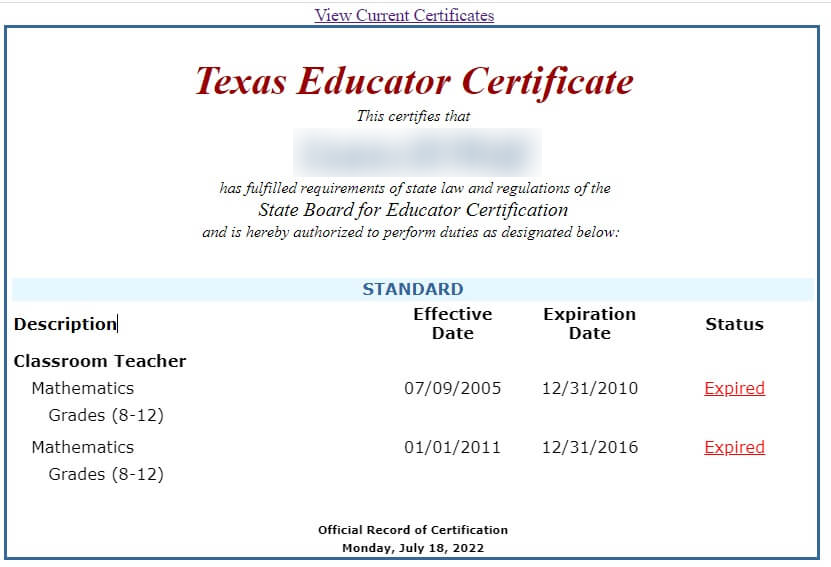
Upon successful review of your application and verification of all requirements, the TEA will issue your official Texas teaching certificate. This document signifies your authorization to teach in public schools within the state. It is essential to keep your certificate in a safe place and be aware of its expiration date, as well as the requirements for renewal.
Maintaining and Renewing Your Certification
Teacher certification in Texas is not a one-time achievement; it requires ongoing professional development to ensure that educators remain current with best practices and advancements in the field.
Continuing Professional Education (CPE)
To maintain their certification, Texas teachers are required to complete a certain number of Continuing Professional Education (CPE) hours within each five-year renewal cycle. These hours can be earned through a variety of approved professional development activities, such as workshops, conferences, graduate courses, and online training programs. CPE ensures that educators are continually enhancing their skills and knowledge.
Renewal Process
The renewal process for a Texas teaching certificate typically involves submitting proof of completed CPE hours and paying the required renewal fee to the TEA. It is the responsibility of the certificate holder to track their CPE hours and ensure they meet the requirements before their certificate expires. Planning ahead and engaging in regular professional development throughout the five-year cycle will make the renewal process smooth and stress-free.
Embarking on a career in education in Texas is a rewarding endeavor. By understanding the comprehensive requirements, exploring the available pathways, diligently preparing for the examinations, and adhering to the renewal processes, aspiring teachers can confidently achieve their goal of making a positive impact in the lives of students.
LifeOutOfTheBox is a participant in the Amazon Services LLC Associates Program, an affiliate advertising program designed to provide a means for sites to earn advertising fees by advertising and linking to Amazon.com. Amazon, the Amazon logo, AmazonSupply, and the AmazonSupply logo are trademarks of Amazon.com, Inc. or its affiliates. As an Amazon Associate we earn affiliate commissions from qualifying purchases.