
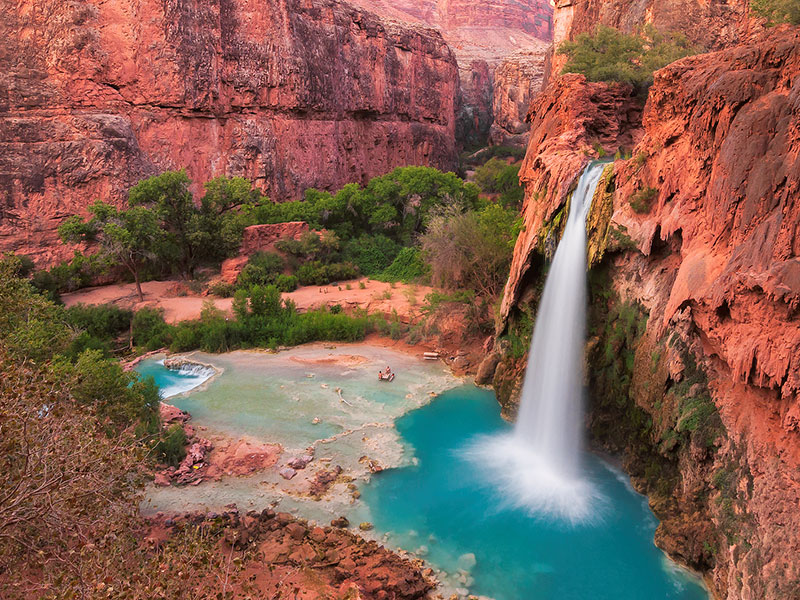
Nestled deep within the majestic Grand Canyon in Arizona lies a paradisiacal oasis known as Havasu Falls. Renowned for its vibrant turquoise waters cascading over striking red rock cliffs, this remote natural wonder is a dream destination for adventurers and nature lovers alike. However, getting to Havasu Falls is not a simple journey; it requires meticulous planning, a coveted permit, and a significant physical commitment. This comprehensive guide will walk you through every step of planning your expedition, from securing your reservation to the exhilarating hike into this hidden gem, ensuring you’re well-prepared for an unforgettable experience on the land of the Havasupai Tribe.
Planning Your Expedition to Havasu Falls
The allure of Havasu Falls stems not only from its breathtaking beauty but also from its exclusivity. Unlike many accessible tourist attractions, this natural wonder is situated on the Havasupai Indian Reservation, and access is strictly controlled by the Havasupai Tribe. This ensures the preservation of their sacred land and provides a more intimate experience for visitors.
Securing Your Havasu Falls Permit and Reservations
The absolute first and most critical step in planning your trip is acquiring a permit. Without one, you simply cannot visit. Permits are notoriously difficult to obtain, often selling out within minutes of their release for the entire year.
- Permit Release Day: Permits for the upcoming year typically become available on February 1st at 8:00 AM Arizona time via the official Havasupai Tribe website. It’s crucial to create an account beforehand and be ready to click the moment they go live.
- What’s Included: A permit includes a reservation for a specific number of nights (usually 3 nights/4 days) at the Havasu Falls Campground, entrance fees, and environmental fees. There are no day-use permits; all visits require an overnight stay.
- Cancellation/Transfer System: The tribe also operates a cancellation and transfer system. If you miss out on the initial release, regularly check the official website for resales, as cancellations do occur. This is often how many travelers secure their spot. Be wary of third-party sellers, as permits are non-transferable outside the official system and scams are prevalent.
- Accommodation Alternatives: While the campground is the primary option, the Havasupai Lodge in Supai Village offers a more comfortable stay. However, reservations for the lodge are even more competitive and are managed separately through a phone-based system. It’s essential to understand that securing a lodge reservation still requires payment of the general entrance and environmental fees.
Choosing the Best Time to Visit
The timing of your visit significantly impacts your experience. The best times to visit are generally in the spring (April-May) and fall (September-October).
- Spring (April-May): Temperatures are pleasant, ideal for hiking and exploring. The water is refreshing, and the risk of flash floods is lower than in the summer.
- Fall (September-October): Similar to spring, with comfortable hiking temperatures and fewer crowds than peak summer. The water remains inviting for swimming.
- Summer (June-August): While popular, summer brings extremely high temperatures (often exceeding 100°F/38°C) and the monsoon season, which increases the risk of dangerous flash floods. Hiking in extreme heat can be dangerous, and the crowds are at their largest.
- Winter (November-March): Permits are not typically issued during these months, and the weather can be quite cold, with snow possible in the Grand Canyon rim areas.
Essential Packing List for Havasu Falls
Your packing strategy is crucial for a comfortable and safe trip. Remember, you’ll be carrying everything for at least 10 miles (16 km) down and then 10 miles back up.
- Backpack: A sturdy, comfortable backpacking pack (50-70 liters) is essential.
- Water Filtration/Purification: Critical for filtering water from the natural spring in Supai Village or at the campground.
- Food: All your meals and snacks for the duration of your stay. Consider lightweight, high-energy options.
- Tent & Sleeping Gear: A lightweight tent, sleeping bag, and sleeping pad suitable for the temperatures.
- Hiking Boots: Broken-in, comfortable hiking boots with good ankle support are a must.
- Water Shoes: Essential for navigating the slippery, rocky areas around the falls and in the water.
- Swimsuit & Quick-Dry Towel: For enjoying the vibrant blue pools.
- Sun Protection: Hat, sunglasses, and reef-safe sunscreen.
- First-Aid Kit: Comprehensive kit including blister treatment, pain relievers, and any personal medications.
- Headlamp/Flashlight: For navigating the campground and trails at night.
- Navigation: Printed maps and a compass, or a reliable GPS device, as cell service is non-existent.
- Cash: For emergency purchases at the small store in Supai Village or for tipping mule packers.
- Trash Bags: Leave No Trace principles are paramount; you must pack out everything you pack in.
The Journey to Supai Village
The journey to Havasu Falls begins long before you even set foot on the hiking trail. It involves reaching a remote trailhead and then undertaking a significant trek into the canyon.
Getting to Hualapai Hilltop
The trailhead for Havasu Falls is called Hualapai Hilltop. This remote location is about a 4-5 hour drive from Las Vegas and Phoenix, and about 2 hours from Kingman or Peach Springs.
- Driving: The most common way to reach Hualapai Hilltop is by car. From Kingman, take Route 66 east to Peach Springs. From there, turn north onto Indian Road 18, which is a paved but winding road for 60 miles (96 km) directly to the hilltop. Ensure your vehicle is in good condition and has a full tank of gas, as there are no services past Peach Springs.
- Parking: There is a large parking lot at Hualapai Hilltop, but it fills up quickly, especially during peak season. Arriving early is advised.
- Overnight Stay Before/After: Many visitors choose to stay in nearby towns like Kingman or Peach Springs the night before or after their hike. The Hualapai Lodge in Peach Springs is a popular option, offering amenities and a comfortable bed before your rugged adventure.
The Hike to Supai Village and Beyond
The hike from Hualapai Hilltop to Supai Village is 8 miles (13 km) long and drops approximately 2,000 feet (610 meters) into the Grand Canyon.
- Early Start: Begin your hike very early in the morning, ideally before sunrise, to avoid the intense desert heat and to secure a good camping spot if you’re staying at the campground.
- The Trail: The first 1.5 miles (2.4 km) are steep switchbacks down the canyon wall, followed by a relatively flat, sandy wash for the remaining 6.5 miles (10.5 km) to Supai Village.
- Supai Village: Upon arrival in Supai Village, you must check in at the Tourist Office to register your permit and pay any outstanding fees. This is also where you can pick up last-minute supplies, souvenirs, or grab a bite at the small cafe.
- To the Campground: From Supai Village, it’s another 2 miles (3.2 km) to the Havasu Falls Campground. Along this stretch, you’ll pass Navajo Falls and Fiftyfoot Falls (the new locations after the 2008 flood), and then arrive at the iconic Havasu Falls itself, just before the campground entrance.
- The Total Trek: The full hike from Hualapai Hilltop to the Havasu Falls Campground is 10 miles (16 km). Allow 4-7 hours for the descent, depending on your fitness level and pack weight. The return hike, being uphill, often takes longer.
Mule and Helicopter Options
For those unable or unwilling to carry all their gear, or for a faster entry/exit, the Havasupai Tribe offers transportation services.
- Mule Service: Mules can carry your gear from Hualapai Hilltop to the campground and back. Reservations are required well in advance and can be made via the official Havasupai Tribe website or phone number. Each bag has weight limits, so plan accordingly. You still have to hike yourself.
- Helicopter Service: The Havasupai Tribe operates a helicopter service from Hualapai Hilltop to Supai Village (and vice versa) on specific days (usually Thursdays, Fridays, Sundays, and Mondays), weather permitting. This service is primarily for tribal members, but tourists can ride on a first-come, first-served, space-available basis. Be prepared for potentially long waits, and understand that there’s no guarantee of a spot. It’s a faster but less reliable option for transport. The helicopter lands in Supai Village, so you’ll still have a 2-mile (3.2 km) hike to the campground.
Exploring the Falls and Surrounding Area
Once you’ve successfully navigated the journey and set up camp, the true reward begins: exploring the magnificent waterfalls and lush canyon landscape.
Havasu Falls Campground
The Havasu Falls Campground is spread along both sides of the Havasu Creek for about a mile downstream from Havasu Falls.
- Finding a Spot: There are no designated campsites, so it’s a first-come, first-served system. Look for established clearings under trees. The earlier you arrive, the better your chances of securing a prime spot near the creek.
- Amenities: The campground has composting toilets (pack your own toilet paper and hand sanitizer). There is a natural spring (Fern Spring) that provides potable drinking water near the ranger station, but always filter or purify it as a precaution. There are no showers, electricity, or trash services.
Discovering Other Waterfalls
While Havasu Falls is the most famous, the area is home to several other stunning cascades, each with its own unique charm.
- Navajo Falls & Fiftyfoot Falls: These are the first waterfalls you encounter after entering the Havasupai Indian Reservation from Supai Village, located about a mile (1.6 km) before Havasu Falls. They offer beautiful swimming holes and are generally less crowded.
- Mooney Falls: Located about a mile (1.6 km) downstream from the Havasu Falls Campground, Mooney Falls is a powerful 200-foot (60-meter) drop. The descent to its base is an adventure in itself, involving slippery chains, ladders, and carved steps through a cave-like tunnel. It’s exhilarating but requires caution and a good head for heights.
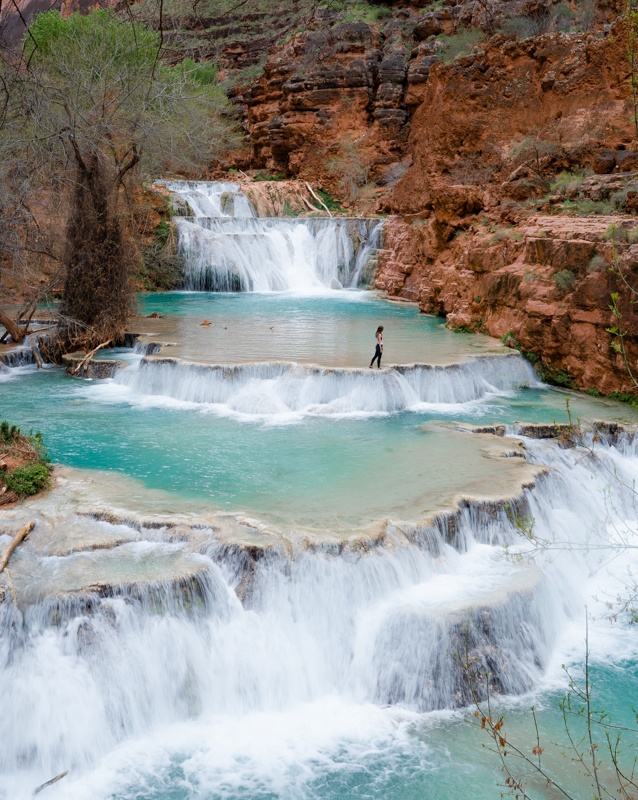
- Beaver Falls: Further downstream from Mooney Falls (approximately 3 miles/5 km), Beaver Falls is a series of tiered cascades and emerald pools. The trek involves crossing the creek multiple times, navigating through lush vegetation, and sometimes climbing small ladders. It’s a full-day round trip but well worth the effort for its secluded beauty. Beyond Beaver Falls lies the confluence with the Colorado River, but this is a very long and challenging day hike, often requiring permits for the Grand Canyon backcountry.
Respecting the Havasupai Land and Culture
Visiting Havasu Falls is a privilege, and respecting the land and the Havasupai Tribe is paramount.
- Leave No Trace: Practice all seven principles of Leave No Trace. Pack out everything you pack in, including all trash and food scraps. Stay on marked trails, respect wildlife, and minimize campfire impacts (fires are generally discouraged).
- Cultural Sensitivity: Remember you are on sacred tribal land. Be respectful of tribal members and their property. Do not photograph tribal members without permission. The tribe asks visitors to refrain from alcohol, drugs, drones, and cliff jumping.
- Environmental Responsibility: The pristine blue waters are delicate. Do not use soaps, shampoos, or detergents in the creek or falls, even biodegradable ones.
Essential Tips for a Memorable Havasu Experience
Preparing thoroughly and staying mindful during your trip will enhance your experience and ensure safety.
Safety and Preparation
The remote nature of Havasu Falls means self-reliance is key.
- Physical Fitness: The hike is challenging, especially with a heavy pack. Regular cardio and strength training are recommended in the months leading up to your trip.
- Hydration: Carry plenty of water, especially during the hike in and out. Dehydration is a real risk in the desert environment.
- Weather Awareness: Be aware of weather forecasts, particularly for flash flood warnings during monsoon season. Flash floods can occur rapidly and turn dry washes into dangerous torrents.
- Emergency Plan: Inform someone of your itinerary and expected return date. Cell service is non-existent beyond Hualapai Hilltop.
- Proper Footwear: Good hiking boots are crucial for the main trail, and water shoes with grip are essential for exploring the falls and creek beds.
Leave No Trace Principles
Your actions have a direct impact on the environment and the experience of future visitors.
- Pack It In, Pack It Out: This cannot be stressed enough. Absolutely everything you bring into the canyon must be carried out. This includes all food waste, packaging, and even toilet paper.
- Stay on Trail: Help preserve fragile vegetation and prevent erosion by sticking to designated trails.
- Respect Wildlife: Observe animals from a distance and never feed them. Store food properly to prevent attracting critters.
- Dispose of Waste Properly: Utilize composting toilets and carry out all other waste.
Where to Stay Before/After Your Hike
Considering the early start required for the hike, many visitors opt for an overnight stay near Hualapai Hilltop both before and after their canyon adventure.
- Peach Springs, Arizona: Located about an hour and a half from Hualapai Hilltop, Peach Springs offers a few accommodation options. The Hualapai Lodge is a popular choice, providing comfortable rooms and a restaurant, making it an excellent base for pre- and post-hike relaxation.
- Kingman, Arizona: A larger town about two hours from Hualapai Hilltop, Kingman offers a wider range of hotels, motels, and dining establishments, including familiar chains. It’s a good option if you prefer more choices for lodging and food.
- Flagstaff, Arizona or Las Vegas, Nevada: If you’re flying into the region, you might consider staying a night in Flagstaff or Las Vegas and driving to Hualapai Hilltop early the next morning. However, be mindful of the significant drive time required.
Embarking on a journey to Havasu Falls is more than just a trip; it’s an expedition into one of nature’s most extraordinary masterpieces. It demands respect, preparation, and perseverance, but the reward of witnessing its ethereal beauty, swimming in its vibrant pools, and experiencing the tranquility of the Havasupai Tribe’s land is truly unparalleled. By following this guide and adhering to the guidelines set forth by the Havasupai Tribe, you can ensure a safe, respectful, and ultimately unforgettable adventure to this hidden jewel of Arizona.
LifeOutOfTheBox is a participant in the Amazon Services LLC Associates Program, an affiliate advertising program designed to provide a means for sites to earn advertising fees by advertising and linking to Amazon.com. Amazon, the Amazon logo, AmazonSupply, and the AmazonSupply logo are trademarks of Amazon.com, Inc. or its affiliates. As an Amazon Associate we earn affiliate commissions from qualifying purchases.