
For many embracing a mobile or location-independent lifestyle, the question of legal residency, particularly in a state like California, is paramount. While the allure of California’s vibrant culture, innovation hubs, and stunning natural beauty is undeniable, its robust tax structure and broad definition of residency can pose significant challenges for individuals whose primary life and financial ties lie elsewhere. Establishing non-residency in California is not merely a legal formality; it’s a critical component of a strategically managed lifestyle, impacting everything from tax obligations to voting rights and professional licensing.
This article delves into the intricacies of demonstrating non-residency, providing a professional and insightful guide for those navigating this complex landscape. Whether you are a digital nomad, a remote worker, someone with multiple homes, or simply considering a move away from the Golden State, understanding how to legally and definitively sever ties is essential for peace of mind and financial prudence. It’s about more than just moving; it’s about aligning your legal status with your chosen lifestyle.

Understanding California Residency Laws and Definitions
The first step in proving non-residency is to grasp California’s specific definitions and criteria for what constitutes a resident. Unlike some states, California employs a broad interpretation, focusing heavily on intent and the totality of circumstances.
The Concept of Domicile vs. Residency
It’s crucial to distinguish between “domicile” and “residency” in the context of California law. Your domicile is considered your true, fixed, and permanent home, the place to which you intend to return whenever you are absent. You can only have one domicile at a time. Your residency, on the other hand, can be established if you are in California for other than a temporary or transitory purpose, or if you maintain a permanent place of abode in California and spend in the aggregate more than nine months of the taxable year within the state.
The key challenge for individuals trying to establish non-residency is demonstrating a clear break from California domicile and proving that any presence in the state is purely temporary or transitory. The burden of proof often rests heavily on the individual asserting non-residency.
Key Factors California Considers
The California Franchise Tax Board (FTB) uses a multi-factor test to determine residency. No single factor is definitive; rather, they look at the preponderance of evidence. These factors fall into several broad categories:
- Physical Presence: How much time do you spend in California versus outside the state? This includes both the number of days and the specific purpose of your presence.
- Location of Abode: Where is your principal home? Do you still own, rent, or maintain a living space in California?
- Family Ties: Where do your spouse and dependents reside?
- Business Connections: Where is your primary place of employment or business? Do you own businesses in California?
- Financial and Economic Ties: Where are your bank accounts, investments, and professional licenses held? Where do you earn your income?
- Social and Community Ties: Where are you registered to vote? Do you have memberships in social clubs, churches, or professional organizations? Where are your vehicles registered?
- Intent: This is often the most subjective but crucial factor. California seeks to understand your true intent regarding your permanent home.
Understanding these factors is the foundation upon which a successful non-residency claim is built, allowing you to proactively align your lifestyle choices with legal requirements.
Establishing Intent and Severing Ties with California
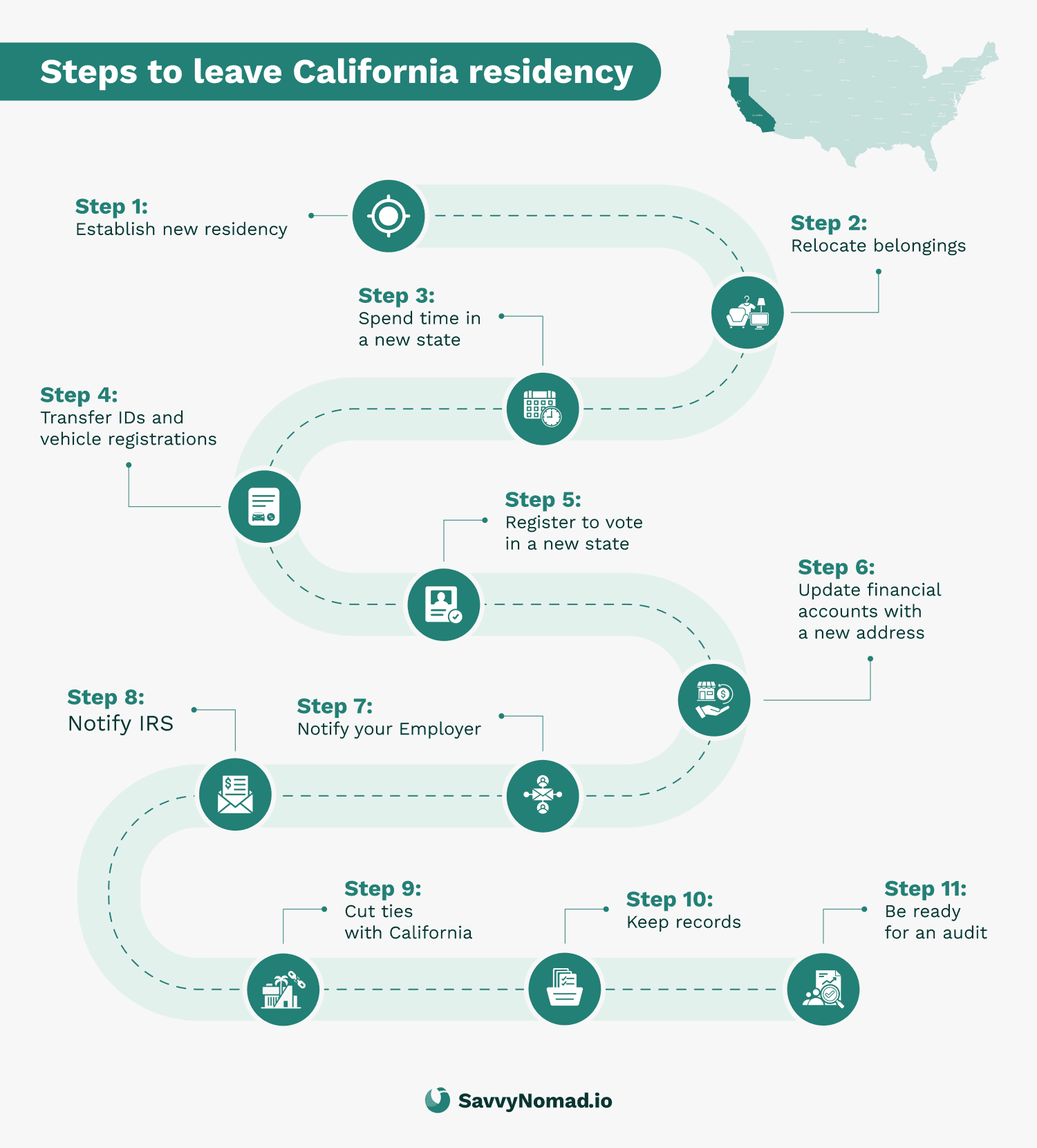
Proving non-residency in California hinges on demonstrably severing ties and establishing a new domicile with clear intent. This isn’t merely about ticking boxes; it’s about making fundamental shifts in your lifestyle that are legally verifiable.
Physical Presence and Primary Home
One of the most immediate and impactful steps is to reduce your physical presence in California and establish a primary home elsewhere.
- Minimizing Time in California: Keep detailed records of your days spent in and out of California. While there’s no hard-and-fast rule, generally, spending less than six months (183 days) in the state per year is a good starting point, but even fewer days are better if you’re trying to prove non-residency. Document travel, hotel stays, and flight records.
- Establishing a New Residence: Rent or purchase a primary home in another state or country. This new residence should be where your family lives, where you store most of your personal belongings, and where you generally spend the majority of your time. This new domicile should be robust and clearly intentional, not merely a temporary stopover.
- Selling or Renting Out California Property: If you own property in California, selling it or renting it out long-term (with no personal access) provides strong evidence that your primary abode is no longer in the state. Maintaining a readily available home in California severely weakens a non-residency claim.
Financial and Economic Ties
Your financial footprint is a powerful indicator of your true domicile. Redirecting these ties away from California is critical.
- Changing Banks and Financial Institutions: Open new bank accounts in your new state of residence and transfer the bulk of your funds. Update your mailing addresses for all investment accounts, credit cards, and financial statements to your new out-of-state address.
- Employment and Business Location: If employed, ensure your employer’s records reflect your new out-of-state address. If self-employed or a business owner, update your business registration to your new state and demonstrate that the primary operations and management of your business are conducted outside California. This includes physical office locations, client meetings, and employee bases.
- Professional Licenses: If you hold professional licenses (e.g., medical, legal, real estate), consider transferring them to your new state of residence, if applicable.
- Income Sourcing: Understand that income sourced from California may still be subject to California taxes, even if you are a non-resident. However, the goal is to demonstrate that your primary income-generating activities and overall financial life are not tied to the state.
Social and Community Connections
While less tangible, social and community connections can significantly influence the FTB’s determination.
- Voter Registration: Register to vote in your new state of residence and cancel your California voter registration.
- Driver’s License and Vehicle Registration: Obtain a new driver’s license in your new state and register your vehicles there. Update your auto insurance policy to reflect your new address.
- Club Memberships and Affiliations: Discontinue memberships in [California](https://lifeoutofthebox.com/california] social clubs, gyms, churches, and professional organizations. Establish new memberships in your new state.
- Healthcare Providers: Change your primary doctors, dentists, and other healthcare providers to your new state of residence. Update your health insurance records.
By systematically addressing these areas, you build a comprehensive narrative that supports your intent to establish domicile outside of California.
Gathering Definitive Proof and Documentation
Simply changing your lifestyle isn’t enough; you must be able to prove it. Meticulous documentation is your strongest ally in demonstrating non-residency to the FTB.
Official Government Records
These are typically the most authoritative forms of evidence, as they are independently verifiable.
- New State Driver’s License/ID: This is often seen as a primary indicator of domicile. The date of issuance is crucial.
- New State Voter Registration Card: Proof of registering to vote in your new state and deregistering in California.
- New State Vehicle Registrations: All vehicles should be registered in your new state.
- New State Property Records: Lease agreements or property deeds for your new primary residence, showing your name and the effective dates.
- Utility Bills: Bills for your new out-of-state residence (e.g., electricity, water, internet) in your name.
- Tax Returns: File non-resident California tax returns (if applicable) and resident tax returns in your new state. The FTB will scrutinize the dates and states filed.
Financial and Business Documentation
These documents illustrate where your economic life is centered.
- Bank and Investment Account Statements: Statements showing your new out-of-state address and the transfer of funds.
- Credit Card Statements: Statements reflecting your new address.
- Employment Records: Pay stubs, W-2s, or 1099s showing your out-of-state address and indicating that your primary work location or home office is outside California.
- Business Registration Documents: If you own a business, documents showing its registration and primary operational address in your new state.
- Insurance Policies: Health, life, home, and auto insurance policies updated to your new address.
Personal and Lifestyle Evidence
While sometimes considered secondary, these documents can paint a comprehensive picture of your daily life.
- Travel Records: Flight manifests, hotel receipts, and passport stamps that clearly demonstrate your time spent outside of California.
- Mail and Correspondence: General mail, subscriptions, and correspondence addressed to your new domicile.
- Affidavits from Friends/Family: Sworn statements from individuals who can attest to your relocation and new primary residence, though these are often given less weight than official documents.
- Social Media/Online Presence: Be mindful of what you post online; public declarations of living in California can be used as evidence against you.
Organizing these documents systematically will be invaluable if you are ever audited or challenged by the FTB.
Practical Steps and Ongoing Maintenance
Achieving and maintaining non-resident status in California is an ongoing process that requires vigilance and proactive management of your lifestyle.
Severing California Connections Proactively
Don’t wait for an audit to begin gathering evidence. Start documenting your intent and actions from the moment you decide to change your domicile.
- Mail Forwarding: Set up mail forwarding from your old California address to your new address. While helpful, ensure you update all critical senders directly.
- Cancel Subscriptions: Discontinue local California newspaper subscriptions, gym memberships, and any other services tied to the state.
- Update All Addresses: Ensure your new out-of-state address is updated with the IRS, Social Security Administration, and all other governmental and financial entities.
- Legal Counsel: Consider consulting with a tax attorney or CPA specializing in California residency rules. Their expertise can be invaluable in navigating complex situations and ensuring all steps are properly taken.
Establishing New State Residency
The stronger your ties to your new state of residence, the more compelling your non-residency claim in California will be.
- Active Engagement: Become actively involved in your new community. This means joining local clubs, attending events, making new social connections, and even volunteering. These actions demonstrate genuine intent to establish a new life.
- Professional and Personal Networks: Build new professional and personal networks in your chosen domicile.
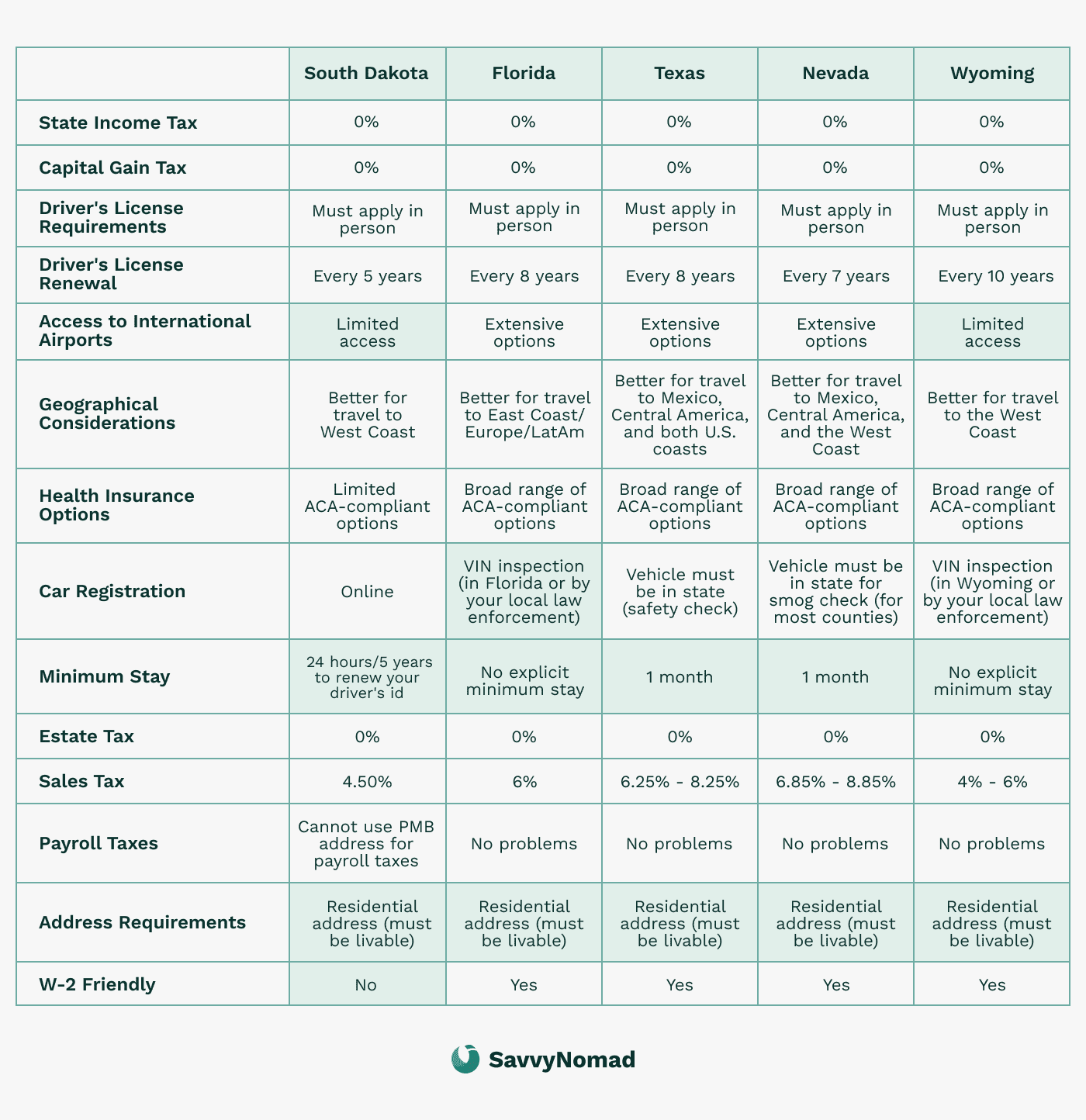
- Homeownership/Long-term Lease: Establishing a clear, long-term living arrangement (e.g., purchasing a home, signing a multi-year lease) in your new state provides strong evidence of a fixed abode.
Maintaining Records and Vigilance
The FTB can audit years after the fact, so ongoing record-keeping is non-negotiable.
- Digital and Physical Records: Maintain organized digital and physical files of all relevant documents. Cloud storage with proper backups is highly recommended for travel logs, financial statements, and official correspondence.
- Travel Itinerary: Keep a detailed log of your movements, including dates and locations, especially for any time spent in California.
- Be Consistent: Ensure your actions and statements are consistent across all aspects of your life. Contradictory information (e.g., telling a friend you “live in California” while trying to claim non-residency) can undermine your entire case.
Proving non-residency in California is a marathon, not a sprint. It demands careful planning, consistent action, and meticulous documentation, all aimed at unequivocally demonstrating that your true home and lifestyle have shifted elsewhere. By proactively managing these elements, you can confidently embrace your chosen lifestyle without the lingering complexities of California residency.
LifeOutOfTheBox is a participant in the Amazon Services LLC Associates Program, an affiliate advertising program designed to provide a means for sites to earn advertising fees by advertising and linking to Amazon.com. Amazon, the Amazon logo, AmazonSupply, and the AmazonSupply logo are trademarks of Amazon.com, Inc. or its affiliates. As an Amazon Associate we earn affiliate commissions from qualifying purchases.