
Navigating periods of unexpected job loss can be one of life’s most challenging experiences, often bringing with it a cascade of financial uncertainty. In California, the Unemployment Insurance (UI) program serves as a critical financial safety net, providing temporary monetary assistance to eligible individuals who have lost their jobs through no fault of their own. Understanding the intricate process of how to qualify for these benefits is paramount for those facing such circumstances. This comprehensive guide aims to demystify the requirements and application procedures, offering an insightful and engaging roadmap for Californians seeking this vital support.
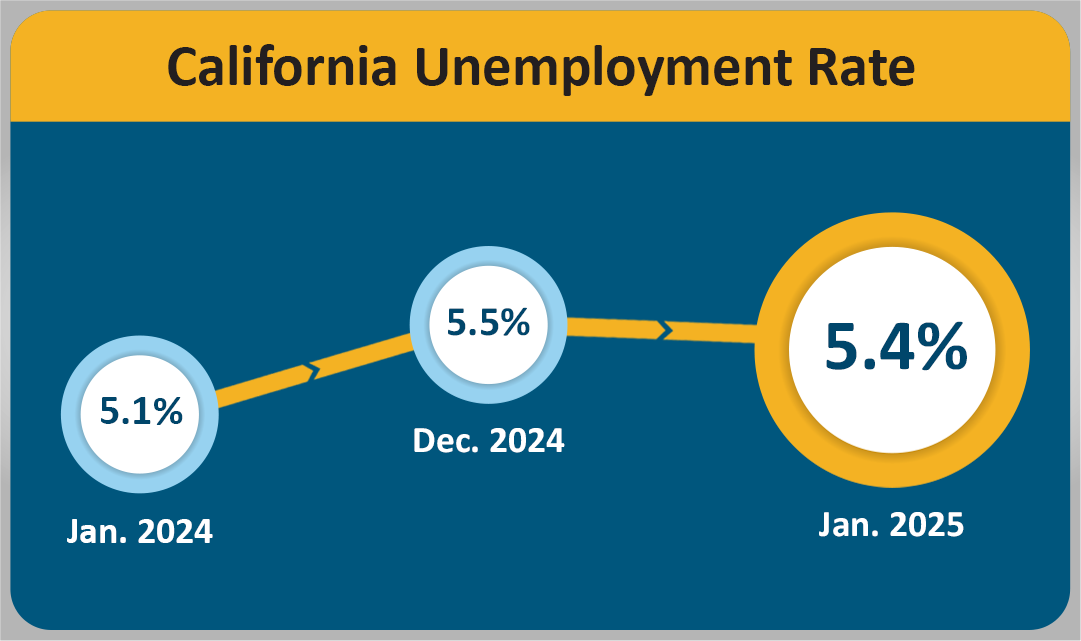
Navigating the Landscape of California’s Unemployment Insurance (UI) Program
The California UI program is administered by the Employment Development Department, commonly known as the EDD. Its fundamental purpose is to mitigate the economic impact of unemployment on individuals and the state’s economy by providing temporary income while claimants search for new employment. Qualifying for this assistance isn’t automatic; it hinges on meeting a series of specific criteria established by state and federal law.
Core Eligibility Requirements: The Foundational Pillars
To be eligible for UI benefits in California, an individual must satisfy several foundational requirements. Foremost among these is that you must have lost your job through no fault of your own. This typically means you were laid off, your position was eliminated, or your employer went out of business. If you quit your job voluntarily, you might still be eligible, but only if you had “good cause” for leaving, such as unsafe working conditions, harassment, or a significant change in job duties that you did not agree to. The definition of “good cause” is strictly interpreted by the EDD, often requiring compelling evidence.
Another critical requirement is that you must be “able and available” for work. This means you are physically and mentally capable of performing work and are ready to accept suitable employment immediately. Being able and available also implies that you do not have significant barriers to employment, such as childcare issues that prevent you from working standard hours or a lack of transportation if it’s required for your profession. The EDD will assess whether your stated availability aligns with typical job market expectations for your occupation.
Furthermore, you must be “actively seeking work.” This is not a passive requirement; it means you must demonstrate a genuine effort to find new employment. The EDD provides guidelines on what constitutes an acceptable work search, which often includes submitting resumes, completing job applications, attending job fairs, and networking. Failing to meet this work search requirement can lead to a denial or suspension of benefits.
Finally, you must have earned sufficient wages during a specific “base period” to establish a claim. This financial qualification ensures that benefits are paid to individuals who have a recent work history and have contributed to the UI system through payroll taxes.
The Critical Role of Wage History and Base Period
The “base period” is a crucial component of UI eligibility, determining both your financial qualification and the weekly benefit amount you could receive. In California, the standard base period is a 12-month period divided into four calendar quarters. It usually consists of the first four of the last five completed calendar quarters before the week you filed your claim. For instance, if you file a claim in April, the base period would typically be the 12 months ending the previous December 31st.
To qualify financially, you must have earned at least:
- $1,300 in one quarter of your base period; OR
- $900 in your highest quarter, and total base period earnings of at least 1.25 times your high quarter earnings.
These wage requirements ensure that claimants have a recent, substantial connection to the workforce. The total wages earned during this base period directly influence your weekly benefit amount, up to a maximum set by California law. Understanding your wage history and how it aligns with the base period is a fundamental step in assessing your eligibility before even applying. For those with unusual work histories or recent employment changes, the EDD also has an “alternate base period” which can sometimes be used if you don’t qualify under the standard one, taking into account more recent earnings.
The Application Process: A Step-by-Step Guide
Once you’ve determined that you likely meet the foundational eligibility requirements, the next step is to formally apply for benefits. The EDD has streamlined the application process, with the majority of claims now filed online, though telephone and mail options remain available for those who need them.
Preparing Your Documentation: What You Need
Before you begin your application, it’s wise to gather all necessary documentation and information. This preparation can significantly speed up the filing process and prevent delays. You will typically need:
- Your Social Security number.
- Your driver’s license or state ID number.
- Your last employer’s name, address, and phone number.
- Dates of your employment with that employer.
- Reason for separation from your last employer.
- Your gross wages earned during your last week of work, including any separation pay, vacation pay, or holiday pay.
- Names, addresses, and phone numbers of all employers you worked for during the past 18 months, along with dates of employment and gross wages earned from each.
- If you are a non-citizen, your Alien Registration Number and expiration date.
- DD 214, if you served in the military in the last 18 months.
- SF 8, SF 50, if you were a federal employee in the last 18 months.
Having these details readily accessible will make the online application much smoother and reduce the chances of errors or incomplete submissions.
Submitting Your Claim Through the EDD Online Portal
The most efficient way to file a new UI claim in California is through the EDD’s official website. The online portal, known as UI Online, guides you through a series of questions designed to capture all relevant information. You’ll create an account, provide your personal details, and input your employment history. It’s crucial to be as accurate and thorough as possible. Any discrepancies or omissions could lead to delays or requests for further information.
When explaining your reason for separation, use clear, concise language. If you were laid off, state “lack of work” or “position eliminated.” If you quit for good cause, explain the circumstances objectively. Avoid emotional language or lengthy narratives; stick to the facts. Once submitted, you’ll receive a confirmation number. Keep this number safe, as it is your primary reference for inquiries about your claim.
What to Expect After Filing: Interviews and Determinations
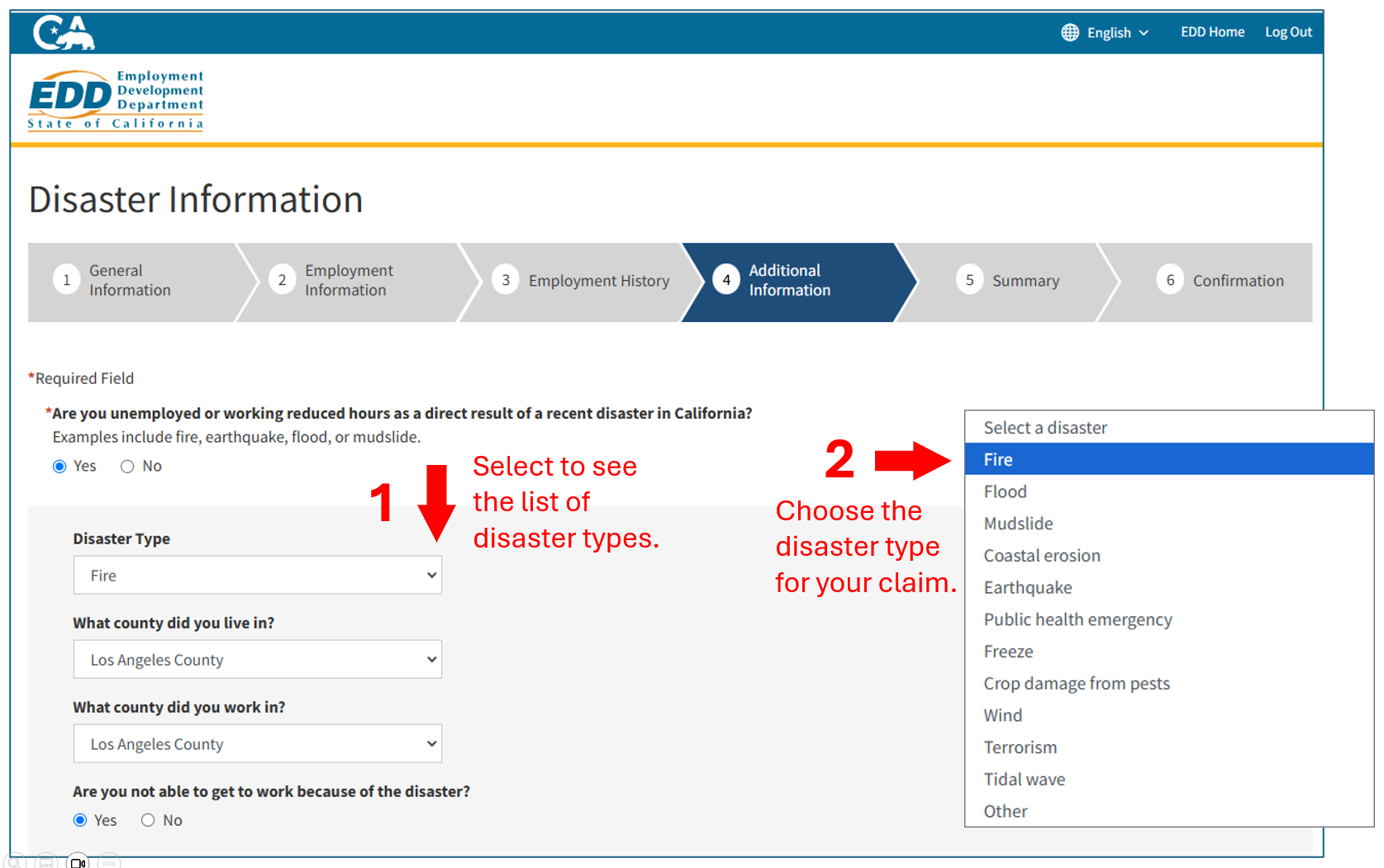
After filing your claim, the EDD will process your application. This often involves mailing you a “Notice of Unemployment Insurance Claim Filed” (DE 1101C) to confirm receipt. Your former employer(s) will also be notified and given an opportunity to respond to the reason for your separation. In some cases, if there are questions or discrepancies regarding your eligibility—especially if you quit your job or were fired—the EDD may schedule a phone interview.
During an interview, an EDD representative will ask questions to gather more facts about your separation from work and your availability for new employment. It’s essential to participate in this interview and provide honest, factual answers. Based on all the information collected, the EDD will issue a “Notice of Determination” (DE 1080CZ) informing you whether you are eligible for benefits and, if so, your weekly benefit amount and the maximum amount payable on your claim. This process typically takes a few weeks, though it can vary based on claim complexity and EDD workload.
Maintaining Eligibility: Ongoing Responsibilities
Qualifying for UI benefits is just the first step. To continue receiving payments, claimants must adhere to ongoing requirements, proving their continued eligibility each week. Failure to meet these obligations can result in delayed payments, suspension of benefits, or even a requirement to repay benefits received.
The Imperative of Actively Seeking Work
As a recipient of UI benefits, you are generally required to actively search for work each week. The EDD mandates a certain number of job search contacts per week, which can include applying for jobs, submitting resumes, interviewing, participating in job fairs, or attending approved workshops. These activities must be verifiable, and you should keep detailed records, including the date of contact, the name of the employer, the type of work sought, and the outcome of the contact.
The EDD may periodically request your work search records, and inconsistencies or lack of effort can jeopardize your benefits. The goal of UI is to bridge the gap between jobs, not to provide long-term income, so demonstrating a genuine commitment to re-employment is crucial.
Certifying for Benefits: Your Weekly Commitment
Each week you wish to receive benefits, you must “certify” your eligibility with the EDD. This process typically involves answering a series of questions online through UI Online or by mail. You’ll be asked about:
- Your availability for work.
- Any work performed and wages earned during the week.
- Whether you refused any job offers.
- Your work search efforts for the week.
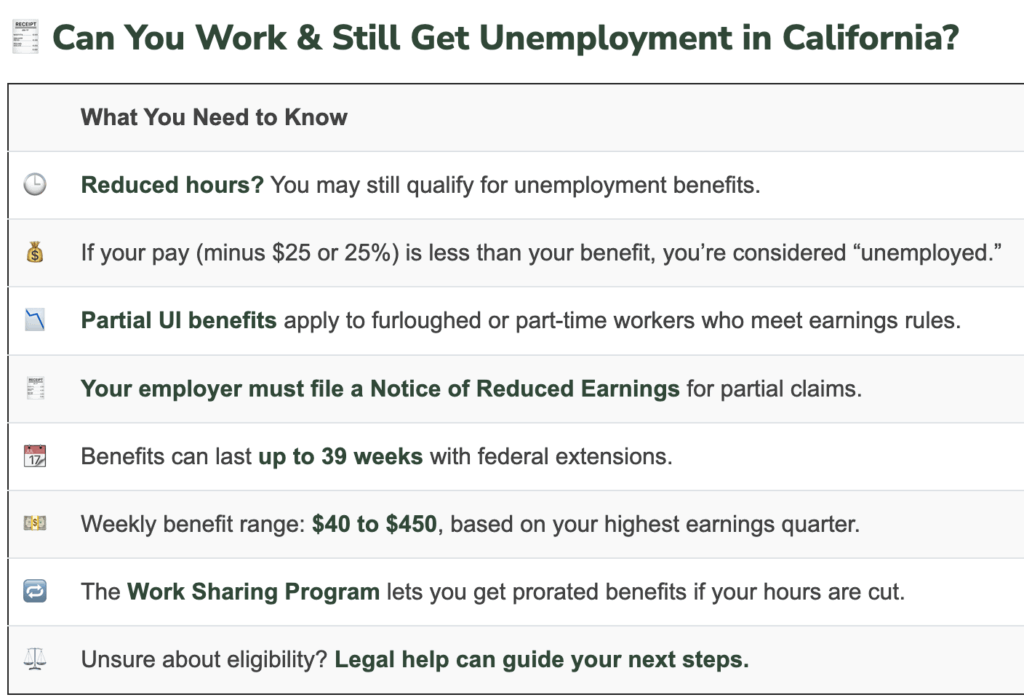
Accurate reporting is paramount. If you worked any hours, even part-time, or earned any income, you must report it. Failing to report earnings can lead to serious consequences, including penalties and the requirement to repay overpaid benefits. The EDD cross-references reported earnings with employer records, so honesty is the best policy.
Understanding Potential Disqualifications and Overpayments
Several factors can lead to disqualification from UI benefits. These include, but are not limited to, refusing suitable work without good cause, failing to participate in required re-employment services, making false statements, or being unavailable for work. If the EDD determines that you were overpaid benefits due to fraud or error, they will issue a “Notice of Overpayment,” and you will be required to repay the money. In cases of fraud, additional penalties may apply. Understanding and adhering to all EDD rules is essential to avoid these pitfalls.
Beyond Qualification: Strategic Considerations for Financial Lifestyle Management
While the immediate focus of unemployment is securing financial assistance, it’s also a critical juncture for broader financial and lifestyle planning. Understanding the appeals process and recognizing the impact of UI on your overall financial picture can help you navigate this period with greater resilience.
Appeals Process: Challenging a Denial
If your UI claim is denied, or if you disagree with any EDD determination, you have the right to appeal. The “Notice of Determination” will include instructions on how to file an appeal, usually within a short timeframe (e.g., 30 days). An appeal typically involves a hearing before an Administrative Law Judge (ALJ) from the California Unemployment Insurance Appeals Board (CUIAB).
During the hearing, you and your former employer will have the opportunity to present evidence and testimony. It’s crucial to prepare thoroughly, gather all relevant documents, and clearly articulate your case. While the appeals process can be daunting, successfully challenging an unfair denial can restore your eligibility for much-needed benefits.
The Broader Impact on Your Financial Lifestyle and Future Planning
Qualifying for unemployment benefits in California provides a temporary financial bridge, but it also necessitates a re-evaluation of your personal financial lifestyle. The weekly benefit amount will likely be less than your previous wages, requiring adjustments to your budget. This period can be an opportune time to reassess spending habits, explore new budgeting strategies, and plan for future financial resilience.
For those whose “lifestyle” might include aspirations of Budget Travel or saving for Family Trips, securing unemployment benefits, while not directly funding such endeavors, provides the crucial stability to manage immediate needs, prevent debt, and potentially allow for continued future planning for these aspects of life. It’s about ensuring that financial instability during job loss doesn’t completely derail long-term lifestyle goals. This period also offers an opportunity for skill development or career pivoting, potentially leading to a more fulfilling and stable future lifestyle. Proactive financial management, even with UI assistance, is key to maintaining control over your economic well-being and paving the way for future opportunities.
Conclusion: Securing Your Financial Bridge in California
Qualifying for unemployment benefits in California is a detailed process that requires careful attention to rules, deadlines, and documentation. From understanding the initial eligibility criteria and wage requirements to navigating the application and diligently fulfilling ongoing responsibilities like active work searches and weekly certifications, each step is critical. While the path to receiving benefits can be challenging, the system is designed to provide essential support during times of job loss. By approaching the process with diligence, honesty, and a clear understanding of the EDD’s requirements, Californians can effectively secure this vital financial bridge, allowing them to focus on re-employment and maintaining stability in their broader financial lifestyle.
LifeOutOfTheBox is a participant in the Amazon Services LLC Associates Program, an affiliate advertising program designed to provide a means for sites to earn advertising fees by advertising and linking to Amazon.com. Amazon, the Amazon logo, AmazonSupply, and the AmazonSupply logo are trademarks of Amazon.com, Inc. or its affiliates. As an Amazon Associate we earn affiliate commissions from qualifying purchases.