
Navigating the intricacies of transferring a vehicle title in Florida can seem like a daunting task, but understanding the process can simplify it considerably. Whether you’ve recently purchased a used car, sold your own vehicle, or inherited one, ensuring the title is correctly transferred is paramount. This guide will walk you through the essential steps, requirements, and considerations for a smooth title transfer experience in the Sunshine State. The primary authority overseeing vehicle titling and registration in Florida is the Department of Highway Safety and Motor Vehicles (FLHSMV).
Understanding the Florida Title
A vehicle title is a legal document that proves ownership of a motor vehicle. In Florida, this document is issued by the FLHSMV and contains vital information about the vehicle, including its make, model, year, Vehicle Identification Number (VIN), and the names of its legal owner(s). A properly transferred title is crucial for any subsequent sale, registration, or insurance application.
The Importance of a Clear Title
A “clear title” signifies that there are no liens or encumbrances against the vehicle. Liens are typically placed on a title when a vehicle is financed. Before you can transfer a title to a new owner, any existing liens must be satisfied and released. The seller is responsible for ensuring the title is clear or for initiating the process of lien release with their lender. If you are purchasing a vehicle with an outstanding lien, the seller must pay off the loan and obtain a lien release from the financial institution before the title can be transferred to you. Failure to address liens can result in significant complications, preventing the new owner from legally registering and operating the vehicle.
Types of Florida Titles
Florida recognizes several types of titles:
- Standard Title: This is the most common type, indicating clear ownership.
- Salvage Title: Issued for vehicles that have been declared a total loss by an insurance company due to damage (e.g., flood, collision). These vehicles cannot be registered for road use until they are rebuilt and pass a specific inspection.
- Rebuilt Title: Issued after a salvage vehicle has been repaired and passed a state inspection, signifying it is roadworthy again.
- Bonded Title: Required for vehicles where the original title is lost or stolen, and proof of ownership is difficult to establish. A surety bond is typically required for a bonded title.
- Transfer Title: This is the title that is being transferred from one owner to another.
The Title Transfer Process
Transferring a vehicle title in Florida involves several key steps, primarily handled by the seller and the buyer working together. It’s essential to have all the necessary documentation in order to avoid delays.
For the Seller: Preparing for Transfer
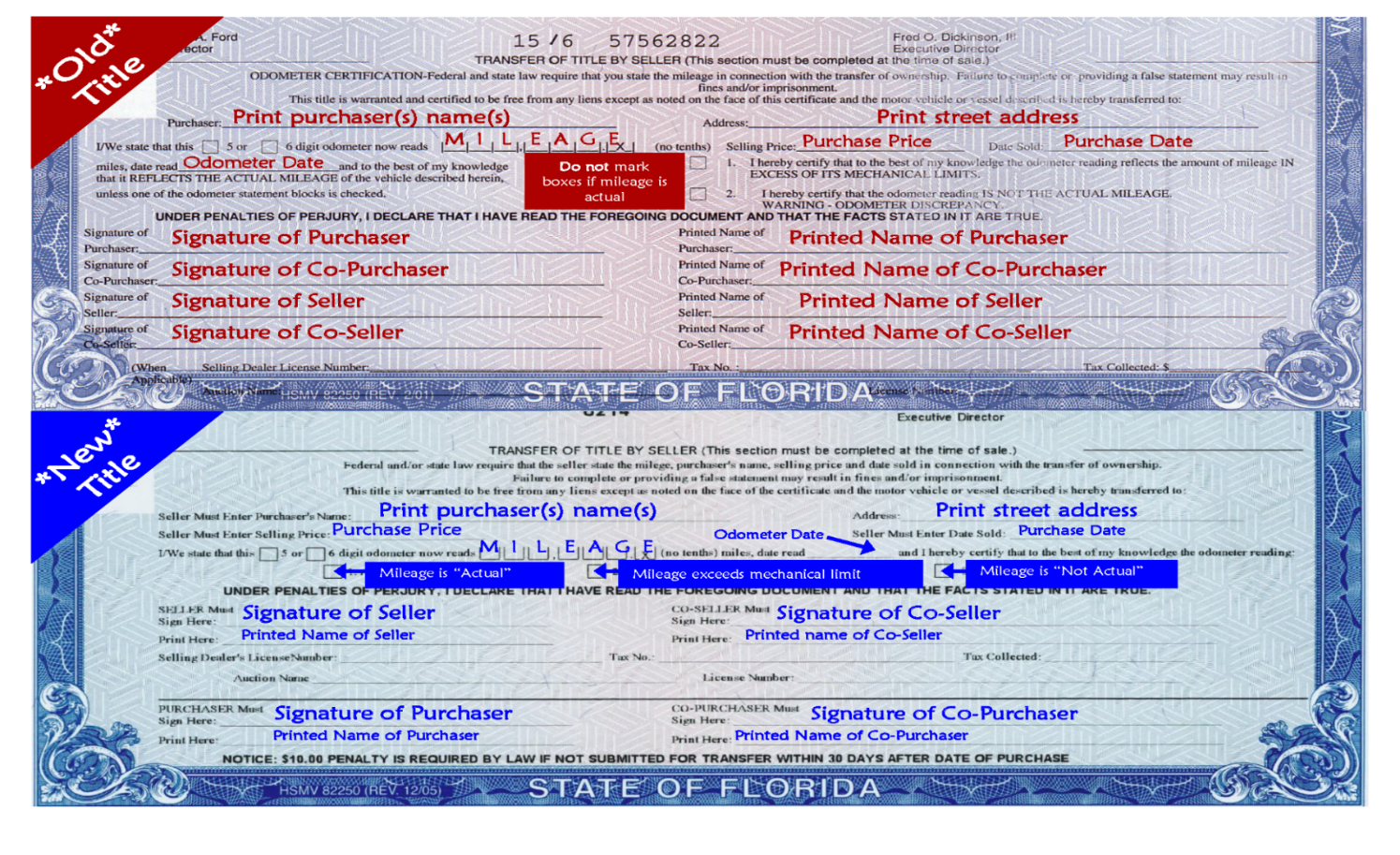
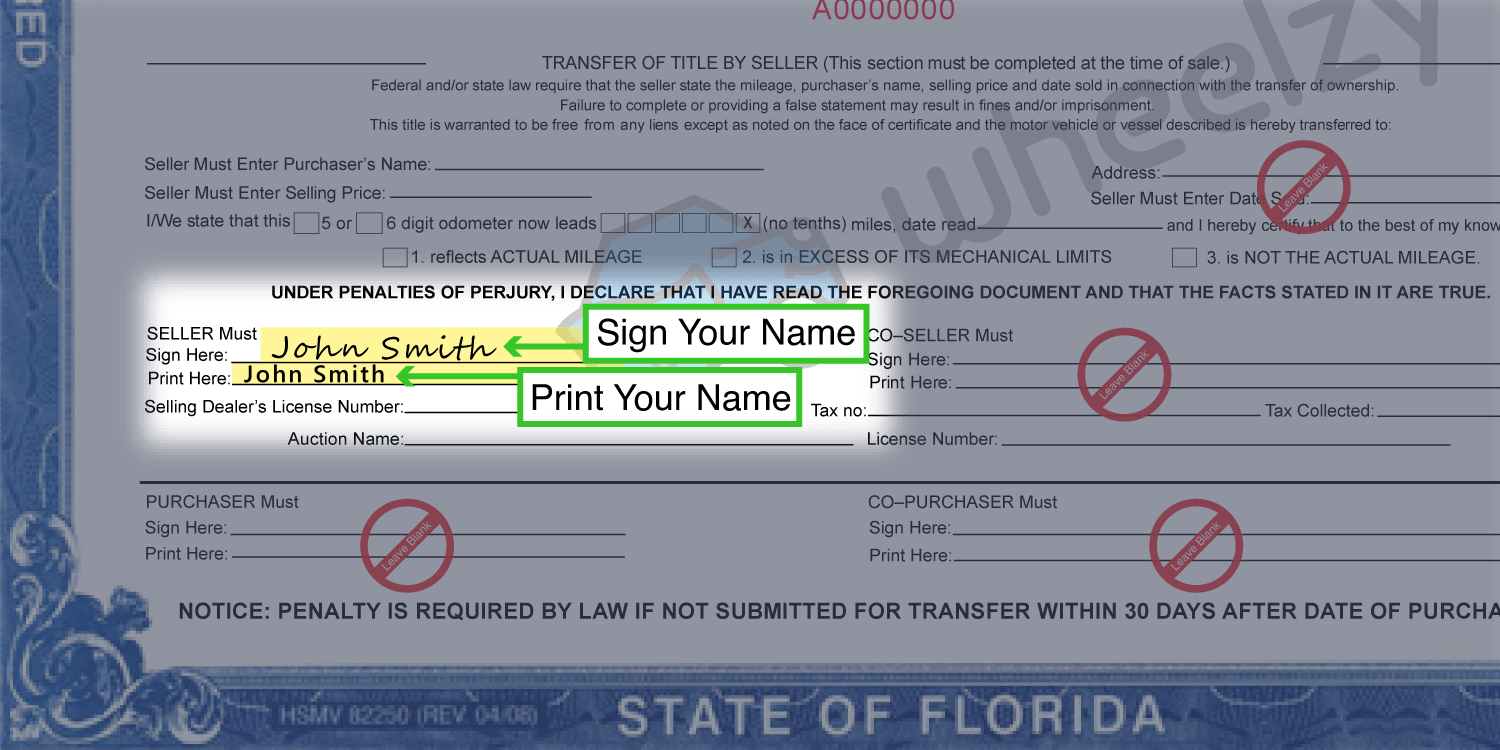
The seller’s primary responsibility is to accurately complete the assignment of title section on the back of the existing Florida title. This section will require:
- Odometer Reading: The seller must accurately record the vehicle’s current mileage. Federal and state laws require this disclosure to prevent mileage fraud. It is illegal to knowingly misrepresent the odometer reading.
- Buyer’s Information: The full legal name and address of the buyer(s) must be clearly printed or typed.
- Selling Price: The amount the vehicle was sold for must be indicated. This is important for tax purposes.
- Signatures: The seller(s) must sign and date the title in the designated spaces. If the title lists multiple owners with “and” between their names, all owners must sign. If it lists owners with “or,” only one signature is typically required.
Releasing Liens
If there is a lienholder listed on the title, the seller must have the lien released by the financial institution. The lienholder will typically sign off on the title or provide a separate Lien Release form (HSMV Form 82040). This document should be submitted with the title transfer application.
For the Buyer: Completing the Transfer
The buyer has the responsibility of ensuring the title is transferred into their name within 30 days of purchase to avoid late fees. The buyer will need to present the following to a Florida Tax Collector office:
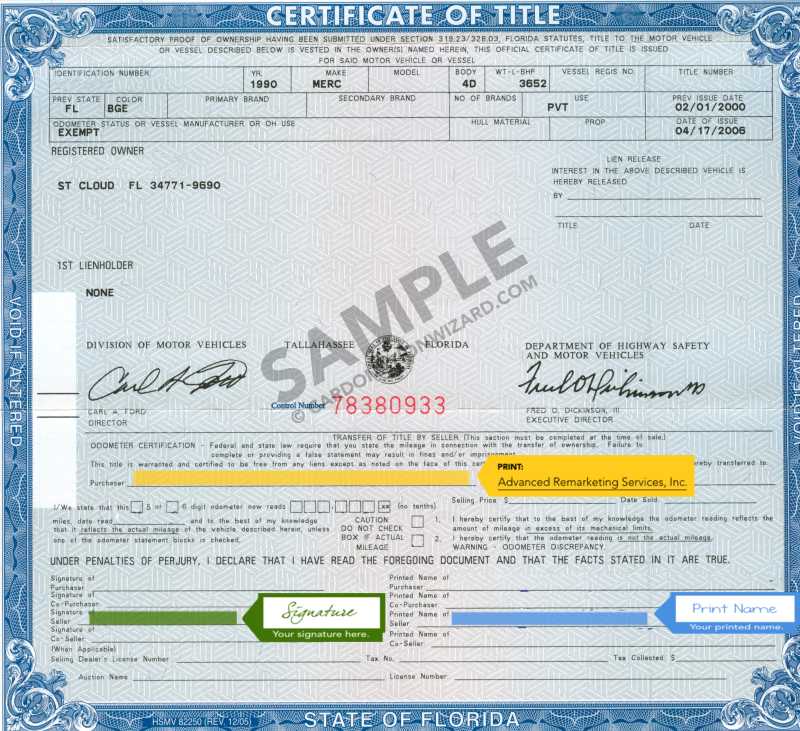
- The Properly Assigned Florida Title: This is the most critical document. Ensure all seller information is complete and accurate.
- Proof of Identity: A valid driver’s license or identification card is required for all owners listed on the title.
- Proof of Florida Insurance: A valid Florida insurance policy for the vehicle is mandatory. This can be a policy card or a binder from an insurance provider.
- Bill of Sale (Recommended): While not always strictly required if the selling price is clearly stated on the title, a Bill of Sale is highly recommended. It serves as a receipt and can help resolve disputes. The FLHSMV provides a template for a Bill of Sale.
- Application for Certificate of Title With/Without Registration (HSMV Form 82040): This form needs to be completed accurately.
- Lien Information (if applicable): If the buyer is financing the vehicle, the lienholder information will need to be provided on the application.
- Payment for Fees and Taxes: Several fees and taxes will apply, including title transfer fees, registration fees, and sales tax.
Sales Tax Calculation
Florida imposes a 6% sales tax on the purchase price of a vehicle. However, if the buyer has traded in another vehicle, the sales tax is calculated on the difference between the purchase price and the trade-in value. There are also a few exemptions, such as transfers between immediate family members or when purchasing from a licensed Florida dealer who collects the tax at the time of sale.
Special Circumstances for Title Transfers
Certain situations require specific documentation or procedures for title transfers.
Inherited Vehicles
If a vehicle is inherited, the process depends on the deceased owner’s estate.
- Probate: If the estate is going through probate, the executor or administrator will need to present a court order authorizing the transfer of the vehicle.
- No Probate: If the estate is not being probated, the surviving spouse or next of kin may be able to transfer the title by presenting a Death Certificate and an Affidavit for Transfer of Title Without Administration (HSMV Form 1801). The specific requirements can vary, so it’s advisable to consult with the FLHSMV or a county tax collector’s office.
Gifts and Family Transfers
Transferring a vehicle as a gift or between immediate family members (spouse, parent, child, sibling) is often exempt from sales tax. However, a Bill of Sale indicating “gift” or the relationship between the parties is usually required. A notarized affidavit stating the vehicle was a gift may also be necessary.
Out-of-State Titles
If you are transferring a title from another state into Florida, the process is similar but involves surrendering the out-of-state title and obtaining a new Florida title. You will also need a VIN verification inspection performed by a law enforcement officer or a licensed inspector.
Navigating the [Florida Tax Collector] Offices
The Florida Tax Collector offices are the primary points of contact for vehicle title transfers and registration. Each county has at least one office, and many have multiple branches. It’s recommended to check the website of your local Tax Collector for specific office hours, accepted forms of payment, and whether appointments are necessary. Many counties offer online services or the ability to start the application process online, which can save time.
Required Documentation Checklist
To ensure a smooth visit to the Tax Collector:
- Original Title: Properly signed by the seller(s).
- Lien Release (if applicable): From the previous lienholder.
- Application for Certificate of Title With/Without Registration (HSMV Form 82040): Completed.
- Proof of Identity: Valid driver’s license or ID for all buyers.
- Proof of Florida Insurance: Valid policy.
- Bill of Sale (Recommended): Detailing sale price, VIN, buyer, and seller information.
- VIN Verification (for out-of-state vehicles): Completed inspection form.
- Payment: For all applicable fees, taxes, and registration costs.
Conclusion
Transferring a vehicle title in Florida requires careful attention to detail and the correct documentation. By understanding the roles of the seller and buyer, the necessary forms, and the potential complexities of different scenarios, you can navigate the process efficiently. Always refer to the official FLHSMV website or contact your local Florida Tax Collector for the most up-to-date information and specific requirements. Ensuring your vehicle title is properly transferred is a crucial step in legal ownership and safe operation on Florida roadways.
LifeOutOfTheBox is a participant in the Amazon Services LLC Associates Program, an affiliate advertising program designed to provide a means for sites to earn advertising fees by advertising and linking to Amazon.com. Amazon, the Amazon logo, AmazonSupply, and the AmazonSupply logo are trademarks of Amazon.com, Inc. or its affiliates. As an Amazon Associate we earn affiliate commissions from qualifying purchases.