
The question of whether California resides within the geographical and cultural confines of the Southwest is one that often sparks debate, particularly for those planning a journey through the American West. While intuitively one might associate the sun-drenched landscapes, arid terrains, and distinct cultural influences of the Southwest with states like Arizona, New Mexico, and Nevada, California’s sprawling geography and diverse identity complicate a simple categorization. To truly understand California’s place, we must delve into geographical definitions, historical contexts, and the experiential tapestry that defines both regions.
Defining the Southwest: More Than Just Deserts
The term “Southwest” itself is a fluid construct, often defined by a blend of geography, climate, and cultural heritage. Geographically, the most common definition includes Arizona, New Mexico, parts of Colorado, Utah, Nevada, and Texas. This region is characterized by its arid to semi-arid climate, vast deserts, rugged mountains, and unique geological formations like the Grand Canyon.
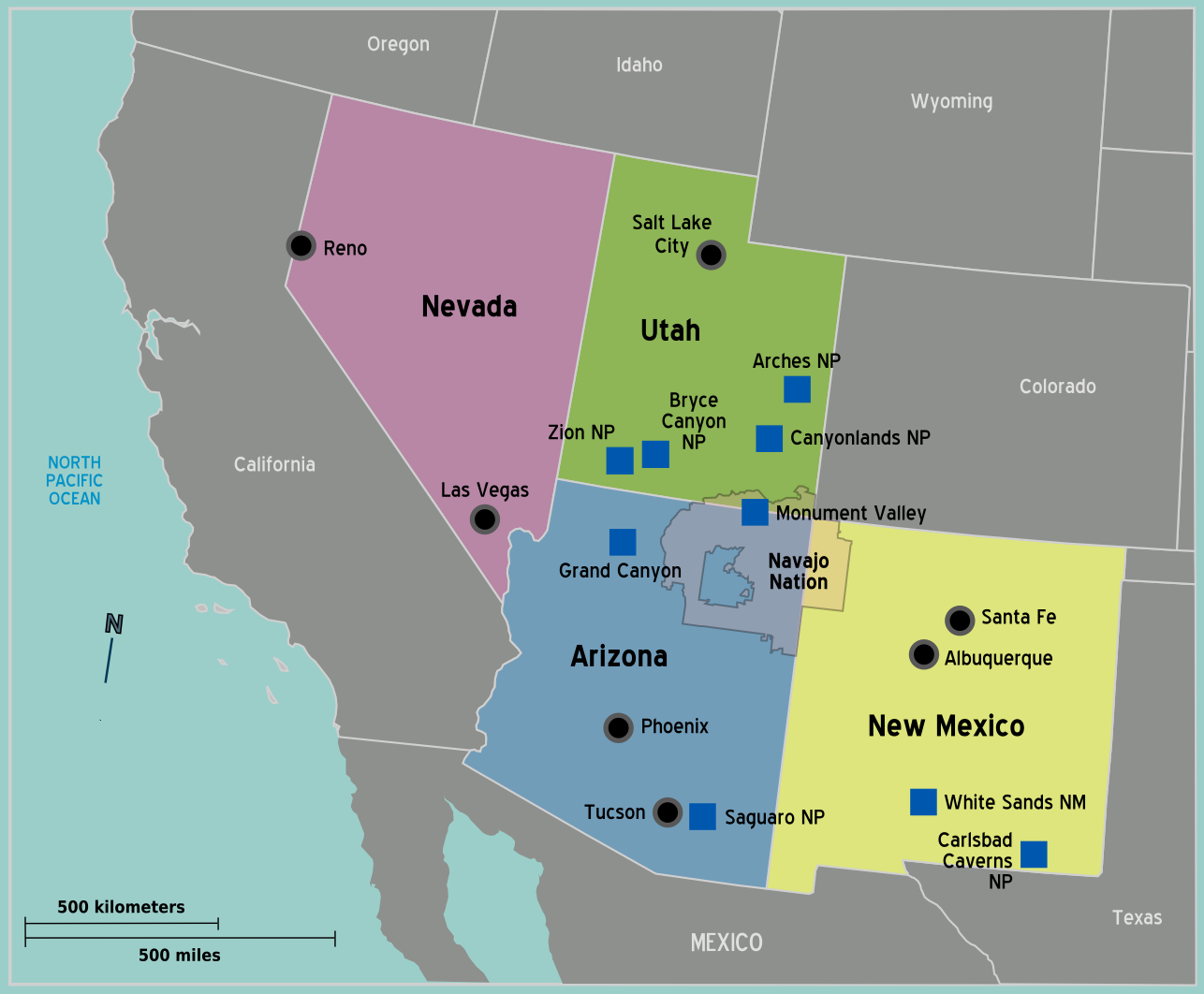
Culturally, the Southwest is deeply influenced by Native American traditions, Spanish colonial history, and a subsequent influx of settlers from various backgrounds. This fusion is evident in its art, architecture, cuisine, and languages. Think of the adobe buildings, the vibrant fiestas, the distinct flavors of chile, and the lingering Spanish place names.
Geographical Overlap and Divergence
When we overlay California onto this picture, the complexities emerge. The southeastern portion of California, including areas like the Mojave Desert and the Colorado Desert, undeniably shares significant geographical and climatic characteristics with the core Southwest states. The scorching temperatures, the stark desert landscapes with their resilient flora and fauna, and even the geological formations such as the Anza-Borrego Desert State Park echo the quintessential Southwestern experience. Destinations like Palm Springs and Joshua Tree National Park often evoke a strong sense of the Southwest for travelers.
However, California is not solely defined by its deserts. The state stretches from the temperate coastlines of the Pacific Ocean to the fertile valleys and the snow-capped peaks of the Sierra Nevada. This immense geographical diversity means that large swaths of California are not geographically analogous to the arid interiors typically associated with the Southwest. The lush redwood forests of the north, the Mediterranean climate of the central coast, and the alpine environments of the mountains present entirely different travel landscapes.
Historical and Cultural Threads
The historical narrative of California also complicates its simple placement within the Southwest. While Spanish influence is undeniable, with missions dotting the coast and Spanish place names prevalent, California’s subsequent development diverged significantly. The Gold Rush, its status as a key player in the Pacific Rim, and its role as a hub for innovation and entertainment have forged a distinct identity.
The cultural makeup of California is a rich mosaic, far more diverse and globally influenced than the core Southwest states. While Native American and Hispanic cultures are foundational, California has been a magnet for immigrants from Asia, Europe, and across the Americas, creating a unique cosmopolitan blend that differentiates it from the more historically homogenous cultural landscape of the traditional Southwest.

The “Californian” Identity
The very idea of a “Californian” identity is often seen as distinct. It’s associated with a laid-back, progressive, and often aspirational lifestyle that, while sharing some elements with the outdoor-oriented culture of the Southwest, possesses its own unique flavor. Think of surf culture, Hollywood glamour, Silicon Valley entrepreneurship, and a strong environmental consciousness that may not be as universally dominant in the drier regions.
Experiential Travel: Where the Lines Blur
For the traveler, the most telling aspect is often the experience. When planning a trip, how does California fit into a “Southwest” itinerary?
Desert Adventures in Southern California
Undeniably, the desert regions of Southern California offer experiences that align perfectly with a Southwestern adventure. Visiting the aforementioned Mojave Desert, exploring ghost towns, marveling at the unique Joshua trees, or enjoying the resort town of Palm Springs provides a direct connection to the arid beauty and relaxed pace often associated with the Southwest. The hiking trails, stargazing opportunities, and the stark, beautiful vistas are pure Southwestern magic.
Beyond the Desert: A Broader Spectrum
However, a traveler focusing solely on these desert areas would be missing a vast portion of what California has to offer. A journey through the entire state will quickly reveal its divergence. Instead of adobe and desert flora, one might encounter towering skyscrapers in Los Angeles, the historic charm of San Francisco, the wine country of Napa Valley, or the majestic redwoods of the northern coast. These experiences are quintessentially Californian, but they move away from the typical Southwestern narrative.

Conclusion: A Dual Identity
In conclusion, while parts of California undeniably share geographical and climatic traits with the Southwest, and offer analogous travel experiences, the state as a whole cannot be definitively classified as exclusively Southwestern. Its vastness, its diverse ecosystems, its unique historical trajectory, and its multi-faceted cultural landscape grant it a distinct identity.
For travel planning purposes, it is more accurate to consider California as a state with a Southwestern-influenced region within its southern and southeastern territories. When organizing a trip, acknowledging this duality allows for a more nuanced and enriching exploration. Travelers seeking the quintessential desert vistas and cultural echoes of the Southwest will find them in parts of California, but to define the entire state by this alone would be to overlook its magnificent and varied Californian essence. It is a state that bridges regions, embodying elements of the Southwest while simultaneously forging its own path as a global icon of diversity and dynamism.
LifeOutOfTheBox is a participant in the Amazon Services LLC Associates Program, an affiliate advertising program designed to provide a means for sites to earn advertising fees by advertising and linking to Amazon.com. Amazon, the Amazon logo, AmazonSupply, and the AmazonSupply logo are trademarks of Amazon.com, Inc. or its affiliates. As an Amazon Associate we earn affiliate commissions from qualifying purchases.