
For motorcyclists and travel enthusiasts exploring the vast and diverse landscapes of Texas, understanding local traffic laws is as crucial as planning the perfect route. One question that frequently arises, particularly for those accustomed to riding in other states or even other parts of the world, is: “Is it legal to lane split in Texas?” The straightforward answer for the Lone Star State is a resounding no. While lane splitting, also known as lane filtering or white-lining, is a common practice in some regions and offers perceived benefits, Texas law currently prohibits it. This comprehensive guide will delve into the intricacies of this law, explore its implications for riders, compare it to practices elsewhere, and offer essential advice for safely and enjoyably navigating the roads of Texas.
Whether you’re embarking on an epic cross-country motorcycle journey, planning a weekend getaway through the scenic Hill Country, or simply commuting through the bustling streets of Dallas or Houston, knowing the rules of the road is paramount for both your safety and your peace of mind. As a platform dedicated to travel, lifestyle, and unique experiences, lifeoutofthebox.com aims to equip you with all the knowledge necessary for seamless and memorable adventures.
Understanding Lane Splitting: Definition and Practice
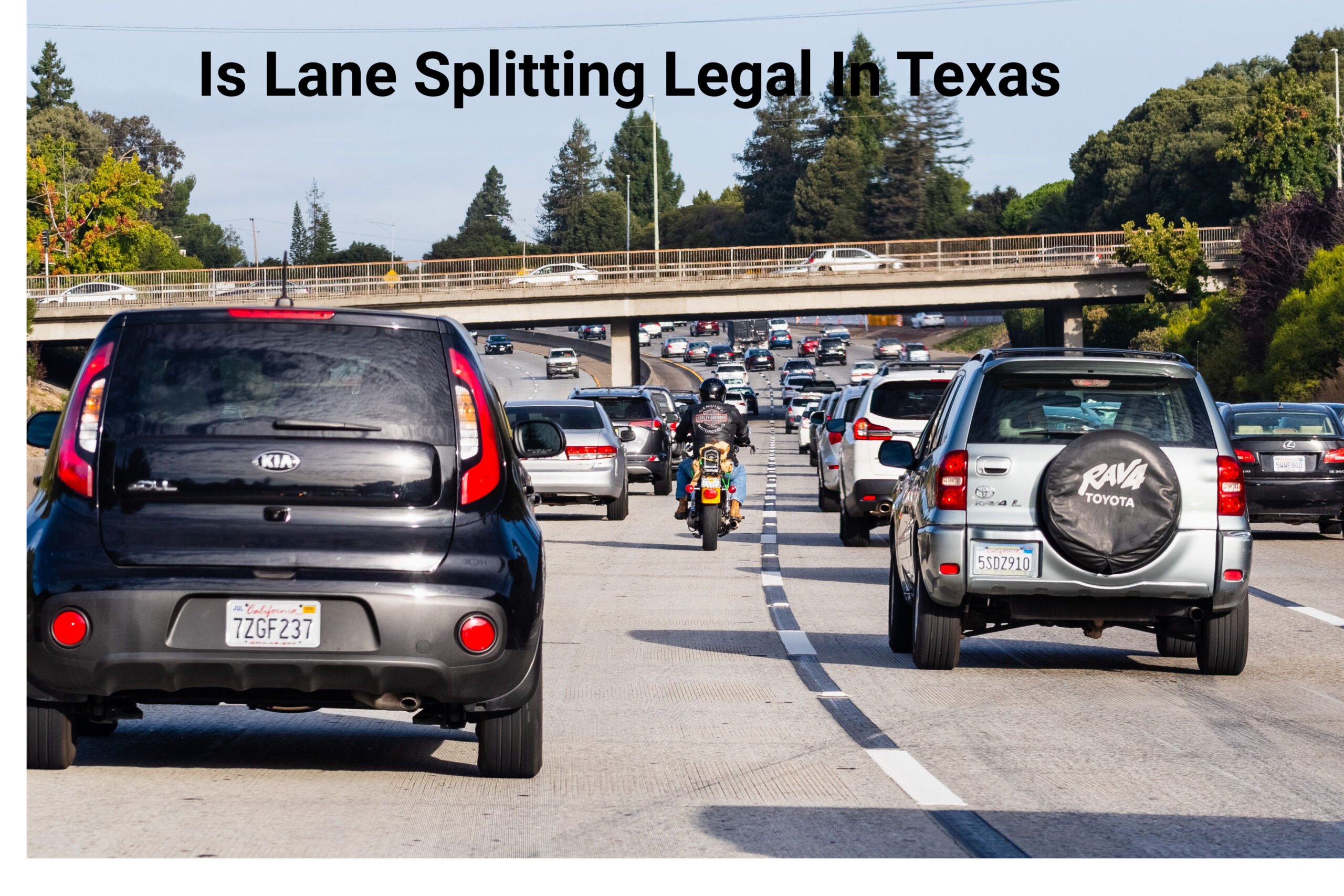
Before we dive deeper into the legal specifics in Texas, it’s important to clearly define what lane splitting entails. Lane splitting, in its most common understanding, refers to the practice of a motorcycle riding between lanes of stopped or slow-moving traffic. This typically occurs in congested areas, often on multi-lane highways or during heavy urban traffic. A rider might weave between stationary cars or slowly inch forward in the space between two lanes, usually along the lane markings, hence the term “white-lining.”
The rationale behind lane splitting from a rider’s perspective is multi-faceted. One primary motivation is to mitigate traffic congestion. By allowing motorcycles to move through gridlocked traffic, it theoretically reduces the overall volume of vehicles occupying space on the road. Another significant factor is rider comfort and safety, particularly in hot climates like Texas. When a motorcycle is stationary in traffic, its engine can generate considerable heat, leading to discomfort for the rider and potential overheating for the bike. Moving through traffic helps maintain airflow, which cools both the engine and the rider.
Furthermore, some proponents argue that lane splitting enhances safety by reducing a motorcyclist’s exposure to rear-end collisions. A common type of motorcycle accident occurs when a car, often distracted, fails to notice a stopped motorcycle and collides with it from behind. By allowing motorcycles to filter to the front of traffic, they are less vulnerable to these types of incidents. It’s also distinct from “lane sharing,” which is the practice of two motorcycles riding side-by-side within a single lane, a practice that is generally allowed in most jurisdictions, including Texas, provided it is done safely.
The Legal Landscape in Texas
The question of lane splitting is often contentious, with strong arguments from both sides regarding safety, efficiency, and fairness. For now, Texas has maintained a clear stance on the matter, making it illegal.
Texas Traffic Laws on Lane Splitting
In Texas, the relevant statutes that govern vehicle operation, including motorcycles, are found within the Texas Transportation Code. While there isn’t a specific statute that explicitly says “no lane splitting,” the prohibition arises from general traffic laws that require drivers to remain within a single lane and not to pass vehicles in an unsafe manner. Essentially, riding a motorcycle between two lanes of traffic, whether moving or stationary, is considered a violation of these general lane usage and passing laws.
Specifically, the Texas Transportation Code Section 545.056 outlines rules for passing on the right, and other sections dictate proper lane usage. Passing on the right is generally prohibited unless specific conditions are met, such as when the vehicle being passed is making a left turn or on a roadway with unobstructed pavement for two or more lines of moving vehicles in the direction of travel. Lane splitting between vehicles doesn’t fit these permitted scenarios. Moreover, motorcycles are generally considered vehicles, and thus, are expected to adhere to the same lane discipline as cars. This means occupying a full lane and not attempting to share it laterally with another vehicle.
The consequences of lane splitting in Texas can include traffic citations, fines, and potentially points on your driving record. More importantly, attempting to lane split can put a rider at significant risk of an accident, given that other drivers are not expecting motorcycles to appear suddenly between their lanes. Such an incident could lead to severe injuries or even fatalities, underscoring the importance of adhering to the law.
The Rationale Behind the Law
The primary reason Texas and many other states prohibit lane splitting is safety. Opponents of lane splitting argue that it creates a hazardous situation for several reasons:
- Driver Awareness: Drivers of cars and trucks are typically not looking for motorcycles to be moving between their lanes. Their mirrors are often set to cover blind spots for adjacent lanes, not the narrow gap between their vehicle and the next. This lack of awareness significantly increases the risk of a collision if a driver changes lanes, opens a door, or simply shifts position slightly.
- Unexpected Maneuvers: Even if a driver sees a motorcyclist, the sudden appearance and movement between vehicles can be startling and unpredictable, leading to erratic reactions or accidents.
- Road Conditions: The spaces between lanes can often contain debris, oil slicks, or uneven pavement, which can be particularly dangerous for a motorcycle.
- Public Perception: Many motorists view lane splitting as aggressive or unfair, which can lead to negative interactions or even intentional obstruction, further escalating risks.
- Lack of Standardized Training: Unlike in some countries where lane filtering is part of driver education, drivers in Texas are not trained to anticipate or react to lane-splitting motorcycles.
While proponents of lane splitting cite safety benefits related to avoiding rear-end collisions and improving traffic flow, lawmakers in Texas have, to date, prioritized the perceived risks associated with driver unfamiliarity and the potential for collisions. This conservative approach aligns with the state’s broader traffic safety goals.
A National Perspective: Where Lane Splitting Is Legal
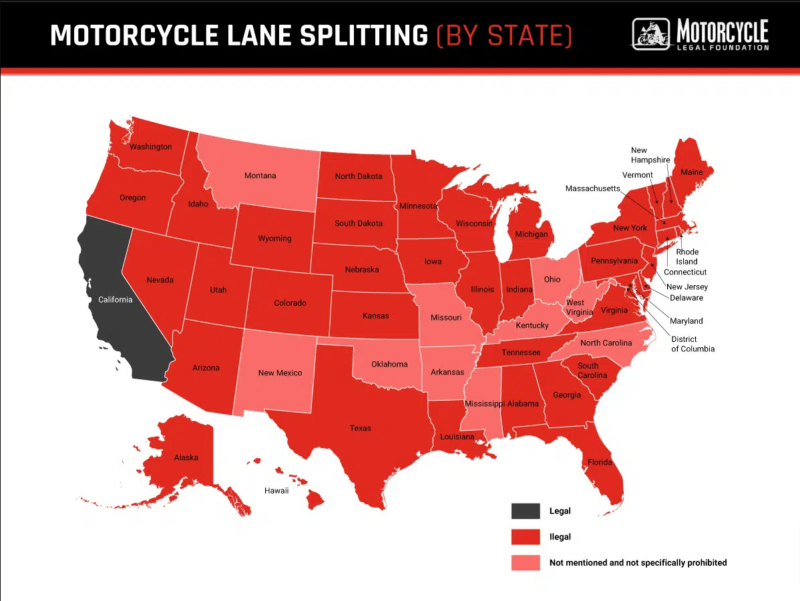
While Texas maintains its prohibition, it’s worth noting that the legal landscape for lane splitting varies significantly across the United States. Understanding these differences can provide context and highlight potential future discussions, though changes in Texas are not immediately foreseen.
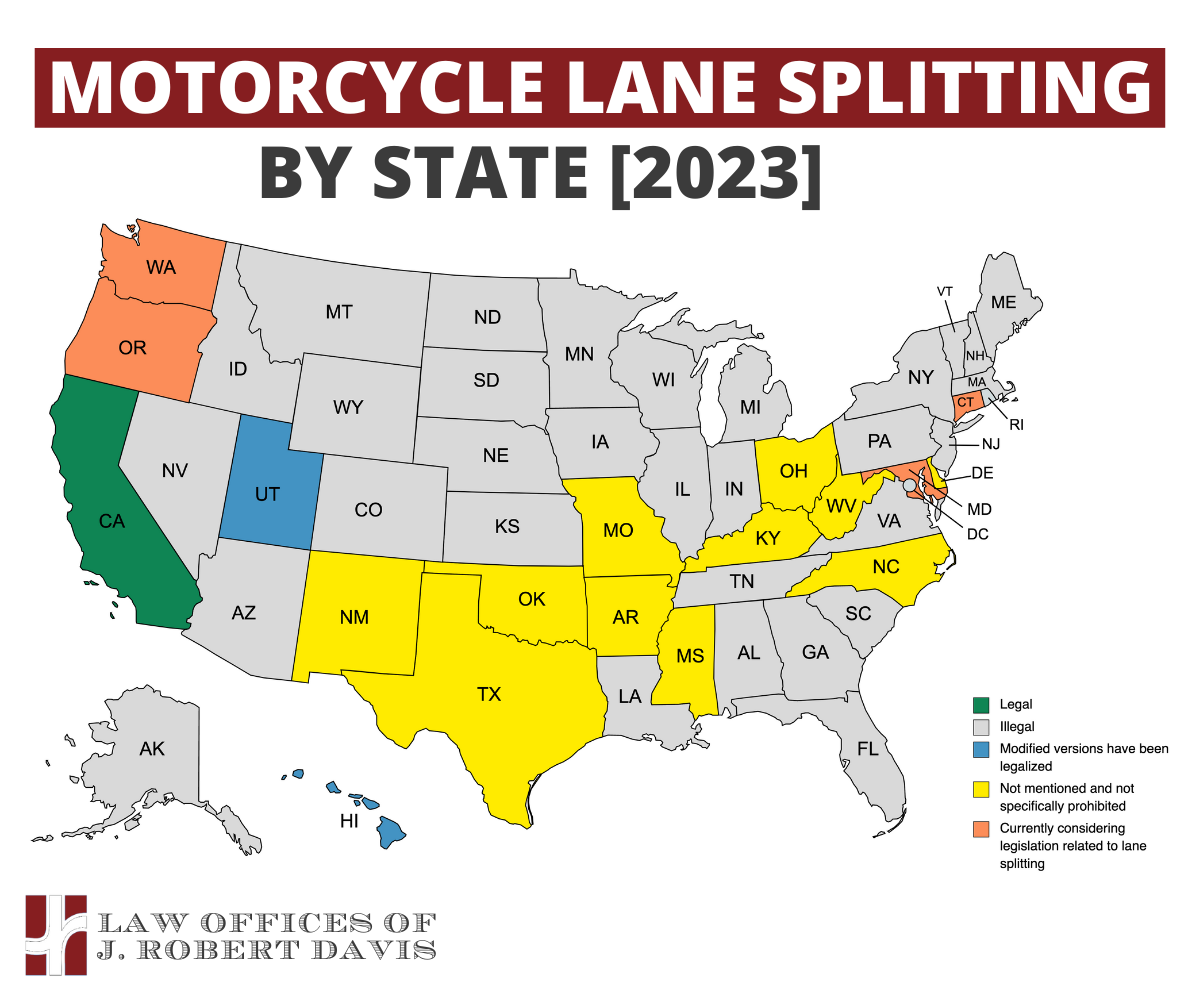
The most prominent example of a state where lane splitting is legal is California. California was the first state to officially legalize lane splitting, recognizing it as a legitimate and often safer practice under specific conditions. Riders in California are generally allowed to ride between lanes of stopped or slowly moving traffic, provided they do so at a reasonable and safe speed relative to the surrounding traffic. The rationale in California includes reducing motorcycle fatalities from rear-end collisions, easing traffic congestion, and offering environmental benefits by reducing idling time. The California Highway Patrol has even published guidelines for safe lane splitting, emphasizing rider responsibility and situational awareness.
Beyond California, a handful of other states have adopted or are considering laws that permit some form of “lane filtering,” which is often a more restrictive version of lane splitting, typically allowing motorcycles to move between lanes of stopped traffic at very low speeds, such as at traffic lights. States like Utah, Arizona, Montana, Idaho, Washington, and Oregon have laws or pilot programs that permit lane filtering under specific conditions, usually limited by speed and traffic conditions. Hawaii has also joined the list with specific lane filtering regulations. These states often cite similar arguments to California — enhanced rider safety, reduced congestion, and improved fuel efficiency — but often with more cautious implementation.
The debate over lane splitting in North America continues, with motorcycle advocacy groups often pushing for legalization, citing studies that suggest it can be safer than remaining stationary in traffic. However, public perception, especially among non-motorcyclists, and concerns from law enforcement agencies often present significant hurdles to widespread adoption. For now, when you’re riding in Texas, the rule of thumb is clear: keep to your lane and avoid splitting.
Safety and Practical Advice for Motorcyclists in Texas
Given the legal standing, motorcyclists traversing Texas must prioritize adherence to the law while focusing on safe riding practices. The state’s vast road network offers incredible opportunities for exploration, from its bustling metropolitan centers to its serene natural wonders.
Navigating Texas Roads Responsibly
The key to a safe and enjoyable motorcycle experience in Texas lies in responsible riding, always within the bounds of the law. Here are some essential tips for navigating Texas roads:
- Adhere to Current Laws: Since lane splitting is illegal, always maintain your position within your lane, just like any other vehicle. Resist the temptation to weave between cars, even in heavy traffic.
- Practice Defensive Riding: Assume other drivers don’t see you. This means constantly scanning for potential hazards, maintaining a safe following distance, and having an escape route planned. Texas highways can be fast, and drivers may be less attentive than you’d hope.
- Enhance Visibility: Wear bright, reflective gear, especially at dawn, dusk, or night. Always ride with your headlight on. Consider adding auxiliary lighting if your bike allows. The larger the vehicle, the harder it can be to see a motorcycle, and Texas is known for its fair share of large trucks.
- Maintain Safe Distances: Give yourself ample space between your motorcycle and the vehicle in front of you. This provides more time to react to sudden stops or maneuvers.
- Be Aware of Surroundings: Texas weather can change rapidly, with sudden downpours or strong winds. Road conditions can also vary, from smooth highways to rougher rural roads. Always be vigilant for debris, potholes, and gravel, especially after rain.
- Lane Positioning: Within your lane, strategically position yourself to maximize visibility to other drivers and to give yourself the best view of the road ahead. Often, the left or right third of the lane can be safer than riding directly in the center, but this needs to be adapted to traffic conditions.
By focusing on these principles, you can significantly reduce risks and ensure a smoother journey, whether you’re cruising along the Gulf Coast or exploring the rugged beauty of Big Bend National Park.
Enjoying Motorcycle Travel in Texas
Texas is a fantastic state for motorcycle travel, offering an incredible array of experiences that cater to various riding styles and preferences. The state’s diverse geography means you can ride through arid deserts, rolling hills, pine forests, and coastal routes, all within its expansive borders.
For those planning a motorcycle adventure, lifeoutofthebox.com suggests several considerations:
- Scenic Routes: Explore the famous “Three Sisters” loop (Ranch Roads 335, 336, and 337) in the Hill Country for exhilarating curves and breathtaking views. The route to Big Bend National Park offers stunning desert vistas and challenging rides. Coastal roads near Galveston provide a different, breezy experience.
- Motorcycle-Friendly Destinations: Many Texas towns, particularly in the Hill Country and along popular routes, welcome motorcyclists with open arms. Look for local diners, specialized lodging, and events that cater to the riding community. Cities like Austin and San Antonio offer vibrant cultures, historical landmarks, and plenty of dining and entertainment options, often with motorcycle parking available.
- Accommodation and Amenities: When planning your trip, consider booking accommodations that offer secure parking for motorcycles. Many hotels, resorts, and even some unique villas cater to travelers with specific needs, and a quick search on
lifeoutofthebox.comcan help you find suitable options. For longer stays, especially if you’re exploring a region, consider apartments or boutique hotels that offer more than just a room. - Preparation is Key: Before any long ride, ensure your motorcycle is in top condition. Check tires, brakes, fluids, and lights. Carry a basic toolkit, a first-aid kit, and plenty of water, especially for rides in remote or hot areas. Roadside assistance membership can be a lifesaver in such a vast state.
Embracing the spirit of adventure while respecting local laws is the essence of responsible travel. While the allure of zipping through traffic might be tempting, the potential risks and legal repercussions in Texas far outweigh any perceived benefits. By riding safely and responsibly, you can fully immerse yourself in the rich experiences that Texas has to offer, creating lasting memories along its open roads.
In conclusion, for those asking “Is it legal to lane split in Texas?” the answer remains a firm no. Adhering to this law, coupled with defensive riding techniques and thorough trip planning, will ensure that your motorcycle adventures in the Lone Star State are not only thrilling but also safe and within the bounds of the law. So, gear up, plan your route, and enjoy the incredible journeys that await you on the diverse and beautiful roads of Texas.
LifeOutOfTheBox is a participant in the Amazon Services LLC Associates Program, an affiliate advertising program designed to provide a means for sites to earn advertising fees by advertising and linking to Amazon.com. Amazon, the Amazon logo, AmazonSupply, and the AmazonSupply logo are trademarks of Amazon.com, Inc. or its affiliates. As an Amazon Associate we earn affiliate commissions from qualifying purchases.