
The question of kratom’s legality in California is a nuanced one, often leading to confusion for residents and visitors alike. As an herbal substance derived from the leaves of a tropical tree native to Southeast Asia, kratom (Mitragyna speciosa) has gained significant attention globally for its stimulant and opioid-like effects. For those considering its use or involved in its distribution, understanding the legal landscape in the Golden State is crucial for making informed lifestyle choices. While the federal government in the United States has yet to impose a nationwide ban, individual states and local municipalities have taken varying stances, creating a patchwork of regulations that can be challenging to navigate. This article delves into the specifics of kratom’s legal status in California, explores the broader context of its regulation, and offers insights into what this means for consumers and vendors.
Understanding Kratom: A Brief Overview
Before diving into the legalities, it’s important to understand what kratom is and why it has become such a contentious topic. Originating from the indigenous cultures of countries like Thailand, Malaysia, Indonesia, and Papua New Guinea, kratom has a long history of traditional use.
What is Kratom?
Kratom is a psychoactive plant belonging to the coffee family. Its leaves contain unique alkaloid compounds, primarily mitragynine and 7-hydroxymitragynine, which interact with opioid receptors in the brain. The effects of kratom are dose-dependent: at low doses, it can act as a stimulant, increasing energy and focus, while at higher doses, it tends to produce sedative and analgesic effects, similar to opioids. It is typically consumed by chewing raw leaves, brewing them as a tea, or ingesting powdered leaf material in capsules or mixed into drinks. Its availability in various forms, from raw leaf powder to extracts and tinctures, further complicates its regulation and public perception. The diversity of strains, each with a distinct alkaloid profile and purported effects, adds another layer of complexity to the discussion surrounding its appropriate use and potential risks.
Traditional Uses and Modern Interest
Traditionally, kratom has been used by laborers in Southeast Asia to combat fatigue, improve mood, and manage pain during long working hours. It was also employed in traditional medicine for treating various ailments, including chronic pain, cough, diarrhea, and as an opium substitute. In recent decades, kratom has garnered significant attention in Western countries, particularly among individuals seeking natural alternatives for chronic pain management, opioid withdrawal symptom relief, anxiety, and depression. Many users praise its efficacy and report improvements in their quality of life. However, this surge in modern interest has also been accompanied by concerns from health authorities regarding its potential for addiction, abuse, and adverse health effects, especially given the lack of robust scientific research and regulatory oversight. The debate often pits personal liberty and traditional use against public health concerns and the need for scientific validation.
The Complex Legal Landscape of Kratom in the United States
The legal status of kratom across the United States is a patchwork, reflecting a lack of consensus at the federal level and differing opinions among state and local lawmakers. This fragmented approach creates significant challenges for consumers, vendors, and law enforcement.
Federal Stance and DEA Considerations
At the federal level, kratom is currently not classified as a controlled substance by the Drug Enforcement Administration (DEA). However, this doesn’t mean it’s without scrutiny. The Food and Drug Administration (FDA) has issued several public health warnings regarding kratom, citing concerns about its safety, potential for abuse, and unproven medical claims. The FDA has also cracked down on companies making unsubstantiated health claims about kratom products and has seized shipments of kratom entering the country. In 2016, the DEA initially announced its intent to classify kratom’s active compounds as Schedule I substances, which would place it in the same category as heroin and LSD, effectively banning it nationwide. This proposal met with significant public backlash, including petitions, protests, and letters from members of Congress, leading the DEA to withdraw its intent and open a public comment period. Since then, no federal scheduling action has been taken, leaving the decision to individual states and localities. This federal indecision has perpetuated uncertainty and contributed to the varied legal responses seen across the country.
State-by-State Variations
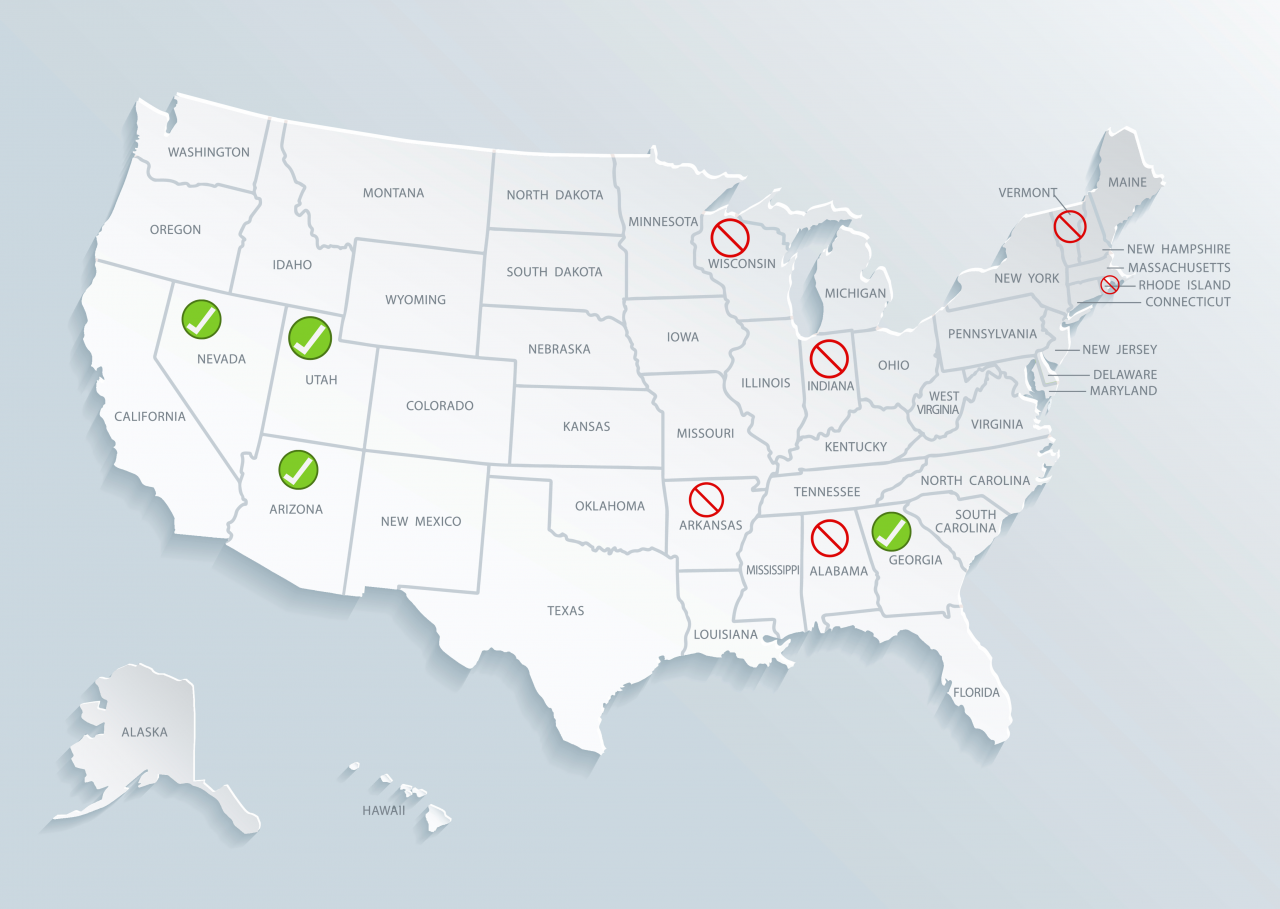
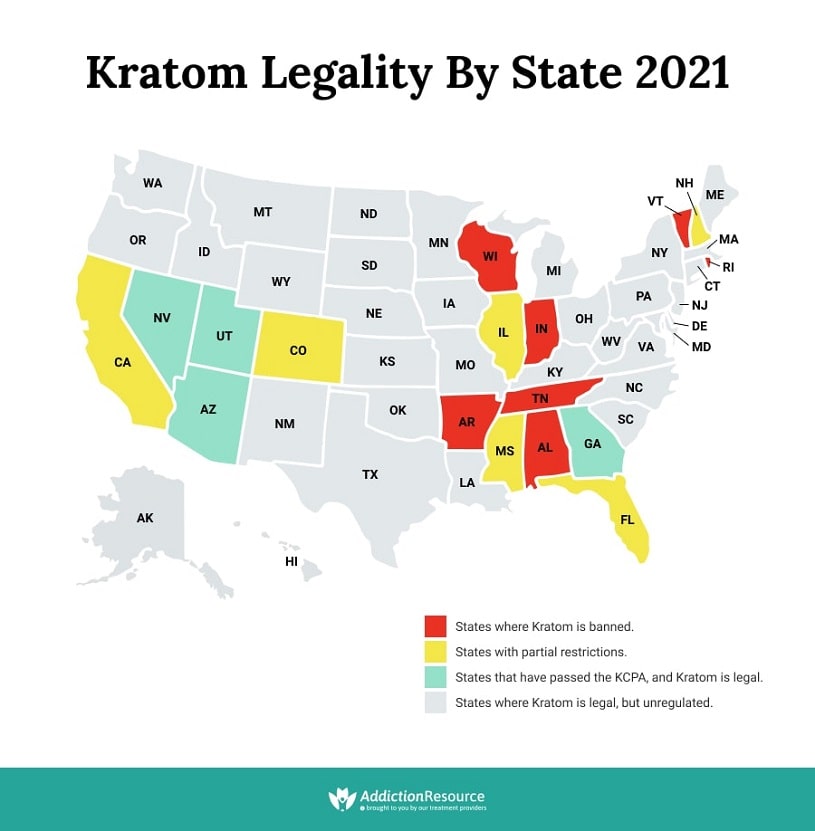
In the absence of a federal ban, the legal status of kratom varies dramatically from one state to another. Some states have fully banned kratom, treating it as a controlled substance. These include Alabama, Arkansas, Indiana, Rhode Island, Vermont, and Wisconsin. Other states have adopted the Kratom Consumer Protection Act (KCPA), which regulates the sale of kratom by establishing age restrictions, requiring lab testing for purity and contaminants, and prohibiting the sale of adulterated or mislabeled products. States like Arizona, Georgia, Kentucky, Nevada, Oklahoma, Oregon, Texas, Utah, and Virginia have implemented some form of the KCPA. The remaining states, including California (with local exceptions), have no statewide regulations, meaning kratom remains legal and unregulated. This patchwork of laws underscores the need for individuals to research the specific regulations in any jurisdiction they plan to visit or reside in.
Kratom’s Legal Status in California
Given the diverse legal landscape across the United States, the question of kratom’s legality in California is particularly important for its vast population and numerous visitors.
Is it Legal Statewide?
As of the current date, kratom is legal at the state level throughout California. There is no statewide ban or regulation on its sale, possession, or use for adults. This means that, broadly speaking, individuals aged 18 and older can legally purchase and consume kratom products across much of the state without fear of legal repercussions from state authorities. This absence of statewide regulation places California among the majority of states where kratom remains an unregulated substance. For consumers, this translates to wide availability in specialized stores, smoke shops, and online retailers. However, the lack of statewide oversight also means that there are no mandated quality control standards, age restrictions, or labeling requirements that apply across the entire state, leaving consumers to rely on the ethical practices of individual vendors.
Local Ordinances and Bans
While kratom is legal statewide, it is crucial to understand that specific cities and counties within California have taken matters into their own hands and enacted local bans or regulations. This means that even if you are in California, you could still face legal issues if you possess or sell kratom in certain areas. The most notable examples of local bans include:
- San Diego: In 2016, the San Diego City Council voted to ban the sale and possession of kratom, classifying it as a Schedule I synthetic drug, despite it being a natural substance. This makes kratom illegal within San Diego city limits.
- Oceanside: Following San Diego’s lead, the city of Oceanside also enacted a ban on kratom.
- Anaheim: While not an outright ban, Anaheim has had discussions and measures proposed regarding the regulation or restriction of kratom sales. It’s essential to check the latest local ordinances.
These local bans highlight the importance of being aware of municipal laws, as they can supersede the broader state-level legality. For anyone traveling or residing in California, it is imperative to verify the specific regulations in their immediate locality before purchasing, possessing, or consuming kratom. Ignorance of local laws is not a valid defense.
Implications for Consumers and Vendors
For consumers in areas where kratom is legal, the primary implication is the responsibility to source products from reputable vendors who voluntarily adhere to quality control standards, such as third-party lab testing. Without statewide regulation, there’s a higher risk of encountering adulterated, contaminated, or mislabeled products. For vendors, the situation is even more complex. While they can operate legally in most of California, they must be hyper-aware of local ordinances and ensure they do not sell in banned areas. Furthermore, the lack of clear state guidelines can lead to uncertainty regarding best practices for marketing, labeling, and age verification, prompting many responsible vendors to implement their own internal standards, often mirroring those suggested by the Kratom Consumer Protection Act. The dynamic nature of these laws also means that vigilance is required, as new local bans or state-level regulations could be introduced at any time.
Potential Risks and Regulatory Concerns
Beyond its legal status, the conversation around kratom is heavily influenced by ongoing debates about its safety, efficacy, and the need for comprehensive regulation.
Health and Safety Debates
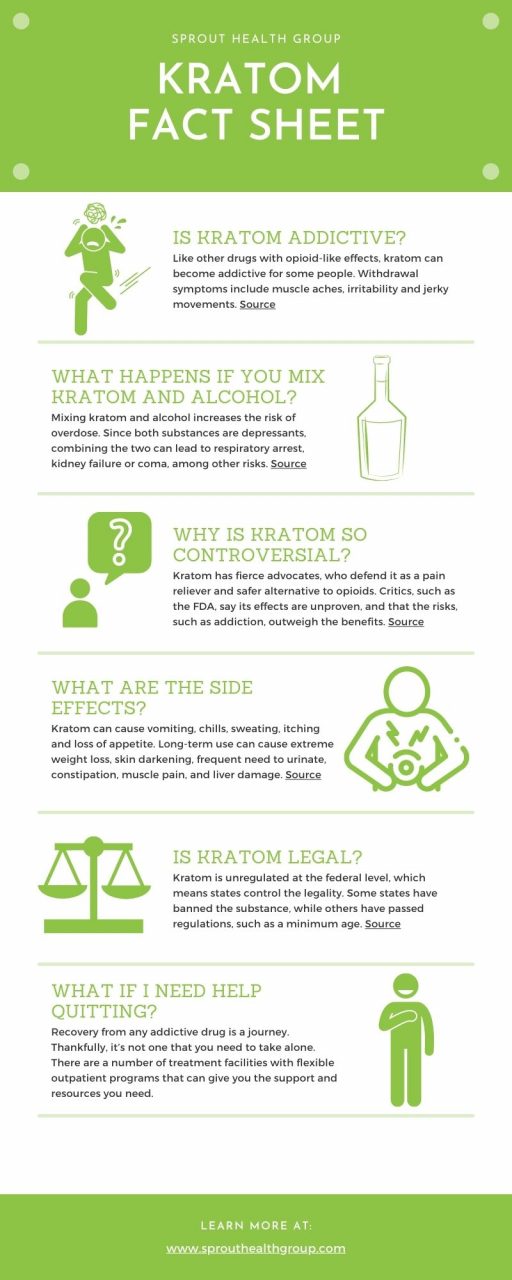
Proponents of kratom often highlight its potential benefits for pain management and opioid withdrawal, citing anecdotal evidence and some preliminary research. They argue that, when used responsibly, kratom can be a safer alternative to conventional opioids and improve quality of life. Conversely, health authorities, including the FDA, express significant concerns about the substance. These concerns include the potential for addiction and withdrawal symptoms similar to opioids, liver toxicity, seizures, and interactions with other medications. The lack of standardized dosing, purity, and labeling across unregulated products further exacerbates these risks, as consumers may unknowingly ingest contaminated or overly potent batches. Reported adverse events, though relatively rare compared to the number of users, underscore the need for more rigorous scientific study and public health monitoring. The debate is often polarized, with passionate arguments on both sides, making it difficult for the average person to discern objective information.
Calls for Regulation and Consumer Protection
The divergent legal stances and health debates have fueled calls for clearer regulation. Many advocates, including the American Kratom Association (AKA), support the implementation of the Kratom Consumer Protection Act (KCPA) at both state and federal levels. The KCPA typically proposes:
- Age Restrictions: Setting a minimum age (e.g., 18 or 21) for purchase.
- Labeling Requirements: Mandating clear and accurate labeling of ingredients, alkaloid content, and warnings.
- Testing for Contaminants: Requiring products to be tested for heavy metals, pesticides, and other harmful substances.
- Prohibition of Adulterated Products: Preventing the sale of kratom mixed with other synthetic or dangerous compounds.
- Penalties for Violations: Establishing consequences for vendors who do not comply.
The aim of such legislation is to ensure consumer safety and product quality, addressing many of the concerns raised by the FDA and public health organizations, while still allowing adult access to the substance. For states like California, where statewide regulation is absent, the adoption of a KCPA could bring much-needed clarity and safety to the market.
Navigating Kratom Use in California: A Lifestyle Consideration
For anyone considering kratom use in California, approaching the topic with an informed and cautious mindset is a critical lifestyle decision.
Staying Informed
The legal status and scientific understanding of kratom are continually evolving. It is imperative for individuals to stay informed about the latest state legislative proposals, county ordinances, and city bans. Reputable news sources, government health advisories (such as those from the FDA), and advocacy groups like the American Kratom Association can be valuable resources for updates. Before purchasing or consuming kratom, especially when traveling within California or to other states, a quick check of local laws can prevent legal issues. This proactive approach is a hallmark of responsible personal choices in a rapidly changing regulatory environment.
Responsible Use and Local Compliance
In areas where kratom is legal, responsible use entails several considerations. Firstly, always verify the legality in your specific city or county. Secondly, prioritize product quality by purchasing from vendors who provide third-party lab results for purity and potency. Start with very low doses, especially if new to kratom, to assess individual tolerance and effects. Avoid combining kratom with alcohol, other drugs, or medications without consulting a healthcare professional, due to potential interactions. Be mindful of the potential for dependence and withdrawal symptoms with regular, high-dose use. Recognizing the risks and practicing moderation are key to minimizing potential negative outcomes and ensuring that any use aligns with a conscious and healthy lifestyle.
Future Outlook
The future of kratom in California and the United States remains uncertain. There is ongoing advocacy from both pro-kratom groups pushing for sensible regulation through the KCPA, and from public health bodies continuing to highlight potential risks and call for more stringent controls or outright bans. As scientific research into kratom’s effects, potential benefits, and risks continues to develop, it will undoubtedly influence future legislative decisions. Until a comprehensive federal or state framework is established in California, navigating its legality requires diligence, personal responsibility, and a commitment to staying informed about local statutes and best practices. For now, kratom generally remains a legal, albeit locally restricted and federally scrutinized, substance in the Golden State, impacting the lifestyle choices of many.
LifeOutOfTheBox is a participant in the Amazon Services LLC Associates Program, an affiliate advertising program designed to provide a means for sites to earn advertising fees by advertising and linking to Amazon.com. Amazon, the Amazon logo, AmazonSupply, and the AmazonSupply logo are trademarks of Amazon.com, Inc. or its affiliates. As an Amazon Associate we earn affiliate commissions from qualifying purchases.