
For many, California represents the pinnacle of travel and lifestyle aspirations. From the sun-drenched beaches of San Diego to the iconic landmarks of San Francisco and the vibrant culture of Los Angeles, the Golden State offers an unparalleled array of destinations, attractions, and experiences. Whether you’re planning a prolonged sabbatical, embarking on a digital nomad adventure, or considering an extended business stay, finding the right accommodation is paramount to curating your ideal long-term stay. However, unlike the often-straightforward process of booking a hotel suite or a resort villa for a short trip, engaging in a long-term rental in California involves a more intricate legal framework. Understanding tenant rights and, crucially, what a landlord cannot do, is not merely a legal formality; it’s an essential aspect of safeguarding your lifestyle, ensuring peace of mind, and protecting your investment in a comfortable home away from home.

The state of California is renowned for its progressive tenant protection laws, designed to balance the rights of property owners with the fundamental need for stable, habitable, and fair housing. These regulations are particularly significant for travelers and individuals seeking extended accommodation, as they dictate everything from privacy expectations to financial safeguards and the overall quality of your living environment. Delving into these limitations on landlord actions empowers you to navigate the rental market with confidence, ensuring your experience in California remains as golden as its reputation. By knowing your rights, you can make informed decisions about your accommodation, avoid potential pitfalls, and focus on enjoying the rich tourism, local culture, and diverse activities that the state has to offer, without undue stress or legal complications. This guide aims to demystify these critical aspects, transforming potential legal jargon into actionable knowledge for your next great California adventure.
Navigating the Golden State’s Rental Landscape: Essential Tenant Protections
Embarking on a long-term stay in California opens up a world of opportunities, from exploring its iconic landmarks to immersing yourself in its unique lifestyle. However, securing and maintaining comfortable accommodation requires an understanding of the state’s robust tenant protection laws. These laws explicitly define the boundaries of a landlord’s authority, acting as a crucial safeguard for your personal space, financial well-being, and overall peace of mind during your extended travel experience. Knowing these limitations is fundamental, ensuring that your journey through the Golden State is characterized by stability and respect for your chosen living environment. From the moment you begin your accommodation search to the final day of your stay, these protections are designed to ensure a fair and equitable relationship between you and your landlord, allowing you to focus on the myriad of experiences California has to offer.
Limits on Entry and Privacy: Your Home Away From Home
One of the most fundamental aspects of any accommodation, whether a luxury hotel suite or a long-term apartment, is the expectation of privacy. In California, landlords do not possess an unrestricted right to enter your rented premises. The law is clear: a landlord cannot enter your rental unit without proper notice, except in very specific emergency situations. Generally, they must provide at least 24 hours’ written notice before entering for non-emergency reasons, such as making necessary repairs, conducting inspections, or showing the property to prospective tenants or purchasers. This notice must specify the date, time, and purpose of the entry. Furthermore, the entry must occur during normal business hours, typically Monday through Friday from 8:00 AM to 5:00 PM.
This protection is vital for anyone settling into a new location for an extended period. It ensures that your private space, your temporary home, is respected, allowing you to enjoy your long-term stay without unexpected intrusions. Imagine planning a day of exploring San Francisco’s vibrant neighborhoods or relaxing after a business trip, only to have your privacy unexpectedly disrupted. California law prevents such occurrences, ensuring your accommodation truly feels like your own sanctuary. While exceptions exist for genuine emergencies – such as a burst pipe, fire, or immediate threat to life or property – even then, the landlord’s entry must be limited to addressing the emergency. They cannot use an emergency as a pretext for a broader inspection or to snoop. Understanding these limits on entry is paramount to maintaining a secure and comfortable lifestyle during your time in California, ensuring that your accommodation provides the expected level of privacy and uninterrupted enjoyment, similar to what you would expect from the finest resorts or private villas.
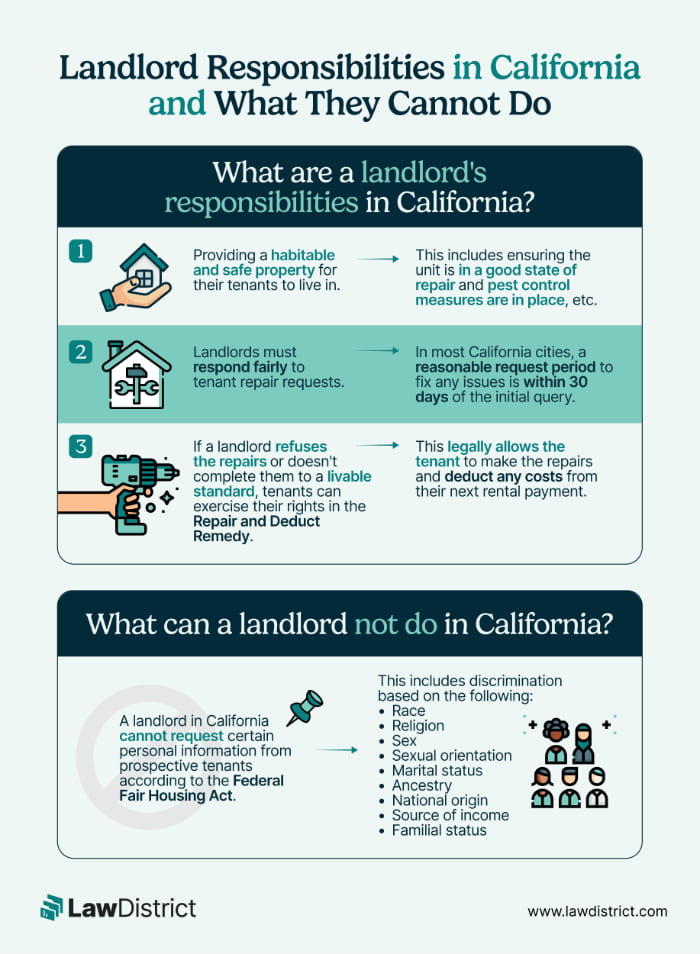
Restrictions on Discrimination: Ensuring Fair Access to Accommodation
For travelers and individuals relocating for an extended stay, ensuring fair access to accommodation is a critical concern, directly impacting lifestyle and experience. Landlords in California are strictly prohibited from discriminating against prospective or existing tenants based on a wide array of protected characteristics. Rooted in both federal Fair Housing laws and the more expansive California Fair Employment and Housing Act (FEHA), these protections mean a landlord cannot refuse to rent to you, harass you, or treat you differently because of your race, color, religion, sex (including gender identity and sexual orientation), national origin, ancestry, disability, familial status (presence of children under 18), marital status, or even medical condition. Importantly, California also prohibits discrimination based on source of income, meaning a landlord generally cannot refuse a tenant solely because they use housing vouchers, social security, or other legal forms of income.
This comprehensive anti-discrimination framework is particularly relevant for the diverse array of individuals drawn to California for travel, work, or lifestyle changes. It ensures that everyone, regardless of their background, has an equal opportunity to secure accommodation in cities like Los Angeles, San Jose, or Sacramento. For digital nomads or those seeking a change of scenery, knowing that these protections are in place offers a significant layer of security and promotes inclusivity, allowing you to freely choose your preferred location without fear of unfair treatment. Such protections foster a welcoming environment, aligning with the spirit of global tourism and ensuring that your exploration of California’s local culture and vibrant communities is accessible and equitable. A landlord cannot, for instance, advertise a preference for “single professionals only” if it unfairly excludes families or other protected groups, nor can they refuse to make reasonable accommodations for tenants with disabilities. These rules uphold the principle that everyone deserves fair access to safe and suitable accommodation, contributing to a more positive and inclusive travel experience.

Prohibited Retaliation: Standing Up for Your Rights
When you embark on an extended stay or long-term accommodation, the last thing you want is to feel hesitant to address issues that arise. California law explicitly prohibits landlords from retaliating against tenants who exercise their legal rights. This means a landlord cannot try to evict you, raise your rent, decrease services, or harass you simply because you have complained about unsafe living conditions, requested repairs, reported housing code violations, or joined a tenant’s rights organization. The law creates a rebuttable presumption of retaliation if a landlord attempts to take such actions within 180 days after a tenant has engaged in protected activity.
This prohibition is crucial for maintaining a positive and secure accommodation experience. It empowers tenants to speak up about legitimate concerns, such as a lack of heating, pest infestations, or other maintenance issues that compromise the habitability of their dwelling, without fear of punitive measures. For individuals on a long-term stay, this protection is invaluable. It ensures that your focus can remain on enjoying the unique tourism opportunities and rich lifestyle California offers, rather than worrying about potential repercussions for asserting your right to a safe and well-maintained home. A landlord cannot, for example, suddenly decide not to renew your lease after you have made a formal complaint about a broken appliance that they were legally obligated to fix. Such actions would be considered retaliatory and are illegal under California law. By upholding these rights, the state ensures that tenants can fully enjoy their accommodation, similar to the peace of mind one expects from a reputable hotel or resort, knowing that their well-being and legal standing are protected.
Financial Safeguards and Rent Control: Managing Your Budget in Pricey Markets
California is undeniably a premium destination, celebrated for its iconic landmarks and luxurious lifestyle, but also known for its higher cost of living. For those planning a long-term stay, whether it’s for work, study, or extended travel, managing your budget effectively is a key consideration. Thankfully, California has implemented significant financial safeguards and rent control measures that directly impact your accommodation costs and financial security. These regulations are designed to prevent excessive financial burdens and provide a degree of stability, which is especially beneficial for budget travel planning and ensuring your extended stay remains enjoyable and sustainable. Understanding these limitations on a landlord’s financial demands can significantly influence your choice of city, from Oakland to Santa Monica, and help you secure the best possible long-term stay experience.
Security Deposit Limitations: Protecting Your Investment
A security deposit is often one of the largest upfront costs when securing long-term accommodation, and California law places strict limits on what a landlord can charge and how they must handle these funds. A landlord cannot demand a security deposit that exceeds two months’ rent for an unfurnished unit or three months’ rent for a furnished unit. This cap is crucial for managing initial expenses, especially for travelers or digital nomads looking to set up a comfortable home without an exorbitant upfront financial commitment. It stands in contrast to short-term rental arrangements, where credit card holds might differ significantly.
Beyond the initial charge, landlords are also restricted in how they can use these funds and when they must return them. A security deposit is intended to cover specific items, such as unpaid rent, cleaning costs (to restore the unit to its condition at the start of the tenancy, minus normal wear and tear), and damages beyond normal wear and tear. It cannot be used for routine maintenance or to upgrade the property. Upon your departure, the landlord is legally obligated to return your security deposit, or the remainder of it, within 21 calendar days. If deductions are made, the landlord must provide an itemized statement detailing the charges and, if the deduction exceeds a certain amount, include copies of receipts or invoices for the repairs or cleaning. This transparency is vital for ensuring fairness and preventing landlords from arbitrarily withholding funds. For anyone booking long-term accommodation, especially those coming from other states or countries, these protections provide a critical financial safeguard, offering peace of mind that your investment in a temporary home is protected and handled equitably.
Rent Control and Eviction Protections: Stability for Your Extended Stay
For many exploring long-term accommodation in California, especially in popular cities, rent costs are a significant consideration. Fortunately, the state has implemented powerful rent control and “just cause” eviction protections that limit what a landlord cannot do regarding rent increases and tenancy termination. The statewide rent control law, AB 1482, generally caps annual rent increases at 5% plus the percentage change in the cost of living index (CPI), up to a maximum of 10% total. This means landlords cannot arbitrarily skyrocket rents, providing a crucial layer of financial stability for those planning an extended stay or seeking to immerse themselves in local culture over a longer period. While specific cities like Los Angeles, San Francisco, Oakland, and San Jose may have even stricter local ordinances, the statewide cap provides a baseline protection across much of the state.
Equally important are the “just cause” eviction protections. Under AB 1482, once a tenant has continuously and lawfully occupied a residential real property for 12 months, a landlord cannot terminate the tenancy without “just cause.” This means landlords cannot evict tenants without a legally recognized reason, such as non-payment of rent, breach of a material term of the lease, or using the property for an illegal purpose. Even in cases where the landlord intends to move in themselves or perform substantial renovations (no-fault just cause), they are typically required to provide relocation assistance to the tenant. These protections offer invaluable stability, transforming a temporary accommodation into a reliable base for experiencing all that California offers. For digital nomads, families on extended trips, or individuals seeking a new lifestyle, the assurance that a landlord cannot simply evict them without cause provides immense security, allowing for deeper engagement with the community and planned activities without the constant worry of displacement. This framework fosters a more secure and predictable environment for long-term travel and residential stability in the Golden State.
Maintaining a Habitable Environment: Your Right to a Comfortable Home
When selecting accommodation, whether it’s a boutique hotel, a spacious resort, or a long-term rental, a fundamental expectation is a safe, clean, and functional living space. For those embarking on an extended stay in California, this expectation is not just a preference; it’s a legal right. California law places a significant responsibility on landlords to ensure their rental properties meet specific standards of habitability, directly impacting the quality of your lifestyle and travel experience. Understanding these obligations means you can confidently expect and demand a comfortable and healthy environment, free from serious defects that could detract from your enjoyment of the Golden State’s tourism and attractions. A landlord cannot allow a rental unit to fall into disrepair or neglect the fundamental necessities that make a dwelling fit for human occupation.
The Implied Warranty of Habitability: What Every Rental Must Provide
At the core of tenant protection in California is the “implied warranty of habitability.” This is an unwritten, unspoken guarantee that every residential rental unit must meet basic health and safety standards. A landlord cannot rent out or allow a tenant to continue living in a property that is not habitable. These standards encompass a broad range of essential features, including effective waterproofing and weather protection of the roof and exterior walls, fully functional plumbing and gas facilities (including hot and cold running water), a safe and properly maintained heating system, working electrical lighting and wiring, and clean, sanitary grounds free from trash and pests (such as rodents or vermin). Furthermore, a landlord must ensure proper garbage receptacles are provided and that all stairways, railings, and common areas are kept in good repair.
This warranty means that your accommodation, much like a well-maintained hotel suite or villa, must provide a functional and safe environment throughout your long-term stay. If a crucial element of habitability breaks down – for example, the heating system fails in winter or there’s a significant pest infestation – the landlord has a legal obligation to make repairs in a timely manner after receiving notice from the tenant. If they fail to do so, tenants have several legal options, including the ability to “repair and deduct” (make the repair themselves and deduct the cost from rent), withhold a portion of the rent, or even abandon the premises without penalty in severe cases. These protections are invaluable for travelers and those on extended stays, ensuring that your focus remains on experiencing California’s unique offerings, rather than grappling with substandard living conditions. It’s about securing a comfortable and dignified lifestyle, backed by strong legal assurances.
Prohibitions Against Self-Help Evictions: The Legal Process Matters
One of the most critical things a landlord cannot do in California is engage in “self-help” evictions. This refers to any action taken by a landlord to force a tenant out of their accommodation without going through the formal legal eviction process in court. Such actions are strictly illegal and severely penalized. For instance, a landlord cannot change the locks on your rental unit, shut off your utilities (like water, electricity, or gas), remove your personal property from the premises, or engage in any form of harassment to intimidate you into leaving. Even if a tenant is behind on rent or has violated a term of the lease, the landlord must follow specific legal procedures, including providing proper notice and obtaining a court order, before they can physically remove a tenant.
This robust prohibition is a cornerstone of tenant protection and is particularly reassuring for anyone embarking on an extended stay or seeking stable accommodation in a new city. It ensures that your long-term stay is secure and that you won’t be suddenly displaced or face illegal tactics designed to force you out. The legal eviction process is designed to protect both parties, providing due process and preventing arbitrary or coercive actions. For travelers, digital nomads, or individuals establishing a new lifestyle in California, knowing that landlords are legally barred from resorting to such disruptive and illegal methods provides immense peace of mind. It reinforces the idea that your chosen accommodation, be it in San Diego or Santa Monica, is a legally protected space, allowing you to fully immerse yourself in the local culture, explore attractions, and enjoy your time without fear of unlawful displacement.
In conclusion, understanding what a landlord cannot do in California is not merely about avoiding legal pitfalls; it’s about empowering your travel and lifestyle choices. The Golden State’s comprehensive tenant protection laws are designed to ensure that your long-term stay, whether for leisure, business, or a complete lifestyle change, is as comfortable, secure, and financially predictable as possible. From guaranteeing your privacy and freedom from discrimination to safeguarding your deposits and ensuring a habitable living environment, these regulations create a framework of trust and fairness in the landlord-tenant relationship. For anyone considering California as a destination for an extended visit or a new beginning, knowledge of these rights transforms the daunting task of finding accommodation into a confident step towards a fulfilling experience. By being informed, you can confidently navigate the rental market, assert your rights when necessary, and fully embrace the diverse destinations, vibrant tourism, and unparalleled lifestyle that California graciously offers, making your time in this magnificent state truly unforgettable. Always remember to check specific local ordinances in your chosen city, as many areas within California offer even stronger tenant protections than the state mandates.
LifeOutOfTheBox is a participant in the Amazon Services LLC Associates Program, an affiliate advertising program designed to provide a means for sites to earn advertising fees by advertising and linking to Amazon.com. Amazon, the Amazon logo, AmazonSupply, and the AmazonSupply logo are trademarks of Amazon.com, Inc. or its affiliates. As an Amazon Associate we earn affiliate commissions from qualifying purchases.