
The question of which Air Force Base resides within or near Phoenix, Arizona points directly to Luke Air Force Base, a cornerstone of military aviation and a significant landmark in the greater Phoenix metropolitan area. While technically located in Glendale, Arizona, a prominent city in the West Valley of Phoenix, Luke AFB is inextricably linked with the region’s identity, economy, and historical fabric. This formidable installation is far more than just a military facility; it is a vital training ground, a symbol of national defense, and a permanent, recognizable feature of the Sonoran Desert landscape. Its presence defines a significant portion of the Arizona landscape, impacting everything from flight paths overhead to local community development, firmly establishing itself as a landmark of strategic and historical importance.

Unveiling Luke Air Force Base: A Phoenix Area Landmark
Luke Air Force Base stands as a monument to aviation history and ongoing military prowess, situated approximately 15 miles west of downtown Phoenix. Its designation as a landmark extends beyond its physical footprint; it encompasses its foundational role in shaping American air power and its sustained contribution to the strategic defense capabilities of the United States. From its sprawling runways to its training facilities, every aspect of Luke AFB reflects a deep-rooted history and an enduring mission.
Location and Significance
Nestled in the arid beauty of the Sonoran Desert, Luke Air Force Base occupies a vast expanse that allows for extensive flight operations and training exercises, largely unencumbered by urban sprawl compared to more congested areas. Its proximity to Phoenix means that its operations, particularly the distinctive roar of fighter jets, are a familiar soundscape across the metropolitan area, serving as a constant reminder of its active role. The base is a primary location for fighter pilot training, specifically focusing on the most advanced combat aircraft in the U.S. Air Force inventory. This mission makes Luke AFB not just a local landmark but a global hub for tactical aviation training, attracting personnel from allied nations and contributing significantly to international defense capabilities. The physical landscape of the base, characterized by expansive concrete runways, numerous hangars, and support buildings, is an impressive sight, embodying the intricate infrastructure required to support modern military aviation.
Historical Foundations and Evolution
The history of Luke Air Force Base is deeply intertwined with the critical military needs of the United States during World War II. Established in 1941 as Luke Field, it was named in honor of Major Frank Luke Jr., an Arizona native and one of America’s first air aces, renowned for his bravery during World War I. Initially, the base served as an advanced training facility for fighter pilots, quickly becoming one of the largest such installations in the Army Air Corps. Its strategic location, with ample clear airspace and favorable flying weather throughout the year, proved ideal for continuous pilot development.
Over the decades, Luke AFB has continually evolved, adapting to new technological advancements in aviation and shifting global defense strategies. From the propeller-driven aircraft of its early days to the supersonic jets of the Cold War era and today’s fifth-generation fighters, the base has remained at the forefront of combat pilot training. This continuous evolution is a hallmark of its landmark status, demonstrating not just historical significance but also a dynamic, ongoing relevance in contemporary defense. The physical architecture of the base, while functional, reflects these eras, with some original structures standing alongside modern hangars and cutting-edge simulation facilities.
Architectural and Operational Landscape
The physical layout and operational characteristics of Luke Air Force Base are integral to its identity as a landmark. It is a purpose-built environment, meticulously designed to support high-intensity flight operations, maintenance, and the rigorous training of elite fighter pilots. The scale of the base is impressive, featuring an extensive network of runways, taxiways, and specialized facilities that are themselves architectural marvels of military engineering.
The Layout of Power Projection
The architecture of Luke AFB is driven by its mission. Central to its design are its dual parallel runways, engineered to handle a constant flow of takeoffs and landings, crucial for a high-volume training environment. These runways, visible from miles away, are perhaps the most iconic architectural feature of the base, signifying its purpose. Surrounding them are numerous hardened aircraft shelters, maintenance hangars, and logistics buildings, all constructed with durability and operational efficiency in mind. The design of these facilities is not merely aesthetic; it is a testament to functional architecture, built to withstand the demanding environment of aviation operations and protect invaluable assets.

Beyond the flightline, the base encompasses a self-contained community, featuring barracks, administrative offices, medical facilities, and recreational areas. While these structures are more utilitarian, their collective presence forms the infrastructure that supports thousands of personnel, making the base a fully integrated entity. The uniformity and strategic placement of these buildings contribute to the distinct visual identity of a military installation, setting it apart from the surrounding urban landscape of Glendale and Phoenix. It’s a carefully planned environment where every building, road, and utility serves a specific, critical function.
Modern Aviation and Training Hub
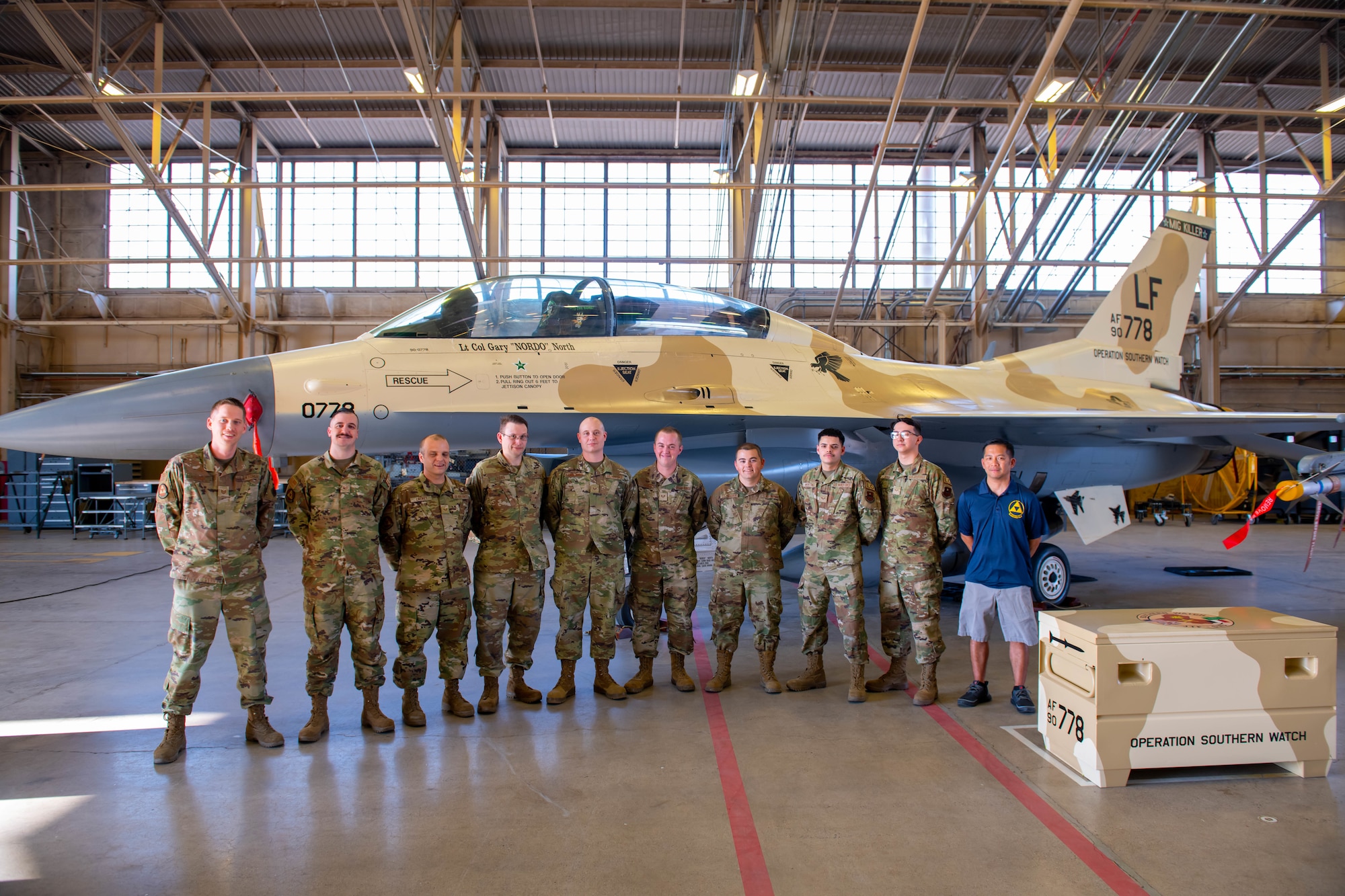
Today, Luke Air Force Base is renowned globally as the premier training center for the F-35 Lightning II, America’s most advanced stealth fighter. This transition from earlier aircraft like the F-16 Fighting Falcon to the F-35 represents a significant modernization and solidifies the base’s role as a cutting-edge landmark in aviation technology. The hangars and support structures dedicated to the F-35 reflect this advanced capability, with specialized facilities for stealth coating maintenance, complex avionics, and advanced simulation. The base is under the command of the Air Education and Training Command (AETC), underscoring its primary role in pilot development.
The operational rhythm of Luke AFB is a constant testament to its mission. The continuous takeoffs and landings, the precision of ground crews, and the integrated command and control systems all contribute to the dynamic character of this landmark. It is a living, breathing testament to human ingenuity and dedication, where the future of air combat is literally taking flight every day. The technological sophistication housed within its boundaries makes it a landmark of innovation, pushing the boundaries of what is possible in military aviation.
Impact as a Regional Landmark
The impact of Luke Air Force Base extends far beyond its fence line, profoundly influencing the surrounding Phoenix metropolitan area. As a major employer and a site of historical significance, its presence is deeply felt across the West Valley and beyond, making it an indispensable part of the region’s identity.
Economic and Community Ties
As one of the largest military installations in the United States, Luke AFB is a substantial economic engine for Arizona. It contributes billions of dollars annually to the state’s economy through direct employment, contracts, and the spending of military personnel and their families. Thousands of active-duty service members, civilians, and contractors work at the base, making it a critical hub of employment and a driver of local commerce in Glendale and neighboring communities. This economic footprint solidifies its status as a vital landmark, not just in terms of defense but also for the sustainable growth and prosperity of the region.
The base also fosters strong community ties, engaging with local schools, businesses, and civic organizations. Its personnel are active members of the community, participating in local events, volunteer efforts, and educational initiatives. This integration ensures that Luke AFB is not an isolated entity but a vibrant and respected partner in the development of the Phoenix area. The base often hosts community events and air shows, providing unique opportunities for the public to witness its operations firsthand and connect with military heritage, further cementing its role as a regional landmark.
Public Engagement and Heritage
While access to an active military base is restricted for security reasons, Luke Air Force Base recognizes the importance of public engagement and preserving its rich heritage. The base maintains a small historical display or museum elements, often accessible during special open house events, that showcase its legacy from World War II to the present day. These displays feature artifacts, photographs, and information about the aircraft that have called Luke AFB home, including detailed histories of legendary planes like the P-40 Warhawk, the F-100 Super Sabre, and the modern F-35.
Air shows are perhaps the most prominent way Luke AFB opens its doors to the public. These events draw hundreds of thousands of visitors, offering breathtaking aerial demonstrations, static displays of military aircraft, and opportunities to interact with pilots and ground crews. These shows not only serve as a significant public relations effort but also educate the public about the capabilities of the U.S. Air Force and the critical role Luke AFB plays in national defense. Such events transform the base from a restricted military zone into a temporary public attraction, highlighting its landmark status as a center of aviation excellence and historical pride.
A Legacy in the Sonoran Desert
In conclusion, while not physically located within the city limits of Phoenix, Luke Air Force Base undeniably stands as the primary Air Force Base associated with the Phoenix metropolitan area. Its deep historical roots, its expansive and purpose-built architectural landscape, and its crucial ongoing mission as a global training hub for the F-35 Lightning II firmly establish it as a paramount landmark. From the distant rumble of fighter jets that echo across the Sonoran Desert to its profound economic and social contributions to the West Valley, Luke AFB is a permanent and powerful symbol of national defense and a vital part of Arizona’s unique identity. It is a place where history is made daily, where the future of air power takes shape, and where the legacy of brave aviators continues to inspire.
LifeOutOfTheBox is a participant in the Amazon Services LLC Associates Program, an affiliate advertising program designed to provide a means for sites to earn advertising fees by advertising and linking to Amazon.com. Amazon, the Amazon logo, AmazonSupply, and the AmazonSupply logo are trademarks of Amazon.com, Inc. or its affiliates. As an Amazon Associate we earn affiliate commissions from qualifying purchases.