
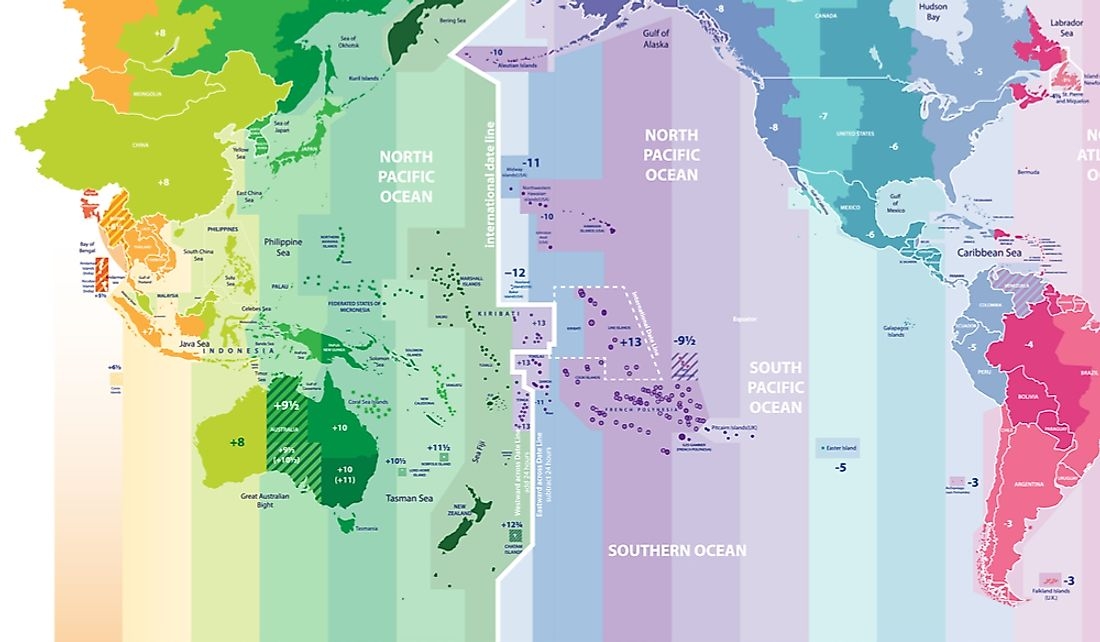
Understanding time zones is crucial for seamless travel planning, effective communication across distances, and appreciating the global tapestry of daily life. When planning a trip from the Golden State, or even just trying to coordinate a call with friends or business associates on the other side of the world, knowing the time difference is paramount. California, situated on the West Coast of the United States, primarily observes Pacific Time, which is UTC-8 during standard time and UTC-7 during daylight saving time. This places it significantly behind many other parts of the globe, especially those in Asia and Oceania. The question of which country is precisely 13 hours ahead of California requires a careful examination of time zone differentials.
Navigating the Global Clock: Time Zones and California
California experiences two primary time zones due to its significant size and its observance of daylight saving time. The majority of the state operates on Pacific Standard Time (PST), which is UTC-8. During daylight saving months, this shifts to Pacific Daylight Time (PDT), which is UTC-7. This fluctuation can sometimes complicate calculations, but for a consistent understanding of the major time differences, we often refer to the standard time.
To find a country that is 13 hours ahead, we need to look for a location with a time zone that is UTC+5. This difference, when calculated from PST (UTC-8), results in exactly 13 hours ahead (UTC+5 minus UTC-8 = 13 hours). However, it’s important to note that time zones are not always perfectly aligned with national borders. A single country might span multiple time zones, or conversely, a specific time zone might encompass parts of several different countries.
Let’s explore the regions that would place them at approximately 13 hours ahead of California. This temporal leap typically lands us in parts of South Asia or Central Asia.
South Asia’s Temporal Alignment
Several countries in South Asia fall into time zones that are significantly ahead of California. The most prominent region that aligns with a 13-hour difference is often found around the Indian subcontinent.
India’s Time Zone
India famously operates on a single time zone, Indian Standard Time (IST). IST is defined as UTC+5:30. This means India is generally 13.5 hours ahead of California when California is on PST (UTC-8). So, while not precisely 13 hours, it’s incredibly close and often the country people are referring to when seeking a roughly 13-hour difference. For instance, if it’s 9 AM on Monday in Los Angeles (PST), it’s 10:30 PM on Monday in Delhi, India. The half-hour difference is a unique characteristic of India’s timekeeping, adopted to avoid the disruptive effects of a full hour shift, particularly in the eastern parts of the country.
Exploring India’s Unique Time Standard
The adoption of IST in 1947 was a strategic move to unify the country’s timekeeping. Prior to this, India had multiple time zones. The decision for UTC+5:30 was a compromise, intended to benefit the majority of the population while acknowledging the vast east-west expanse of the country. For travelers, this means that while a direct 13-hour calculation might point to a different zone, India is the closest major nation, offering a familiar cultural experience within a very similar temporal gap.
Central Asia and Eastern Europe’s Proximity
Moving further west from India, we encounter countries in Central Asia and some fringe areas of Eastern Europe that might also align with a significant time difference.
Potential Time Zone Overlaps
While many Central Asian countries adhere to UTC+5 or UTC+6, the exact national boundaries and their specific time zone implementations can be nuanced. For example, countries like Uzbekistan, Turkmenistan, and Tajikistan primarily use UTC+5. This makes them precisely 13 hours ahead of California’s Pacific Standard Time (UTC-8). If it is 9 AM on Monday in Los Angeles, it would be 10 PM on Monday in Tashkent, Uzbekistan, or Ashgabat, Turkmenistan.

Planning Your Journey to UTC+5 Regions
Traveling to these Central Asian nations offers a distinct cultural immersion, often characterized by ancient Silk Road history, unique architectural marvels, and diverse landscapes. When planning a trip to places like Samarkand in Uzbekistan, understanding this 13-hour time difference is key to adjusting to jet lag and scheduling activities. For business travelers, coordinating meetings with partners in this region requires a clear grasp of the temporal gap to avoid misunderstandings.
The Impact of Daylight Saving Time on the Calculation
It is essential to remember that the 13-hour difference is most accurate when California is observing Pacific Standard Time (PST), which is UTC-8. During the months when California observes Pacific Daylight Time (PDT), it shifts to UTC-7.
Recalculating for Daylight Saving
When California is on PDT (UTC-7), a country at UTC+5 would be 12 hours ahead (UTC+5 minus UTC-7 = 12 hours). Conversely, a country at UTC+6 would be 13 hours ahead (UTC+6 minus UTC-7 = 13 hours). This means that during daylight saving months in California, countries in the UTC+6 time zone, such as parts of Russia (specifically the Ural region and western Siberia), or even parts of Kazakhstan, would become the ones that are 13 hours ahead.
Adapting to Seasonal Time Shifts
For frequent travelers or those with international business ties, staying abreast of daylight saving schedules in both California and the destination country is vital. While the exact UTC offset can shift the difference by an hour, the general principle of looking towards South and Central Asia (and sometimes parts of Eastern Europe during specific times of the year) for countries significantly ahead of California remains consistent.
Practical Implications for Travelers and Communicators
The knowledge of which country is 13 hours ahead of California has direct implications for numerous activities.
Coordinating International Communications
For individuals who need to communicate with people in these time zones, be it for work, family, or social reasons, planning calls and virtual meetings requires careful attention. A common scenario is a business professional in San Francisco needing to connect with a colleague in Tashkent. If it’s 9 AM on a Tuesday in San Francisco (PST), it’s already 10 PM on Tuesday in Tashkent. This means late-night or early-morning calls are often unavoidable, and scheduling needs to be precise to avoid inconveniencing either party.
Planning International Travel Itineraries
When planning a trip to a country that is 13 hours ahead of California, such as Uzbekistan or potentially India with its 13.5-hour difference, travelers should be prepared for a significant jet lag. The feeling of arriving in a place where the local time is almost a full day ahead can be disorienting. Strategies like adjusting sleep schedules before departure, staying hydrated, and immediately adopting the local time upon arrival are crucial for a smoother transition.

Experiencing the Cultural Shift
The temporal distance also underscores the vast cultural differences one might encounter. Traveling from California to a country 13 hours ahead means stepping into a different rhythm of life, different meal times, different work schedules, and different social customs. Embracing this difference is part of the adventure of international travel. For instance, arriving in a city like Bishkek, Kyrgyzstan (which also uses UTC+5), means experiencing a world that is quite literally operating on a different part of the daily cycle. This awareness enhances the travel experience, allowing for a deeper appreciation of global diversity and interconnectedness.
LifeOutOfTheBox is a participant in the Amazon Services LLC Associates Program, an affiliate advertising program designed to provide a means for sites to earn advertising fees by advertising and linking to Amazon.com. Amazon, the Amazon logo, AmazonSupply, and the AmazonSupply logo are trademarks of Amazon.com, Inc. or its affiliates. As an Amazon Associate we earn affiliate commissions from qualifying purchases.