
The year 1966 marked a pivotal moment in American legal history with the Supreme Court‘s landmark decision in Miranda v. Arizona. This ruling fundamentally reshaped criminal procedure, etching itself as a cornerstone of due process and individual rights within the United States. Far from a physical edifice, this case represents an intellectual and legal landmark, establishing critical protections for individuals subjected to custodial interrogation. Its significance lies in its profound impact on how law enforcement interacts with suspects and its enduring legacy in safeguarding constitutional liberties.
The Historical Context: Pre-Miranda Interrogations
Before the Miranda v. Arizona decision, the landscape of police interrogation was often characterized by methods that, while sometimes effective in eliciting confessions, frequently raised concerns about coercion and the voluntariness of statements. The absence of explicit, constitutionally mandated warnings meant that suspects, particularly those unversed in legal matters, could be pressured into self-incrimination without fully understanding their rights. This period saw a growing tension between the legitimate need for law enforcement to investigate crimes and the imperative to protect individual liberties enshrined in the Constitution.
The Fifth Amendment and Self-Incrimination
At the heart of the Miranda v. Arizona case was the Fifth Amendment to the U.S. Constitution, which declares, among other things, that no person “shall be compelled in any criminal case to be a witness against himself.” This protection against self-incrimination is a foundational principle of American justice, designed to prevent the state from forcing individuals to confess to crimes, ensuring that confessions are a product of free will, not duress. However, prior to Miranda, the application of this right during police interrogations was inconsistently enforced and often left to the subjective judgment of courts based on the “totality of the circumstances” surrounding a confession. This ad hoc approach led to a lack of clear guidance for both law enforcement and citizens, creating an environment ripe for legal challenges concerning the admissibility of confessions.
Early Challenges to Police Practices
Throughout the mid-20th century, the Supreme Court gradually began to address concerns about coercive police practices. Cases like Brown v. Mississippi (1936) highlighted extreme instances of physical brutality used to extract confessions, leading the Court to rule such confessions inadmissible. Later, cases such as Spano v. New York (1959) and Escobedo v. Illinois (1964) chipped away at unfettered police interrogation, recognizing the importance of legal counsel during certain stages of criminal proceedings. Escobedo, in particular, was a precursor to Miranda, holding that a suspect who has requested and been denied an attorney, and who has not been effectively warned of his right to remain silent, has been unconstitutionally interrogated. These cases, while significant, still lacked a comprehensive, clear standard for police to follow uniformly across the nation, setting the stage for the groundbreaking clarity that Miranda v. Arizona would provide.
The Genesis of a Landmark Decision
The historical trajectory towards Miranda v. Arizona was not a sudden leap but a culmination of evolving legal thought and societal pressures to safeguard individual rights against state power. The case itself involved four distinct appeals, consolidated under the name Miranda v. Arizona, each illustrating the diverse challenges faced by individuals interrogated without proper constitutional safeguards.
The Case of Ernesto Miranda
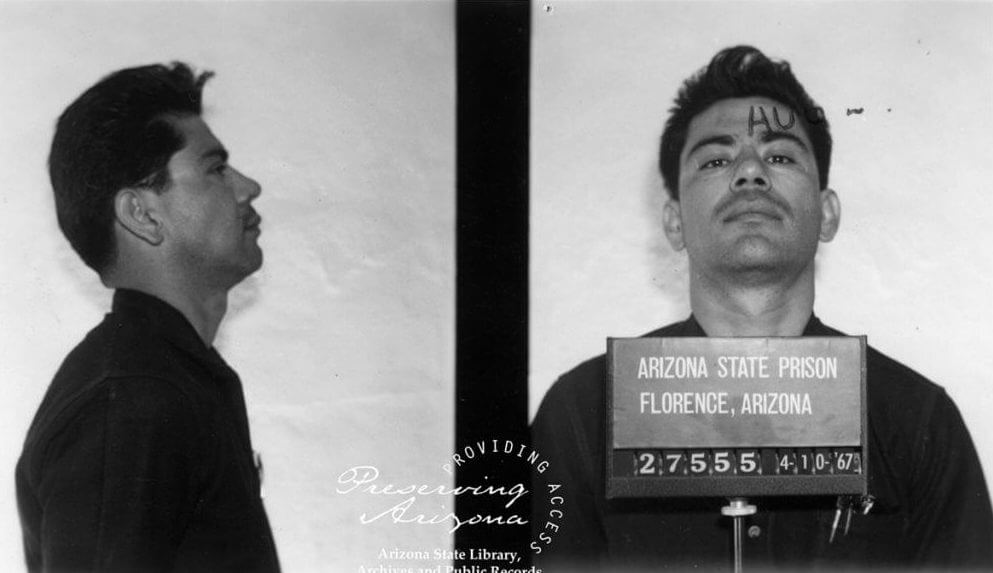
The most famous of these consolidated cases involved Ernesto Miranda. In 1963, Miranda was arrested in Phoenix, Arizona, in connection with the kidnapping and rape of an 18-year-old woman. During interrogation, police officers obtained a signed confession from Miranda after two hours of questioning. Crucially, Miranda was not informed of his right to remain silent or his right to legal counsel during this interrogation. The confession was subsequently used against him in court, leading to his conviction. His appointed lawyer, Alvin Moore, appealed the conviction, arguing that Miranda’s Fifth Amendment rights had been violated. The Arizona Supreme Court affirmed the conviction, holding that Miranda did not specifically request an attorney and that signing the confession was sufficient evidence of its voluntariness. This ruling set the stage for the case to ascend to the highest court in the land, where it would join other similar appeals.
From State Court to the Supreme Court
The journey of Miranda v. Arizona to the Supreme Court was facilitated by the growing awareness among civil rights advocates and legal scholars regarding the inequities embedded in pre-interrogation procedures. The Court, under the leadership of Chief Justice Earl Warren, was actively engaged in an era of expanding civil liberties and criminal due process rights, often referred to as the Warren Court era. The decision to hear Miranda’s case, alongside three others ( Vignera v. New York, Westover v. United States, and California v. Stewart), underscored the Court’s recognition of a systemic issue that required a unified, national standard. The arguments presented before the Supreme Court focused on whether statements obtained during custodial interrogations could be used as evidence against a defendant if they were not first informed of their constitutional rights, specifically the right to an attorney and the right against self-incrimination. The justices deliberated on how to reconcile the need for effective law enforcement with the constitutional imperative to protect individuals from compelled testimony.
The Core Establishment: Miranda Warnings

The Supreme Court’s decision in Miranda v. Arizona, delivered on June 13, 1966, was a watershed moment. In a 5-4 ruling, the Warren Court reversed Ernesto Miranda’s conviction and established a clear, unambiguous set of procedural safeguards that law enforcement must provide to suspects prior to custodial interrogation. These safeguards, now universally known as “Miranda Warnings,” became an iconic feature of American criminal justice.
The Right to Remain Silent
The first and arguably most famous component of the Miranda Warnings is the advisement that “you have the right to remain silent.” This directly flows from the Fifth Amendment’s privilege against self-incrimination. The Court recognized that the inherent coercive nature of custodial interrogation, where a suspect is isolated and questioned by trained officers, could easily overwhelm an individual’s will. To counteract this, it mandated that suspects must be clearly informed that they are not obligated to speak and that any statements they make can and will be used against them in a court of law. This warning serves to empower individuals, ensuring that their decision to speak or remain silent is a free and informed choice, rather than a response to intimidation or ignorance.
The Right to an Attorney
Equally crucial is the establishment of the right to counsel during interrogation: “Anything you say can and will be used against you in a court of law. You have the right to an attorney. If you cannot afford an attorney, one will be provided for you.” The Supreme Court acknowledged that the right to counsel, guaranteed by the Sixth Amendment and incorporated to the states via the Fourteenth Amendment, was essential not just at trial, but at critical stages prior to trial, including police interrogation. An attorney, the Court reasoned, could serve as a buffer between the suspect and the state, ensuring that the interrogation proceeds fairly and that the suspect’s rights are fully protected. For indigent suspects, the Court made it clear that the state must provide legal representation, thereby leveling the playing field and preventing economic status from dictating the extent of constitutional protection.
The Consequence of Not Warning: Exclusionary Rule
The Miranda v. Arizona decision also established a significant enforcement mechanism: the exclusionary rule. If law enforcement fails to provide the Miranda Warnings before a custodial interrogation, any statements, confessions, or evidence derived directly from that unwarned interrogation generally cannot be used by the prosecution in its case-in-chief against the defendant. This rule serves as a powerful deterrent against police misconduct and ensures compliance with the newly established procedures. It is a critical component that gives the warnings their force, making them more than mere suggestions but rather constitutionally mandated prerequisites for obtaining admissible statements.
The Lasting Impact and Ongoing Debates
The Miranda v. Arizona decision instantly became one of the most recognized and debated legal landmarks in American history. Its immediate impact was revolutionary, altering police procedures nationwide and instilling a new awareness of constitutional rights among both law enforcement and the public. Over five decades later, the “Miranda Warning” remains an indispensable part of criminal justice, a constant reminder of the Fifth Amendment protections against self-incrimination.
Protecting Constitutional Rights
The primary aim and lasting success of Miranda v. Arizona lie in its ability to protect fundamental constitutional rights. By requiring explicit warnings, the decision aims to ensure that any statements made by a suspect during custodial interrogation are truly voluntary and that the suspect is fully aware of their options. It empowers individuals, particularly those unfamiliar with the legal system, to make informed decisions about whether to speak to police without an attorney present. The warnings provide a clear, understandable framework for interaction, reducing the likelihood of coercive tactics and promoting a fairer criminal justice process from the outset. This standardization brought much-needed clarity where there was once ambiguity, benefiting all parties involved.
Criticisms and Legislative Responses
Despite its monumental status, Miranda v. Arizona faced significant criticism from its inception. Law enforcement agencies and some political figures argued that the decision “handcuffed” police, making it more difficult to obtain confessions and solve crimes. Critics claimed it led to guilty criminals going free due to technicalities, prioritizing procedure over public safety. These criticisms even led to legislative attempts to modify or overturn Miranda. For example, in 1968, Congress enacted 18 U.S.C. § 3501, which purported to overturn Miranda by making the admissibility of confessions dependent on voluntariness as determined by judges, rather than adherence to specific warnings. However, in Dickerson v. United States (2000), the Supreme Court reaffirmed Miranda, holding that it was a constitutional rule and could not be legislatively overruled. This decision solidified Miranda’s place as a deeply entrenched part of American law.

Miranda in the Modern Era: Exceptions and Clarifications
Over the decades, subsequent Supreme Court rulings have clarified and, in some instances, carved out exceptions to the original Miranda v. Arizona ruling. Cases like New York v. Quarles (1984) introduced the “public safety exception,” allowing unwarned statements to be admitted in emergency situations where there is an immediate threat to public safety. Other decisions have addressed issues such as what constitutes “custodial interrogation,” how unequivocally a suspect must invoke their rights, and the use of Miranda-violative statements for impeachment purposes (to challenge a defendant’s credibility if they testify inconsistently at trial). These developments reflect the ongoing dynamic between upholding constitutional rights and adapting to the practical realities of law enforcement. Despite these refinements, the core principles established by Miranda v. Arizona — the right to remain silent and the right to counsel during custodial interrogation — remain an enduring landmark, a testament to the nation’s commitment to due process and individual liberty.
LifeOutOfTheBox is a participant in the Amazon Services LLC Associates Program, an affiliate advertising program designed to provide a means for sites to earn advertising fees by advertising and linking to Amazon.com. Amazon, the Amazon logo, AmazonSupply, and the AmazonSupply logo are trademarks of Amazon.com, Inc. or its affiliates. As an Amazon Associate we earn affiliate commissions from qualifying purchases.