
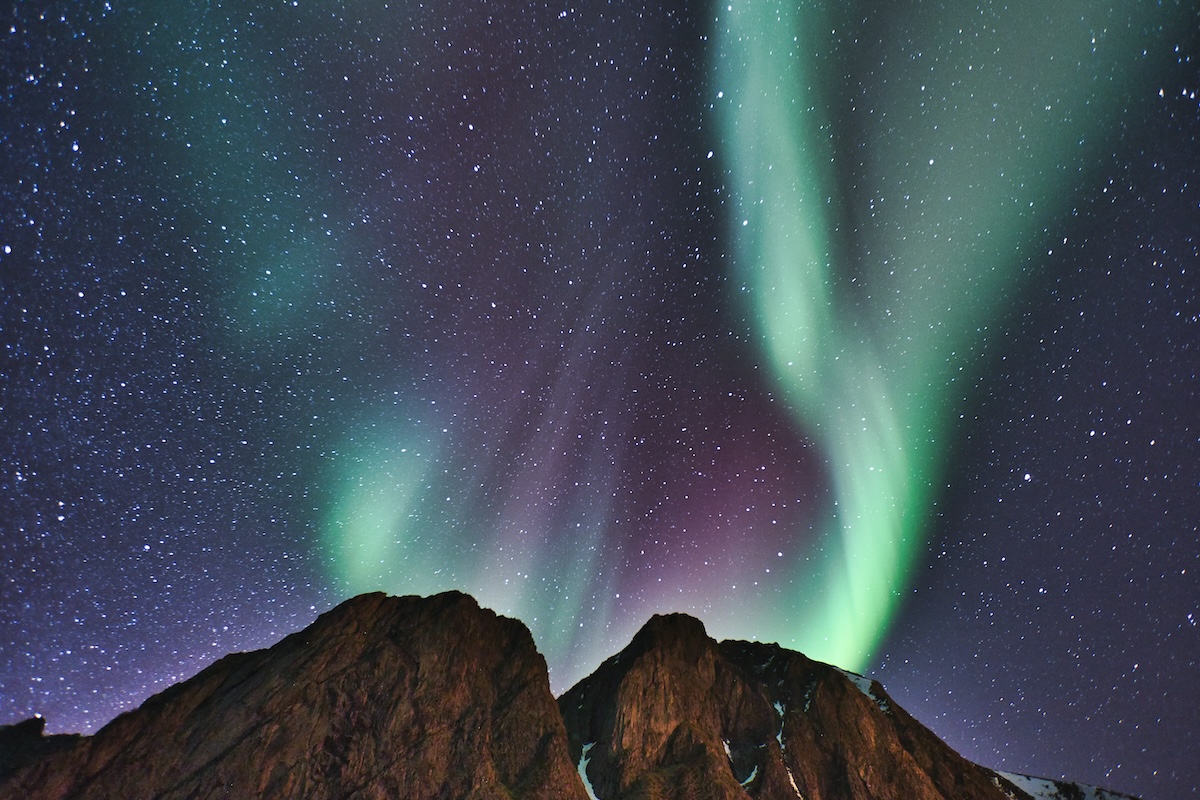
The allure of the Northern Lights, or Aurora Borealis, captivates travelers and dreamers worldwide. Its ethereal dance of green, pink, and purple across the night sky is a bucket-list spectacle for many. Naturally, those residing in or visiting destinations like California often wonder if this celestial ballet extends its reach to the Golden State. While technically possible under highly specific and rare circumstances, California is generally not considered a prime viewing destination for the aurora. Understanding the science behind this phenomenon and California’s geographic realities is key to managing expectations and planning your aurora quest.
The Science Behind the Aurora Borealis
To comprehend why the aurora is predominantly seen in specific regions, it’s essential to grasp the science behind its formation. This mesmerizing display is a direct consequence of the interaction between solar activity and Earth’s magnetic field.
How the Aurora Forms
The Northern Lights originate from the sun’s surface. Our sun constantly ejects charged particles—protons and electrons—in what is known as the solar wind. Sometimes, the sun releases much larger bursts of plasma and magnetic field, called Coronal Mass Ejections (CMEs). When these charged particles travel through space and encounter Earth’s magnetic field, they are largely deflected. However, near the magnetic poles, the field lines converge, allowing some of these particles to penetrate Earth’s upper atmosphere.
As these high-energy particles collide with atoms and molecules of gases like oxygen and nitrogen in the atmosphere, they excite them. When these excited atoms return to their normal energy state, they emit photons of light. The specific color of the aurora depends on the type of gas hit and the altitude of the collision. Oxygen atoms typically produce the most common green-yellow light, while higher-altitude oxygen can emit red. Nitrogen contributes blue and purple hues. The result is the stunning, fluctuating curtains of light we admire.
Why Latitude Matters
The Earth’s magnetic field acts like a giant shield, protecting us from the continuous bombardment of solar radiation. This magnetic field is strongest and most concentrated around the planet’s magnetic poles. Consequently, the charged particles from the sun are funneled towards these polar regions. This funneling effect creates what is known as the “auroral oval”—a band around the magnetic poles where auroral activity is most frequent and intense.
Countries and regions located within or close to this auroral oval, such as Alaska, Canada, Greenland, Iceland, Norway, Sweden, and Finland, are prime locations for consistent aurora viewing. These high-latitude regions benefit from the direct channeling of solar particles, making regular sightings a common occurrence during the dark winter months. The further you move away from this oval towards the equator, the less likely it is to witness the aurora, as the magnetic field lines are less effective at directing the particles to those lower latitudes.
California’s Unique Position: A Geographic Reality Check
Despite its diverse landscapes and occasional celestial wonders, California faces significant hurdles when it comes to regular aurora viewing. Its geographical location and population density play critical roles in diminishing the chances of witnessing the Northern Lights.
The Golden State’s Latitude
California is located at a relatively low latitude compared to the prime auroral zones. The state spans from roughly 32° N to 42° N latitude. For consistent aurora sightings, locations generally need to be above 60° N latitude. This significant difference means that most of California lies well outside the typical auroral oval.
For the aurora to be visible this far south, an extraordinarily powerful geomagnetic storm is required. These intense solar events push the auroral oval equatorward, making it possible for the lights to be seen from regions that would otherwise never experience them. However, such events are rare and unpredictable, occurring only a few times per decade, if that. When they do happen, the aurora observed from California is usually faint, low on the northern horizon, and typically a pale green or red, lacking the vibrant, dancing displays seen in higher latitudes.
Light Pollution Challenges
Even if a strong geomagnetic storm were to extend the aurora’s reach to California, another significant challenge stands in the way: light pollution. California is one of the most populous states in the United States, home to major metropolitan areas like Los Angeles, San Francisco, and Sacramento. The glow from city lights can severely obscure faint celestial phenomena, including the aurora.
To have any chance of seeing the Northern Lights from California, one would need to venture far from urban centers, into exceptionally dark-sky locations. Even then, the faintness of the display might make it difficult for the naked eye to discern against residual skyglow, especially compared to the vivid, easily visible auroras in polar regions. Astrophotographers with specialized equipment and long exposures often capture images of the aurora from California that are not apparent to the casual observer.
Geomagnetic Storms: The Rare Exception
The only true possibility for seeing the Northern Lights in California hinges on powerful geomagnetic storms. These storms are rated on a G-scale from G1 (minor) to G5 (extreme). For California sightings, a G3 (strong) or higher storm is generally required. Such events are driven by significant CMEs or high-speed streams of solar wind impacting Earth’s magnetosphere.
During these rare occurrences, the Earth’s magnetic field is substantially disturbed, causing the auroral oval to expand significantly towards the equator. This expansion can bring the aurora low on the northern horizon for states like Washington, Oregon, Idaho, Montana, and sometimes even California. Predicting these events with certainty more than a few days in advance is challenging, and even then, cloud cover or local light conditions can still spoil the view.
Documented Sightings and What They Mean

While exceedingly rare, there have been documented instances of the Northern Lights being visible from California. These sightings underscore the exceptional nature of such events.
Historical Accounts and Modern Confirmations
Historical records occasionally mention aurora sightings from California, often described as faint glows or red arcs. One of the most significant recent events was in October 2003, during the “Halloween Storms,” which were G5 (extreme) geomagnetic storms. Reports and photographs confirmed aurora visibility across much of the United States, including parts of California. More recently, in May 2024, an unprecedented G5 geomagnetic storm also led to widespread aurora visibility across the lower 48 United States, including many parts of California, where reports and stunning photographs confirmed its presence, often appearing as vibrant reds and purples for keen observers in dark-sky locations.
These events are significant not just for their rarity but also for demonstrating the power of solar activity to temporarily override geographic limitations. However, they remain exceptions rather than the rule, highlighting that chasing the aurora in California is primarily an exercise in patience and extraordinary luck.
Conditions for a California Sighting
If you’re in California and a powerful geomagnetic storm is forecast, here are the optimal conditions to maximize your slim chances of a sighting:
- Extreme Geomagnetic Activity: Monitor space weather forecasts from agencies like NOAA’s Space Weather Prediction Center. Look for Kp-index predictions of 7 or higher.
- Dark, Clear Skies: Travel far from any city lights. Head to remote deserts, mountains, or coastal areas with unobstructed views of the northern horizon. National Parks and designated dark-sky areas are ideal.
- New Moon Phase: Aim for a night close to the new moon to avoid moonlight interference, which can significantly dim the faint aurora.
- Peak Hours: The aurora is generally most active between 10 PM and 2 AM local time.
- Patience and Persistence: Even with ideal conditions, the display might be brief, subtle, and require significant observation time to detect.
The Best Places to Watch (If It Happens)
Should a rare geomagnetic storm grace California, the best places to attempt a sighting would be locations renowned for their dark skies. These include:
- Death Valley National Park: An International Dark Sky Park, offering incredibly dark skies in eastern California.
- Joshua Tree National Park: Another excellent dark-sky location in Southern California’s desert landscape.
- Anza-Borrego Desert State Park: California’s largest state park and an International Dark Sky Park, located near San Diego.
- Big Sur Coastline: Remote sections along the Big Sur coast, away from small towns, can offer dark horizons over the Pacific.
- High Sierra Wilderness: Remote areas within the Sierra Nevada mountains, far from ski resorts or towns, can provide excellent darkness, though access can be challenging.
Even in these locations, managing expectations is crucial. The experience will likely be a faint, low-horizon glow, far from the dynamic, overhead displays seen in destinations within the auroral oval.
Planning Your Aurora Quest: Realistic Expectations
For most travelers, seeking out the Northern Lights requires a trip to higher latitudes. While California offers unparalleled beauty, it’s not the destination for a guaranteed aurora experience.
When to Chase the Lights
The best time to chase the Northern Lights globally is during the dark winter months, typically from late August to early April. Within this window, the longer nights increase the chances of catching a display. The solar cycle also plays a role; the aurora is generally more active during periods of Solar Maximum, a peak in the sun’s 11-year activity cycle. We are currently approaching Solar Maximum conditions, which slightly increases the chances of stronger geomagnetic storms that could reach lower latitudes, but this still doesn’t make California a reliable viewing spot.
Optimal Viewing Destinations Worldwide
For a truly immersive and reliable aurora experience, consider destinations firmly within the auroral oval:
- Alaska, United States: Particularly areas like Fairbanks and Anchorage.
- Canada: Yukon (e.g., Whitehorse), Northwest Territories (e.g., Yellowknife), and Manitoba (e.g., Churchill).
- Iceland: The entire island offers excellent opportunities, especially away from Reykjavik.
- Norway: The northern regions like Tromsø and the Lofoten Islands.
- Finland Lapland: Towns like Rovaniemi and Levi.
- Sweden Lapland: The Abisko National Park is particularly famous.
These destinations offer not only higher chances of seeing the aurora but also the infrastructure (tours, accommodations, viewing platforms) to enhance the experience.

Alternative Stargazing Experiences in California
While the Northern Lights remain an elusive spectacle in California, the state offers world-class stargazing opportunities. Its vast deserts, high mountains, and commitment to dark-sky preservation make it an exceptional destination for enjoying the night sky.
- Milky Way Photography: Many of the same dark-sky locations mentioned for aurora hunting (e.g., Death Valley, Joshua Tree) provide breathtaking views of the Milky Way galaxy, especially during summer and early autumn.
- Meteor Showers: California is an excellent place to watch annual meteor showers like the Perseids (August) and Geminids (December) from its dark parks.
- Observatories: The state is home to famous observatories like the Griffith Observatory in Los Angeles and the Mount Wilson Observatory, which offer public viewing events and educational programs.
- Dark Sky Parks: California boasts several certified International Dark Sky Parks and communities, including Borrego Springs (part of Anza-Borrego Desert State Park), which actively protect their night skies from light pollution.
In conclusion, while the dream of seeing the Northern Lights in California is a captivating one, the reality is that it’s an extremely rare event, dependent on extraordinary solar activity and perfect local viewing conditions. For a truly fulfilling aurora chase, direct your travel plans to the higher latitudes where this natural wonder paints the sky with dependable brilliance. However, for an unforgettable night under the stars, California’s dark skies offer a celestial panorama that is a destination in itself.
LifeOutOfTheBox is a participant in the Amazon Services LLC Associates Program, an affiliate advertising program designed to provide a means for sites to earn advertising fees by advertising and linking to Amazon.com. Amazon, the Amazon logo, AmazonSupply, and the AmazonSupply logo are trademarks of Amazon.com, Inc. or its affiliates. As an Amazon Associate we earn affiliate commissions from qualifying purchases.