
Florida, often lauded as the Sunshine State, beckons millions of visitors annually with its pristine beaches, vibrant cities, and lush natural landscapes. From the theme park thrills of Orlando to the historic charm of St. Augustine and the tropical allure of Miami, Florida offers an unparalleled array of experiences. However, like any diverse ecosystem, it comes with its unique set of local inhabitants, some of which are less glamorous than the dolphins and manatees. Among these are termites, tiny insects that can pose a significant challenge to properties. For tourists, seasonal residents, or anyone considering an extended stay in Florida, understanding what these common pests look like is an invaluable “tip” for a smooth and worry-free visit. Being able to identify termites can save you from potential stress, help you protect your belongings, and ensure you can promptly alert accommodation providers if you suspect an issue. This guide aims to equip you with the knowledge to recognize the various termite species prevalent in Florida, allowing you to fully enjoy your Florida adventure without unwelcome surprises.
The Sunshine State’s Unseen Inhabitants: Why Termite Awareness is a Key Tip for Tourists
Florida’s subtropical climate, characterized by warmth and high humidity, creates an ideal breeding ground for a diverse range of insects, including termites. While often out of sight, these wood-destroying organisms play an ecological role, yet can become a major concern when they invade human-made structures. For visitors, understanding this local reality is not about fear, but about preparedness and informed observation, enhancing your overall tourism experience. Whether you’re staying in a historic bungalow in Key West, a vacation rental near Fort Lauderdale, or even a modern hotel, the potential presence of termites is a local environmental factor worth noting.
Florida’s Climate: A Termite Paradise
The consistent warmth and moisture throughout much of the year in Florida provide termites with an extended breeding season and ample resources. Unlike colder climates where termite activity might slow down in winter, Florida’s mild winters mean these pests can remain active year-round. This continuous activity means that historical sites, wooden boardwalks, rental properties, and even personal belongings brought into such environments can be susceptible. Awareness isn’t about dread; it’s about being informed. Knowing that Florida’s environment fosters termite activity helps set realistic expectations and encourages vigilance, akin to knowing about mosquitos or alligators.
Protecting Your Florida Experience: Early Detection
For tourists, early detection is primarily about peace of mind and swift action. Imagine discovering signs of termites in your vacation rental or hotel room. Knowing what to look for allows you to quickly differentiate between a harmless insect and a potential pest issue. This knowledge empowers you to alert property management promptly, ensuring the situation can be addressed without disrupting your holiday. It’s a proactive measure that prevents small observations from becoming significant concerns, preserving the enjoyment of your travels and safeguarding your temporary accommodation.
Identifying the Main Culprits: Common Termite Species in Florida
Florida is home to several types of termites, each with distinct appearances and habits. The most common species you might encounter or hear about during your visit are Subterranean, Drywood, and Formosan termites. Recognizing the subtle differences between them, and distinguishing them from other insects like ants, is a crucial local tip.
Subterranean Termites: The Silent Destroyers
Subterranean termites are the most destructive and widespread termite species globally, and Florida is no exception. They live in colonies underground and build mud tubes to travel between their nest and food sources, protecting them from predators and dry air.
- Appearance:
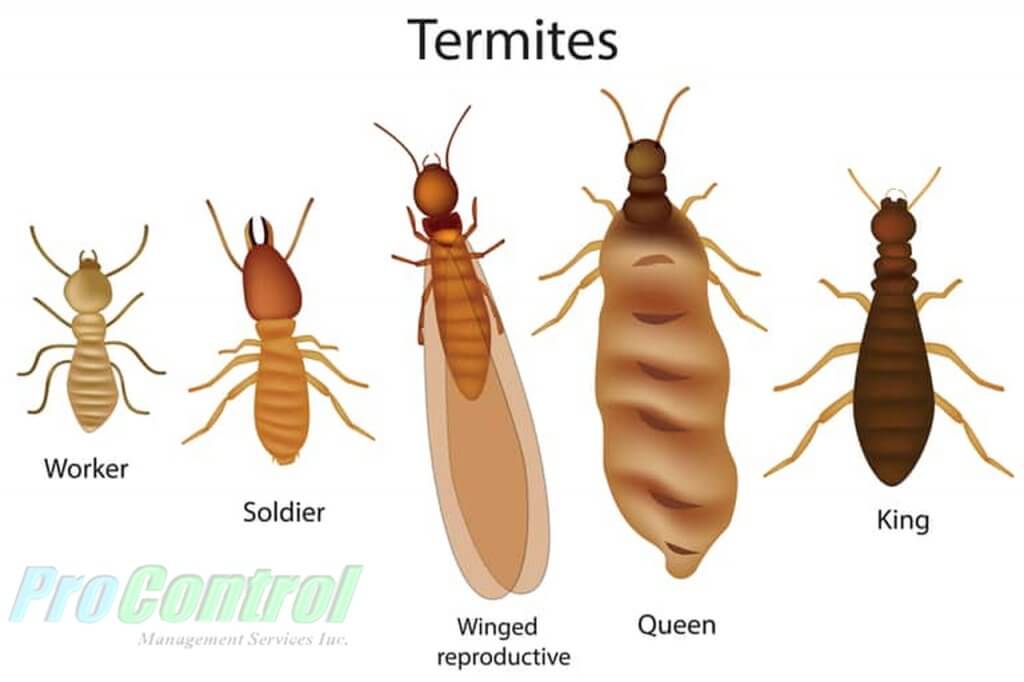
- Workers: These are the most numerous members of the colony. They are typically cream-colored or translucent, soft-bodied, and about 1/8 to 1/4 inch long. They are blind and do not have wings.
- Soldiers: Slightly larger than workers, soldiers have darker, rectangular-shaped heads with powerful jaws designed for defense. They are also wingless.
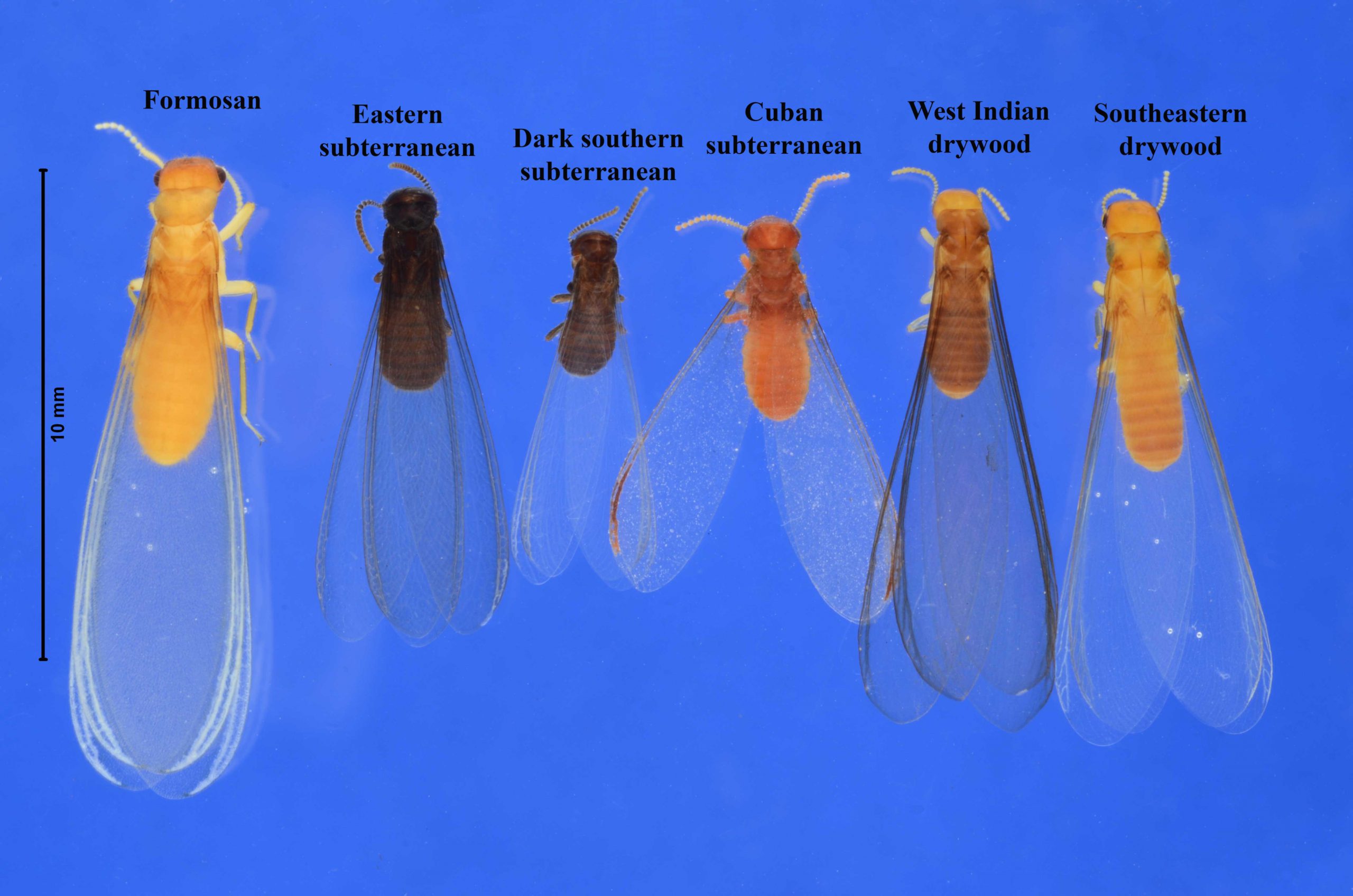
- Swarmers (Alates): These are the reproductive termites, appearing during mating flights. They are dark brown or black, about 3/8 inch long (including wings), and have two pairs of wings that are equal in size and shape, often appearing translucent or slightly opaque. They shed their wings after swarming, leaving them behind as a tell-tale sign.
- Signs of Infestation: The most distinctive sign of subterranean termites is their mud tubes. These pencil-sized tunnels made of soil and wood particles are typically found on foundations, walls, or wooden structures, indicating their protected travel routes. Damaged wood often appears hollowed out along the grain, with mud packed into the galleries.
- Relevance for Tourists: If you’re staying in a ground-floor accommodation or exploring older wooden structures, look out for these mud tubes on exterior walls, doorframes, or within basements or crawl spaces. These termites thrive in contact with soil, so properties with wooden elements close to the ground are most susceptible.
Drywood Termites: Tiny Invaders of Wooden Structures
Unlike their subterranean cousins, drywood termites do not require contact with the soil. They infest dry wood directly and get all their moisture from the wood they consume. This makes them a threat to furniture, wooden frames, and structural timbers in any part of a building, including upper floors.
- Appearance:
- Workers: Drywood termite workers are less distinct, often seen as nymphs. They are cream-colored and similar in size to subterranean workers.
- Soldiers: They have larger, reddish-brown heads and strong mandibles, often with a more cylindrical body than subterranean soldiers.
- Swarmers (Alates): Drywood swarmers are usually reddish-brown, larger than subterranean swarmers (up to 1/2 inch long), and also have two pairs of wings of equal size, often with a darker vein pattern. They too shed their wings after swarming.
- Signs of Infestation: The most common sign of drywood termites is their fecal pellets, known as “frass.” These are tiny (less than 1mm), hard, hexagonal-shaped pellets that termites push out of “kick-out holes” in infested wood. Frass often accumulates in small piles below infested areas and can vary in color depending on the wood consumed. You might also find kick-out holes themselves, which are very small and often plugged with a fecal plug.
- Relevance for Tourists: Keep an eye out for frass on windowsills, floors, or under wooden furniture, picture frames, or decorative elements in your accommodation. As they infest dry wood directly, they can affect any wooden item, making them relevant for any type of property, from a beachfront condo to an historic inn.
Formosan Termites: An Aggressive Threat
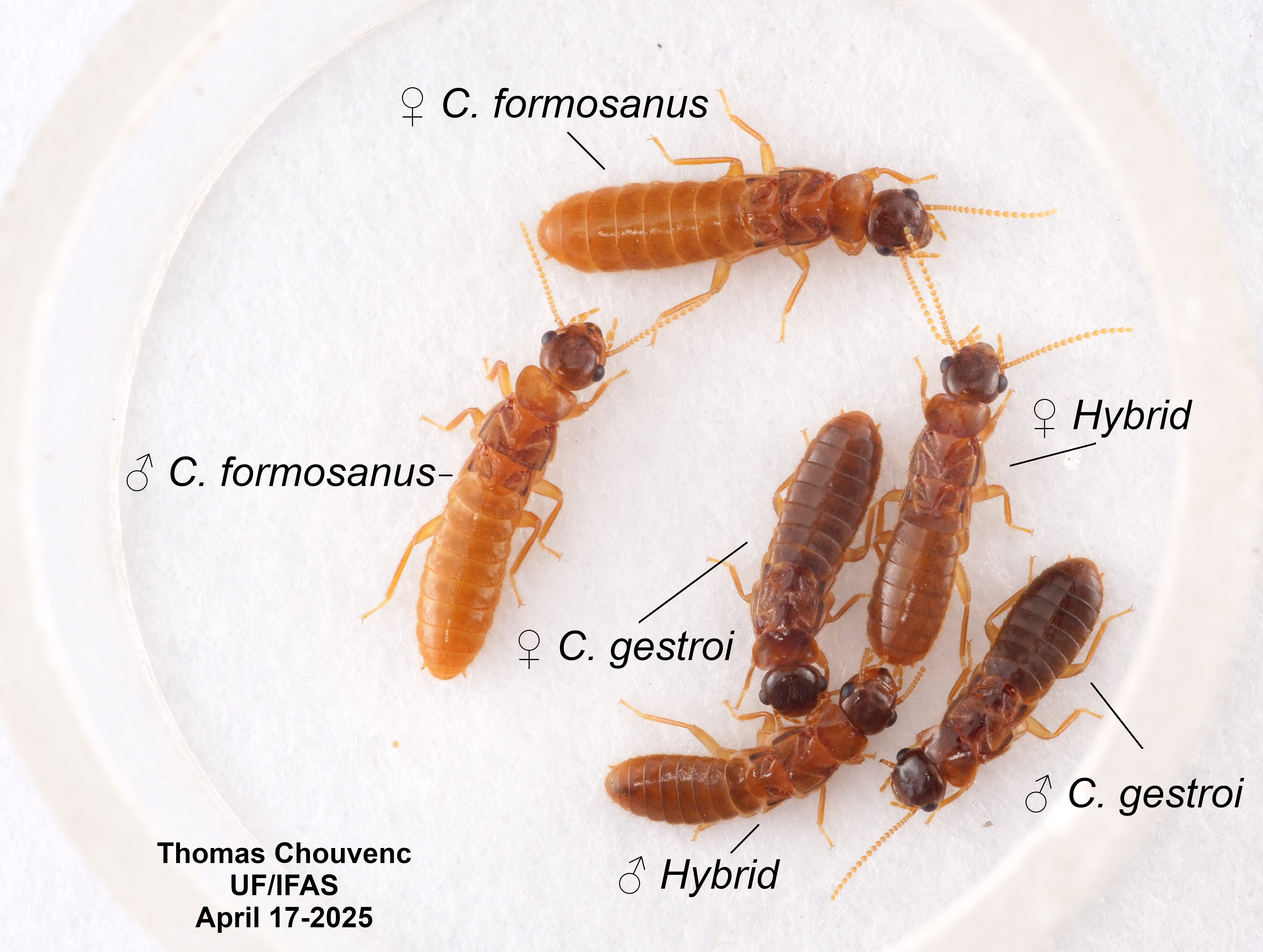
The Formosan termite is an invasive species, believed to have arrived in Florida after World War II. They are a type of subterranean termite but are far more aggressive and build larger colonies, capable of causing extensive damage more rapidly than native subterranean species.
- Appearance:
- Workers: Similar to other subterranean workers, cream-colored and soft-bodied.
- Soldiers: Their heads are distinctly oval or tear-drop shaped, and they are typically more aggressive, emitting a defensive secretion. They are light brown.
- Swarmers (Alates): Formosan swarmers are yellowish-brown, larger than native subterranean swarmers (about 1/2 to 5/8 inch long), and have hairy wings. They are strongly attracted to light and often swarm in massive numbers, typically from May to July.
- Signs of Infestation: Besides larger mud tubes, Formosan termites can construct carton nests within walls or voids, made of soil, wood, and saliva. These nests can be quite large and are a clear indication of a significant infestation. Damaged wood will also show the characteristic hollowing.
- Relevance for Tourists: While less common than general subterranean termites, their aggressive nature means early reporting is even more critical. If you see very large swarms, especially at night, or unusually robust mud tubes, particularly during the late spring/early summer, it’s prudent to be aware of the possibility of Formosan termites.
Beyond Appearance: Understanding Termite Behavior and Impact on Florida Properties
Beyond just recognizing the physical characteristics of termites, understanding their behavior, particularly swarming and how they differ from ants, is another valuable tip for visitors to Florida. This knowledge can prevent misidentification and unnecessary concern or, conversely, ensure prompt action when needed.
Swarming Season: What to Expect
Termite swarming is a natural part of their reproductive cycle, where winged reproductives (alates) leave the colony to establish new ones. In Florida, swarming seasons vary by species, but they often occur during warmer, humid periods, especially after rain. Subterranean termites typically swarm in late winter and spring during the day, while drywood termites often swarm in late summer and fall, usually late afternoon or evening. Formosan termites, as mentioned, usually swarm from May to July, often at dusk and into the night, attracted to lights.
Encountering a swarm can be startling for a tourist. It’s crucial to know that seeing winged insects does not automatically mean an infestation in your immediate accommodation. Swarmers are simply looking for new places to colonize. However, finding discarded wings, especially in piles on windowsills or floors, is a strong indicator that an existing colony is nearby or within the structure.
Distinguishing Termites from Ants: A Crucial Skill for Florida Visitors
One of the most common mistakes visitors make is confusing winged termites with winged ants, which can also swarm. Both can look similar at a glance, but there are three key visual differences that can help you distinguish between them:
- Waist: Ants have a very narrow, constricted “waist” between their thorax and abdomen, like a tiny hourglass figure. Termites have a broad, thick waist, making their body appear more uniform in width.
- Antennae: Ants have elbowed (bent) antennae. Termites have straight, beaded antennae.
- Wings: Winged ants have two pairs of wings that are unequal in size (the front pair is longer than the back pair). Winged termites have two pairs of wings that are roughly equal in size and length. Termite wings are also typically twice the length of their body.
Knowing these distinctions is a practical tip that can save you a call to property management or help you provide accurate information if you do need to report a sighting.
What to Do If You Suspect Termites During Your Florida Stay
If you encounter what you suspect are termites during your Florida visit, don’t panic. Your role as a tourist is simply to observe and report.
Immediate Steps for Tourists
- Do Not Disturb: Resist the urge to poke at mud tubes or try to remove frass. Disturbing the insects can make identification and treatment more difficult for professionals.
- Document: Take clear photos or videos of the suspected termites, mud tubes, frass, or damaged wood. Note the exact location and time of discovery.
- Inform Property Management/Owner: Immediately notify the hotel front desk, your vacation rental owner, or property manager. Provide them with your observations and documentation. They are responsible for addressing pest issues and will have established protocols with professional pest control services.
Prevention Tips for Vacation Rentals and Long-Term Stays
While you can’t control the structural integrity of your accommodation, you can take a few proactive steps, especially for longer stays or if you’re bringing your own belongings:
- Inspect Upon Arrival: Do a quick visual check of your accommodation upon arrival, especially in bathrooms, kitchens, and around windows and doors, for any signs mentioned above.
- Keep Luggage Sealed: Store luggage off the floor and keep it sealed when not in use to prevent any hitchhikers.
- Be Mindful of Wooden Items: If you purchase wooden souvenirs or antique furniture in Florida, inspect them thoroughly for any signs of drywood termites before bringing them home.
- Maintain Cleanliness: While not directly preventing termites, general cleanliness helps in easily spotting any frass or discarded wings.
By understanding what termites in Florida look like and knowing what to do if you encounter them, you equip yourself with valuable local knowledge. This practical tip ensures that your focus remains on enjoying the incredible attractions and experiences Florida has to offer, rather than being overshadowed by unexpected pest concerns. A little awareness goes a long way in ensuring your Sunshine State getaway is as perfect as you envisioned.
LifeOutOfTheBox is a participant in the Amazon Services LLC Associates Program, an affiliate advertising program designed to provide a means for sites to earn advertising fees by advertising and linking to Amazon.com. Amazon, the Amazon logo, AmazonSupply, and the AmazonSupply logo are trademarks of Amazon.com, Inc. or its affiliates. As an Amazon Associate we earn affiliate commissions from qualifying purchases.