
Navigating the administrative requirements of a new state can be daunting, but securing proper identification is a cornerstone of establishing your life, whether you’re a new resident or a long-term visitor in the Sunshine State. A Florida ID card or driver’s license is more than just a piece of plastic; it’s your key to countless daily activities, from opening a bank account and verifying your age to accessing local services and even voting. Understanding the specific documents required by the Florida Department of Highway Safety and Motor Vehicles (FLHSMV) is crucial for a smooth and efficient application process. This comprehensive guide aims to demystify the requirements, ensuring you arrive at the DMV office fully prepared and confident.
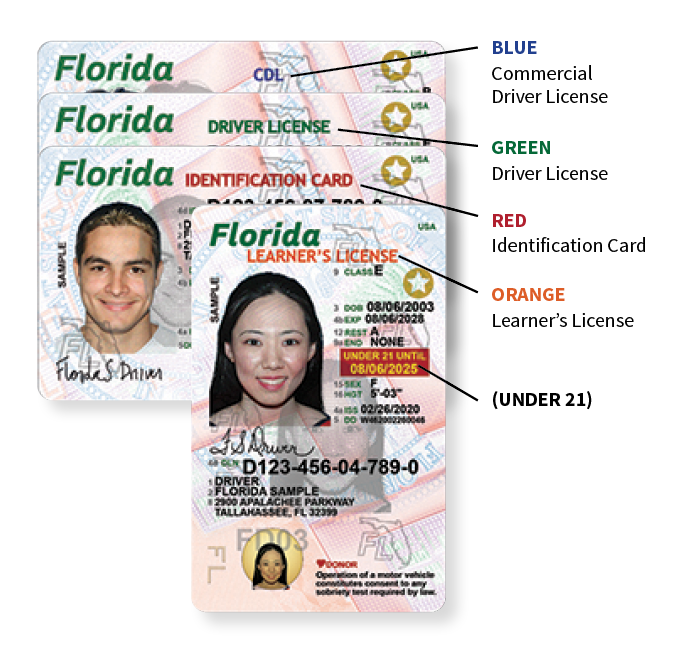
Understanding Florida ID Options: Driver’s License vs. Identification Card
Before gathering your documents, it’s essential to understand the type of identification you need. Florida offers two primary forms of state-issued identification: a driver’s license and a state identification card. While both serve as official proof of identity, their functions differ significantly.
Who Needs a Florida ID?
Anyone establishing residency in Florida will eventually need a state-issued ID. This includes individuals moving from another state, those who have recently turned 16 and wish to drive, or non-driving residents who require official proof of identity. Tourists typically do not need a Florida ID for short visits, as their home country’s passport or driver’s license usually suffices. However, for those planning extended stays or aiming to integrate more fully into the local lifestyle, a Florida ID becomes indispensable.
Key Differences and Benefits
The most apparent difference is that a driver’s license grants you the legal privilege to operate a motor vehicle on Florida roads, provided you pass the necessary tests. A state identification card, conversely, serves solely as proof of identity and age for non-drivers. Both types of cards bear your photo, full name, address, and date of birth, making them equally valid for identity verification in most situations not involving driving. Choosing between the two depends entirely on your need to drive.
The REAL ID Act
It’s also important to be aware of the REAL ID Act, a federal law that establishes minimum security standards for state-issued driver’s licenses and identification cards. All Florida driver’s licenses and ID cards issued since January 2010 are REAL ID Act compliant. This means they are accepted for federal purposes, such as boarding domestic flights and entering federal facilities. When applying for your Florida ID, ensure you meet the requirements for a REAL ID Act compliant card, as this will prevent future inconvenience for air travel and other federal interactions. The documents you provide during your application will directly contribute to your card’s REAL ID Act compliance.
Primary Document Requirements: Proof of Identity
The bedrock of your Florida ID application is establishing your identity. The FLHSMV requires original documents (or certified copies) to verify who you are, ensuring accuracy and preventing fraud. These documents are categorized into primary and secondary proofs.
Proving Your Identity
To prove your identity, you must present one primary document from an approved list. The most common and widely accepted primary documents include:
- Original or Certified U.S. Birth Certificate: This must be issued by a state, territory, or district of the U.S. and bear an official seal. Hospital birth certificates, photocopies, or abstracts are generally not accepted.
- Valid U.S. Passport or Passport Card: An unexpired U.S. passport is an excellent form of primary identification.
- Consular Report of Birth Abroad (CRBA): Issued by the U.S. Department of State for U.S. citizens born abroad.
- Certificate of Naturalization (Form N-550 or N-570) or Certificate of Citizenship (Form N-560 or N-561): For naturalized citizens.
- Valid Alien Registration Card (Green Card, Form I-551): For lawful permanent residents.
- Employment Authorization Card (Form I-766): For non-citizens authorized to work in the U.S.
- Non-immigrant Visa with supporting I-94 (if applicable): For foreign nationals residing temporarily in Florida.
It is imperative that the name on your primary identity document matches your current legal name. Any discrepancies will require additional documentation, as detailed below.
Acceptable Secondary Identification
While usually not a standalone requirement for new IDs if a strong primary document is presented, secondary identification documents can be crucial in specific scenarios, such as verifying a name change or supporting other aspects of your application. Examples include:
- Social Security card (though primarily for SSN verification, not identity proof)
- Marriage certificate (to link maiden name to married name)
- Divorce decree (to revert to a maiden name)
- School ID card with photo (for minors)
- Employer ID card with photo
- Military ID card
It’s always a good practice to bring more documents than you think you’ll need, especially if there’s any ambiguity in your primary identification.
Name Consistency
A critical aspect of document verification is name consistency. The name on all your supporting documents, particularly your proof of identity, Social Security card, and proof of residential address, must align with the name you wish to appear on your Florida ID. If your name has changed due to marriage, divorce, or a court order, you must provide certified legal documents that demonstrate this change. Without these, the FLHSMV cannot process your application with the new name. This is a common pitfall for many applicants, so double-check all names before your appointment.
Establishing Residency: Proof of Address
Beyond proving your identity, you must demonstrate that you are a bona fide resident of Florida. The FLHSMV requires two different documents to verify your residential address. These cannot be from the same source.
Two Proofs Required
The requirement for two distinct documents helps prevent fraudulent applications and confirms your current physical address within Florida. Both documents must show your name and the complete residential address. P.O. boxes are not acceptable for proof of residency; you must provide a physical street address.
Common Documents
Here are some of the most commonly accepted documents for proof of residential address:
- Utility Bill: Electric, water, gas, or landline phone bill issued within the last two months. Cellular phone bills are generally not accepted.
- Lease Agreement or Mortgage Statement: A current residential lease agreement, mortgage statement, or deed for your Florida property.
- Vehicle Registration or Title: A current Florida vehicle registration or title showing your name and address.
- Financial Statements: A bank statement, credit card statement, or investment statement issued within the last two months.
- Mail from Government Agencies: Official mail from a federal, state, county, or city government agency (e.g., property tax bill, social security statement, selective service card) received within the last two months.
- Insurance Policies: Current automobile, homeowner’s, or renter’s insurance policy.
- School Documents: Transcripts or report cards from a Florida school (for minors).
Ensure that the documents are recent, typically within the last two months, unless it’s a long-term document like a lease or deed. Digital copies printed at home may be accepted if they clearly show the source and date.

Special Cases
For individuals in unique living situations, the FLHSMV offers provisions:
- Minors Living with Parents: A minor can prove residency through their parents’ Florida driver’s license/ID card, along with a certified birth certificate or court document showing the relationship. The parents must sign a “Certification of Address” form, and the minor must provide at least one additional proof of residency (e.g., school record).
- Homeless Individuals: A letter from a shelter, social service agency, or government agency verifying the individual’s mailing address can sometimes be accepted. It’s best to contact the FLHSMV directly for specific guidance in these situations.
Social Security and Name Changes: Essential Supporting Documents
Beyond identity and residency, the FLHSMV requires verification of your Social Security Number (SSN) and specific documentation for any name changes.
Social Security Number
All applicants for a Florida driver’s license or ID card are required to provide proof of their SSN. This can be satisfied by presenting your original Social Security card. If you do not have your card, other documents showing your SSN, such as a W-2 form, pay stub, or a 1099 form, may be accepted. The important point is that your full SSN must be visible.
For individuals who are not eligible for an SSN (e.g., certain foreign nationals), you must provide a letter from the Social Security Administration stating your ineligibility. This ensures compliance with federal reporting requirements.
Documenting Name Changes
As mentioned earlier, if your current legal name differs from the name on your primary identity document, you must provide certified legal documents to bridge the gap. Each name change requires a separate, certified document.
- Marriage: A certified marriage certificate is required to change your maiden name to your married name.
- Divorce: A certified divorce decree is needed if you wish to revert to your maiden name or any other name specified in the decree.
- Court Order: Any other legal name change must be supported by a certified court order.
These documents must be originals or certified copies; photocopies will not be accepted. Ensure the documents clearly show the link between your previous name and your current legal name.
Foreign Nationals
Non-U.S. citizens have additional requirements depending on their immigration status. Generally, you will need to present:
- Proof of Identity: Valid foreign passport.
- Proof of Legal Presence: Valid visa (if applicable) and the most recent I-94 (Arrival/Departure Record).
- Proof of Employment Authorization: Employment Authorization Document (EAD, Form I-766), if applicable.
- Social Security Ineligibility Letter: If you do not have an SSN.
The FLHSMV will verify your legal presence with the U.S. Department of Homeland Security (DHS), which can sometimes take longer. It’s advisable to have all related immigration documents readily accessible.
The Application Process: What to Expect at the DMV
Once you’ve meticulously gathered all your required documents, the final step is to visit an FLHSMV driver’s license service center or a county tax collector office that provides driver’s license services. Knowing what to expect can ease any anxiety.
Scheduling Your Appointment
While some locations accept walk-ins, it is highly recommended to schedule an appointment online through the FLHSMV website. Appointments reduce wait times significantly and allow you to plan your visit more efficiently. Select the “Make an Appointment” option and choose the service you require.
Fees and Payment
There are standard fees associated with obtaining a Florida ID card or driver’s license. These fees can vary slightly and are subject to change, so it’s wise to check the FLHSMV website for the most current information. Typically, fees can be paid by cash, check, or credit/debit card. Be prepared for your chosen payment method.
What Happens at the Office
Upon arrival, you will check in for your appointment. A representative will review your documents to ensure you have everything needed. You will then:
- Present Documents: Hand over all your original or certified documents for verification.
- Complete Application: Fill out any necessary application forms.
- Vision Test (for Driver’s License): If applying for a driver’s license, you will undergo a vision screening.
- Photo: Your photograph will be taken for the ID card.
- Signature: You will provide a digital signature.
The staff will scan your documents and return the originals to you. They may keep copies for their records.
Receiving Your ID
In most cases, you will receive a temporary paper Florida ID or driver’s license immediately. Your permanent, plastic card will then be mailed to your residential address within a few weeks. It’s important to verify that the address on your application is correct to ensure timely delivery. The temporary ID serves as valid proof of identity until your permanent card arrives.

Preparing for Success
The key to a hassle-free experience is preparation. Create a checklist of all required documents and cross-reference it with the official FLHSMV website. Gather all original or certified copies well in advance of your appointment. Double-check that names match, addresses are current, and documents are not expired. If you have any doubts about a particular document, it’s better to bring an alternative or contact the FLHSMV directly for clarification.
Obtaining your Florida ID is a vital step in embracing your lifestyle in the Sunshine State. By understanding the requirements and preparing diligently, you can ensure a smooth process and quickly acquire the official identification necessary for daily life and beyond.
LifeOutOfTheBox is a participant in the Amazon Services LLC Associates Program, an affiliate advertising program designed to provide a means for sites to earn advertising fees by advertising and linking to Amazon.com. Amazon, the Amazon logo, AmazonSupply, and the AmazonSupply logo are trademarks of Amazon.com, Inc. or its affiliates. As an Amazon Associate we earn affiliate commissions from qualifying purchases.