
Understanding the minimum wage in California, particularly in a dynamic metropolis like Los Angeles, is far more than just knowing a number. For anyone contemplating a move, considering a long-term stay, or even just working within the city’s vibrant economy, this figure forms the bedrock of financial planning and significantly shapes the lifestyle one can achieve. In a region celebrated for its glamour and innovation, but equally known for its high cost of living, the minimum wage is a critical piece of information for budgeting, career choices, and ultimately, the quality of life enjoyed by countless residents. This article delves into the specifics of minimum wage regulations in Los Angeles, exploring how these policies are set, their current status, and the profound implications they have for the everyday lifestyle of those who call this iconic city home.
Understanding California’s Minimum Wage Landscape
California stands out in the United States for its progressive approach to labor laws, including its robust minimum wage policies. Unlike many states that adhere strictly to the federal minimum wage, California has historically set its own, higher standard, reflecting a commitment to ensuring a more livable wage for its workforce. This two-tiered system—state and local—is crucial for grasping the full picture of earning potential in areas like Los Angeles.
State-Mandated Minimum Wage
The California statewide minimum wage is a foundational benchmark for all employers operating within the state. This rate is subject to annual adjustments, typically taking effect on January 1st, and is often tied to inflation or a pre-determined schedule of increases. The intent behind these consistent raises is to help workers keep pace with the rising cost of living across the state, ensuring that even entry-level positions can offer a more sustainable income. These state-mandated increases are legislated well in advance, providing businesses and employees with predictability and allowing for forward-looking financial planning. For many years, California has been on a trajectory to reach and then maintain a higher minimum wage compared to the federal standard, underscoring its commitment to worker welfare.
Local Ordinances: The Los Angeles Factor
While the state sets a baseline, California law also empowers individual cities and counties to establish their own minimum wage ordinances, provided they are equal to or higher than the state rate. This is where Los Angeles enters the picture as a prime example of a locality taking proactive steps to address the unique economic realities of its residents. The City of Los Angeles recognized that the statewide minimum wage, while helpful, might not adequately cover the significantly higher cost of living within its bustling urban core. Consequently, the city council has passed its own ordinances, creating a distinct minimum wage schedule that typically outpaces the state’s rate. This localized approach acknowledges that the cost of housing, transportation, and daily necessities in Los Angeles is often far greater than in less populated or less expensive areas of California, necessitating a higher earning floor for a truly sustainable lifestyle.
The Specifics: Minimum Wage in Los Angeles City and County
Navigating the minimum wage landscape in Los Angeles requires a clear understanding of where one works, as rates can vary between the incorporated city limits and the broader Los Angeles County. This distinction is critical for both employers calculating payroll and employees planning their personal finances and lifestyle budgets.
Current Rates for Los Angeles City
The City of Los Angeles has consistently pushed for a higher minimum wage than the state average, implementing its own schedule of increases. These rates typically apply to employees who perform at least two hours of work within the geographic boundaries of the City of Los Angeles in a given week. It’s important to note that the city’s ordinance often simplifies the structure, applying a uniform rate regardless of employer size, though historical variations sometimes existed. As of recent updates, the minimum wage in the City of Los Angeles typically stands significantly above the state minimum, often reaching well over $16 per hour, reflecting the city’s commitment to addressing its high cost of living. These rates are usually adjusted annually, often on July 1st, providing a mid-year increase that accounts for ongoing economic shifts. Individuals working in prominent areas like Hollywood, Downtown Los Angeles, or Venice Beach would generally fall under this city ordinance.
Los Angeles County’s Approach
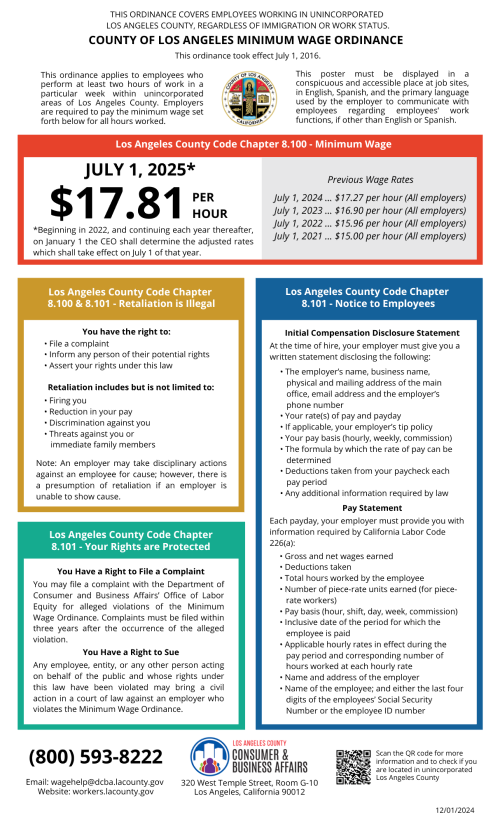
Beyond the city limits, Los Angeles County also maintains its own minimum wage ordinance for unincorporated areas within its jurisdiction. This means that if an employee works in a community that is part of Los Angeles County but is not an incorporated city with its own minimum wage (like Long Beach or Pasadena, which have their own rates), they would fall under the county’s standard. The Los Angeles County minimum wage generally mirrors or closely aligns with the City of Los Angeles rate, also seeing annual adjustments, typically on July 1st. This comprehensive approach ensures that workers across the vast metropolitan area benefit from enhanced wage protections. It’s crucial for both job seekers and businesses to verify which specific jurisdiction’s minimum wage applies to their particular location to ensure compliance and accurate financial planning.
Important Considerations for Employers and Employees
Beyond the base hourly rate, both employers and employees in Los Angeles must be aware of additional labor protections. California law, often supplemented by local ordinances, mandates paid sick leave, specific break requirements, and often premium pay for certain types of work or overtime. Certain industries, such as hotels in specific areas or healthcare, might have even higher specific minimum wage rates or benefit requirements. Furthermore, robust enforcement mechanisms are in place at both the city and state levels to ensure compliance. For those navigating the job market or managing staff in Los Angeles, understanding these nuances is not just about legal obligation but also about fostering a fair and sustainable working environment, which directly impacts the daily lifestyle and financial stability of the workforce.
Lifestyle Implications: Budgeting for Life in Los Angeles
Earning minimum wage in Los Angeles requires meticulous financial planning and a clear understanding of the city’s high cost of living. While the local minimum wage is among the highest in the United States, the economic realities of this vibrant city mean that individuals on this income level face significant challenges in achieving a comfortable and sustainable lifestyle.
Cost of Living vs. Minimum Wage
Los Angeles consistently ranks as one of the most expensive major cities globally. The most substantial challenge for anyone earning minimum wage is undoubtedly housing. Rent for even a modest studio apartment can consume a disproportionately large portion of a minimum wage earner’s income, making independent living exceptionally difficult. Beyond rent, the costs of utilities, groceries, transportation (especially if relying on a car given the city’s sprawling nature), and healthcare can quickly add up. Discretionary spending, which contributes to a quality lifestyle through entertainment, dining out, or cultural experiences, becomes a luxury that requires careful budgeting. Understanding this stark contrast between earning potential and expenditure is crucial for anyone planning their life or an extended stay in Los Angeles, as it shapes everyday decisions and long-term financial goals.
The Pursuit of a Sustainable Lifestyle
Despite the challenges, many individuals successfully build a life in Los Angeles on a minimum wage or slightly above. This often involves strategic lifestyle choices and diligent budgeting. Sharing accommodations, often with multiple roommates, is a common strategy to mitigate high housing costs. Utilizing Los Angeles’ increasingly robust public transportation system can reduce expenses associated with car ownership, insurance, and fuel. Smart grocery shopping, cooking at home, and seeking out free or low-cost recreational activities (like hiking in local parks or enjoying the city’s numerous beaches) are also vital components of a budget-conscious lifestyle. For many, earning minimum wage in Los Angeles is a stepping stone, often supplemented by additional work, side gigs, or educational pursuits aimed at increasing future earning potential. The “dream” Los Angeles lifestyle of luxury often requires significant financial resources, but a rich, culturally fulfilling life is still accessible through careful planning and resourcefulness.
Impact on Service Industries and Hospitality
The higher minimum wage in Los Angeles also has a direct impact on the service and hospitality sectors, which are cornerstones of the city’s economy and lifestyle. Businesses in these sectors, from cafes in Silver Lake to hotels near LAX, bear increased labor costs. While this can lead to slightly higher prices for consumers on goods and services, it aims to ensure that the workers providing these essential services can afford to live in the city they serve. For residents and visitors alike, this translates into a dynamic where the cost of a meal, a coffee, or a local experience reflects the city’s commitment to paying a living wage. Understanding this economic interplay provides insight into the local economy and offers a more complete picture of the value behind the services one enjoys while experiencing the Los Angeles lifestyle.
Future Outlook and Economic Dynamics
The minimum wage in California and Los Angeles is not a static figure but an evolving policy reflecting ongoing economic conditions and societal priorities. Its trajectory continues to shape the city’s unique lifestyle and economic landscape.
Scheduled Increases and Policy Debates
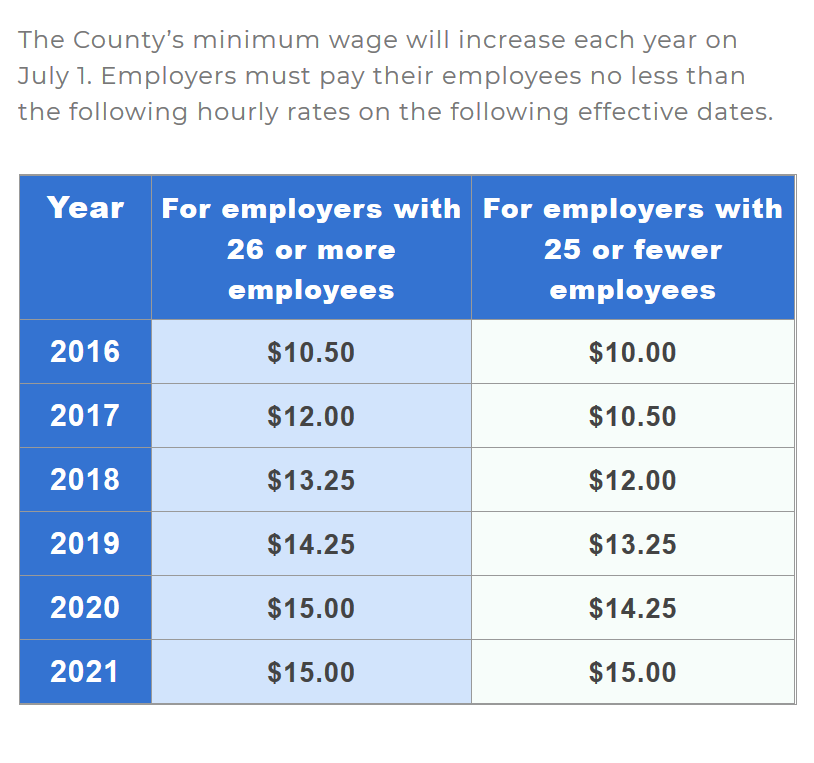
Both California and the City of Los Angeles typically have pre-scheduled annual increases for their minimum wage rates, often linked to inflation or a predetermined pathway to a higher target wage. These regular adjustments are designed to help maintain purchasing power for workers in the face of rising living costs. However, minimum wage policies are also a constant subject of debate. Proponents argue that higher wages reduce poverty, stimulate local economies, and improve worker morale and productivity, contributing to a more equitable lifestyle for all. Opponents often raise concerns about potential job losses, increased costs for small businesses, and inflationary pressures. These ongoing discussions by policymakers, labor unions, and business groups will continue to influence future adjustments, ensuring the minimum wage remains a dynamic component of Los Angeles’ economic and social fabric.
Broader Economic Context
The minimum wage is just one piece of the intricate economic puzzle in Los Angeles. Its impact ripples through various sectors, affecting consumer spending, business investment, and employment levels. A higher minimum wage contributes to a stronger local consumer base, as workers have more disposable income to spend on goods and services within the city. This can invigorate local businesses, from the vibrant culinary scene in Koreatown to boutique shops in Downtown Los Angeles. Simultaneously, businesses must adapt by optimizing operations, enhancing productivity, or adjusting pricing. The interplay of these factors ultimately shapes the character of the city’s economy and, by extension, the lifestyle opportunities available to its residents. Understanding the minimum wage in this broader context reveals its fundamental role in defining the economic realities and social equity that underpin life in Los Angeles.

Conclusion
The question “What Is The Minimum Wage In California Los Angeles?” opens the door to a deeper understanding of financial realities and lifestyle choices in one of the world’s most iconic cities. For anyone considering living, working, or even undertaking an extended visit, knowing the specific state and local minimum wage rates is fundamental for accurate financial planning and budgeting. While Los Angeles offers one of the highest minimum wages in the United States, its equally high cost of living means that strategic financial management and resourceful lifestyle choices are paramount for sustainability. From understanding local ordinances to appreciating the broader economic impacts, grasping the intricacies of the minimum wage empowers individuals to navigate the Los Angeles landscape with greater insight, ensuring their pursuit of the city’s vibrant lifestyle is built on a solid financial foundation. Always consult official city and state labor department websites for the most current and precise minimum wage figures relevant to your specific location and industry.
LifeOutOfTheBox is a participant in the Amazon Services LLC Associates Program, an affiliate advertising program designed to provide a means for sites to earn advertising fees by advertising and linking to Amazon.com. Amazon, the Amazon logo, AmazonSupply, and the AmazonSupply logo are trademarks of Amazon.com, Inc. or its affiliates. As an Amazon Associate we earn affiliate commissions from qualifying purchases.