
The haunting melody and enigmatic lyrics of the Eagles’ iconic song, “Hotel California,” have captivated audiences for decades, sparking countless debates and interpretations about its true meaning. Released in 1976, this masterpiece transcends mere music, evolving into a cultural touchstone that continues to resonate with new generations. On the surface, it tells a surreal story of a weary traveler’s unsettling stay at a mysterious hotel in the California desert. Yet, beneath the alluring guitar riffs and Don Henley’s evocative vocals lies a rich tapestry of social commentary, allegories, and metaphors that speak to deeper human experiences, many of which can be interestingly paralleled with the world of travel, tourism, and lifestyle.
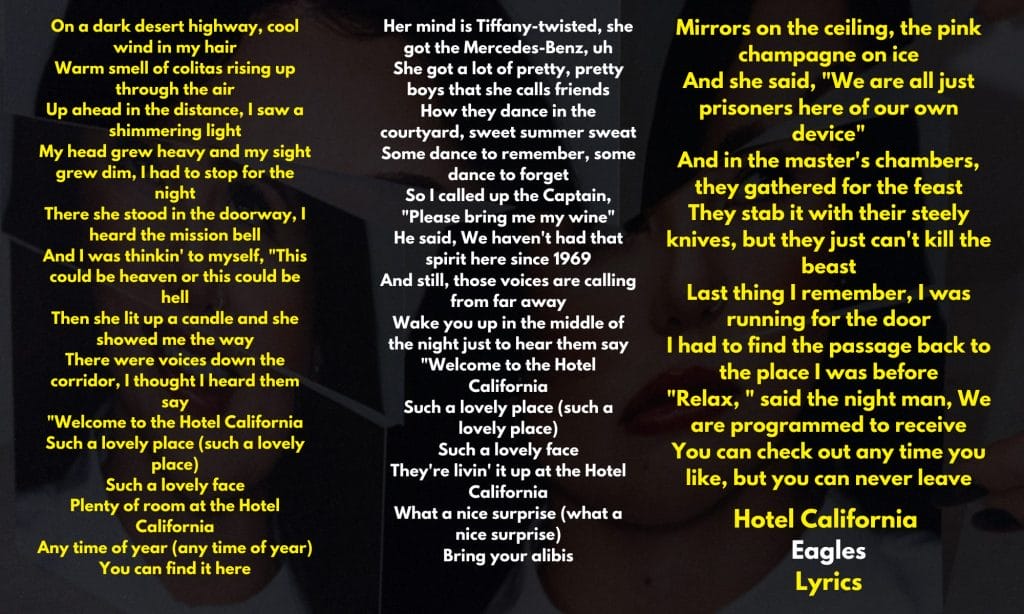
From the shimmering facade of luxury accommodations to the intoxicating allure of famous destinations, the themes woven into “Hotel California” — excess, disillusionment, the pursuit of paradise, and the feeling of being trapped by one’s desires — offer a fascinating lens through which to examine our own relationship with travel and the quest for the ultimate experience. This article delves into the most prominent interpretations of the song’s cryptic verses, exploring how they reflect not just the dark underbelly of the American Dream, but also the intoxicating and sometimes disorienting aspects of modern tourism and the pursuit of certain lifestyles.
Unpacking the Enigma: Core Interpretations of the Lyrics
The genius of “Hotel California” lies in its ambiguity, allowing listeners to project their own experiences and understanding onto its narrative. While the Eagles themselves have offered various explanations over the years, often asserting it’s a commentary on the excesses of the music industry and the darker side of the American Dream, the lyrics lend themselves to several compelling interpretations that intertwine with universal themes of attraction and entrapment.
The Allure and Disillusionment of the American Dream
One of the most widely accepted interpretations positions “Hotel California” as a scathing critique of the American Dream, particularly as it manifested in Los Angeles and Hollywood during the 1970s. The song paints a vivid picture of a seemingly idyllic place that promises fame, fortune, and pleasure, only to reveal a hollow, decadent reality. The “warm smell of colitas, rising up through the air” and the “dark desert highway” initially suggest a sense of freedom and adventure, a quintessential road trip through the vast United States. However, this quickly gives way to a sense of unease. The “Hotel California” itself becomes a metaphor for the golden cage of superficiality and excess that defined a particular era. People flock to destinations like Hollywood, seeking the glamour advertised in films and magazines, much like a traveler arriving at a highly-touted resort. They are drawn by the promise of luxury and an enhanced lifestyle, often investing heavily in the journey, both financially and emotionally.
Yet, just as the traveler in the song finds it impossible to leave, many who pursue the glittering dream in famous cities or exclusive enclaves discover that the reality is far from the fantasy. The pursuit of perpetual youth, fleeting fame, and material wealth can lead to a spiritual emptiness, a feeling of being perpetually stuck in a cycle of consumption and desire. The line “We are programmed to receive, you can check out any time you like, but you can never leave!” encapsulates this perfectly, suggesting an addictive quality to the pursuit of this dream, where the physical ability to depart is overshadowed by a psychological inability to escape its grasp. This interpretation warns against the seductive power of superficial allure, a critical lesson for any traveler enchanted by polished brochures and curated social media feeds that often obscure the deeper, more complex realities of a destination.
A Metaphor for Addiction and Excess
Beyond the broader American Dream, many scholars and fans interpret “Hotel California” as a powerful allegory for addiction, particularly to drugs or destructive lifestyles. The “mystic shimmering light” and the “warm smell of colitas” can be seen as the initial high, the intoxicating draw of a substance or experience. The characters encountered within the hotel – the “lovely women” and the “prison wine” – represent the seductive yet ultimately corrupting elements that fuel the addiction. The idea of being “captured” or “trapped” is central to the experience of addiction, where the individual feels powerless to break free, despite knowing the detrimental effects.
In the context of travel and lifestyle, this interpretation serves as a potent reminder of the potential for excess that can accompany certain journeys. Think of the allure of places renowned for their nightlife and indulgence, like Las Vegas or Ibiza, where the boundaries of moderation can easily blur. Travelers seeking an escape might find themselves in environments that encourage overindulgence, from lavish dining and endless drinks to gambling and other fleeting pleasures. While enjoyable in moderation, the relentless pursuit of such experiences can lead to a feeling of being caught in a loop, akin to the hotel where one can “check out any time you like, but you can never leave.” The feeling of being drained, financially or emotionally, after an excessive trip, leaving one yearning for a true escape but perhaps feeling unable to fully detach from the memory or the desire for repeat indulgence, mirrors the song’s unsettling message.
Critiquing the Music Industry
The Eagles, having experienced the meteoric rise to fame in Los Angeles, were uniquely positioned to comment on the music industry’s darker facets. From this perspective, the “Hotel California” symbolizes the music business itself – a seemingly glamorous and welcoming world that promises stardom and riches, but often entraps artists in contracts, endless tours, and the pressures of maintaining a public image. The “master” of the house could be a record label executive, and the “prison wine” refers to the deals and obligations that bind musicians.
While less directly related to leisure travel, this interpretation still offers parallels. Consider the journey of an aspiring artist traveling to a major music hub like Nashville or New York City in pursuit of their dreams. The initial excitement and promise mirror the traveler’s arrival at a dream destination. However, the realities of the industry—the competitive nature, the demanding schedules, the potential for exploitation—can quickly turn the dream into a struggle for survival, a feeling of being consumed by the very system designed to elevate them. This speaks to the broader idea that any pursuit of an idealized lifestyle, whether through creative endeavors or luxurious travel, can carry hidden costs and unexpected burdens that transform the journey from liberation into a form of gilded captivity.

Connecting the Song’s Themes to Modern Travel and Hospitality
The enduring power of “Hotel California” lies in its ability to transcend specific interpretations and touch upon universal human experiences. When viewed through the lens of travel, tourism, and modern accommodation trends, the song’s themes gain a fascinating contemporary relevance, highlighting the complex relationship we have with the places we visit and the lifestyles we aspire to.
The Allure of Luxury Hotels and Exclusive Resorts
Today’s travel landscape is saturated with images of opulent suites, breathtaking villas, and all-inclusive resorts that promise an escape from reality. From the Maldives to Dubai, these destinations meticulously craft an experience of unparalleled luxury, pampering guests with every conceivable amenity. Much like the “Hotel California,” they present an enticing facade – perfectly manicured grounds, infinity pools, gourmet dining, and attentive service. These establishments are designed to make guests feel special, offering a temporary kingdom where every desire is catered to. The guest checks in, perhaps after a long journey, seeking solace and indulgence, much like the weary traveler on the dark desert highway.
However, the song subtly hints at a potential downside to this manufactured paradise. While undeniably beautiful and comfortable, an overly curated environment can sometimes lead to a sense of detachment from the authentic culture of a destination. Guests might find themselves cocooned within a bubble, never truly experiencing the local life or confronting any challenges, thus hindering genuine connection and exploration. The very perfection of these settings can become monotonous, and the constant indulgence can, paradoxically, lead to a feeling of emptiness rather than true rejuvenation. The line “Mirrors on the ceiling, the pink champagne on ice” perfectly encapsulates the superficial glamour that, while initially dazzling, can feel isolating and ultimately unsatisfying if not balanced with genuine experience. Hotels like the historic Chateau Marmont or the Beverly Hills Hotel in Los Angeles, while iconic and luxurious, also carry with them stories of excess and the sometimes-confining nature of their own legendary status, echoing the mythical Hotel California.
The Concept of “Escape” and Its Pitfalls in Travel
Many travelers seek an “escape” from their daily routines, responsibilities, or even themselves. They venture to exotic locales like Bali or serene retreats, hoping to find a fresh perspective or simply to forget their troubles. “Hotel California” serves as a powerful cautionary tale about the pitfalls of such an escape, especially when it turns into a form of avoidance or self-deception. The song’s protagonist, initially drawn to the “lovely place” and its welcoming ambiance, eventually realizes that this escape has become an inescapable reality.
In modern tourism, this can manifest in various ways. For instance, chasing increasingly extravagant or remote destinations in search of an elusive feeling of happiness or fulfillment, only to find that internal issues persist regardless of the external scenery. Or, becoming so engrossed in the “vacation mode” — with its endless entertainment, food, and drink — that the return to ordinary life becomes jarring and difficult, creating a longing to return to the “golden cage.” The song reminds us that true freedom and peace come not from escaping reality, but from engaging with it mindfully. A truly enriching travel experience often involves moments of discomfort, cultural immersion, and self-reflection, rather than simply being whisked away into a frictionless, pre-packaged fantasy.
Destinations with a Dual Nature
Certain iconic destinations around the world possess a dual nature, much like the Hotel California. They are celebrated for their beauty, history, or vibrant energy, yet also carry an undercurrent of excess, commercialization, or a sense of lost authenticity. Consider cities like Paris, with its undeniable romantic charm, but also its bustling tourist traps and the occasional feeling of being overwhelmed by crowds. Or Rome, a city of unparalleled historical significance, which can also feel chaotic and, at times, exploitatively commercialized for tourists.
These places, much like the “Hotel California,” lure millions with their promises of unforgettable experiences and unique local culture. Yet, the sheer volume of tourism can sometimes transform them into something less genuine, where the “magic” is diluted by commercial interests and the constant influx of visitors. Travelers might find themselves caught in the superficial aspects of these destinations, unable to truly connect with the deeper essence that initially drew them. The song, therefore, encourages us to approach travel with an awareness of these complexities, to look beyond the immediate facade, and to seek out authentic experiences that truly enrich our understanding of a place and its people. It’s a reminder that even the most beautiful destinations can have a hidden side, and that a truly meaningful journey involves navigating both the light and the shadows.

The Enduring Legacy: A Metaphor for Travel and Life
“Hotel California” remains a powerful and resonant piece of art precisely because it taps into universal human experiences that are as relevant today as they were in the 1970s. It is, at its heart, a metaphor for the human condition – our desires, our pursuit of happiness, and the often-unforeseen consequences of our choices. The song critiques the illusion of endless pleasure and the seductive power of superficiality, themes that find a clear echo in our modern pursuit of travel and lifestyle goals.
For the contemporary traveler, the song serves as a profound reminder to engage with the world thoughtfully. It encourages us to look beyond the curated images and enticing promises of luxury accommodations and dream destinations. It challenges us to question what we truly seek when we travel: Is it genuine connection, cultural immersion, personal growth, or merely a fleeting escape from reality? By exploring the dark undertones of the Hotel California, we are invited to consider the potential for disillusionment when expectations are unrealistic, or when we allow ourselves to be consumed by excess rather than seeking balance and authenticity.
Ultimately, the Eagles’ masterpiece is a timeless cautionary tale, wrapped in an irresistibly catchy melody. It urges us to be mindful of our journeys, both literal and metaphorical, and to remember that true fulfillment comes not from an external paradise that can never be left, but from a conscious engagement with the world around us and within ourselves. As we embark on our next adventure, the phantom whispers from the “Hotel California” continue to serve as a poignant reminder to seek genuine experiences and to always maintain the ability to truly “check out” and move forward, enriched but not entrapped by our explorations.
LifeOutOfTheBox is a participant in the Amazon Services LLC Associates Program, an affiliate advertising program designed to provide a means for sites to earn advertising fees by advertising and linking to Amazon.com. Amazon, the Amazon logo, AmazonSupply, and the AmazonSupply logo are trademarks of Amazon.com, Inc. or its affiliates. As an Amazon Associate we earn affiliate commissions from qualifying purchases.