
The year 1966 marked a pivotal moment in the history of American jurisprudence, etching a name into the collective consciousness that would forever change the landscape of criminal justice: Miranda v. Arizona. This landmark United States Supreme Court decision, rendered by the progressive Warren Court, established a fundamental requirement for law enforcement to inform suspects of their constitutional rights before custodial interrogation. It stands as a towering historical landmark, a testament to the ongoing evolution of individual liberties and due process under the United States Constitution.
The Precedent-Setting Case: A Historical Flashpoint
The story of Miranda v. Arizona begins with Ernesto Miranda, a 23-year-old indigent man with a ninth-grade education, arrested in Phoenix, Arizona, in March 1963. He was identified by a victim in a lineup as the perpetrator of kidnapping and rape. Following his arrest, Miranda was interrogated for two hours by Phoenix Police Department officers. During this interrogation, he confessed to the crimes and signed a written confession which included a statement that he had “full knowledge of my legal rights, understanding any statement I make may be used against me.” Crucially, Miranda was never explicitly informed of his right to remain silent or his right to an attorney prior to or during the interrogation.
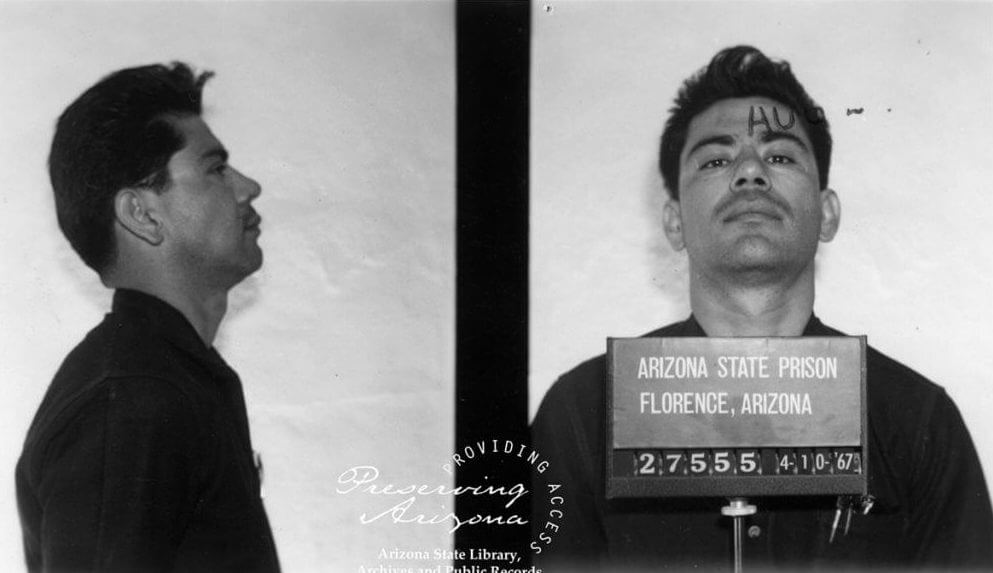
At trial, the prosecution used Miranda’s confession as key evidence against him. He was found guilty of kidnapping and rape and sentenced to 20-30 years in prison. His defense attorney appealed the conviction, arguing that Miranda’s confession was not truly voluntary because he had not been advised of his rights. The Arizona Supreme Court upheld the conviction, reasoning that Miranda had not specifically requested counsel. This decision paved the way for the case to be heard by the highest court in the land, setting the stage for a dramatic re-evaluation of police procedure and individual protections.
The legal questions at the heart of the case revolved around the Fifth Amendment’s protection against self-incrimination and the Sixth Amendment’s right to counsel, both made applicable to the states through the Fourteenth Amendment’s Due Process Clause. Prior to Miranda, the admissibility of confessions largely hinged on a “totality of the circumstances” test, which often proved inconsistent and susceptible to varying interpretations. The Warren Court, renowned for its commitment to civil rights and expanding protections for criminal defendants, sought to establish a clearer, more uniform standard. The stakes were incredibly high, promising to reshape daily interactions between citizens and law enforcement across the United States.
The Supreme Court’s Deliberation: Forging a New Standard
On June 13, 1966, the United States Supreme Court, led by Chief Justice Earl Warren, delivered its landmark 5-4 decision, reversing Ernesto Miranda’s conviction. The majority opinion, penned by Chief Justice Warren himself, was a profound declaration on the necessity of procedural safeguards to protect the Fifth Amendment privilege against self-incrimination during custodial interrogation.
The Rationale for Rights
The Court recognized the inherent psychological pressures and intimidation tactics that can be present in police interrogations, even in the absence of physical coercion. It argued that without proper safeguards, a suspect’s confession could not truly be considered the product of a free will. The environment of in-custody interrogation, often isolating and unfamiliar, was deemed to carry an “inherently compelling pressure” that could easily undermine an individual’s resolve to remain silent. To counteract this, the Court determined that an affirmative notification of rights was essential.

The Core Mandate: Miranda Warnings
The decision established a set of specific warnings that law enforcement officers must provide to a suspect in custody before questioning. These are now famously known as Miranda warnings:
- Right to Remain Silent: The suspect must be informed that they have the right to remain silent.
- Statements Used Against Them: The suspect must be warned that anything they say can and will be used against them in a court of law.
- Right to an Attorney: The suspect must be informed that they have the right to an attorney.
- Right to Appointed Counsel: If the suspect cannot afford an attorney, one will be appointed for them prior to any questioning if they so desire.
The Court emphasized that these warnings must be given clearly and unequivocally. Furthermore, it stressed that once a suspect indicates a desire to remain silent or requests an attorney, all interrogation must cease. The prosecution bears the heavy burden of proving that the defendant “knowingly and intelligently waived” these rights before any statements made during interrogation can be admitted into evidence.
Dissenting Voices
The Miranda decision was not without significant dissent, highlighting the contentious nature of balancing individual rights with the practicalities of law enforcement. Justice Tom C. Clark, Justice John Marshall Harlan II, and Justice Byron White penned separate dissenting opinions, primarily expressing concerns that the majority’s decision would unduly hamstring police efforts to investigate crimes and secure confessions, thereby jeopardizing public safety. They argued that the new rules were an unwarranted intervention into police procedures, creating an overly rigid framework that ignored the complexities of real-world crime fighting. These dissenting viewpoints underscored the fundamental tension between protecting civil liberties and ensuring effective criminal prosecution, a debate that continues to reverberate in legal circles today.
The Enduring Legacy: Miranda Rights in Modern America
The impact of Miranda v. Arizona was immediate and profound, cementing its status as one of the most significant legal landmarks of the 20th century. The requirement of Miranda warnings quickly became an ingrained part of police procedure across the United States, transforming how law enforcement interacts with suspects and forever changing the constitutional landscape of criminal investigations.
Shifting Law Enforcement Practices
Initially, many in law enforcement feared the Miranda ruling would severely impede their ability to solve crimes, predicting a drastic drop in confession rates. While there was an initial adjustment period, studies over time have generally shown that the impact on overall clearance rates was not as catastrophic as some had anticipated. Police departments adapted, developing new training protocols and techniques for obtaining evidence without relying solely on confessions. The Miranda warnings became a routine, almost ritualistic, part of an arrest, familiar to anyone who has watched a police procedural on television. This widespread cultural recognition underscores the depth of its integration into the fabric of American society.
Reinforcing Due Process
Beyond its practical implications for police work, Miranda served as a powerful reinforcement of due process and the protection of individual liberties. It enshrined the principle that every individual, regardless of their background, education, or financial status, must be aware of their fundamental constitutional rights when facing government interrogation. This ensures a more equitable playing field, preventing coerced confessions from entering the courtroom and upholding the integrity of the justice system. The decision underscored the idea that justice is not merely about finding guilt, but about doing so through fair and lawful means.
Subsequent Legal Developments
The application and interpretation of Miranda have been continuously refined by subsequent court decisions. Cases like New York v. Quarles (1984) established a “public safety exception” to Miranda, allowing un-Mirandized statements if immediate public safety is at risk. Dickerson v. United States (2000) reaffirmed Miranda as a constitutional rule, preventing Congress from legislatively overruling it. These later rulings demonstrate the dynamic nature of constitutional law and how landmark decisions continue to evolve in practice and interpretation, even decades after their initial pronouncement.

Ernesto Miranda’s Fate
As for Ernesto Miranda himself, his conviction was overturned by the Supreme Court. He was retried, but this time, without the un-Mirandized confession, the prosecution relied on other evidence and witness testimony. He was again convicted and sentenced to 20-30 years in prison. He was paroled in 1972 but tragically died in 1976 after being stabbed in a bar fight. Ironically, the man suspected of his murder was read his Miranda rights by police. His personal story, though ending sadly, is inextricably linked to one of the most consequential legal rulings in American history.
The legacy of Miranda v. Arizona extends far beyond the courtroom. It has become a cultural touchstone, a symbol of fairness and constitutional protection that resonates with ordinary citizens and legal professionals alike. This historical landmark decision serves as a constant reminder of the judiciary’s vital role in safeguarding individual liberties and ensuring that due process remains a cornerstone of the American legal system.
LifeOutOfTheBox is a participant in the Amazon Services LLC Associates Program, an affiliate advertising program designed to provide a means for sites to earn advertising fees by advertising and linking to Amazon.com. Amazon, the Amazon logo, AmazonSupply, and the AmazonSupply logo are trademarks of Amazon.com, Inc. or its affiliates. As an Amazon Associate we earn affiliate commissions from qualifying purchases.