
A domestic partnership in California is a legally recognized union that grants couples many of the same state-level rights and responsibilities as married couples. Established to provide legal protections for couples who may not wish to or are unable to marry, domestic partnerships have become a significant aspect of relationship recognition in the Golden State. Understanding the nuances of this legal status is crucial for individuals and couples navigating their rights and benefits within California.
The concept of domestic partnership emerged as a response to the evolving landscape of relationships and the need for legal parity. Initially, it provided an avenue for same-sex couples to gain legal recognition before marriage equality was nationwide. However, California has since expanded eligibility to include opposite-sex couples under certain conditions. This evolution reflects a broader societal shift towards recognizing diverse forms of committed relationships.
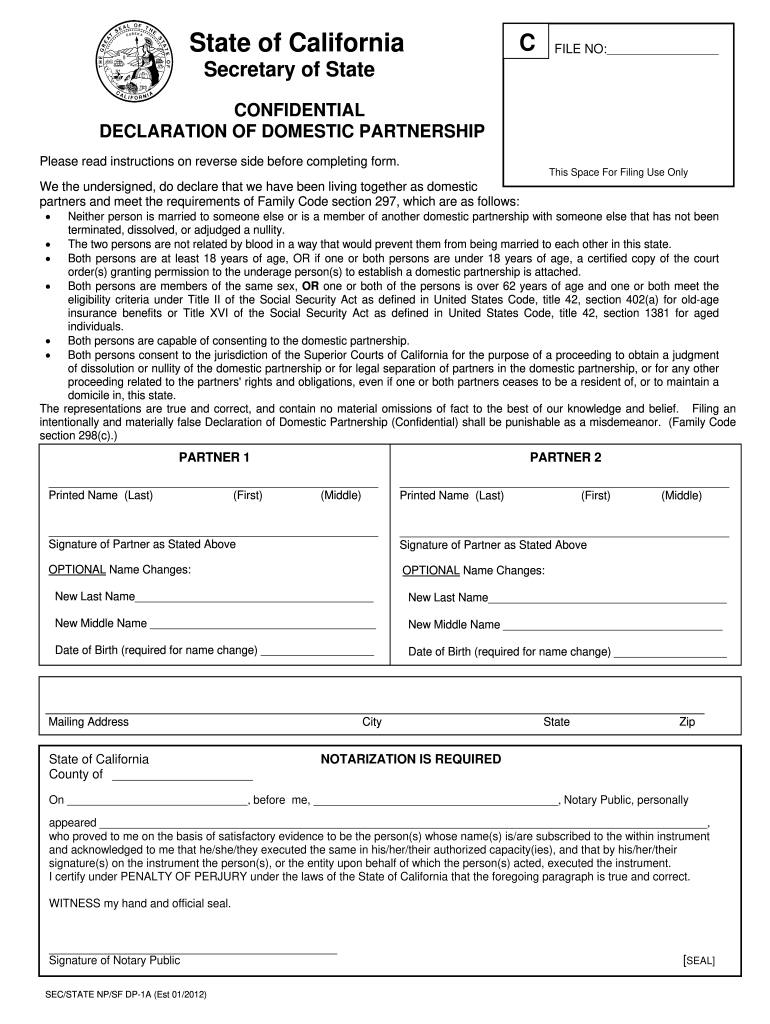
Eligibility Requirements for Domestic Partnership in California
To establish a domestic partnership in California, couples must meet specific criteria set forth by state law. These requirements are designed to ensure that the partnership is a genuine, committed relationship with the intention of sharing a life.
Age and Capacity
Both individuals must be at least 18 years of age. They must also have the legal capacity to enter into a contract, meaning they are of sound mind and not currently married to another person. If an individual is under 18, they would generally need court permission to enter into a domestic partnership, which is an uncommon scenario.
Not Married or in Another Partnership
Crucially, neither partner can be married to someone else. They also cannot be in another registered domestic partnership with a different individual. This exclusivity is a cornerstone of legal partnership recognition.
Shared Residence
A key requirement is that the couple must share a common residence. This means they live together and consider the same dwelling their home. The intent to share a residence, even if temporarily separated due to specific circumstances like military deployment or attending school, can often satisfy this requirement. The California Secretary of State’s office provides guidelines for what constitutes a shared residence, emphasizing the ongoing nature of cohabitation.
Not Related by Blood
The partners cannot be related to each other by blood in any way that would prevent them from being married under California law. This aligns with existing legal prohibitions against incestuous relationships.
Registered Domestic Partners
For opposite-sex couples, there is an additional eligibility criterion: at least one partner must be at least 62 years of age. This provision was enacted to ensure that older individuals who may have relied on Social Security or other benefits tied to marital status could still access similar protections through a domestic partnership. This age requirement does not apply to same-sex couples, who can register regardless of age, provided they meet the other criteria.
How to Register a Domestic Partnership
The process for registering a domestic partnership in California is straightforward and involves filing specific forms with the California Secretary of State.
Filing the Declaration of Domestic Partnership
The primary document required is the Declaration of Domestic Partnership (Form RP-1). This form requires both partners to provide their full names, addresses, dates of birth, and social security numbers. It also includes a statement affirming that they meet all the eligibility requirements for registering a domestic partnership. Both partners must sign the form in the presence of a notary public.
Submission to the Secretary of State
Once notarized, the completed Declaration of Domestic Partnership must be mailed or delivered in person to the California Secretary of State’s office. There is a filing fee associated with this process, which can be found on the Secretary of State’s website. After the form is reviewed and accepted, the Secretary of State will officially register the domestic partnership and send a certified copy of the registered declaration back to the couple.
Importance of Registration
Registering with the Secretary of State is crucial. This official registration is what provides legal standing to the domestic partnership within California. Without this formal step, a couple living together and meeting the criteria would not have the legal protections afforded by a registered domestic partnership. It serves as the definitive proof of their legal union.
Rights and Responsibilities of Domestic Partners
Registering as domestic partners in California bestows a wide array of state-level rights and responsibilities, mirroring those typically granted to married couples.
Property Rights
Domestic partners have rights concerning property acquired during the partnership. Similar to married couples, property acquired during the partnership is generally considered community property, meaning it is jointly owned by both partners and subject to division in the event of dissolution. This includes real estate, bank accounts, investments, and personal property.
Healthcare and Medical Decisions

One of the significant benefits of domestic partnership is the ability to make healthcare decisions for one’s partner. This includes the right to visit a partner in the hospital, make medical decisions in case of incapacitation, and access health insurance benefits through an employer’s plan if the partner is covered. This is particularly vital for ensuring continuity of care and decision-making power during medical emergencies.
Inheritance Rights
Domestic partners have inheritance rights. If one partner dies without a will (intestate), the surviving domestic partner is entitled to inherit from the deceased partner’s estate under California law, similar to a spouse. However, it’s important to note that these inheritance rights, particularly at the federal level, can differ from those of married couples, especially concerning estate taxes and Social Security benefits.
State Tax Benefits
Domestic partners are recognized for state tax purposes. They can file their state income taxes jointly, which can sometimes lead to tax advantages. This aligns with the principle of equal treatment under state law for married couples and domestic partners.
Other State-Level Benefits
This legal recognition extends to various other areas governed by state law, including:
- Leave for family care: The right to take time off work to care for a seriously ill domestic partner, similar to family and medical leave for spouses.
- Disability and workers’ compensation benefits: Eligibility for benefits related to a partner’s disability or workplace injury.
- Public benefits: Access to certain public benefits and programs that are available to married couples.
Dissolving a Domestic Partnership
Just as there are specific procedures for entering into a domestic partnership, there are also legal processes for ending one. Dissolving a domestic partnership is similar to divorce and is handled through the court system.
The Process of Dissolution
To dissolve a domestic partnership, a Petition for Dissolution of Domestic Partnership must be filed with the superior court. This initiates a legal process that will address issues such as the division of community property, spousal support, and child custody if the couple shares children.
Community Property Division
The division of property acquired during the partnership will follow the principles of community property law. Assets and debts will be divided equitably between the partners. This can be a straightforward process if partners agree on the division, or it can become complex if there are significant assets or disagreements.
Spousal Support and Child Custody
If applicable, issues of spousal support (alimony) and child custody, visitation, and support will be determined by the court. The court’s decisions in these matters are guided by state laws and aim to ensure fairness and the best interests of any children involved.
Key Differences from Marriage Dissolution
While the process is largely parallel to divorce, there are some key differences, particularly at the federal level. For instance, federal benefits like Social Security survivor benefits and federal tax filing status are generally not extended to domestic partners in the same way they are to married couples. This is a crucial distinction to understand when considering the long-term implications of domestic partnership.
Domestic Partnership vs. Marriage in California
While California domestic partnerships offer many of the same state-level rights as marriage, there are important distinctions, particularly when it comes to federal law and certain types of benefits.
State vs. Federal Recognition
The most significant difference lies in federal recognition. California domestic partnerships are recognized by the state government, granting state-specific rights. However, they are not automatically recognized by the federal government. This means federal benefits, such as Social Security, federal tax filing status (e.g., married filing jointly for federal taxes), and veterans’ benefits, are generally not available to domestic partners. Married couples, on the other hand, are recognized at both the state and federal levels.
Eligibility Criteria Nuances
As previously mentioned, opposite-sex couples can only register as domestic partners in California if one partner is at least 62 years old. Same-sex couples can register regardless of age. Marriage in California is available to both opposite-sex and same-sex couples without an age-based restriction for eligibility beyond the general age of majority.
Perceived Commitment and Symbolism
For some couples, marriage carries a deeper symbolic or cultural weight than a domestic partnership. While both represent a significant commitment, marriage is a universally recognized institution with long-standing societal traditions. The choice between marriage and domestic partnership often comes down to personal preference, legal considerations, and the specific benefits sought.
Planning for the Future
Understanding these differences is vital for comprehensive legal and financial planning. Couples who are domestic partners may wish to create wills, powers of attorney, and other legal documents to ensure their wishes are met, especially concerning matters not covered by state domestic partnership law, such as federal benefits or estate planning beyond state inheritance laws.
In conclusion, a domestic partnership in California offers a robust legal framework for committed couples, providing a substantial number of state-level rights and protections. While it mirrors many aspects of marriage, understanding the distinctions, particularly regarding federal recognition, is essential for navigating legal and personal matters effectively.
LifeOutOfTheBox is a participant in the Amazon Services LLC Associates Program, an affiliate advertising program designed to provide a means for sites to earn advertising fees by advertising and linking to Amazon.com. Amazon, the Amazon logo, AmazonSupply, and the AmazonSupply logo are trademarks of Amazon.com, Inc. or its affiliates. As an Amazon Associate we earn affiliate commissions from qualifying purchases.