
The very name, “California Gold Rush,” conjures images of rugged prospectors, vast fortunes, and the untamed spirit of the American frontier. More than just a historical event, it was a pivotal moment that reshaped the landscape, demography, and destiny of California and, indeed, the entire United States. From January 1848, when glittering flecks of gold were first spotted, to the mid-1850s, this extraordinary period triggered one of the largest mass migrations in human history, drawing hundreds of thousands of dreamers, adventurers, and entrepreneurs from across the globe to the rugged foothills of the Sierra Nevada.

For travelers and history enthusiasts today, the legacy of the California Gold Rush offers an unparalleled journey into the past. It’s an opportunity to explore ghost towns, vibrant historic cities, and pristine natural landscapes that still bear the marks of this frenzied era. This article delves into what the California Gold Rush truly was, its profound impact, and how its fascinating story continues to captivate visitors, offering a unique blend of history, adventure, and cultural immersion that aligns perfectly with modern travel experiences.
The Spark: Discovery and the Dawn of a New Era
The fuse for the California Gold Rush was lit on January 24, 1848, a seemingly ordinary day that would forever alter the course of American history. The unassuming site was Sutter’s Mill in Coloma, a sawmill being constructed by James W. Marshall for his employer, the Swiss pioneer John Sutter. While overseeing the construction, Marshall spotted shimmering flakes in the tailrace of the mill, an observation that would soon turn the tranquil American River basin into a magnet for the world.
Initially, Sutter and Marshall attempted to keep the discovery a secret, fearing disruption to Sutter’s burgeoning agricultural empire. However, news of the find proved impossible to contain. Within months, reports of “gold in them thar hills” began to spread like wildfire, first through local newspapers, then across the United States, and eventually, around the globe. President James K. Polk’s confirmation of the discovery in December 1848, during his address to Congress, served as an official invitation to the world, igniting an exodus on an unprecedented scale.
The Great Migration of the Forty-Niners
The year 1849 saw the full force of the migration unleashed, giving rise to the iconic term “Forty-Niners.” These were the brave, desperate, or simply adventurous souls who abandoned their homes, families, and livelihoods to embark on arduous journeys to California. Their routes were perilous and varied:
- Overland Trails: The most common path involved a grueling trek across the North American continent, primarily via the California Trail or the Gila Trail. This journey, often lasting several months, was fraught with challenges from harsh weather and rugged terrain to disease and starvation. The stories of wagons lumbering across vast plains and unforgiving mountains are etched into the fabric of American legend.
- Sea Routes: Others chose to sail, either around Cape Horn at the southern tip of South America – a voyage that could take four to eight months – or by sailing to Panama, crossing the Isthmus (often through dense jungle), and then catching another ship up the Pacific coast to California. While faster than the overland route, these sea journeys were expensive and often exposed travelers to tropical diseases.
The influx was staggering. In 1848, California’s non-indigenous population was roughly 15,000. By the end of 1849, it had swelled to over 100,000. This rapid demographic shift had immediate and lasting consequences, transforming a sparsely populated frontier into a bustling, diverse, and often chaotic land of opportunity.
The Methods of Gold Extraction
The pursuit of gold drove ingenuity and desperation, leading to the development and widespread use of various mining techniques, each with its own environmental and societal impact:
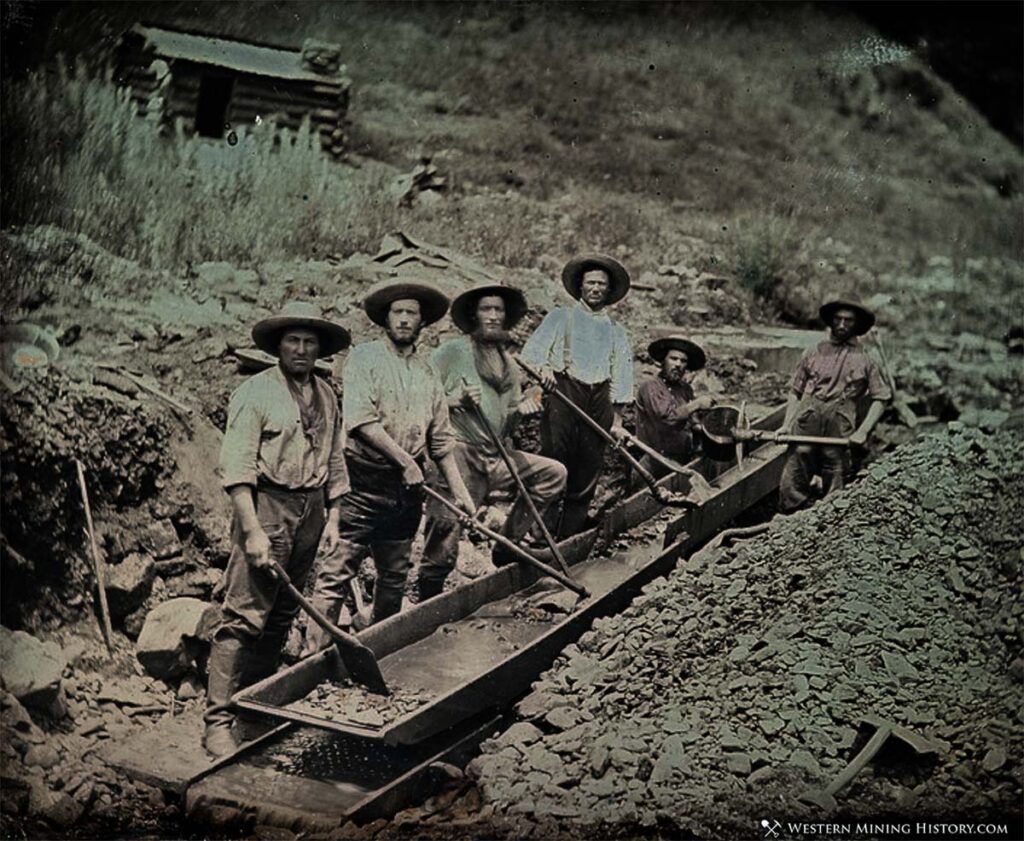
- Placer Mining: This was the simplest and most common method, especially in the early days. Prospectors used basic tools like pans, rockers (cradles), and sluice boxes to separate gold flakes and nuggets from sand and gravel in riverbeds and streambanks. The manual labor was intense, but the dream of a large nugget kept hope alive. This method required minimal capital, making it accessible to virtually anyone.
- Hydraulic Mining: As easily accessible placer deposits dwindled, miners turned to more aggressive techniques. Hydraulic mining, introduced in 1853, involved using high-pressure jets of water to blast away hillsides, eroding vast quantities of earth into sluices. While incredibly efficient at extracting gold, this method caused catastrophic environmental damage, silting up rivers, destroying agricultural land, and leaving behind barren landscapes. It was eventually largely outlawed due to its destructive nature.
- Hard Rock Mining: When surface and river gold became scarce, miners followed gold veins deep underground, leading to the development of hard rock mining. This involved digging shafts and tunnels into quartz formations, extracting gold-bearing ore, and then crushing it to release the precious metal. This required significant capital investment, sophisticated machinery, and a more organized labor force, signaling a shift from individual prospectors to industrial operations. This method continues in various forms today.
The transition from rudimentary panning to industrial-scale operations marked the evolution of the Gold Rush from a wild free-for-all to a more structured, albeit still volatile, economic enterprise.
The Gold Rush’s Transformative Impact on Society and Economy
The California Gold Rush wasn’t just about gold; it was a catalyst for monumental societal and economic change, laying the groundwork for modern California and shaping national development.
Boomtowns and Urban Development
The sudden influx of people created an urgent demand for goods, services, and shelter, giving birth to countless “boomtowns” overnight. What were once sleepy outposts or uninhabited wilderness areas rapidly transformed into bustling, albeit often ramshackle, communities.
- San Francisco: Perhaps the most dramatic example of Gold Rush growth, San Francisco mushroomed from a small village of fewer than 1,000 residents in 1848 to a sprawling city of 25,000 by 1850. It became the primary port of entry for gold-seekers arriving by sea and the commercial hub for the mining region. The city’s waterfront was notoriously crowded with abandoned ships, their crews having deserted to seek their fortunes in the goldfields. This rapid growth led to a vibrant, if chaotic, urban culture, with a demand for everything from luxurious hotels and opulent saloons to basic accommodation and diverse culinary experiences. The city’s unique blend of cultures, including a thriving Chinatown, can be traced back to this era.
- Sacramento: Situated at the confluence of the American River and the Sacramento River, Sacramento served as the primary supply center for miners heading into the northern Gold Country. It rapidly evolved from Sutter’s Fort into a major commercial and transportation hub, quickly becoming the state capital in 1854. Its strategic location made it a crucial bottleneck for goods and people moving to and from the mines.
- Mining Towns: Countless smaller towns, such as Placerville, Nevada City, and Columbia, sprang up in close proximity to the richest gold veins. These towns were characterized by their temporary nature, rough-and-tumble lifestyle, and a constant ebb and flow of hopeful miners and opportunistic merchants. Many of these towns became ghost towns as the gold ran out, while others, like Columbia State Historic Park and Nevada City, have remarkably preserved their 19th-century charm and infrastructure, making them popular tourist destinations today.
Demographic Shifts and Cultural Mélange

The Gold Rush was a truly global event, attracting people from every corner of the world. While the majority of Forty-Niners were Americans, significant populations arrived from Mexico, China, Chile, Peru, Australia, and various European countries. This created an incredibly diverse society, albeit one often marked by prejudice and conflict.
- Diversity and Conflict: The clash of cultures, languages, and customs was inevitable. While many found opportunities, racial tensions and xenophobia were also prevalent, particularly against Chinese and Mexican miners. Despite these challenges, the diversity of the Gold Rush era laid the foundation for California’s multicultural identity, contributing to its rich culinary landscape, architectural styles, and vibrant cultural traditions.
- Impact on Indigenous Populations: Tragically, the Gold Rush had a devastating impact on California’s indigenous populations. Displaced from their ancestral lands, subjected to violence, and exposed to new diseases, their numbers plummeted dramatically during this period.
- Gender Imbalance: The vast majority of early gold-seekers were men, leading to a stark gender imbalance in the mining regions. This created unique social dynamics, driving up the value of women’s labor and leading to opportunities for women who ran boarding houses, laundries, and other essential services.
Economic Transformations and California’s Statehood
The sheer volume of gold extracted during the rush was staggering. It’s estimated that hundreds of millions of dollars’ worth of gold (at 19th-century values) were pulled from California’s soil. This immense wealth had profound economic consequences:
- National Economic Boom: The gold flowed into the national economy, stimulating trade, finance, and industrial growth across the United States. It helped finance the construction of infrastructure like the Transcontinental Railroad and facilitated the nation’s expansion westward.
- Agricultural Development: While gold was the initial draw, the rapidly growing population created a massive demand for food. This spurred the development of California’s agricultural sector, which quickly became a vital part of the state’s economy, eventually surpassing the economic output of gold mining.
- Statehood: The rapid population growth fueled by the Gold Rush quickly pushed California towards statehood. In September 1850, just two years after Marshall’s discovery, California was admitted to the Union as the 31st state, forever altering the balance between free and slave states and contributing to the escalating tensions that led to the Civil War.
Gold Rush Legacy: Travel, Tourism, and Landmarks Today
For the modern traveler, the California Gold Rush isn’t just a chapter in a history book; it’s a living, breathing experience. The region known as Gold Country, stretching along the western foothills of the Sierra Nevada, offers a wealth of destinations, attractions, and activities that allow visitors to step back in time and connect with this extraordinary era.
Preserving the Past: Museums and Historic Sites
Many of the places that burst into existence during the Gold Rush have been meticulously preserved or restored, offering authentic glimpses into 19th-century life. These landmarks are crucial for understanding the period:
- Marshall Gold Discovery State Historic Park: Located in Coloma, this park is the very spot where James W. Marshall made his momentous discovery. Visitors can see a replica of Sutter’s Mill, explore historic buildings, pan for gold in the American River, and walk interpretive trails that tell the story of the initial discovery and its immediate aftermath. It’s a foundational experience for anyone interested in the rush.
- Columbia State Historic Park: Often called the “Gem of the Southern Mines,” Columbia is a remarkably preserved Gold Rush town. It’s a living history museum where costumed docents bring the 1850s to life. You can ride a stagecoach, watch a blacksmith at work, pan for gold, and explore historic shops, saloons, and hotels. It’s an immersive experience that transports visitors directly to the boomtown days.
- Sutter’s Fort State Historic Park: In the heart of modern Sacramento, Sutter’s Fort was the hub of John Sutter’s agricultural empire and a crucial trading post before and during the initial stages of the Gold Rush. It offers insights into the pre-rush frontier life and the challenges faced by early settlers.
- Old Sacramento State Historic Park: This vibrant district along the Sacramento River preserves the city’s 19th-century commercial core. With its wooden sidewalks, historic buildings, and museums like the California State Railroad Museum, it offers a glimpse into the bustling port city that supplied the goldfields.
- Other Historic Towns: Nevada City, Grass Valley, and Sonora are just a few of the other towns that retain much of their Gold Rush charm, featuring historic main streets, old saloons, and quaint shops. They are perfect for leisurely exploration and offer a real sense of the region’s past.
Modern-Day Gold Country Adventures
Beyond the historic sites, the Gold Country region offers a wide array of activities that blend history with modern travel preferences.
- Experiences: Many parks and private operators offer authentic gold panning experiences, allowing visitors to try their hand at striking it rich, just like the Forty-Niners. Guided tours delve into the intricacies of mining, the daily lives of prospectors, and the stories of prominent figures from the era.
- Outdoor Activities: The stunning natural beauty that first drew miners to the region now attracts hikers, kayakers, and outdoor adventurers. The rivers and foothills provide ample opportunities for white-water rafting, fishing, and scenic drives, making it a destination for those seeking both historical insight and natural beauty.
- Local Culture and Food: The diverse heritage of the Gold Rush is still evident in the region’s local culture, arts, and burgeoning food and wine scene. Many small towns boast excellent farm-to-table restaurants, local breweries, and award-winning wineries, providing a modern twist on the region’s historic charm. From artisanal cheese makers to craft distilleries, the area offers a feast for the senses, complementing the historical journey.
- Lifestyle Travel: Whether you’re interested in luxury travel with stays in boutique hotels in historic buildings or budget travel exploring campsites and simpler accommodations, Gold Country caters to various lifestyles. Family trips can be particularly rewarding, as the hands-on historical experiences are engaging for all ages.
Accommodation and Hospitality in Gold Country
The spirit of hospitality, born out of the necessity to house and feed thousands of transient miners, continues in Gold Country today. Visitors have a wide range of accommodation options that enhance their historical journey:
- Historic Hotels and B&Bs: Many towns offer charming historic hotels, some dating back to the Gold Rush era, providing a unique stay. Imagine sleeping in a room where a miner once dreamt of striking it rich! Bed and breakfasts in beautifully restored Victorian homes offer a more intimate and personalized experience, often steeped in local lore. The National Hotel in Jackson, for instance, has been continuously operating since 1862 and offers a genuine step back in time.
- Modern Resorts and Lodges: For those seeking contemporary comforts, there are numerous resorts and lodges nestled amidst the natural beauty of the foothills. These often offer amenities like spas, fine dining, and recreational activities, blending the region’s historical allure with modern luxury.
- Apartments and Villas: For longer stays or family trips, self-catering apartments and villas provide flexibility and comfort, allowing visitors to explore the region at their own pace and immerse themselves more deeply in the local lifestyle.
- Campgrounds and RV Parks: Budget travelers and outdoor enthusiasts will find plenty of campgrounds and RV parks, particularly near the national forests and state parks, allowing for an affordable and nature-focused experience.
The Gold Rush legacy of providing lodging and services for weary travelers continues, ensuring that today’s visitors can find accommodation to suit every preference and budget, making their exploration of this historic region both comfortable and memorable.
Conclusion
The “California Gold Rush” was far more than a frantic search for precious metal; it was a profound historical earthquake that reverberated across the globe. It ignited dreams, forged fortunes, spurred unprecedented migration, and ultimately laid the foundations for a vibrant, multicultural California. From the simple discovery at Sutter’s Mill to the bustling streets of San Francisco and Sacramento, the rush defined an era of relentless pursuit, innovation, and change.
Today, the spirit of the California Gold Rush lives on, inviting travelers to embark on their own journeys of discovery. Whether you’re panning for gold in a historic river, wandering through preserved boomtowns, or simply savoring the local cuisine in a charming Gold Country town, the legacy of this incredible period offers a compelling blend of history, adventure, and cultural richness. It’s a powerful reminder of how a single discovery can reshape a nation and leave an indelible mark on the world, waiting to be explored by every curious traveler.
LifeOutOfTheBox is a participant in the Amazon Services LLC Associates Program, an affiliate advertising program designed to provide a means for sites to earn advertising fees by advertising and linking to Amazon.com. Amazon, the Amazon logo, AmazonSupply, and the AmazonSupply logo are trademarks of Amazon.com, Inc. or its affiliates. As an Amazon Associate we earn affiliate commissions from qualifying purchases.